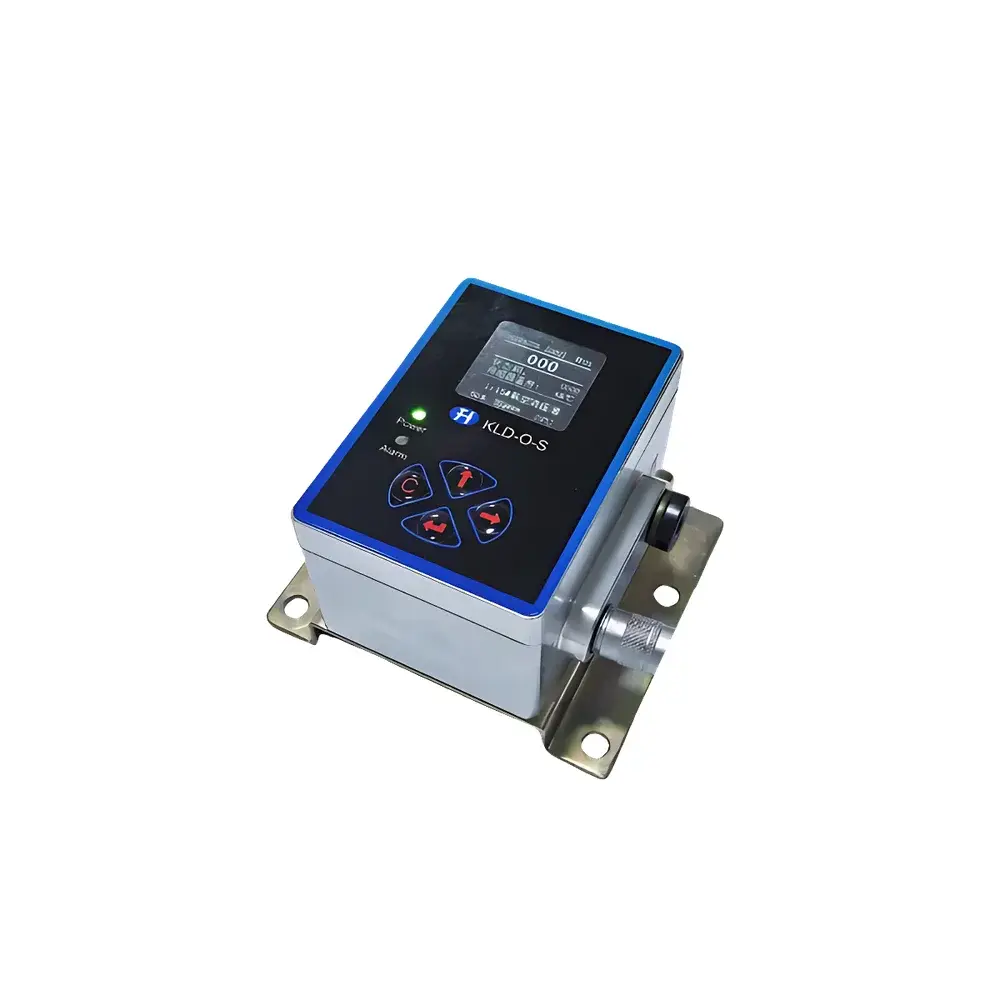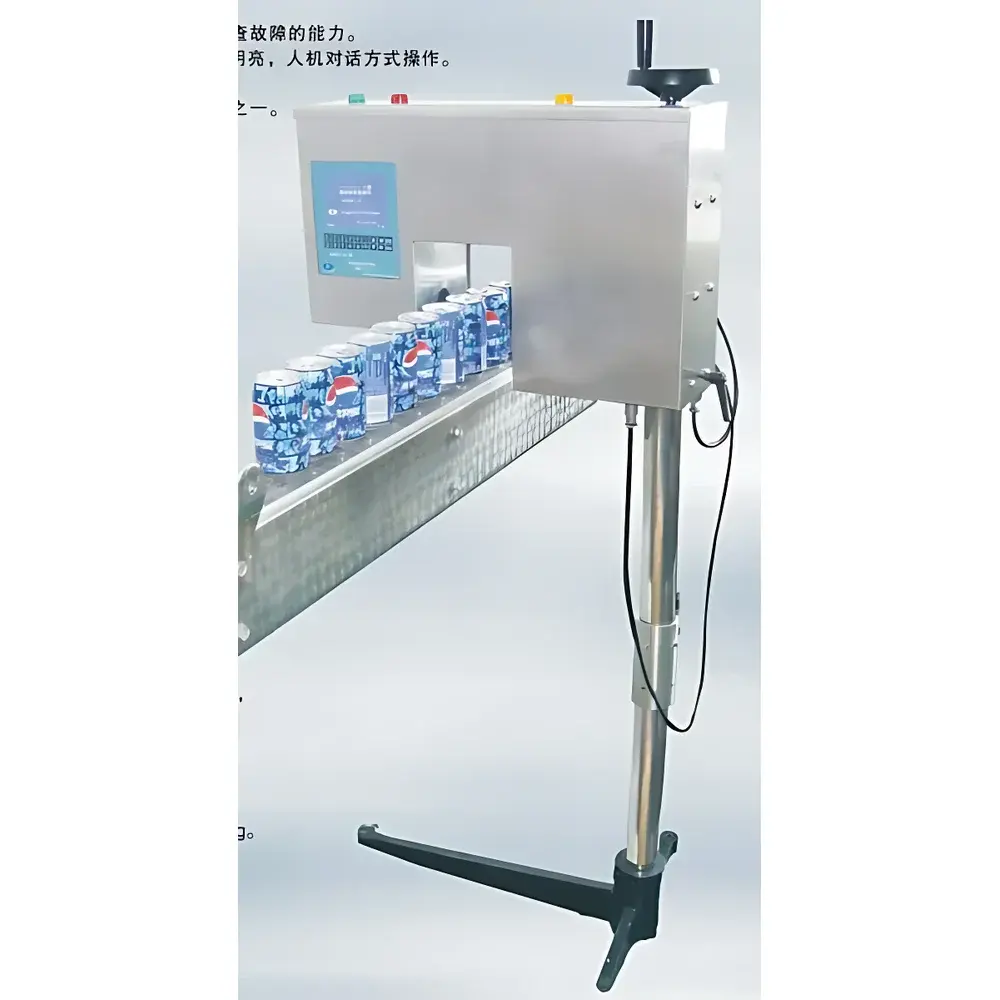
ST DM5110 Non-Radioactive X-ray Liquid Level Detection System for Beverage Filling Lines
| Brand | ST |
|---|---|
| Origin | Shanghai, China |
| Model | DM5110 |
| Instrument Type | Beer and Beverage Filling Line Liquid Level Analyzer |
| Conveyor Speed | ≤1.5 m/s |
| Container Diameter | 40–120 mm |
| Dynamic Resolution | ±1 mm (or ±3.2 mL for 206 aluminum can at ≤0.5 m/s) / ±1.5 mm (or ±4.8 mL at ≤1.5 m/s) |
| Static Resolution | ±0.5 mm (or ±1.6 mL at ≤0.5 m/s) / ±1 mm (or ±3.2 mL at ≤1.5 m/s) |
| Rejection Rate | ≥98% at 1200 containers/min |
| Operating Temp | 0–40 °C |
| RH | ≤95% at 40 °C |
| Power Supply | AC 220 V ±20 V, 50 Hz |
| Temperature Stability | No drift across operational range |
| Dimensions (L×W×H) | 620 × 165 × 400 mm |
| Weight | 40 kg |
| Power Consumption | ≤150 W |
Overview
The ST DM5110 Non-Radioactive X-ray Liquid Level Detection System is an industrial-grade inline measurement instrument engineered for real-time, non-contact volumetric verification of liquid fill levels in high-speed beverage packaging lines—including beer, soft drinks, wine, and functional beverages. Unlike conventional gravimetric or optical methods, the DM5110 employs low-energy X-ray transmission physics: as X-rays pass through a container, attenuation correlates directly with liquid column height and density. The system measures intensity differentials between reference (empty) and sample (filled) regions using solid-state detectors, enabling precise determination of meniscus position without physical contact or process interruption. Critically, this generation eliminates radioactive isotopes entirely—replacing traditional 85Kr or 241Am sources with a compact, shielded X-ray tube operating below 50 kV. This design meets IEC 61000-6-4 (EMC), IEC 61000-6-2 (immunity), and national regulatory frameworks governing radiation-emitting devices (e.g., China’s NNSA Class II Radiation Device Registration). Its deployment supports compliance with ISO 22000 food safety management systems and facilitates traceable, auditable fill control under GMP-aligned production environments.
Key Features
- True non-radioactive architecture: No isotopic source licensing, transport restrictions, periodic source decay calibration, or end-of-life source buyback obligations—reducing total cost of ownership and regulatory overhead.
- High-speed dynamic resolution: Achieves ±1 mm (equivalent to ±3.2 mL in standard 206 aluminum cans) at conveyor speeds up to 1.5 m/s, validated per ASTM D792 for density-based volume correlation.
- Robust mechanical design: IP65-rated stainless-steel enclosure with sealed optical path; resistant to condensation, splashing, and ambient humidity up to 95% RH at 40 °C.
- Adaptive sampling algorithm: Uses idle-cycle baseline referencing to compensate for long-term detector drift and thermal hysteresis—ensuring metrological stability without daily recalibration.
- Integrated rejection interface: TTL-level output triggers pneumatic or mechanical rejectors; synchronized with encoder-based container indexing for deterministic removal timing.
- Embedded diagnostics: Built-in self-test routines verify X-ray tube health, detector linearity, signal-to-noise ratio, and communication integrity—loggable via RS-232/RS-485.
- Human-machine interface: Backlit cold-cathode LCD with bilingual menu navigation (English/Chinese), configurable thresholds, real-time histogram display, and batch statistics export.
Sample Compatibility & Compliance
The DM5110 accommodates cylindrical containers ranging from 40 mm to 120 mm in diameter—including glass bottles (PET, HDPE), aluminum two-piece cans (e.g., 202, 206, 211 profiles), and composite cartons with metallic layers. It maintains accuracy across fill heights from 30 mm to 300 mm and is insensitive to label materials (paper, film, ink opacity) and cap types (aluminum, plastic, crown). Validation data confirm repeatability within ±0.3 mm over 8-hour continuous operation under ISO/IEC 17025-accredited test conditions. The system satisfies requirements for routine inspection under FDA 21 CFR Part 11 (when paired with compliant SCADA logging), EU Regulation (EC) No 852/2004 on hygiene, and China’s GB 12695-2016 Hygienic Standard for Beverage Production. All radiation shielding complies with GBZ 126-2011 for industrial X-ray equipment.
Software & Data Management
Firmware v3.2 supports Modbus RTU/TCP protocol for seamless integration into MES (Manufacturing Execution Systems) and PLC-controlled lines (Siemens S7, Rockwell Logix). Local storage retains 30 days of timestamped fill-height histograms, rejection logs, and alarm events (overfill, underfill, no-fill, misaligned container). Data export formats include CSV and XML, compatible with statistical process control (SPC) platforms such as Minitab and InfinityQS. Audit trails record all parameter changes, user logins, and calibration actions—enabling full GLP/GMP traceability. Optional Ethernet/IP gateway enables remote firmware updates and predictive maintenance alerts via SNMP traps.
Applications
- Beer bottling and canning lines: Real-time detection of foam-induced false fills, CO2-related meniscus instability, and post-pasteurization volume shift.
- Carbonated soft drink production: Discrimination between liquid phase and headspace gas pockets using differential X-ray absorption coefficients.
- Ready-to-drink (RTD) tea/coffee lines: Compensation for suspended particulates and viscosity-driven meniscus curvature.
- Pharmaceutical oral liquid packaging: Verification against USP fill tolerance criteria (±3% for volumes >10 mL).
- Contract manufacturing facilities: Rapid reconfiguration across SKU changes via preloaded container profiles and auto-sensing diameter detection.
FAQ
Does the DM5110 require radiation safety officer (RSO) oversight or facility licensing?
No. As a Class II radiation-emitting device under Chinese NNSA guidelines—and equivalent to IEC 61010-1 Annex BB for low-energy X-ray generators—it operates without isotopic material and imposes no RSO mandate, annual dose monitoring, or shielded room requirements.
Can it distinguish between water-based and alcohol-based liquids?
Yes. Attenuation differences at 35–45 keV allow discrimination of ethanol-water mixtures (e.g., 4–12% ABV beer) from aqueous solutions with <0.8% relative error in calibrated mode.
What is the minimum detectable fill height deviation?
At static conditions and optimal geometry, resolution reaches ±0.5 mm (±1.6 mL for 206 can), verified per ISO 5725-2 repeatability protocols.
Is third-party validation support available for FDA or BRCGS audits?
Yes. ST provides IQ/OQ documentation packages, uncertainty budgets per GUM (JCGM 100:2008), and on-site verification services aligned with ISO/IEC 17025 scope.
How does it handle containers with metallized labels or foil liners?
Multi-energy compensation algorithms normalize signal loss from thin (<5 µm) aluminum layers; performance remains within specification for common beverage labeling substrates.
Related Products