
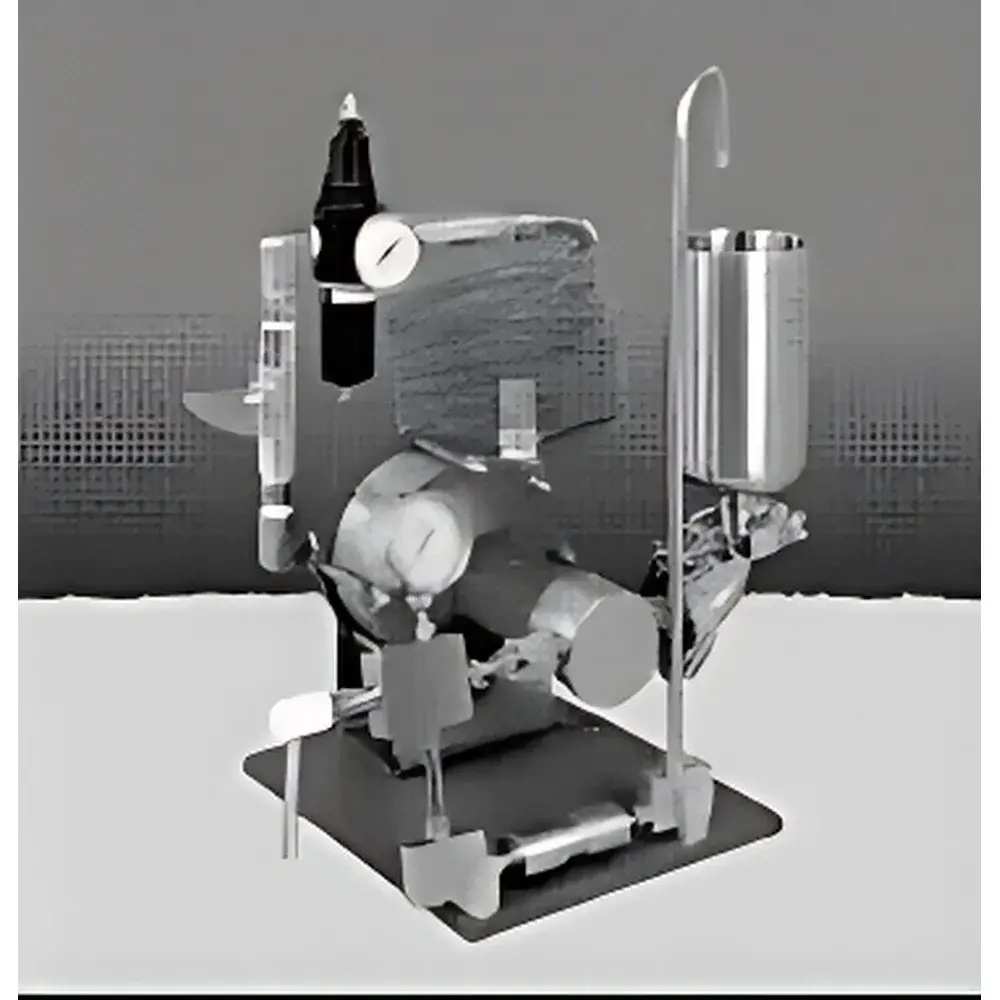
High-Pressure Microfluidic Nanosizer (Homogenizer) HC-5000 Series
| Origin | USA |
|---|---|
| Manufacturer Type | Authorized Distributor |
| Origin Category | Imported |
| Model | HC-5000 |
| Pricing | Upon Request |
| Max Operating Pressure | 5,000 psi |
| Max Flow Rate | 950 mL/min |
| Feed Temperature Range | –15–165 °F (–26–74 °C) |
| Compressed Air Requirement | 28 SCFM at 50 psi, Dew Point: –17.7–1.6 °C |
| Minimum Sample Volume | 100 mL |
| Dimensions | 44 × 44 × 51 cm |
| Weight | 16.8 kg |
| Construction Material | Electropolished 316 Stainless Steel |
Overview
The HC-5000 Series High-Pressure Microfluidic Nanosizer is an engineered homogenization platform developed by Microfluidics International Corporation (MFIC), USA. It operates on the principle of microfluidic interaction—where process fluid is forced under high pressure through precisely engineered, fixed-geometry microchannels within a Y- or Z-type interaction chamber. This geometry generates intense, reproducible shear, cavitation, and impact forces—enabling consistent nano-scale particle size reduction, liposome extrusion, emulsion stabilization, and cell disruption. Unlike rotor-stator or valve-based homogenizers, the HC-5000 eliminates moving parts in the fluid path, ensuring zero metal wear contamination and intrinsic batch-to-batch repeatability. Designed for laboratory-scale development and formulation optimization, it delivers up to 5,000 psi operating pressure using standard shop air (50 psi supply), eliminating the need for hydraulic power units or high-voltage electrical infrastructure.
Key Features
- Patented fixed-geometry interaction chamber fabricated from hardened, wear-resistant 316 stainless steel—no moving parts in contact with sample fluid
- Pneumatically actuated drive system compliant with Class I, Division 1 hazardous location requirements; intrinsically safe for flammable solvent processing
- Full-system sterilizability (SIP) and clean-in-place (CIP) capability via integrated high-pressure fluid pathways and autoclavable chamber assemblies
- Electropolished 316 SS wetted surfaces meeting ASME BPE-2023 surface finish specifications (Ra ≤ 0.4 µm)
- Thermal management support: feed temperature range from –26 °C to +74 °C (–15 °F to 165 °F), compatible with chilled recirculation loops or heated jacketing
- Modular chamber interchangeability—Y-type for high-shear dispersion, Z-type for gentle yet effective liposome sizing and protein complex formation
- Dual-seal piston design with chemically resistant fluorocarbon elastomers (FFKM), rated for >10,000 cycles under full-load conditions
- Compact footprint (44 × 44 × 51 cm) and low mass (16.8 kg) enabling benchtop deployment in ISO Class 5–7 cleanrooms or mobile GMP pilot labs
Sample Compatibility & Compliance
The HC-5000 accommodates aqueous, organic, and biphasic systems—including lipid suspensions, polymeric nanoparticles, protein therapeutics, vaccine adjuvants, and food-grade emulsions. Its all-metal, non-leaching fluid path meets USP , EP 3.2.1, and FDA 21 CFR Part 11 requirements for material compatibility and extractables profiling. The system supports GLP/GMP documentation workflows via optional audit-trail-enabled operation logs and electronic signature integration. Chamber designs comply with ISO 22442-1 (biological safety of medical devices) and ASTM F2347 (standard practice for liposome characterization). All wetted components are traceable to mill-certified 316L SS raw material batches.
Software & Data Management
While the base HC-5000 operates via analog pressure regulation and manual flow control, optional digital instrumentation packages provide real-time monitoring of inlet pressure, outlet temperature, total processed volume, and cycle count. Data export is supported via USB or RS-485 to LIMS-compatible formats (CSV, XML). When paired with MFIC’s Homogenizer Control Suite (v3.2+), users gain access to protocol-driven operation, parameter locking for SOP enforcement, and electronic batch records aligned with Annex 11 and 21 CFR Part 11 compliance frameworks. All firmware updates undergo IEC 62304 validation per device software lifecycle requirements.
Applications
- Nanosizing of poorly soluble APIs into stable nanosuspensions (e.g., for IV or oral bioavailability enhancement)
- Production of unilamellar liposomes (50–200 nm) with narrow PDI (<0.1) for mRNA delivery and vaccine platforms
- Stabilization of oil-in-water and water-in-oil emulsions in cosmetic actives and functional food matrices
- Disruption of Gram-negative and Gram-positive bacterial cells for inclusion body recovery without protease activation
- Deagglomeration of ceramic, metallic, and quantum dot nanoparticles for advanced coating formulations
- Preparation of standardized reference materials for DLS, TEM, and NTA method qualification
FAQ
What is the minimum viable sample volume for method development studies?
100 mL is the validated lower limit for reproducible pressure build-up and chamber thermal equilibrium. For screening, reduced-volume adapters (50 mL) are available under MFIC’s R&D Access Program.
Can the HC-5000 be integrated into a closed-loop recirculation system?
Yes—its inlet/outlet ports conform to 1/4″ NPT and accept sanitary tri-clamp adapters (SMS 1142); full recirculation manifolds with back-pressure regulators and inline temperature sensors are offered as turnkey options.
Is the interaction chamber replaceable in-house, and what is its service life?
Chambers are field-replaceable without tools; typical lifetime exceeds 500 hours at 4,000 psi with aqueous buffers. Wear inspection protocols and calibration certificates are included with each replacement unit.
Does the system meet regulatory requirements for pharmaceutical manufacturing?
The HC-5000 qualifies as a Class I GMP auxiliary equipment per EU GMP Annex 15. Full IQ/OQ documentation kits—including pressure transducer calibration reports, surface finish verification, and material traceability dossiers—are provided upon order.
How does microfluidic homogenization differ from traditional valve-based systems in terms of scalability?
The fixed-geometry chamber enables direct linear scale-up: lab-scale HC-5000 parameters translate predictably to pilot-scale HC-10000 and production-scale M-110P systems using identical chamber internal profiles and fluid dynamics modeling.



