
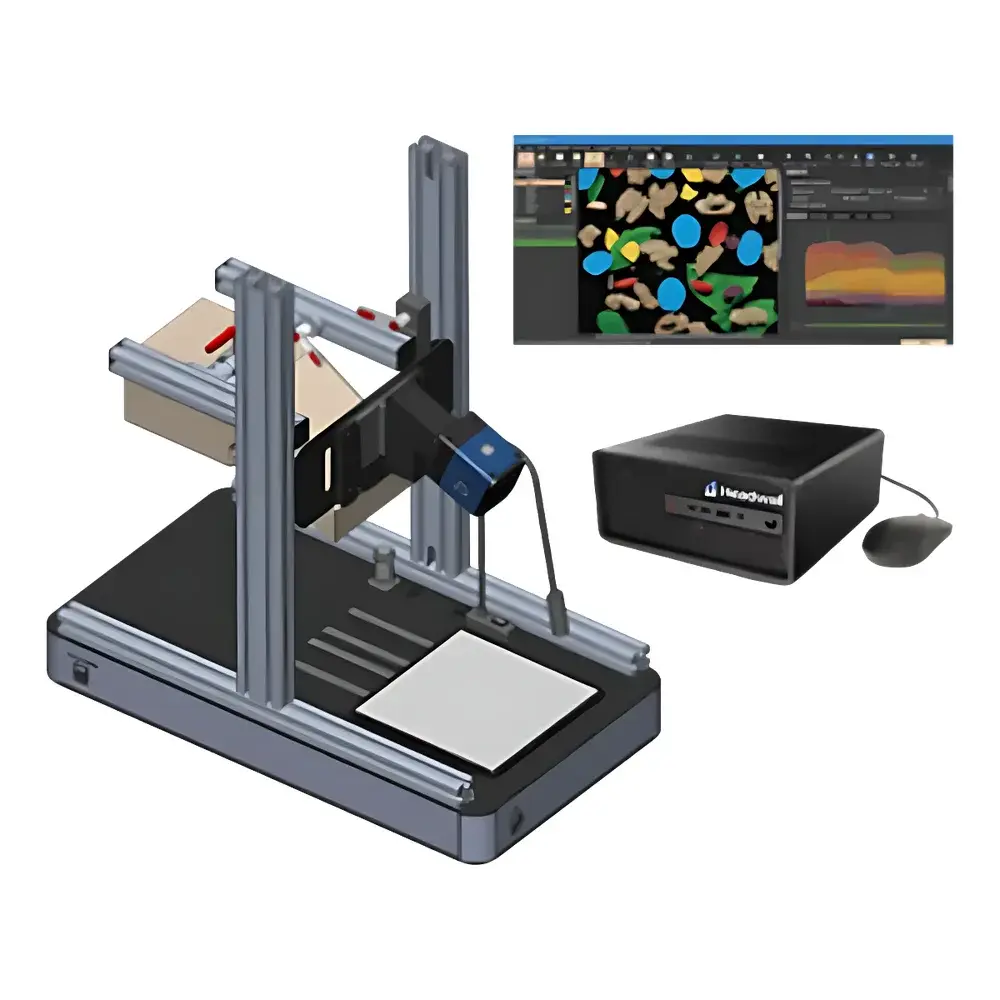
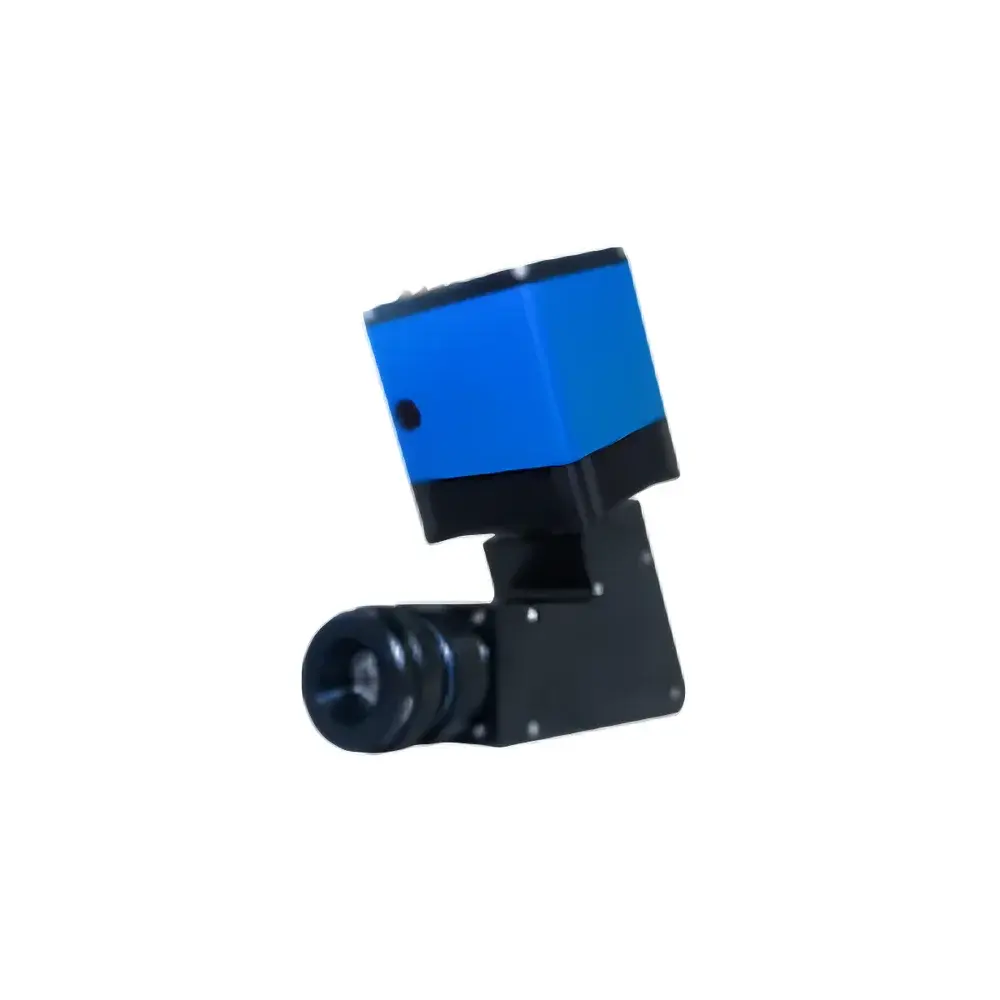
HeadWall BlueEye UV Pushbroom Hyperspectral Imaging Spectrometer
| Brand | HeadWall |
|---|---|
| Origin | USA |
| Model | BlueEye UV |
| Spectral Range | 220–380 nm |
| Spectral Resolution | < 2 nm |
| Spatial Channels | 1750 |
| Spectral Channels | 1845 |
| Operating Mode | Ground-based Pushbroom |
| Weight | 1.9 kg |
| Integrated Ozone Scrubbing System | Yes |
| Illumination System | Integrated UV-optimized broadband source |
| Motorized Scanning Stage | Optional (standard in turnkey configuration) |
| Enclosure | Ruggedized, light-tight, ozone-resistant housing |
Overview
The HeadWall BlueEye UV is a precision-engineered pushbroom hyperspectral imaging spectrometer designed for high-fidelity spectral data acquisition in the deep and near-ultraviolet (UV) region (220–380 nm). Unlike conventional multispectral systems, the BlueEye UV captures contiguous, narrowband spectral information across 1845 discrete wavelength channels with sub-2 nm spectral resolution—enabling discrimination of subtle electronic transitions, aromatic compound signatures, and photochemical absorption features critical in UV-sensitive applications. Its pushbroom architecture acquires spatial-spectral data line-by-line via precise mechanical scanning, ensuring high radiometric stability and minimal motion-induced artifacts. Engineered for laboratory, field-deployable, and controlled-environment use, the system operates exclusively in ground-based configurations and integrates hardware-level ozone mitigation to maintain optical throughput and detector quantum efficiency in the short-wave UV (< 240 nm), where atmospheric and optical path ozone absorption otherwise degrades signal integrity.
Key Features
- Deep-UV Optimized Optics: Reflective fore-optics and back-illuminated CCD sensor with enhanced quantum efficiency below 250 nm; all optical surfaces coated for maximum UV reflectance and minimized fluorescence.
- Ozone Elimination Subsystem: Integrated catalytic ozone scrubber within the optical enclosure ensures stable transmission down to 220 nm without external purge gas requirements.
- Modular Turnkey Configuration: Ships with UV-optimized broadband illumination (220–400 nm, adjustable intensity), motorized precision scanning stage (±0.5 µm repeatability), and ruggedized, light-tight enclosure rated for Class 1000 cleanroom compatibility.
- High Spatial Fidelity: 1750-pixel across-track spatial sampling at native resolution supports sub-millimeter spatial binning for macro-scale sample mapping or high-magnification microscopic analysis when coupled with UV-corrected objectives.
- Thermal & Mechanical Stability: Monolithic aluminum chassis with passive thermal management maintains spectral calibration stability better than ±0.3 nm over 8-hour continuous operation (23 ± 2 °C ambient).
Sample Compatibility & Compliance
The BlueEye UV accommodates solid, semi-solid, and thin-film samples—including biological tissues, forensic trace evidence (e.g., latent fingerprints treated with UV-reactive powders), pharmaceutical tablets, semiconductor wafers, and archival documents. Its non-contact, non-destructive measurement mode complies with ASTM E2965 (Standard Practice for Hyperspectral Imaging of Solid Surfaces) and supports method validation under ISO/IEC 17025:2017 for accredited laboratories. The integrated illumination and shielding meet IEC 61000-4-3 immunity standards for electromagnetic compatibility in analytical environments. Data provenance and instrument state logging are structured to align with FDA 21 CFR Part 11 requirements when used with validated software workflows.
Software & Data Management
Acquisition and processing are managed through HeadWall’s SpectralView™ v5.x platform, which provides real-time spectral cube generation, onboard dark-current and flat-field correction, and radiometric calibration traceable to NIST-traceable UV sources. The software exports ENVI-compatible .hdr/.dat files and supports batch processing via Python API (PySpectral) for integration into custom chemometric pipelines (e.g., PLS-DA, SVM classification). Audit trails record operator ID, acquisition parameters, calibration timestamps, and environmental metadata (temperature, humidity, lamp hours)—enabling full GLP/GMP-compliant documentation for regulated QA/QC labs.
Applications
- Biomedical Research: Label-free detection of tryptophan, tyrosine, and nucleic acid absorbance gradients in unstained tissue sections; quantification of UV-induced DNA photoproducts (e.g., cyclobutane pyrimidine dimers).
- Forensic Science: Visualization and spectral differentiation of bodily fluids (semen, saliva), accelerants, and counterfeit document inks without chemical enhancement.
- Pharmaceutical Quality Control: Uniformity assessment of UV-active API distribution in coated tablets; identification of polymorphic forms via characteristic absorption edge shifts.
- Materials Science: Mapping of UV-curable resin cure depth, defect localization in UV-stabilized polymers, and oxidation state analysis of transition metal oxides (e.g., TiO₂, ZnO).
- Cultural Heritage: Non-invasive pigment identification in historical manuscripts and paintings, especially organic dyes with strong UV chromophores (e.g., indigo, madder lake).
FAQ
What UV sources are compatible with the BlueEye UV?
The system includes a factory-calibrated, pulsed-xenon broadband source optimized for 220–400 nm output. External UV lamps (e.g., deuterium, Hg-Xe) may be integrated via fiber coupling but require recalibration and ozone management verification.
Is real-time spectral cube reconstruction supported?
Yes—SpectralView™ performs on-the-fly radiometric correction and cube assembly at up to 60 lines/sec (full 1750×1845 spatial-spectral resolution), with optional GPU-accelerated processing for >200 lines/sec in binned modes.
Can the BlueEye UV be mounted on a microscope?
It is compatible with standard C-mount UV-transmitting microscopes; however, objective selection must account for UV transmission (e.g., Nikon UV-NIC, Mitutoyo UV-grade lenses) and working distance constraints.
Does the system support automated focus or auto-exposure?
Focus is manual via precision translation stage; exposure time (1 ms–10 s) and gain are programmable per scan line, with auto-exposure available in ROI-driven mode using histogram-based thresholding.
What calibration standards are supplied?
NIST-traceable holmium oxide and mercury-argon emission lamps for wavelength calibration; certified UV reflectance standards (Labsphere SPECTRALON® UV) for radiometric validation.
Related Products





