
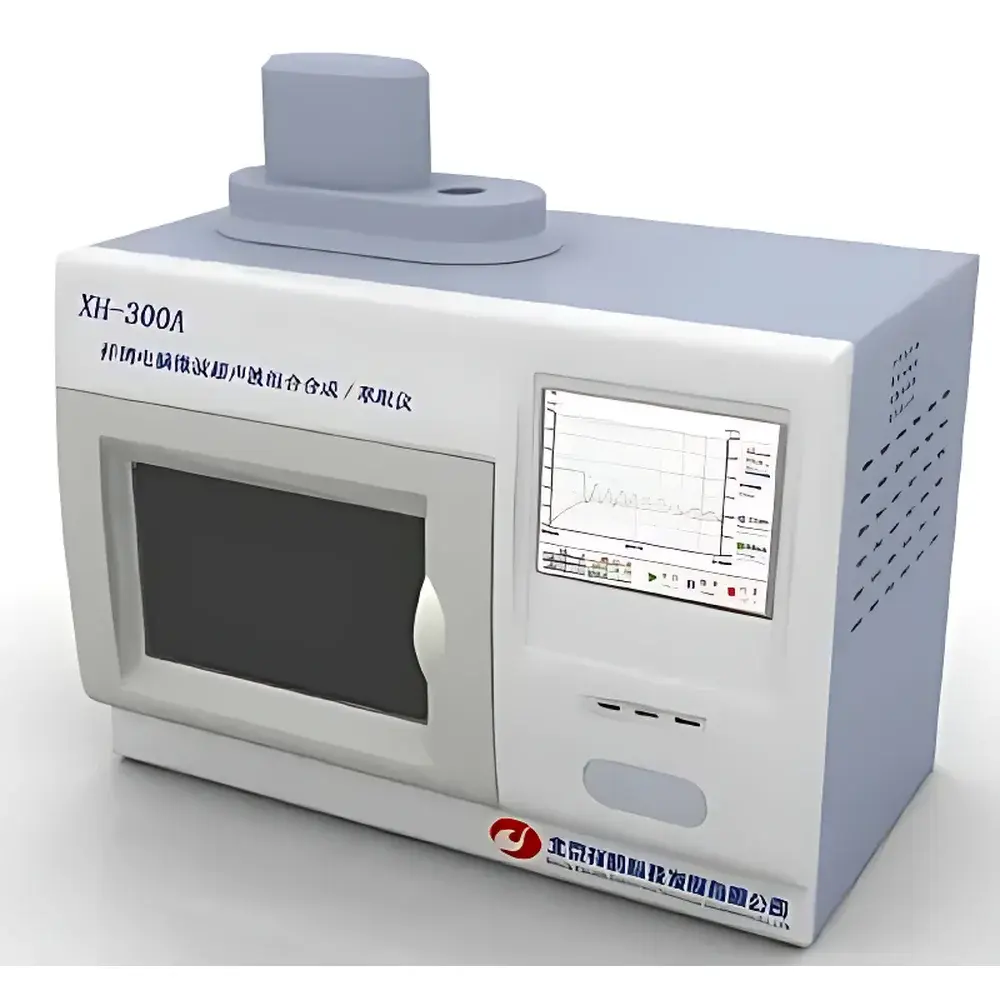
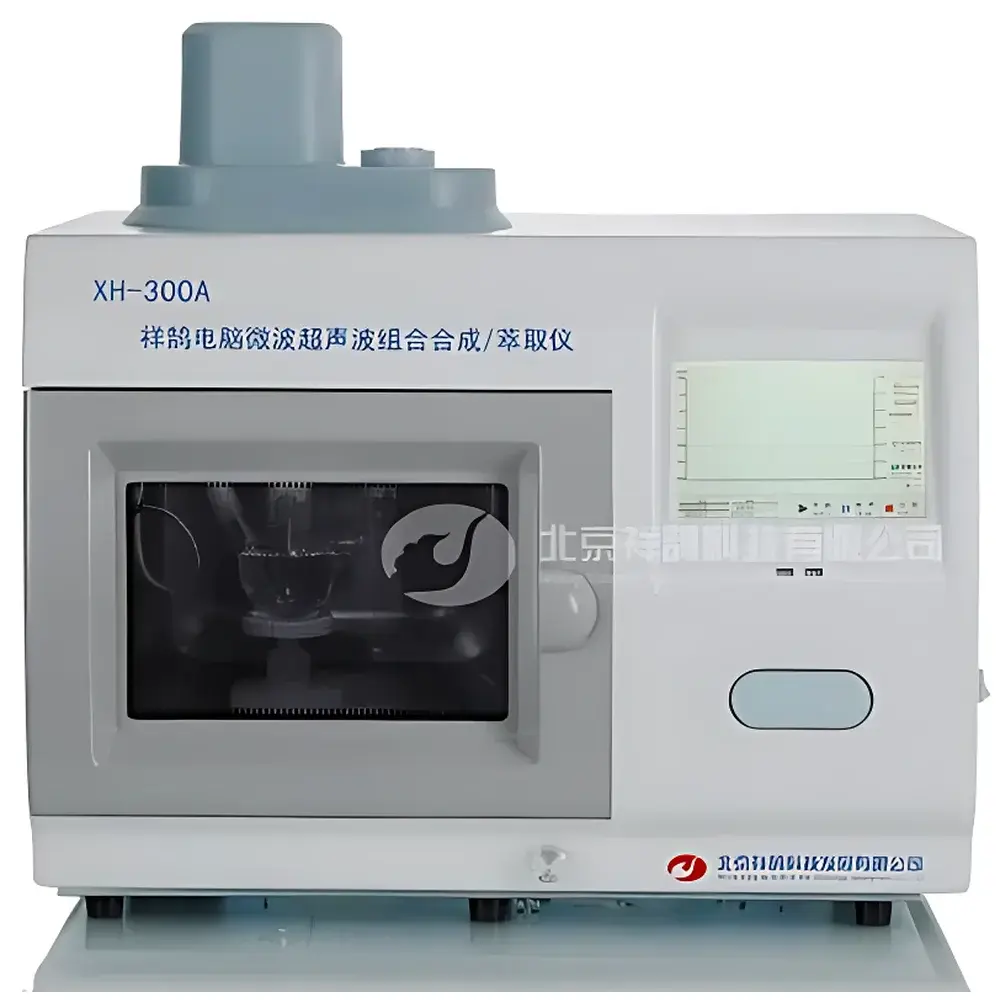
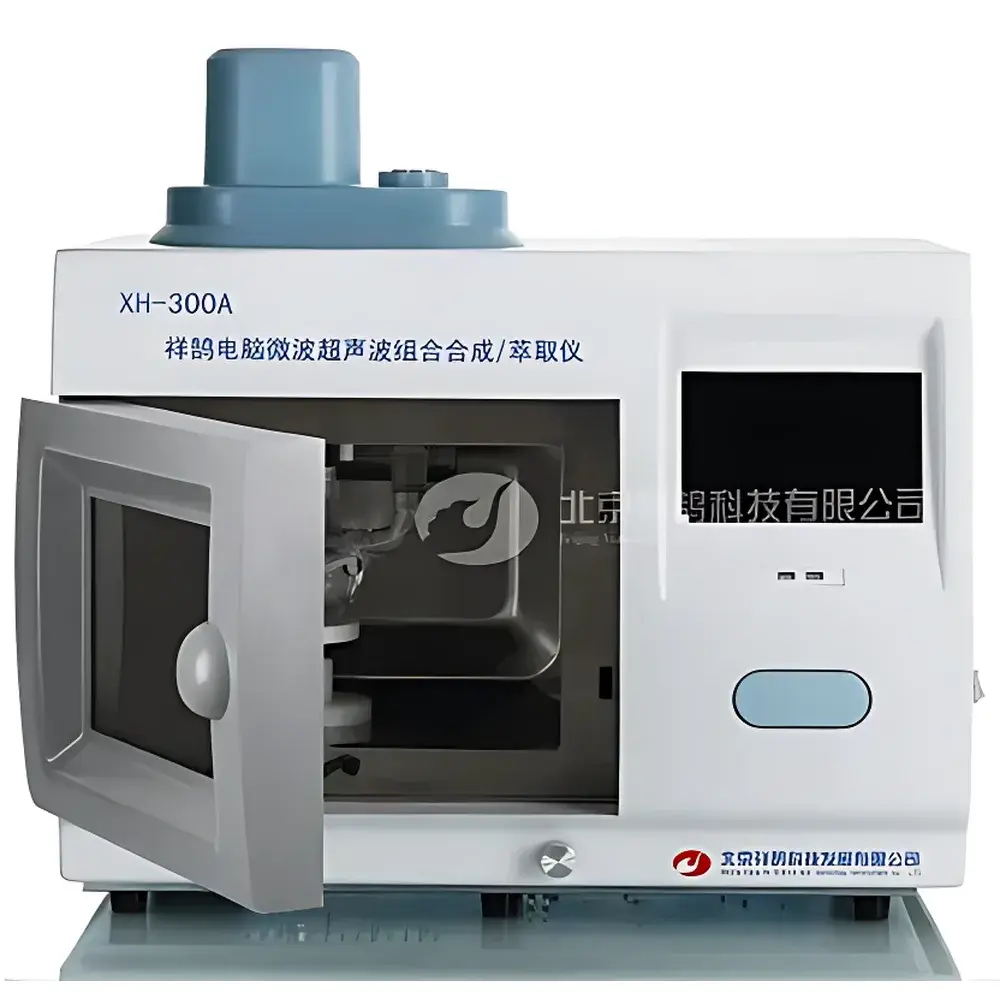
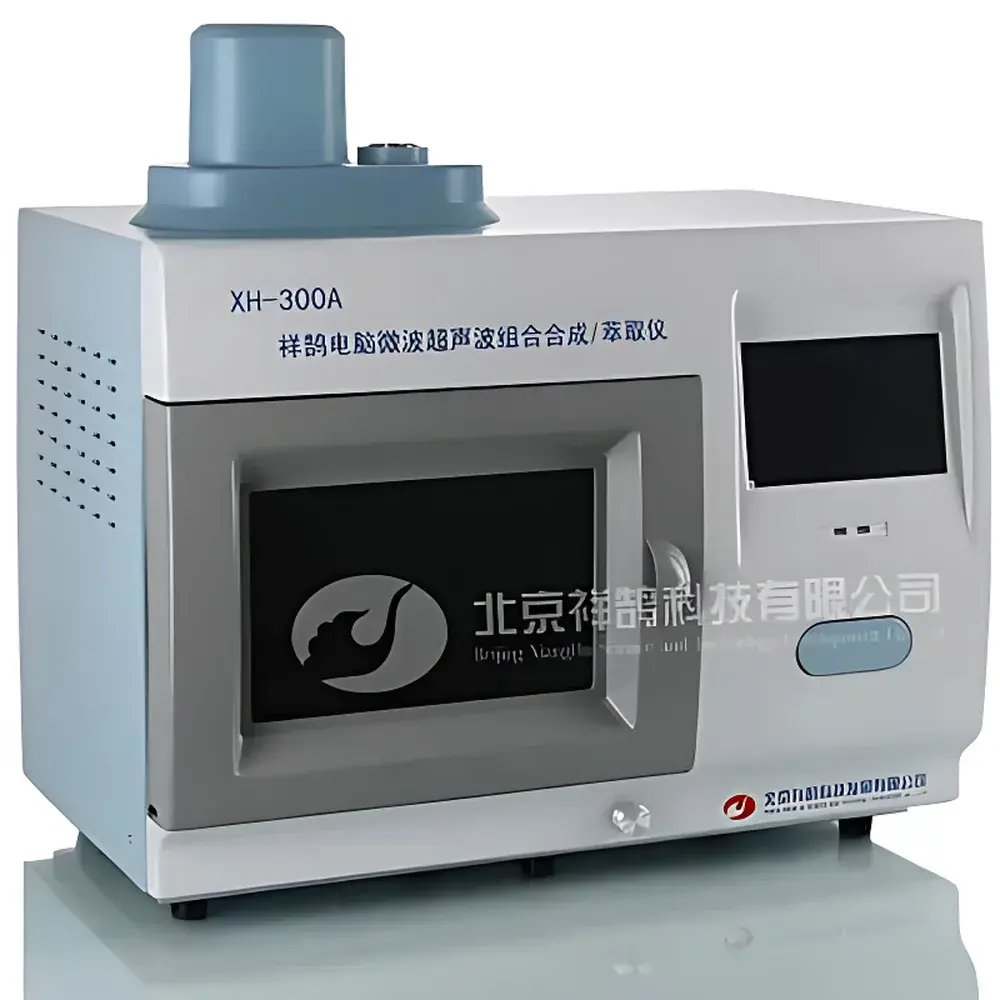
Xianghu XH-300A Computer-Controlled Microwave-Ultrasound Hybrid Synthesis and Extraction System
| Brand | Xianghu |
|---|---|
| Origin | Beijing, China |
| Manufacturer Type | Direct Manufacturer |
| Product Origin | Domestic (China) |
| Model | XH-300A |
| Temperature Range | 0–300 °C |
| Pressure Rating | 6 MPa |
| Microwave Power Output | 0–1000 W (continuously adjustable) |
| Magnetron Frequency | 2450 MHz |
| Ultrasonic Frequency | 25 kHz |
| Reaction Vessel Capacities | 100 mL, 250 mL, 500 mL |
| Cooling Method | Water-cooled ultrasonic probe |
| Control Architecture | 32-bit embedded multi-processor system |
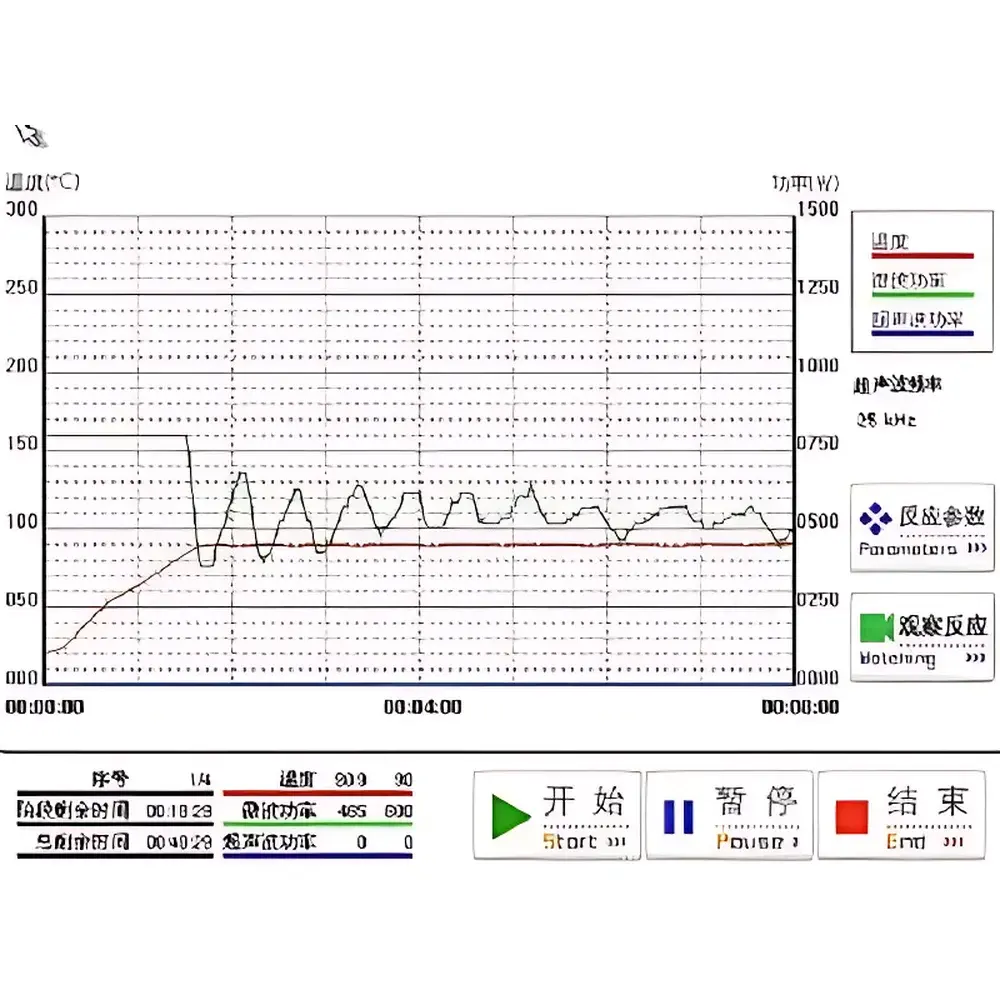
| Display | Color LCD touchscreen interface |
| Data Interface | USB (for mouse, flash storage, data export) |
| Real-time Monitoring | Integrated cavity-view video feed |
| Reaction Configuration | Open-system compatible with reflux accessories (condenser, dropping funnel) |
| Stirring | Magnetic stirring (microwave mode only) |
Overview
The Xianghu XH-300A Computer-Controlled Microwave-Ultrasound Hybrid Synthesis and Extraction System is an integrated laboratory platform engineered for precise, reproducible, and scalable chemical synthesis, catalytic reaction acceleration, and solvent-based extraction under controlled thermal, electromagnetic, and acoustic energy inputs. It operates on the synergistic principles of microwave dielectric heating—where polar molecules absorb 2450 MHz electromagnetic radiation to generate rapid, volumetric heating—and high-intensity ultrasonic cavitation—where 25 kHz acoustic waves induce transient microbubble formation, collapse, and localized extreme conditions (up to ~5000 K and ~1000 atm) at liquid-solid or liquid-liquid interfaces. This dual-energy coupling enables enhanced mass transfer, improved catalyst activation, reduced reaction times (often by 50–90% versus conventional heating), and higher product yields in heterogeneous catalysis, nanoparticle synthesis, natural product extraction, and green chemistry applications. Designed for research laboratories engaged in method development, process optimization, and regulatory-compliant small-scale synthesis, the XH-300A supports both closed-vessel high-pressure reactions (up to 6 MPa) and open-system reflux configurations.
Key Features
- Triple operational modes: microwave-only, ultrasound-only, and synchronized microwave-ultrasound co-irradiation—enabling systematic investigation of energy coupling effects.
- Water-cooled, high-power immersed ultrasonic transducer with automatic frequency tracking and three selectable pulse duty cycles (continuous, pulsed, burst) for optimized energy delivery across varying viscosities and sample volumes.
- Digitally regulated microwave output (0–1000 W, continuous fine adjustment) with real-time power feedback control to maintain setpoint accuracy within ±5 W under dynamic load conditions.
- Multi-sensor monitoring: PT100 temperature probe (±0.5 °C accuracy), pressure transducer (0–6 MPa, ±0.05 MPa), and real-time acoustic intensity estimation via transducer current/voltage signature analysis.
- Embedded 32-bit multi-processor architecture supporting simultaneous data logging at 1 Hz resolution—including temperature, pressure, microwave power, ultrasonic amplitude, and time-stamped video frames.
- 7-inch color TFT-LCD touchscreen with intuitive icon-driven UI; supports parameter presetting, profile-based program execution (up to 20 user-defined methods), and immediate context switching between trend graphs and live cavity video feed.
- USB host port for direct connection of external peripherals (mouse, keyboard) and portable storage devices—enabling secure, timestamped export of raw datasets (CSV), method files (.xhm), and synchronized video clips (AVI/H.264).
Sample Compatibility & Compliance
The XH-300A accommodates standard borosilicate glass and quartz reaction vessels (100 mL, 250 mL, 500 mL) and supports interchangeable ultrasonic probes (3–10 mm tip diameters) for tailored energy density delivery. Its open-system configuration permits integration of standard lab glassware—including Liebig condensers, addition funnels, gas inlet/outlet adapters, and inert gas purging lines—facilitating air-sensitive or exothermic reactions. All electronic subsystems comply with IEC 61000-6-3 (EMC emission limits) and IEC 61010-1 (safety requirements for laboratory equipment). While not certified for GMP production environments, its audit-ready data management features—including immutable timestamped logs, user-access controls, and method versioning—support GLP-aligned workflows and method validation per ISO/IEC 17025 requirements. The system meets ASTM E2877-13 guidelines for microwave-assisted reaction instrumentation qualification.
Software & Data Management
The onboard firmware implements a deterministic real-time operating system (RTOS) ensuring sub-millisecond response to sensor inputs and actuator commands. All experimental data—including scalar time-series (T, P, WMW, WUS) and synchronized video—are stored locally in non-volatile memory with cyclic overwrite protection. USB-exported datasets include full metadata headers (operator ID, vessel ID, calibration timestamps, firmware version) and conform to FAIR principles (Findable, Accessible, Interoperable, Reusable). Optional PC software (XH-DataLink v3.x, Windows 10/11) provides advanced visualization (multi-axis overlays, derivative analysis), statistical process control (SPC) charting, and export to LIMS-compatible formats (e.g., ASTM E1384-compliant XML). Audit trail functionality records all parameter modifications, method loads, and data exports with operator attribution and ISO 8601 timestamps—fully traceable for FDA 21 CFR Part 11 compliance when deployed with validated electronic signatures.
Applications
- Accelerated synthesis of metal–organic frameworks (MOFs), perovskites, and transition-metal nanocatalysts under controlled inert or reducing atmospheres.
- Ultrasound-enhanced leaching and microwave-assisted extraction (MAE) of bioactive compounds (polyphenols, alkaloids, terpenes) from plant matrices with >20% yield improvement versus Soxhlet.
- Kinetic studies of solid–liquid heterogeneous catalysis (e.g., Suzuki coupling, esterification) under simultaneous thermal and mechanical activation.
- Development of solvent-free or low-solvent green synthesis protocols compliant with ACS GCI Pharmaceutical Roundtable metrics.
- Method scouting for API crystallization, polymorph screening, and co-crystal formation where nucleation kinetics are modulated by acoustic cavitation.
- Validation of reaction scalability from mg- to g-scale prior to continuous-flow reactor implementation.
FAQ
What safety certifications does the XH-300A hold?
The instrument complies with IEC 61010-1 (2010) for electrical safety and IEC 61000-6-3:2019 for electromagnetic compatibility. It carries CE marking for the European Economic Area and CCC certification for domestic Chinese markets.
Can the system operate under inert gas or vacuum conditions?
Yes—the open-system design allows direct integration of Schlenk-line adapters, vacuum pumps, and gas regulators. Vessels are rated for operation up to 6 MPa positive pressure but are not designed for sustained vacuum below 10 mbar without supplemental sealing verification.
Is third-party software integration supported?
Raw data exports (CSV, XML) are fully schema-documented and compatible with MATLAB, Python (pandas), and commercial LIMS platforms. OPC UA or Modbus TCP interfaces are not natively available but may be implemented via optional RS-485 expansion module (XH-RS485-Kit).
How is ultrasonic energy calibrated and verified?
Calibration is performed using calorimetric measurement (ISO 20485:2020 Annex B) at 25 °C water load. Each probe undergoes factory calibration with certificate traceable to NIM (National Institute of Metrology, China); users may re-validate using supplied calorimetry kit (XH-CAL-25).
Does the system support remote monitoring or network connectivity?
No built-in Ethernet or Wi-Fi; remote access requires local PC tethering via USB or optional USB-to-Ethernet bridge. Cloud synchronization or IoT telemetry is not supported to preserve data sovereignty and cybersecurity integrity per institutional IT policies.



