
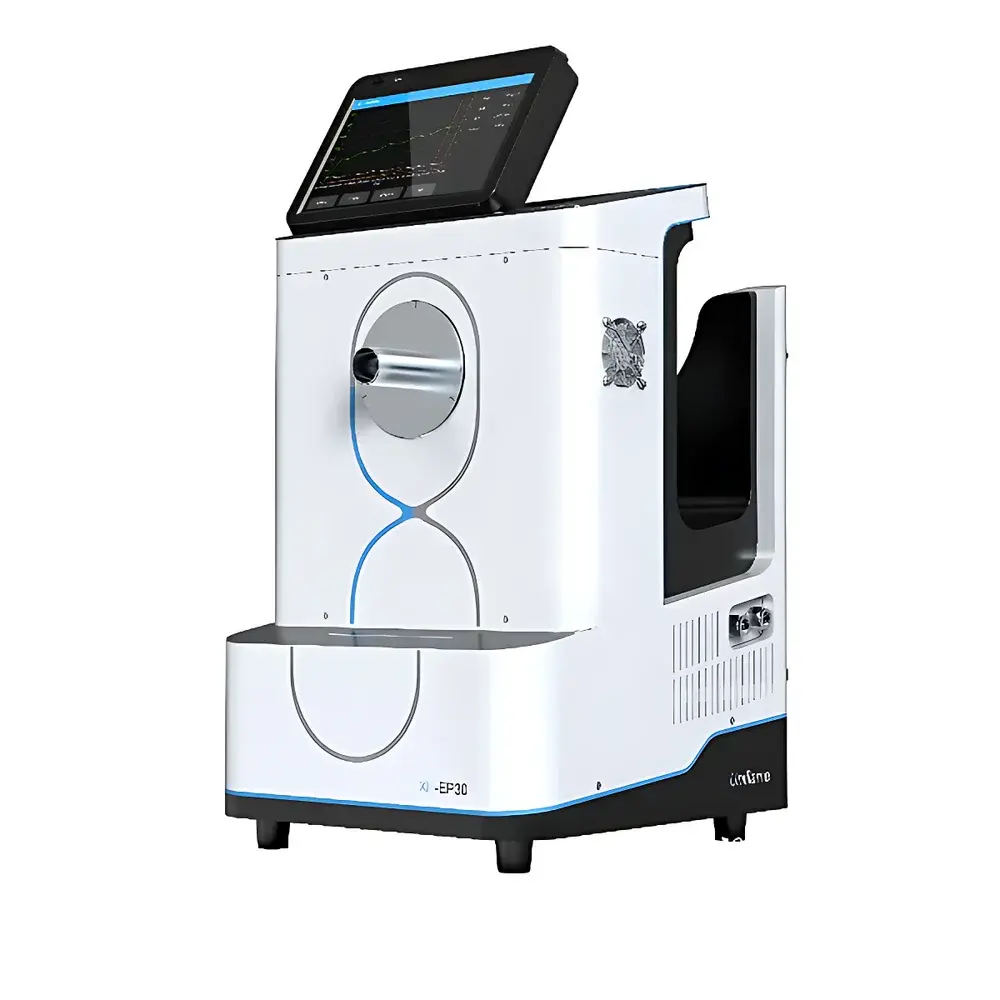
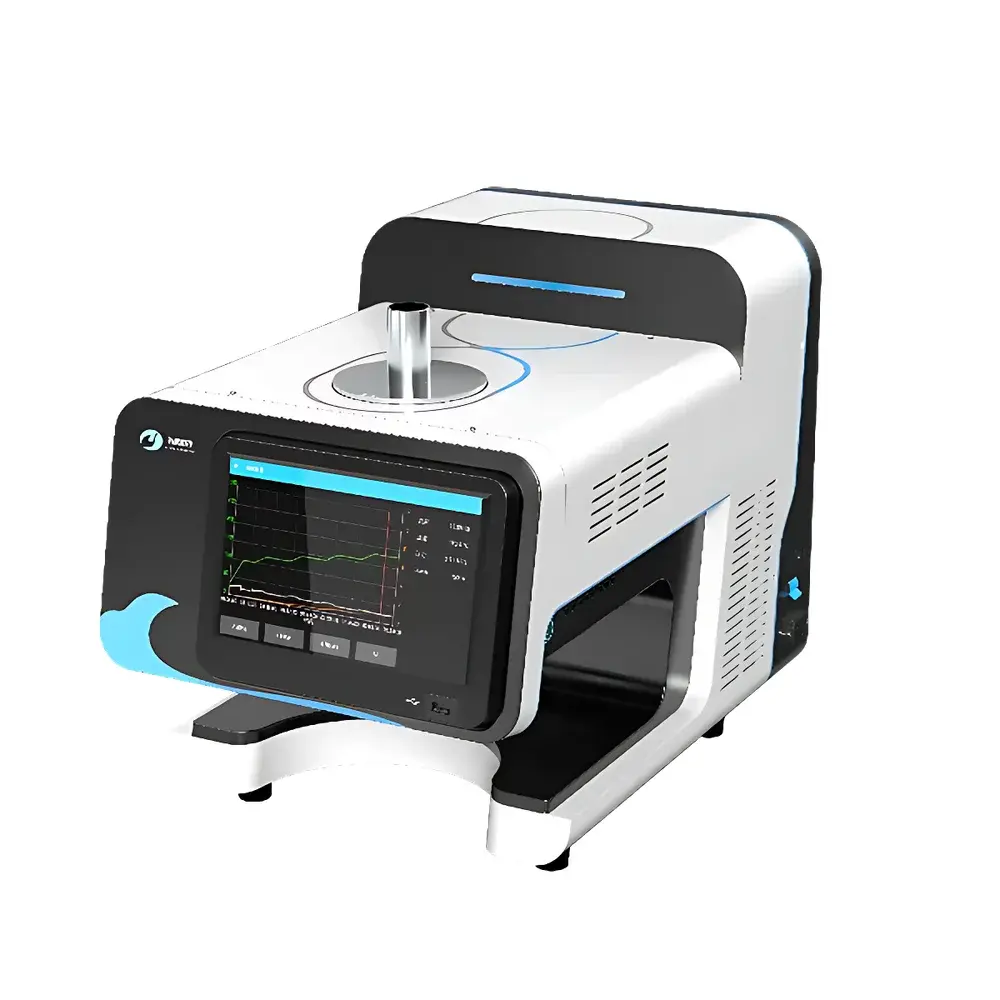
XH-EP30 Xianghu Multi-Mode Single-Mode Microwave Muffle Furnace
| Brand | Xianghu |
|---|---|
| Origin | Beijing, China |
| Manufacturer Type | Direct Manufacturer |
| Product Origin | Domestic (China) |
| Model | XH-EP30 |
| Price Range | USD 14,000–28,000 (FOB) |
| Max Temperature | 1550 °C (tube furnace mode: 1100 °C) |
| Temperature Control Accuracy | ±0.5% of setpoint or ±2 °C (whichever is greater) |
| Max Power Output | 900 W |
| Ramp Time to Max Temperature | ≤5 min |
| Heating Method | 2.45 GHz Monomode Microwave Energy Coupling |
| Control Modes | Independent Microwave Power Regulation + Programmable Temperature Profile Control |
| Tube Inner Diameter | 22 mm |
| Cooling Method | Forced-air convection with thermal cutoff protection |
Overview
The XH-EP30 Xianghu Multi-Mode Single-Mode Microwave Muffle Furnace is an engineered laboratory heating system designed for rapid, energy-efficient, and spatially selective thermal processing of small-volume samples under controlled inert or reactive atmospheres. Unlike conventional resistance-heated muffle furnaces that rely on conductive/convective heat transfer from external elements, the XH-EP30 employs a monomode 2.45 GHz microwave cavity optimized for precise field distribution—enabling direct volumetric coupling of electromagnetic energy into dielectrically lossy materials. This results in significantly reduced thermal lag, improved temperature homogeneity within the sample zone, and enhanced reproducibility in high-temperature synthesis, calcination, sintering, and thermal decomposition protocols. The furnace integrates dual operational modes: standard muffle configuration for open crucible work and optional tube-furnace configuration (with 22 mm ID quartz or alumina tubing) for atmosphere-controlled experiments up to 1100 °C. Its compact footprint and modular architecture support integration into glovebox systems or fume hood environments.
Key Features
- Monomode microwave cavity with tunable coupling efficiency—ensures stable standing-wave pattern and repeatable energy delivery across temperature ranges up to 1550 °C
- Dual-control interface enabling simultaneous real-time adjustment of microwave power (0–900 W) and target temperature setpoint (RT to 1550 °C)
- Pt100 thermocouple-based closed-loop temperature feedback with ±0.5% full-scale accuracy or ±2 °C absolute tolerance, validated per IEC 60584-2
- Programmable ramp-hold profiles supporting up to 10 segments, with independent dwell time and rate definition per segment
- Forced-air cooling system with overtemperature cutoff (≥1600 °C) and interlocked door safety switch compliant with EN 61000-6-4 EMC requirements
- Front-panel touchscreen interface with USB data export and optional RS485 Modbus RTU protocol for SCADA integration
Sample Compatibility & Compliance
The XH-EP30 accommodates standard ceramic crucibles (Al₂O₃, ZrO₂), graphite susceptors, and quartz or high-purity alumina tubes (22 mm ID). It supports sample masses up to 15 g in muffle mode and ≤5 g in tube mode, depending on material dielectric loss tangent (tan δ) and thermal conductivity. The furnace meets CE marking requirements for laboratory electrical equipment (EN 61010-1:2019) and conforms to ISO/IEC 17025:2017 guidelines for calibration traceability of temperature sensors. Optional gas inlet ports (N₂, Ar, air) enable operation under inert or oxidizing conditions, facilitating compliance with ASTM C1171 (ceramic sintering), ISO 11358 (thermal degradation analysis), and USP (residue on ignition) methodologies.
Software & Data Management
The embedded firmware records timestamped temperature, applied microwave power, and cavity reflection coefficient (S₁₁) at user-defined intervals (1–60 s). Data logs are stored internally (≥10,000 points) and exportable as CSV via USB flash drive. For regulated environments, optional PC-based software provides 21 CFR Part 11-compliant audit trails—including operator login tracking, parameter change history, electronic signatures, and immutable log archiving. All calibration certificates (temperature sensor, power meter) are supplied with NIST-traceable documentation, supporting GLP/GMP audit readiness.
Applications
- Rapid synthesis of metal oxides, phosphors, and battery cathode precursors (e.g., LiCoO₂, Ni-rich NMC)
- Controlled pyrolysis of polymer-derived ceramics and carbonaceous frameworks
- Thermal gravimetric analysis (TGA) pre-treatment steps requiring sub-minute ramp rates
- Low-thermal-mass ashing of biological tissues and pharmaceutical excipients per AOAC 990.18
- In-situ activation of heterogeneous catalysts under reducing or inert atmospheres
- Material phase transformation studies where microwave-specific non-thermal effects require isolation from conventional heating artifacts
FAQ
What distinguishes monomode microwave heating from multimode in this furnace?
Monomode operation confines microwaves to a single resonant mode (TE₁₀), generating a predictable, stationary electric field maximum—ideal for reproducible localized heating of small samples. Multimode cavities produce chaotic field patterns prone to hot/cold spots.
Can the XH-EP30 be used for vacuum applications?
No—this model is not rated for vacuum operation. It is designed for ambient pressure or positive-pressure inert gas flow only. Vacuum-compatible variants require reinforced waveguide feedthroughs and specialized sealing.
Is third-party calibration support available?
Yes—Xianghu provides factory calibration services traceable to CNAS-accredited laboratories; users may also engage ISO/IEC 17025-certified metrology providers using the documented sensor specifications and mounting geometry.
Does the furnace comply with FDA or EU regulatory requirements for pharmaceutical R&D?
While not a GMP production device, its data integrity features, audit trail capability, and calibration traceability meet foundational expectations for Stage 1–2 pharmaceutical process development under ICH Q5A and Q5C guidelines.
What maintenance is required for long-term microwave performance?
Annual inspection of waveguide gasket integrity, magnetron output verification (using calibrated power meter), and cavity wall oxidation assessment are recommended. No routine magnetron replacement is needed below 5,000 operating hours.



