
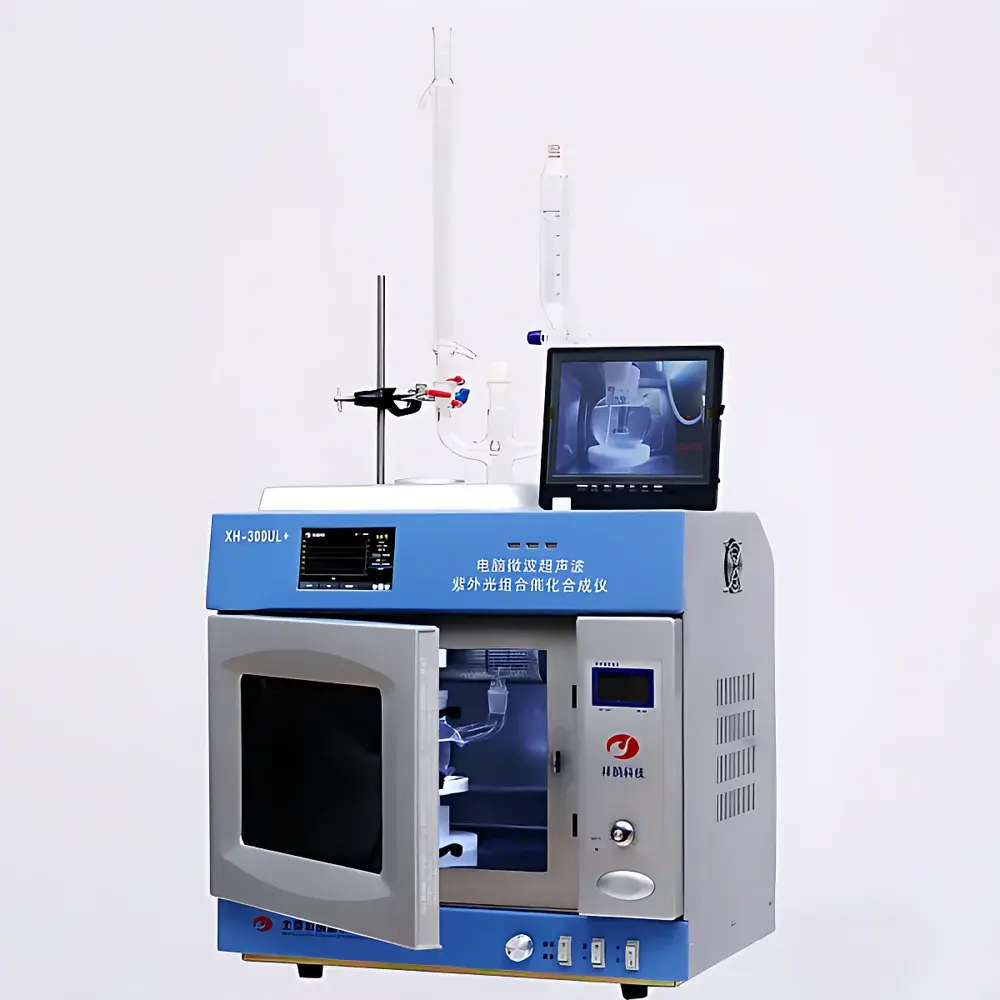
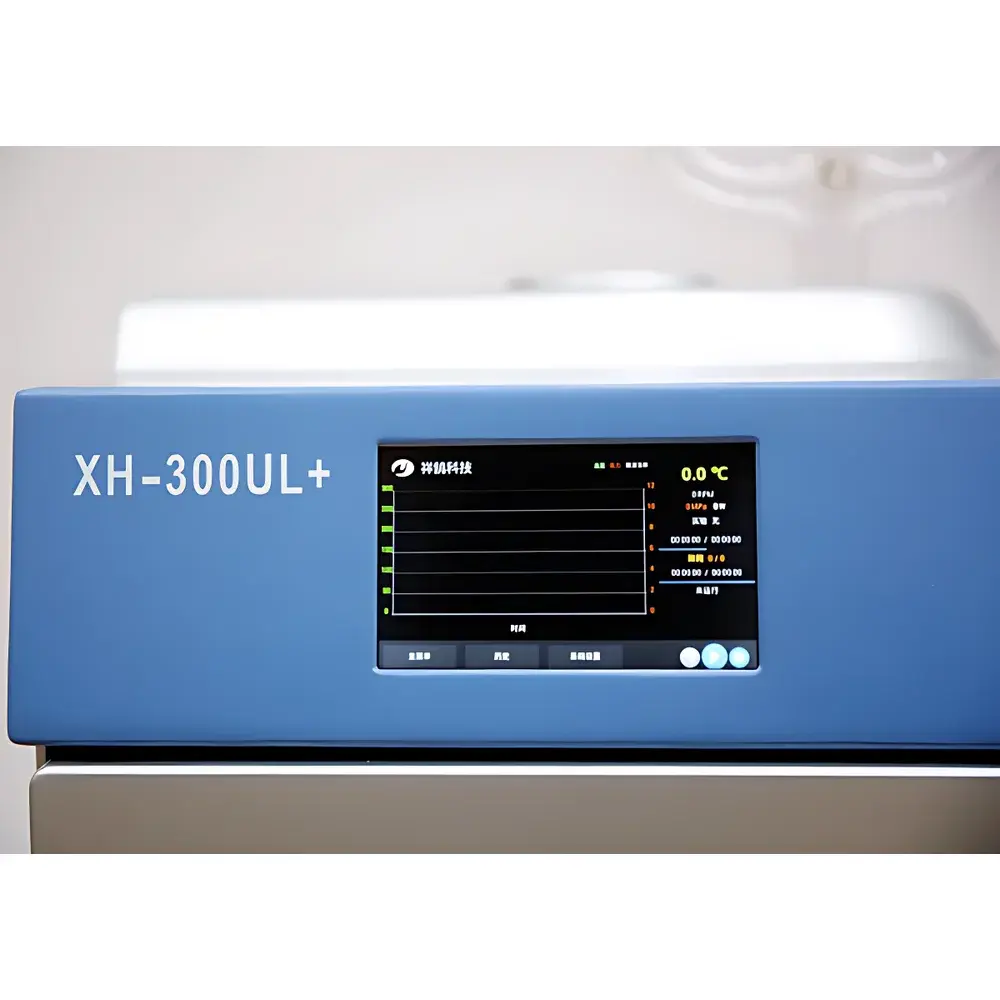
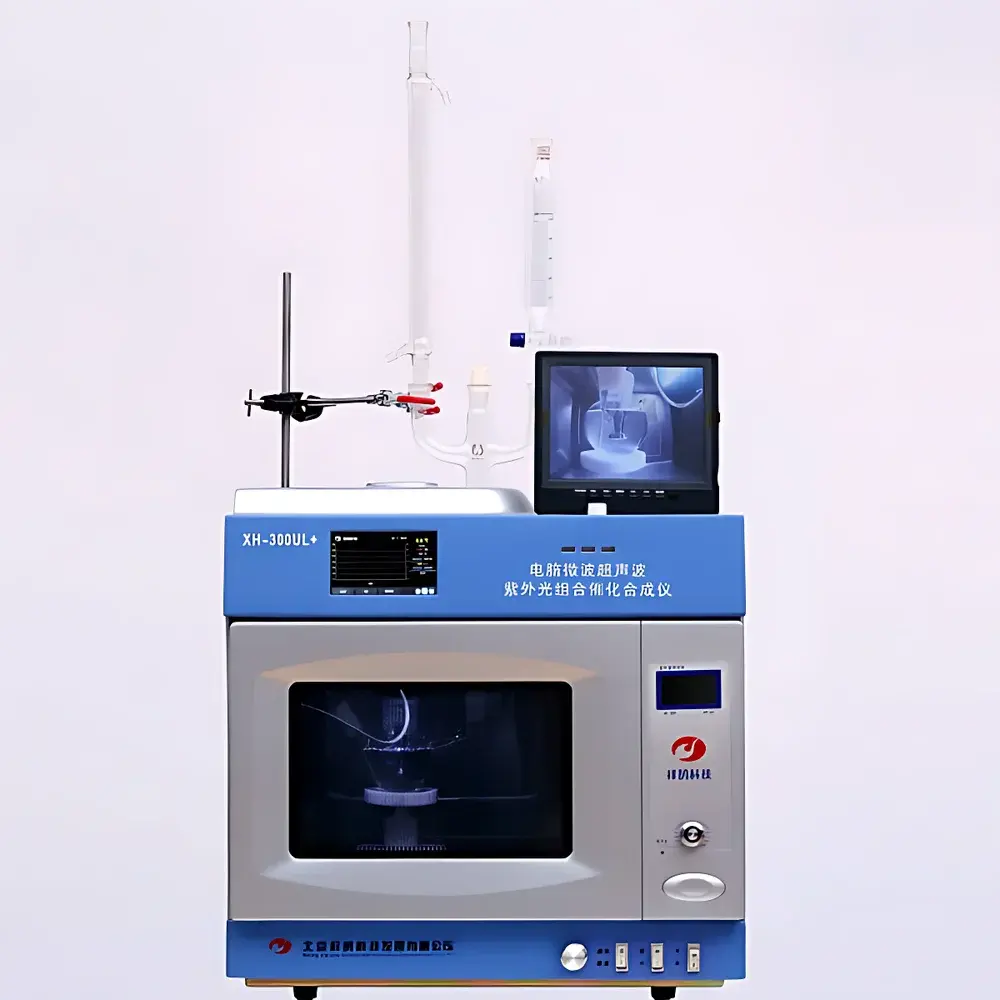
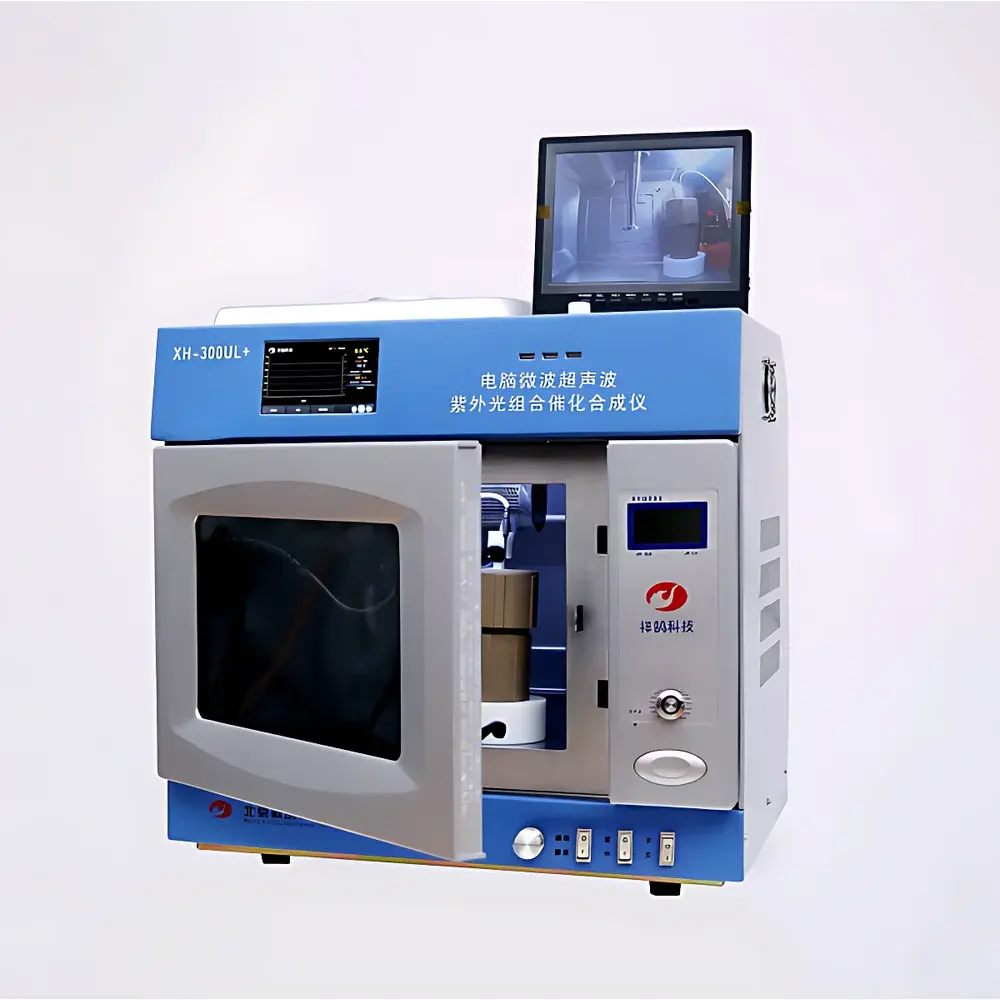
Xianghu XH-300UL+ Multi-Mode Catalytic Synthesis System with Microwave, Ultrasonic, UV Irradiation and Hydrothermal Capabilities
| Brand | Xianghu |
|---|---|
| Origin | Beijing, China |
| Manufacturer Type | Direct Manufacturer |
| Regional Category | Domestic (China) |
| Model | XH-300UL+ |
| Temperature Range | 0–260 °C |
| Pressure Range | 0–6 MPa |
| Microwave Power Output | 0–1500 W (continuously adjustable) |
| Magnetron Frequency | 25 ± 1 kHz |
| Stirring Method | Magnetic Stirring |
| Reaction Vessel Capacity | 100–500 mL |
Overview
The Xianghu XH-300UL+ Multi-Mode Catalytic Synthesis System is an integrated laboratory platform engineered for advanced reaction methodology development in synthetic chemistry, materials science, and catalysis research. It uniquely combines four distinct energy-input modalities—microwave irradiation, ultrasonic cavitation, ultraviolet (UV) photochemical excitation, and controlled hydrothermal conditions—within a single, unified instrument architecture. Unlike conventional single-mode reactors, the XH-300UL+ enables precise, independent or synergistic activation of chemical transformations through simultaneous or sequential application of these physical stimuli. Its core operating principle leverages dielectric heating (microwave), acoustic cavitation-induced localized hotspots and radical generation (ultrasound), photolytic bond cleavage and excited-state reactivity (UV at 365 nm standard wavelength), and high-pressure/temperature solvothermal environments (hydrothermal mode). This multi-physical-field approach significantly expands accessible reaction pathways, enhances kinetic rates, improves selectivity, and facilitates access to metastable or thermodynamically disfavored products under reproducible, instrument-monitored conditions.
Key Features
- Four independent yet interoperable activation modules: microwave (0–1500 W, 25 ± 1 kHz), ultrasonic (40 kHz transducer, adjustable amplitude), UV irradiation (365 nm LED array, optional 254 nm), and hydrothermal (pressure- and temperature-regulated sealed vessel system)
- Intelligent control system with real-time monitoring of temperature (fiber-optic probe), pressure (piezoresistive sensor), microwave power, and reaction time; supports programmable ramp-hold profiles including rate-controlled heating (e.g., 1–10 °C/min)
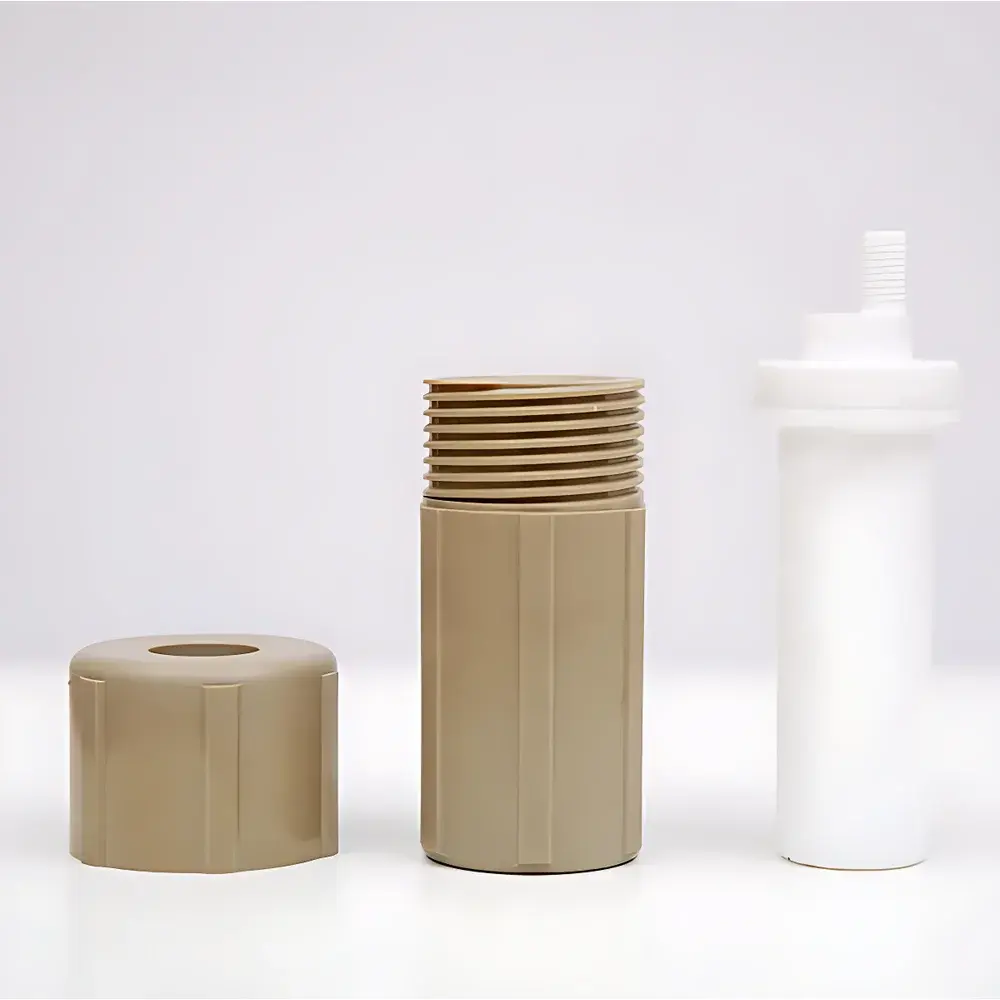
- Standard configuration includes three 100 mL hydrothermal autoclaves rated to 6 MPa; optional 250 mL (4 MPa) or 500 mL (2 MPa) vessels available for scalable synthesis
- Magnetic stirring integrated across all operational modes to ensure homogeneous mixing and thermal uniformity, critical for reproducible heterogeneous catalysis and nanoparticle synthesis
- Robust stainless-steel cavity with electromagnetic shielding, corrosion-resistant reaction chamber, and safety interlocks compliant with IEC 61000-4 electromagnetic compatibility standards
- Modular design permits standalone use of any single function (e.g., microwave-only digestion) or combinatorial protocols (e.g., UV-assisted photocatalytic oxidation under microwave-enhanced hydrothermal conditions)
Sample Compatibility & Compliance
The XH-300UL+ accommodates a broad spectrum of sample types—including organic/inorganic precursors, metal-organic frameworks (MOFs), colloidal dispersions, solid catalysts, and biological macromolecules—within chemically resistant PTFE- or quartz-lined vessels. All pressure-rated components conform to GB/T 150 (Chinese National Standard equivalent to ASME BPVC Section VIII Div. 1 for pressure equipment). The system supports GLP-compliant operation via timestamped parameter logging and user-accessible audit trails. While not FDA 21 CFR Part 11-certified out-of-the-box, its data export functionality (CSV, PDF reports) and password-protected method storage enable integration into validated laboratory workflows adhering to ISO/IEC 17025 and ASTM E2500-21 guidelines for equipment qualification.
Software & Data Management
Control and data acquisition are managed via a Windows-based desktop application featuring intuitive graphical interface, multi-step protocol programming, and real-time curve visualization (temperature vs. time, pressure vs. time, power vs. time). Raw sensor data are logged at ≥1 Hz resolution and stored locally with metadata (user ID, method name, timestamp, vessel ID). Export options include tab-delimited text, Excel-compatible .csv, and printable PDF summaries with embedded calibration certificates. Remote monitoring is supported via Ethernet connection; however, cloud synchronization or API integration is not implemented. All software binaries undergo SHA-256 integrity verification prior to installation, and firmware updates retain backward compatibility with legacy XH-300UL method files.
Applications
- Synthesis of nanomaterials (e.g., TiO₂, ZnO, g-C₃N₄) via rapid solvothermal crystallization under microwave-activated nucleation
- Photocatalytic degradation studies combining UV excitation with ultrasound-enhanced mass transfer and microwave-accelerated radical generation
- Green chemistry applications: solvent-free or low-solvent esterifications, Suzuki couplings, and heterocycle formations enabled by synergistic microwave–ultrasound activation
- Hydrothermal carbonization (HTC) of biomass feedstocks under controlled pressure–temperature trajectories for functional carbon material production
- Accelerated aging tests and stability screening of pharmaceutical intermediates under combined thermal–photo–mechanical stress conditions
- Development of novel co-catalytic systems where UV-generated electron–hole pairs are stabilized by microwave-heated support matrices
FAQ
What safety certifications does the XH-300UL+ hold?
The system complies with GB 4793.1 (equivalent to IEC 61010-1) for electrical safety and GB/T 18268.1 for EMC. Pressure vessels meet GB/T 150 requirements; full CE marking is not applicable as it is classified as a research-grade instrument not intended for EU commercial distribution.
Can third-party reaction vessels be used?
Only Xianghu-certified vessels with verified pressure ratings and dimensional tolerances are supported. Use of non-OEM vessels voids pressure safety warranty and may compromise temperature uniformity and microwave coupling efficiency.
Is the UV source intensity calibrated and traceable?
The 365 nm LED array is factory-calibrated against NIST-traceable radiometers; calibration certificates are provided with each unit. Intensity degrades <5% per 5,000 hours of operation under nominal current.
How is temperature measured during microwave irradiation?
A fiber-optic temperature probe (FOT) is employed—immune to electromagnetic interference—providing direct, contact-based measurement inside the reaction vessel with ±0.5 °C accuracy from 0 to 260 °C.
Does the system support automated reagent addition or gas purging?
No. The XH-300UL+ is designed as a closed-vessel batch reactor. Liquid/gas handling requires manual pre-loading or external manifold integration, which is not natively supported.



