
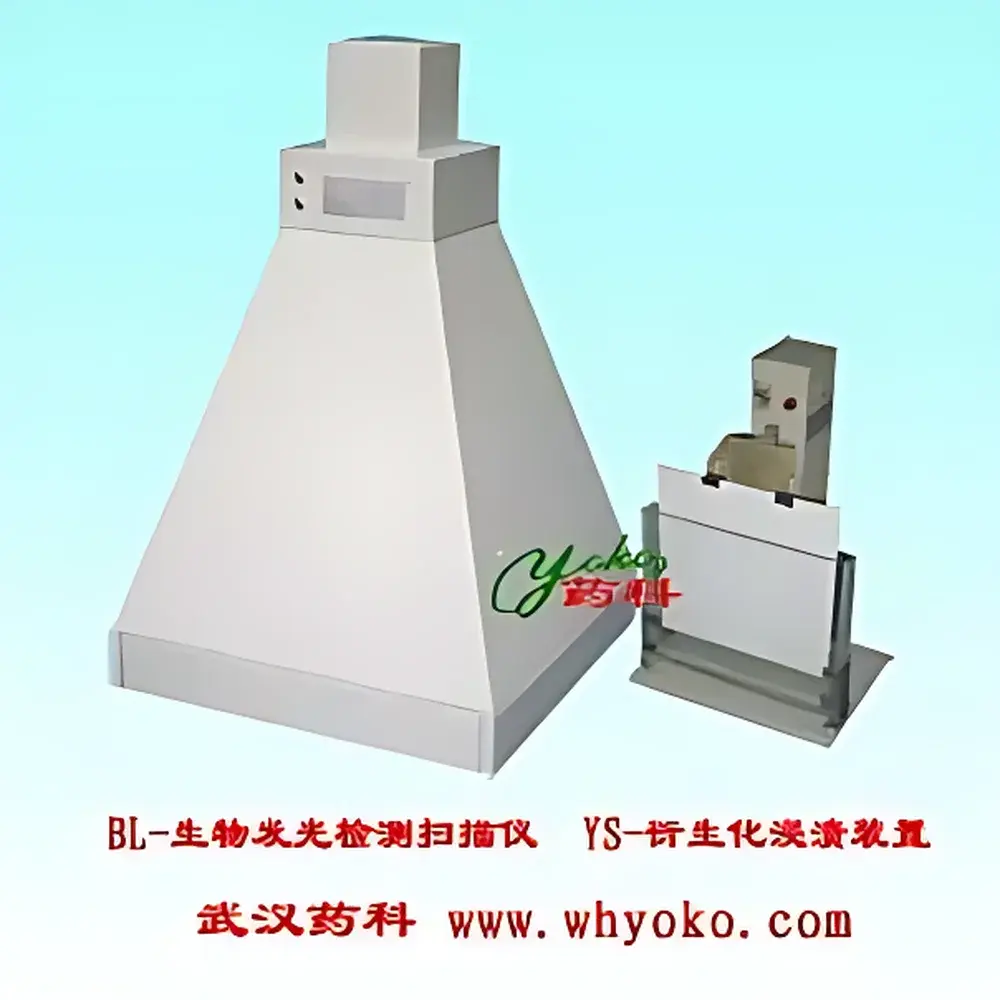
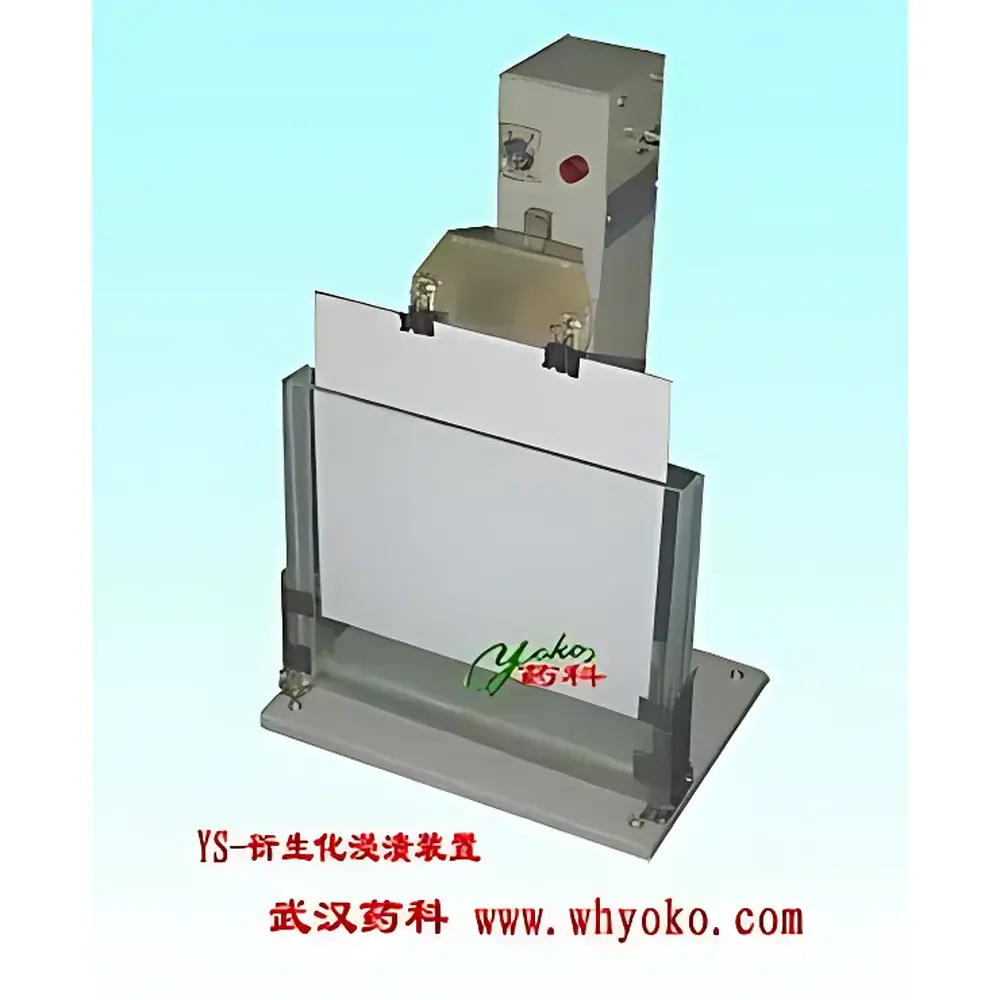
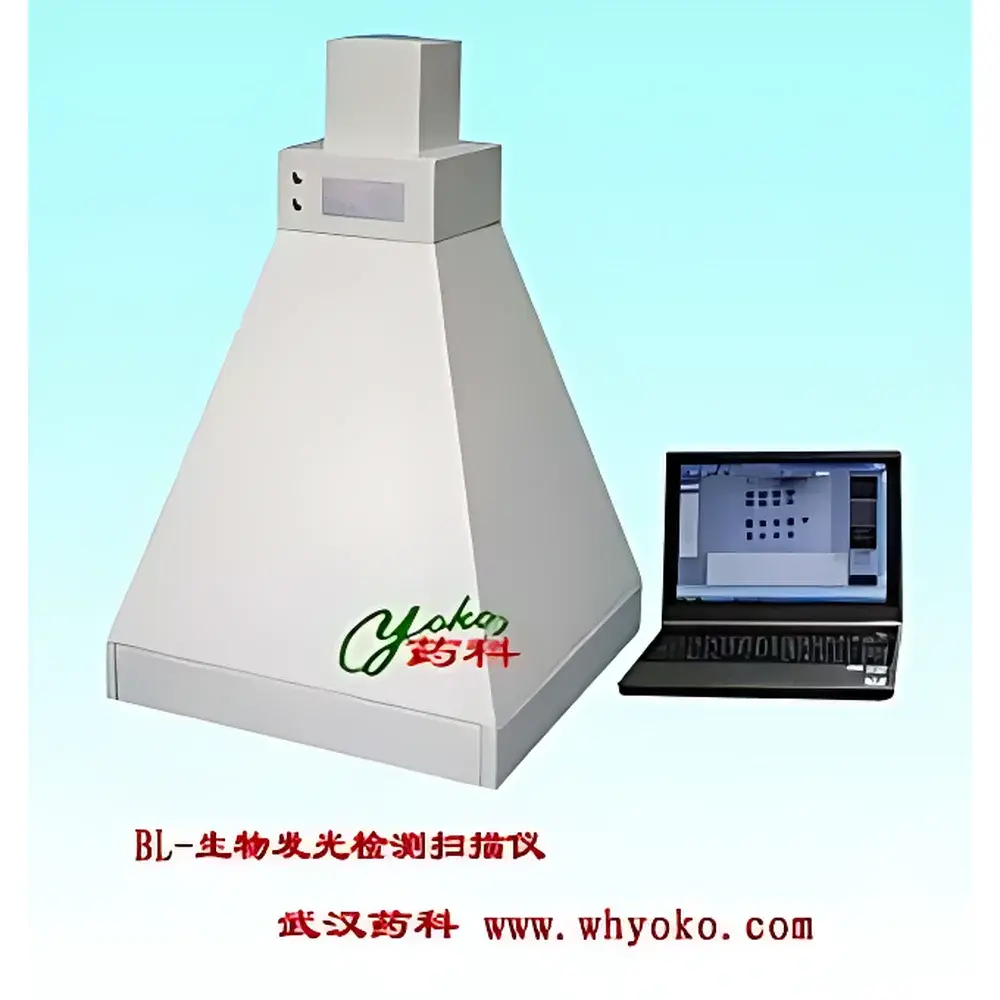
whYOKO BL+YS Bio-Luminescence TLC Scanner with Automated Immersion Derivatizer
| Brand | whYOKO |
|---|---|
| Origin | Hubei, China |
| Model | BL+YS |
| Instrument Type | Thin-Layer Chromatography (TLC) Densitometer with Bio-Luminescence Detection and Integrated Immersion Derivatization System |
| Detector Principle | Bioluminescent Inhibition Assay (BIA) |
| Maximum Plate Size | 200 mm × 200 mm |
| Scanning Modes | Linear scan, Multi-channel simultaneous acquisition |
| Detection Sensor | High-quantum-efficiency CCD with cooled imaging architecture |
| Derivatization Method | Vertical immersion (non-aerosol, contact-based) |
| Immersion Speed | 40 mm/s (adjustable vertical actuation) |
| Immersion Duration | 1–60 s (programmable in 0.1 s increments) |
| Plate Height Compatibility | 100 mm and 200 mm formats |
| Pre-wash Function | Supported via immersion cylinder |
| Derivatization Chamber | Sintered stainless-steel immersion tank (200 mm × 200 mm × 50 mm depth) |
| Software Platform | whYOKO TLC-Densitometry Suite v3.x (Windows 10/11 compatible) |
| Quantitation Algorithms | Normalization, internal standard, external standard |
| Data Storage | Unlimited spectral archives with metadata tagging (ISO/IEC 17025-compliant file structure) |
| Regulatory Compliance | Supports audit trail, user access levels, electronic signature (FDA 21 CFR Part 11 ready mode) |
Overview
The whYOKO BL+YS Bio-Luminescence TLC Scanner with Integrated Automated Immersion Derivatizer is a dedicated analytical platform engineered for high-sensitivity detection of biologically active compounds—particularly cytotoxic, antimicrobial, or enzyme-inhibitory substances—via bioluminescent inhibition assay (BIA). Unlike conventional UV or fluorescence densitometers, this system leverages the metabolic response of luminous bacteria (e.g., Aliivibrio fischeri) immobilized on thin-layer chromatograms. Following separation by TLC, plates are uniformly immersed in a standardized bacterial suspension; viable cells emit visible light (λmax ≈ 490 nm) under physiological conditions. Compounds exhibiting biological activity suppress cellular respiration or ATP synthesis, resulting in localized luminescence quenching—visualized as dark zones against a uniform bioluminescent background. The BL+YS captures these spatially resolved inhibition patterns using a thermoelectrically cooled, high-quantum-efficiency CCD detector (peak QE > 85% at 490 nm), enabling quantitative densitometric analysis without radioactive or enzymatic labeling.
Key Features
- Integrated dual-module architecture: Synchronized operation between immersion derivatization and bioluminescence scanning minimizes manual handling and cross-contamination risk.
- Vertical immersion mechanism with programmable speed (40 mm/s) and dwell time (1–60 s), ensuring reproducible reagent contact across 100 mm and 200 mm plate formats.
- Cooled CCD detector with 16-bit dynamic range and pixel resolution ≤ 20 µm, optimized for low-light bioluminescent signal capture under ambient-dark conditions.
- Sintered stainless-steel immersion tank (200 × 200 × 50 mm) resistant to organic solvents and compatible with aqueous bacterial suspensions; designed for easy drainage and cleaning at ≤50 °C.
- whYOKO TLC-Densitometry Suite v3.x provides real-time preview, multi-channel overlay, and compliance-ready data management—including timestamped acquisition logs, operator ID tagging, and encrypted database archiving.
Sample Compatibility & Compliance
The BL+YS supports silica gel, aluminum oxide, cellulose, and RP-18 TLC plates (pre-coated or self-prepared), including HPTLC plates up to 200 mm × 200 mm. It accommodates both solvent-based and aqueous derivatization protocols, with particular suitability for microbial inhibition assays per ISO 11348-3 (water quality—determination of the inhibitory effect of water samples on the light emission of Vibrio fischeri). All software operations comply with ALCOA+ principles (Attributable, Legible, Contemporaneous, Original, Accurate, Complete, Consistent, Enduring, Available); audit trails meet FDA 21 CFR Part 11 requirements when configured with role-based authentication and digital signature modules. The immersion-only derivatization method eliminates aerosol generation, aligning with OSHA hazard communication standards (29 CFR 1910.1200) and reducing exposure to volatile reagents.
Software & Data Management
The whYOKO TLC-Densitometry Suite enables full workflow control—from plate calibration and background subtraction to peak integration, baseline correction, and relative quantitation. Raw image files (.TIFF, 16-bit) retain full photon-count metadata. Quantitative outputs include inhibition zone area (mm²), relative intensity ratio (% RLU), and IC50 estimation via dose-response curve fitting. Databases support hierarchical tagging (sample batch, analyst, date, plate lot) and export to CSV, Excel, or LIMS-compatible XML. Electronic signatures, session locking, and immutable audit logs are configurable to support GLP and GMP environments.
Applications
- Rapid screening of natural product extracts for antimicrobial or cytostatic activity.
- Quality control of pharmaceutical intermediates where biological impurities must be detected below UV-detectable thresholds.
- Environmental monitoring of toxicants in wastewater or soil leachates using standardized bioluminescent bioassays.
- Method development for hyphenated techniques—e.g., coupling with HPTLC–bioautography followed by MALDI-TOF MS identification of active bands.
- Educational use in analytical chemistry and toxicology laboratories for teaching non-instrumental bioassay principles.
FAQ
What biological indicators are compatible with the BL+YS system?
Standardized suspensions of Aliivibrio fischeri, Vibrio harveyi, or freeze-dried Photobacterium phosphoreum kits may be used; viability must be confirmed prior to immersion.
Can the immersion tank be sterilized between runs?
Yes—autoclaving is not recommended due to thermal limits of sintered metal seals; instead, rinse with 70% ethanol followed by sterile deionized water and UV irradiation in a biosafety cabinet.
Is external calibration required for quantitative inhibition analysis?
No—built-in reference standards (e.g., mitomycin C or chloramphenicol gradients) enable semi-quantitative IC50 estimation; absolute quantification requires parallel LC-MS validation.
Does the system support multi-plate sequential processing?
Manual plate loading is required per run; however, batch scripting in the software allows queued acquisition of up to 12 plates with pre-defined parameters.
How is data integrity ensured during long-term archival?
All raw images and processed results are stored with SHA-256 checksums; database backups include version-controlled schema migration and rollback capability.






