
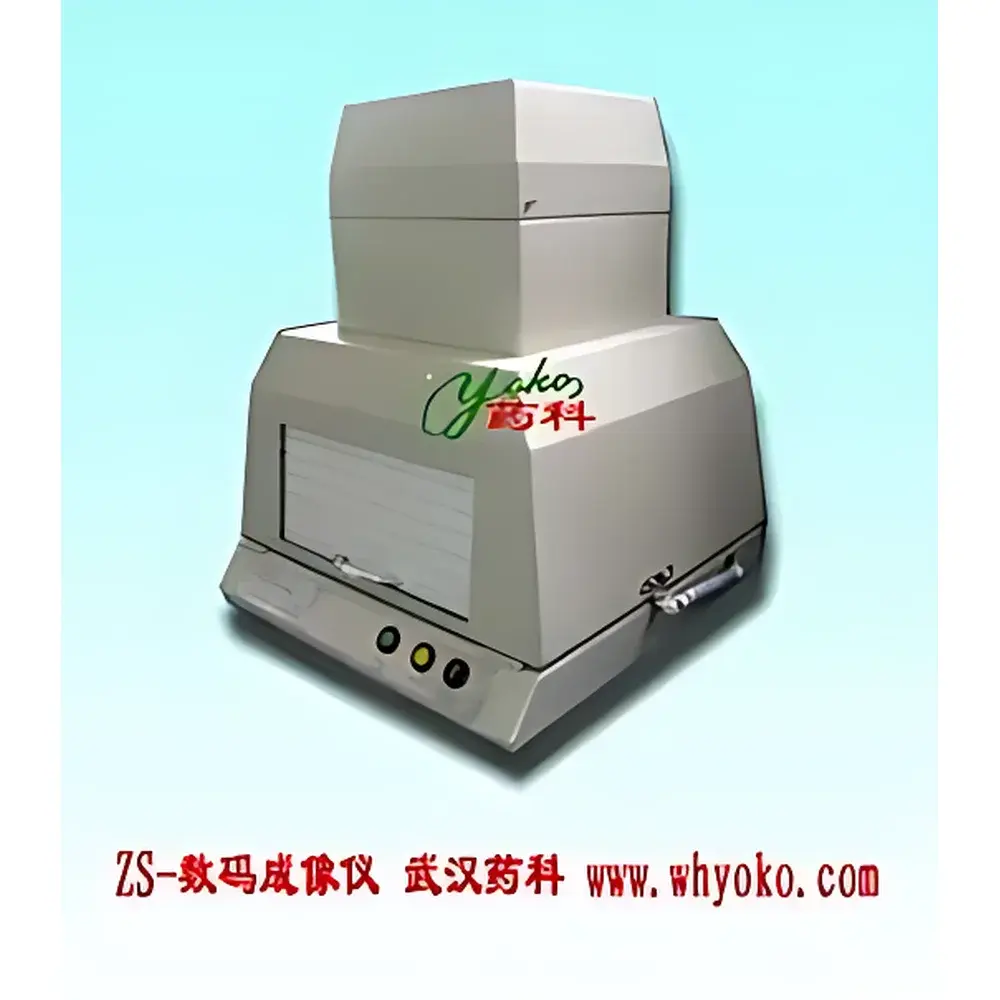
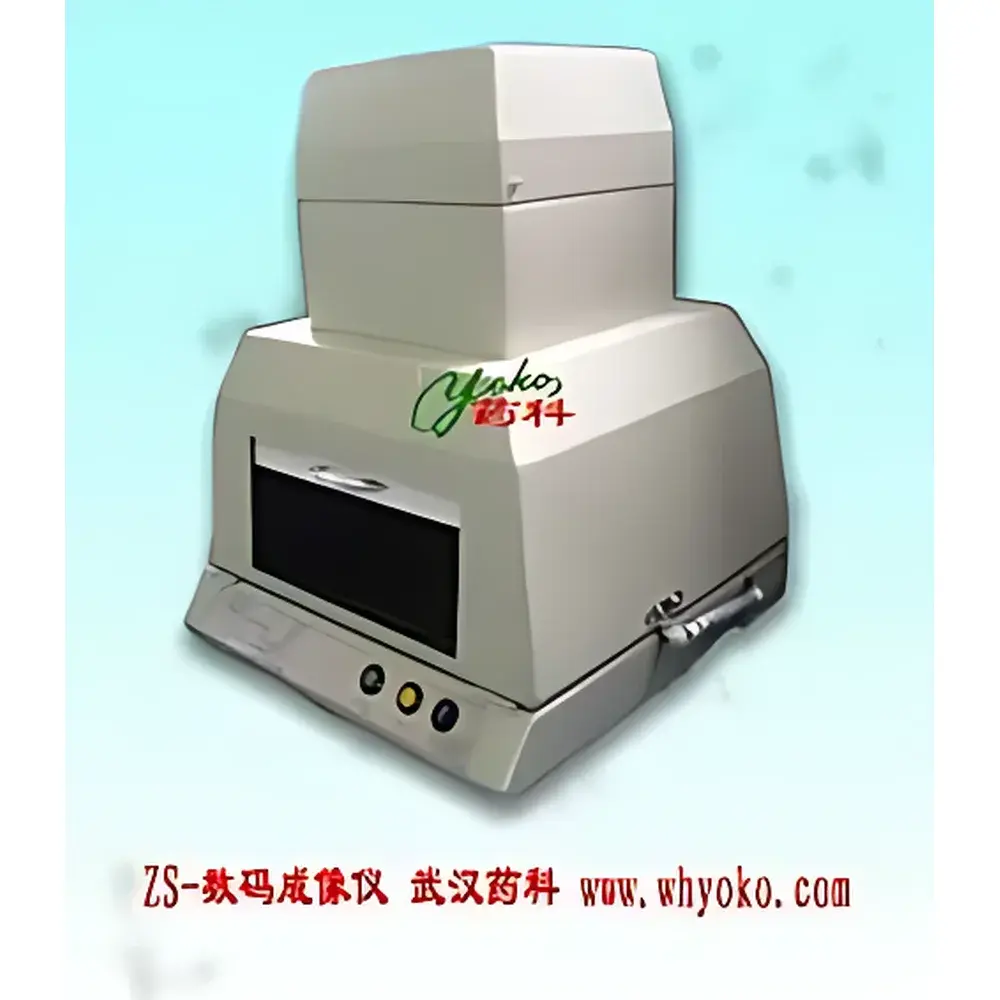
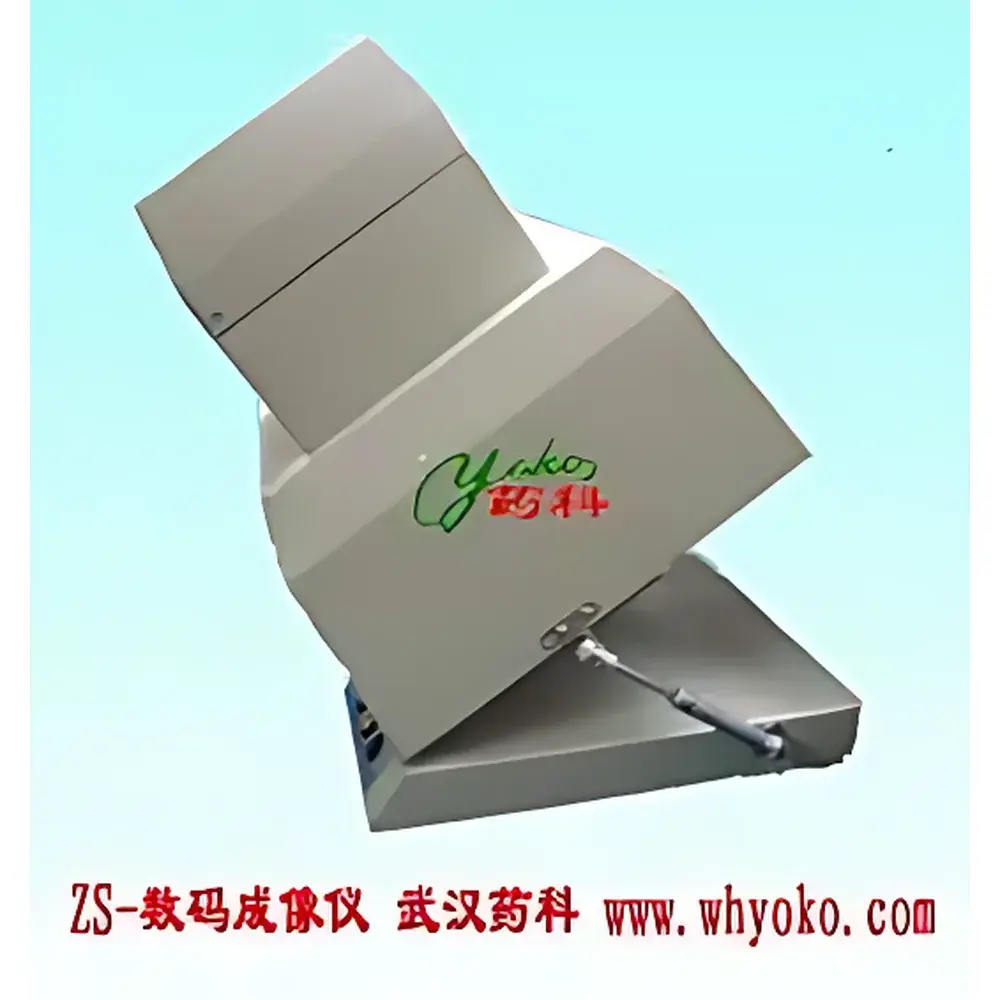
whYOKO YOKO-ZS Thin Layer Chromatography Imaging System
| Brand | whYOKO |
|---|---|
| Origin | Hubei, China |
| Manufacturer Type | Authorized Distributor |
| Instrument Type | TLC Imaging System |
| Illumination Sources | 254 nm (2 × 6 W), 365 nm (2 × 6 W), White Light (GB standard, 2 × 6 W) |
| UV Transmittance | ≥68% at 254 nm, ≥86% at 365 nm |
| Filter Dimensions | 50 × 200 mm (dual-wavelength UV-transmitting) |
| Power Supply | 220 V, 50 Hz |
Overview
The whYOKO YOKO-ZS Thin Layer Chromatography Imaging System is a dedicated digital documentation platform engineered for high-fidelity visualization and archival of thin-layer chromatography (TLC) plates under multiple excitation wavelengths. Designed specifically for fluorescence detection and fluorescence quenching analysis, the system operates on the principle of selective UV-induced emission or absorption contrast—enabling clear differentiation of analytes based on their native or derivatized photophysical properties. Unlike general-purpose document scanners or standalone UV lamps, the YOKO-ZS integrates a precision-engineered dark chamber with fixed-position, calibrated UV and white-light sources to eliminate ambient interference and ensure repeatable illumination geometry. Its optical architecture supports both reflected-light imaging (for fluorescent bands on silica or alumina plates) and transmitted-light interpretation (when paired with optional UV-transparent backplates or compatible TLC media). The system conforms to standard laboratory documentation practices required for qualitative and semi-quantitative TLC analysis in pharmaceutical QC, natural product isolation, forensic chemistry, and academic research settings.
Key Features
- Integrated dark chamber with rigid light-shielded enclosure ensures consistent low-background imaging conditions.
- Dual-wavelength UV excitation: Two 6 W lamps each at 254 nm and 365 nm, optimized for broad-spectrum compound detection—including aromatic hydrocarbons, alkaloids, coumarins, and derivatized carbohydrates.
- White-light illumination module (GB-standard daylight-balanced fluorescent tubes) enables visible-light documentation of iodine-stained, anisaldehyde-reacted, or other non-fluorescent TLC plates.
- High-transmittance UV filters (50 × 200 mm) certified for ≥68% transmission at 254 nm and ≥86% at 365 nm—ensuring maximum photon flux delivery to the sample surface without spectral distortion.
- Electronic ballast design provides instant lamp ignition and stable output over extended operation cycles, minimizing thermal drift and power fluctuation effects.
- Modular interface supports seamless integration with external color CCD cameras or consumer-grade DSLR/mirrorless systems via standard C-mount or adapter kits—facilitating image capture at user-selected resolution and dynamic range.
- Compact footprint (benchtop configuration) and ergonomic access door simplify plate loading and alignment—reducing operator fatigue during high-throughput screening workflows.
Sample Compatibility & Compliance
The YOKO-ZS accommodates standard commercial TLC plates (e.g., silica gel 60 F254, aluminum-backed or glass-supported), as well as custom-coated layers up to 20 × 20 cm. It is routinely deployed in laboratories adhering to GLP-aligned documentation protocols and serves as a compliant imaging tool for preliminary method development under ICH Q5A and USP . While not inherently 21 CFR Part 11–compliant (as it lacks embedded audit trail or electronic signature functionality), the system supports traceable image acquisition when used with validated third-party software platforms that enforce metadata logging, time-stamping, and user-access controls. All UV components meet IEC 62471 Photobiological Safety requirements for UV-A/UV-C lamp classification, and electrical design complies with GB/T 14710 environmental testing standards for domestic laboratory equipment.
Software & Data Management
The YOKO-ZS functions as a hardware imaging station—not a self-contained analytical workstation—and therefore relies on externally installed image acquisition and processing software. Compatible platforms include ImageJ (with TLC Analyser plugin), GelAnalyzer, VisionWorks LS, or custom Python-based pipelines leveraging OpenCV and scikit-image libraries. When connected to a Windows or macOS host, captured TIFF or PNG images retain EXIF metadata (including timestamp, lamp wavelength, exposure duration if camera-controlled), supporting retrospective traceability. For regulated environments, laboratories may implement file-integrity hashing (SHA-256), folder-level version control, and network-attached storage (NAS) archiving aligned with internal SOPs for raw data retention per ISO/IEC 17025 Clause 7.5.2.
Applications
- Routine identity confirmation of synthetic intermediates and final APIs in pharmaceutical manufacturing.
- Monitoring reaction progress in organic synthesis labs via parallel TLC lane comparison.
- Qualitative screening of herbal extracts, essential oils, and food adulterants using multi-wavelength visualization.
- Educational demonstration of separation principles, Rf calculation, and fluorescence behavior in undergraduate chemistry curricula.
- Forensic ink analysis and counterfeit drug detection through comparative spot morphology and quenching patterns.
- Supporting HPTLC method development prior to densitometric quantification or hyphenated LC-TLC workflows.
FAQ
Does the YOKO-ZS include built-in image analysis software?
No—the system delivers raw digital images only; analysis must be performed using external software packages.
Can the instrument perform quantitative densitometry?
Not natively. Quantitative evaluation requires coupling with a calibrated densitometer or post-capture grayscale intensity profiling tools.
Is UV transmittance data independently certified?
Filter transmittance values are manufacturer-specified per GB/T 26180 and verified during production batch testing; full calibration reports available upon request.
What is the recommended maintenance interval for UV lamps?
Lamp replacement is advised every 1,000 operating hours or annually—whichever occurs first—to maintain consistent irradiance output.
Can the YOKO-ZS be upgraded to support UV transillumination?
Yes—users may integrate the optional CS-series UV transilluminator module for bottom-side excitation, enabling visualization of UV-active compounds on transparent supports.





