
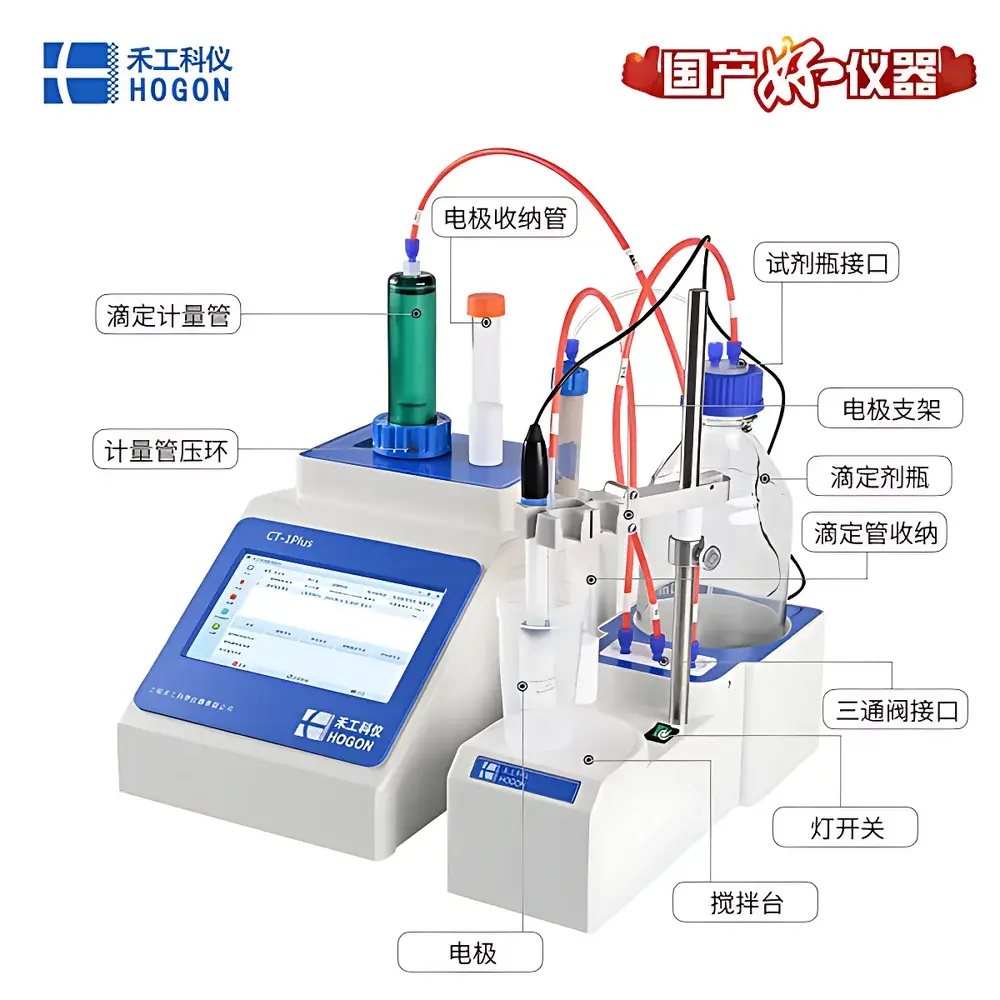
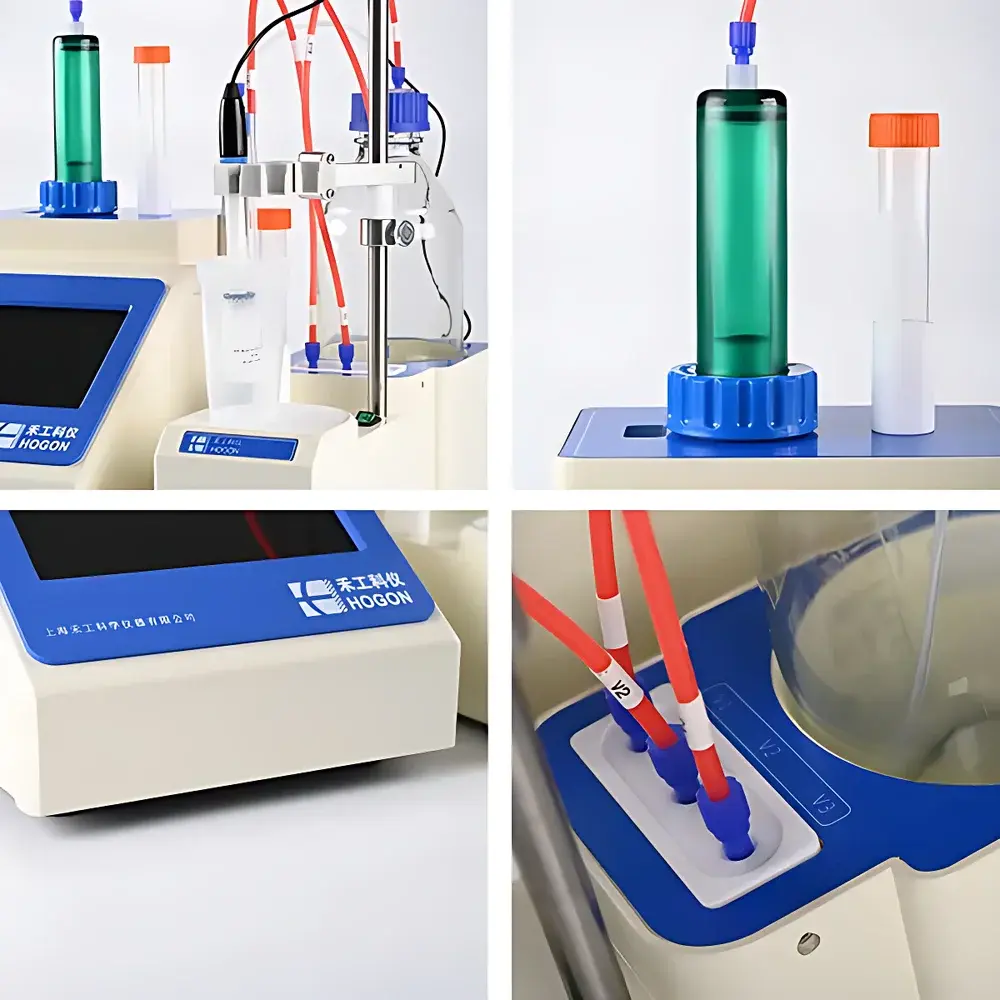
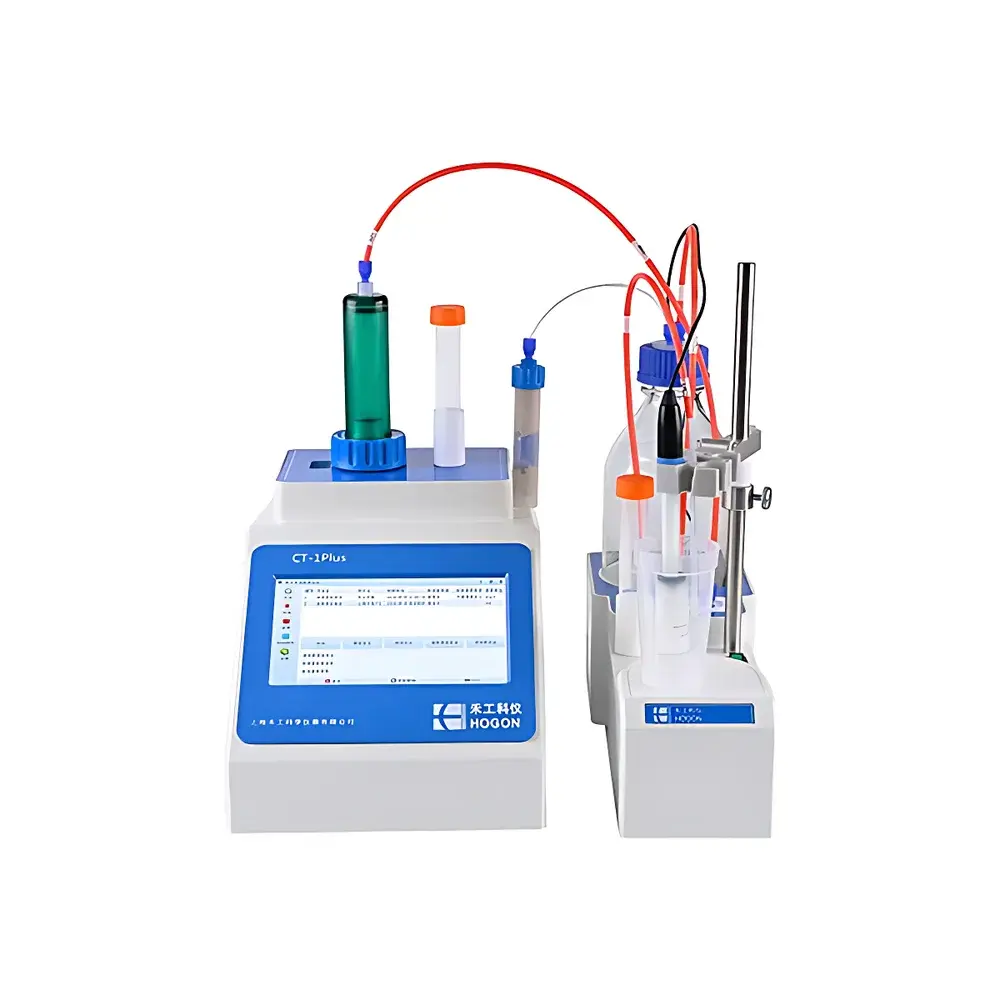
HOGON CT-1Plus Dedicated Potentiometric Titrator for Sulfate Ion Quantification in Vanadium Redox Flow Battery Electrolytes
| Brand | HOGON |
|---|---|
| Origin | Shanghai, China |
| Manufacturer Type | Direct Manufacturer |
| Instrument Category | Domestic (China-Made) |
| Model Designation | CT-1Plus for Sulfate Ion in VRFB Electrolytes |
| Instrument Type | General-Purpose Automatic Potentiometric Titrator |
| Application Scope | Specialized for VRFB electrolyte quality control |
| Measurement Ranges | Potential: ±2000 mV |
| pH | 0–14 |
| Temperature | −5 to 125 °C |
| Meter Accuracy | ±0.3% of full scale |
| Meter Resolution | 0.1 mV |
| Titration Accuracy | (±0.3 mV ±1 digit) over 3 h |
| Titration Resolution | ±2000 mV range, 0.1 mV resolution, ±0.2 mV absolute accuracy |
Overview
The HOGON CT-1Plus Dedicated Potentiometric Titrator is an application-optimized electrochemical analyzer engineered for the precise and repeatable quantification of sulfate ion (SO₄²⁻) concentration in vanadium redox flow battery (VRFB) electrolytes. It operates on the principle of potentiometric precipitation titration, leveraging the stoichiometric reaction between sulfate ions and lead perchlorate (Pb(ClO₄)₂) in a mixed ethanol–water solvent system. The endpoint is detected via real-time monitoring of potential shift across a Pb-101 reference electrode and R-101D indicator electrode pair — a configuration calibrated for high selectivity and low interference in acidic, multivalent vanadium-containing matrices. Unlike generic titrators, the CT-1Plus integrates hardware and method parameters specifically validated for VRFB electrolyte analysis per ASTM D1129 and ISO 8288 guidelines for sulfate determination in complex aqueous–organic media. Its architecture supports trace-level reproducibility under ambient laboratory conditions (23 °C, 50% RH), delivering results in ≤3 minutes per sample without manual intervention.
Key Features
- Dedicated hardware configuration: Pb-101 reference electrode and R-101D ion-selective electrode optimized for sulfate detection in low-pH, high-ionic-strength VRFB electrolytes
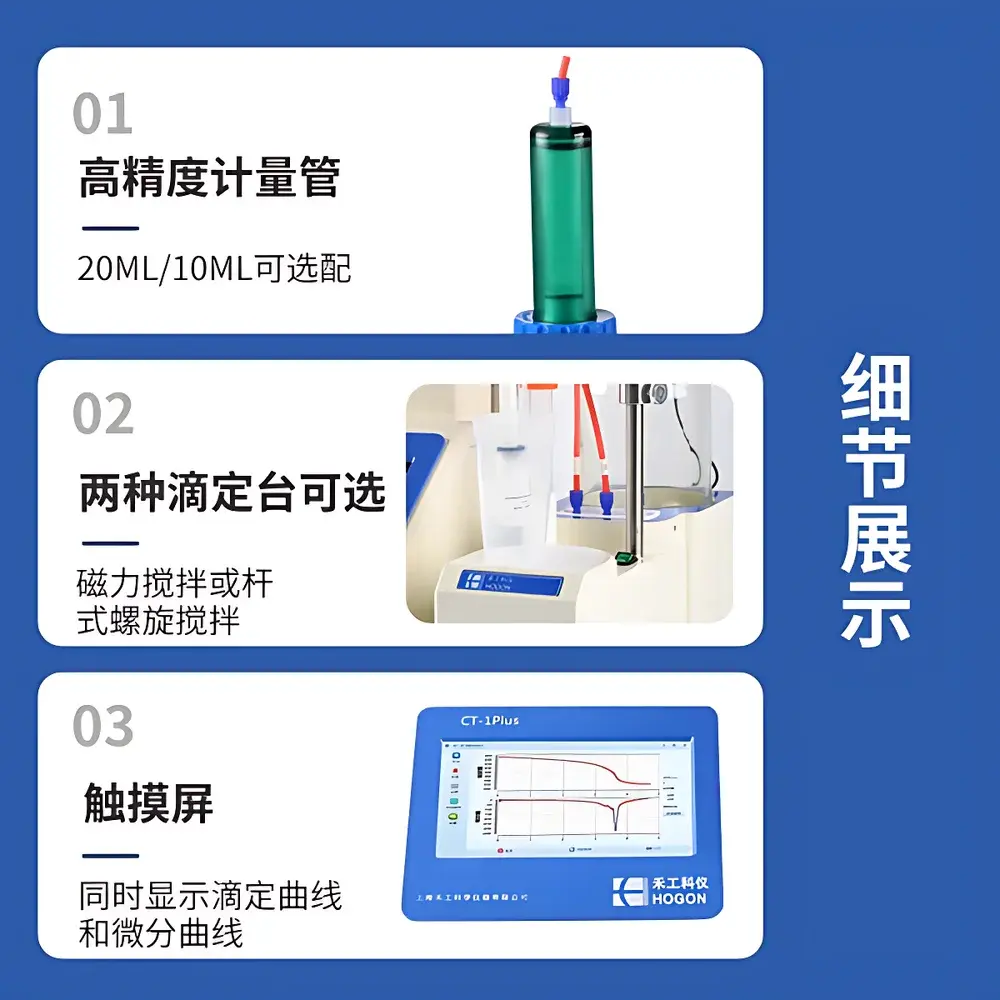
- High-precision 20 mL burette with volumetric accuracy of ±0.3 µL per dispense and minimum dispensing volume of 20 µL
- Programmable agitation: fixed-speed magnetic stirring at 200 rpm ensures homogeneous mixing without vortex-induced air entrapment or electrode fouling
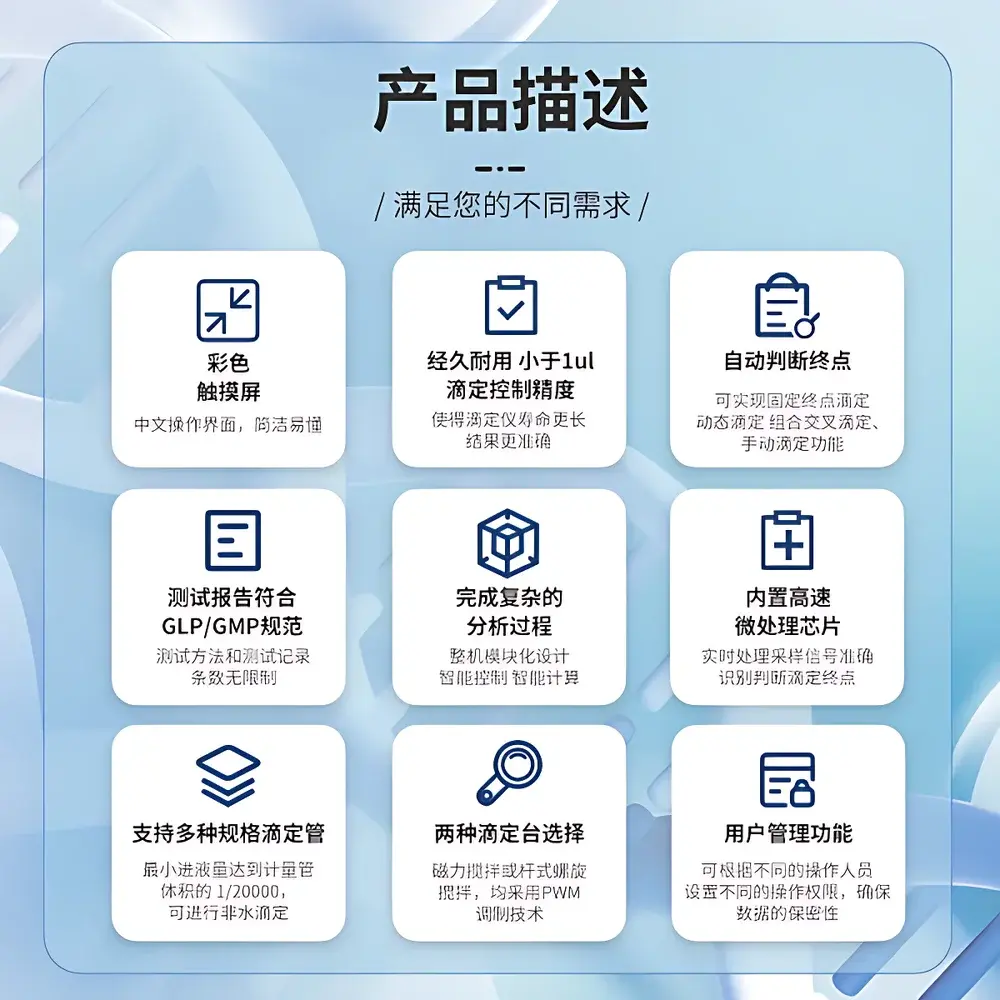
- Endpoint detection via first-derivative (dE/dV) algorithm with user-defined threshold (default: 200 mV/mL), minimizing false endpoints from slow kinetic responses
- Thermostatically stabilized electrode interface with temperature compensation (−5 to 125 °C), critical for maintaining consistent activity coefficients during titration
- Auto-zero and auto-calibration routines compliant with GLP documentation requirements, including timestamped calibration logs and electrode impedance diagnostics
Sample Compatibility & Compliance
The CT-1Plus is validated for direct analysis of VRFB electrolyte solutions containing V²⁺/V³⁺/VO²⁺/VO₂⁺ species in 2–5 mol/L H₂SO₄ background. It accommodates sample volumes of 5–25 mL diluted into 100 mL ethanol–water (70:30 v/v) to suppress vanadium hydrolysis and enhance PbSO₄ precipitate formation kinetics. The instrument meets ISO/IEC 17025 analytical validity criteria for precision (RSD ≤ 0.8% for n = 6 replicates at 3.95 mol/L SO₄²⁻), accuracy (recovery 99.2–100.7%), and robustness across batch-to-batch electrolyte variability. All measurement protocols align with USP and FDA 21 CFR Part 11 requirements for electronic records, including audit-trail-enabled method locking, user access controls, and tamper-proof result archiving.
Software & Data Management
The embedded titration software (v3.2.1) provides method-driven workflow automation: preloaded VRFB-SO₄²⁻ assay templates include blank correction routines, drift compensation algorithms, and automatic equivalence point refinement using Savitzky–Golay smoothing. Raw potential–volume data are exported in CSV and XML formats compatible with LIMS integration. All sessions generate PDF reports with embedded metadata: operator ID, instrument serial number, electrode calibration history, environmental conditions, and statistical summary (mean, SD, %RSD, confidence interval). Data integrity is enforced via SHA-256 hashing and digital signature verification for regulatory submission readiness.
Applications
- Quality control of incoming VRFB electrolyte batches in manufacturing facilities
- In-process monitoring during electrolyte regeneration and purification cycles
- Stability assessment of sulfate concentration under accelerated aging (e.g., 40 °C/7-day thermal stress)
- Method validation studies supporting IEC 62933-2-2 certification for flow battery energy storage systems
- Research applications in electrolyte formulation optimization, including additive screening (e.g., phosphate buffers, chelating agents)
- Secondary use cases: chloride, iodide, and thiocyanate quantification in metallurgical leachates and semiconductor process baths
FAQ
Is the CT-1Plus compliant with GMP/GLP documentation standards?
Yes — all assays generate ALCOA+ compliant records, including electronic signatures, version-controlled methods, and immutable audit trails meeting FDA 21 CFR Part 11 and EU Annex 11 requirements.
Can the instrument be reconfigured for non-sulfate titrations?
Yes — while pre-validated for VRFB sulfate analysis, its open method editor supports customization for acid–base, redox, complexometric, and argentometric titrations using interchangeable electrode sets.
What maintenance is required for long-term stability in corrosive H₂SO₄ environments?
Electrode housings feature PTFE–ceramic junctions rated for continuous exposure to ≤5 mol/L sulfuric acid; routine cleaning with 0.1 mol/L EDTA solution every 50 runs prevents lead-sulfate clogging.
How does the system handle electrode drift during extended multi-sample sequences?
The software performs automatic slope verification before each titration and triggers recalibration if electrode response deviates >2 mV from baseline — configurable thresholds ensure uninterrupted throughput.
Is remote operation supported for centralized lab networks?
Yes — Ethernet-enabled communication allows secure web-based monitoring and method deployment via HTTPS, with role-based access control for multi-user environments.





