
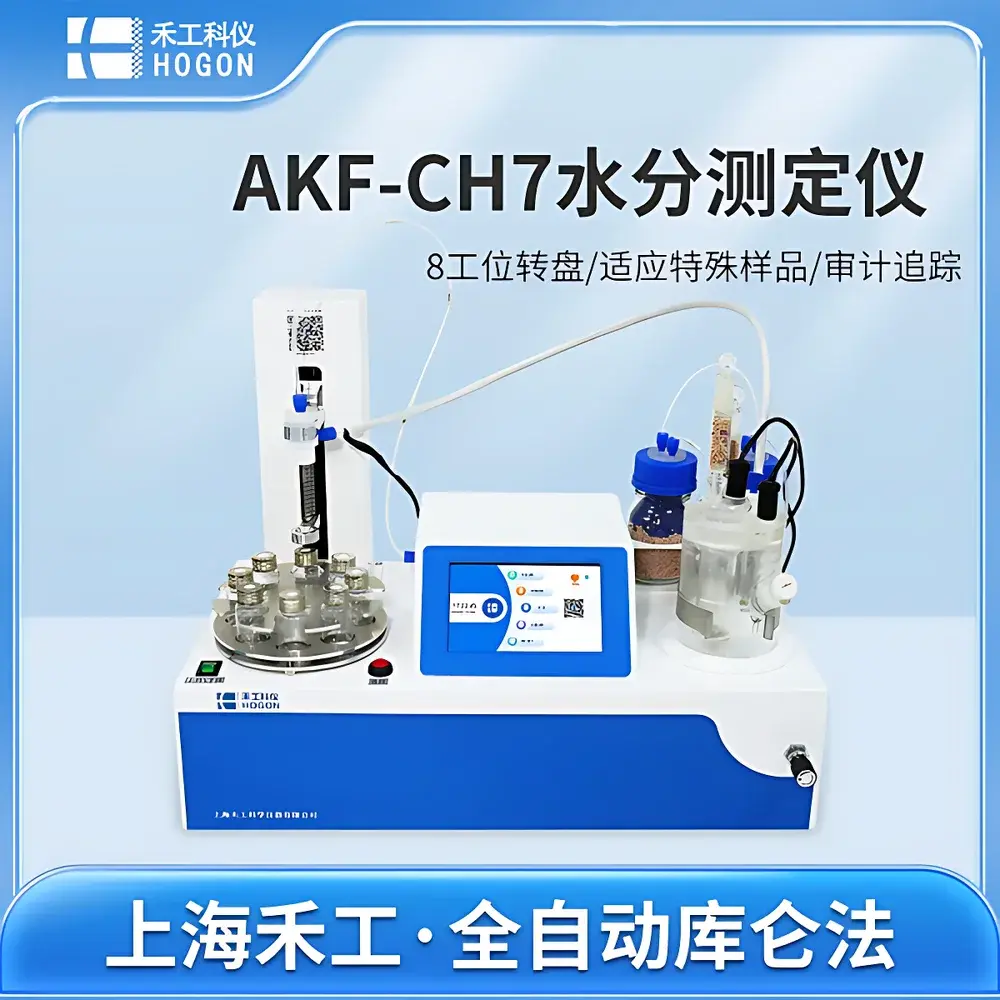
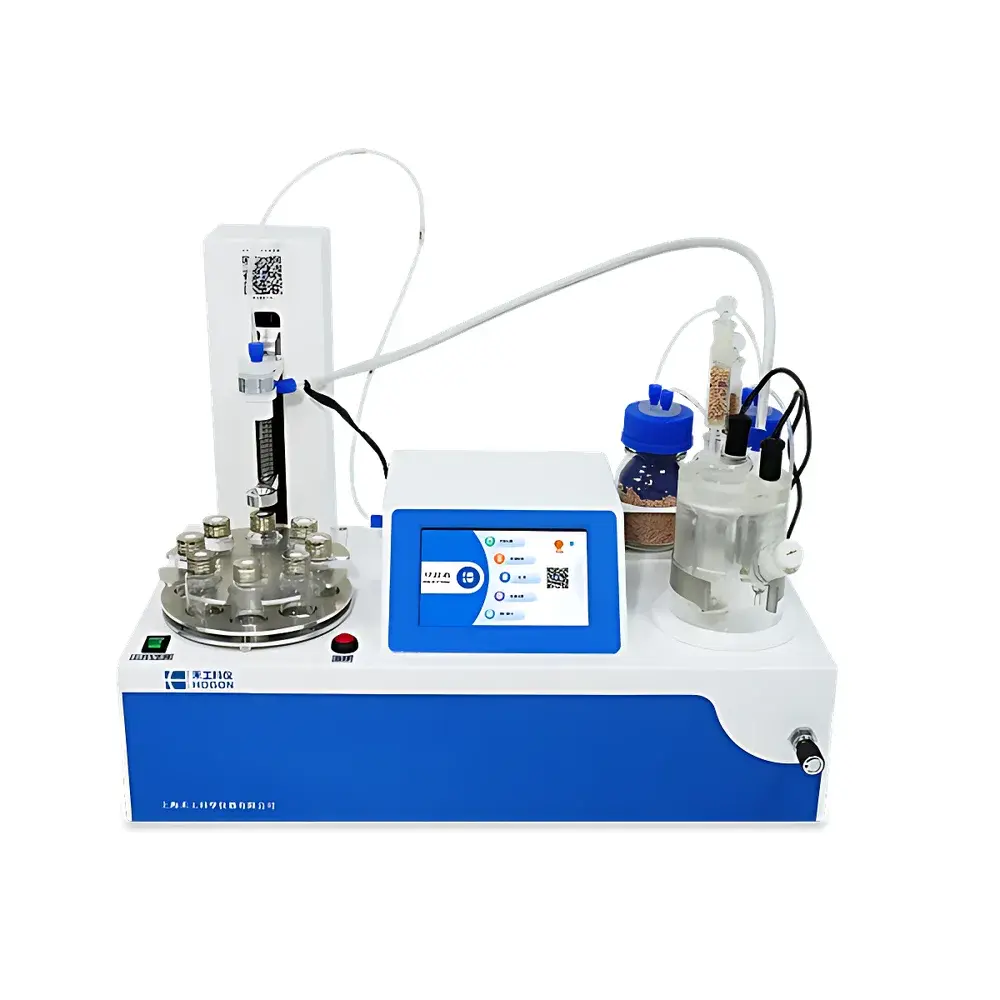
HOGON AKF-CH7 Multi-Station Coulometric Karl Fischer Moisture Analyzer for Manganese Ferroalloy Powder
| Brand | HOGON |
|---|---|
| Origin | Jiangsu, China |
| Manufacturer Type | Direct Manufacturer |
| Instrument Type | Coulometric Karl Fischer Moisture Analyzer |
| Model | AKF-CH7 Multi-Station |
| Measurement Principle | Coulometric Karl Fischer Titration (Polarographic Current Detection) |
| Sample Heating Temperature | Up to 230 °C |
| Typical Analysis Time | ≤10 min per sample |
| Detection Limit | < 0.1 µg H₂O |
| Resolution | 0.1 µg |
| Compliance Basis | ASTM E203, ISO 8533, USP <921>, GB/T 11133, GB/T 6283 |
| Software Features | GLP-compliant audit trail, user permission levels, electronic signature support (21 CFR Part 11 ready) |
Overview
The HOGON AKF-CH7 Multi-Station Coulometric Karl Fischer Moisture Analyzer is a purpose-engineered system designed for high-precision, trace-level water quantification in thermally stable, low-moisture solid materials—specifically optimized for manganese ferroalloy powders used in primary steelmaking. It operates on the fundamental electrochemical principle of coulometric Karl Fischer titration, where iodine is generated *in situ* via controlled electrolysis of an iodide-containing reagent solution. Water reacts stoichiometrically with iodine, sulfur dioxide, and base in methanol medium (I₂ + SO₂ + H₂O + 3RN → 2RN·HI + RN·SO₃), and the total charge passed during electrolysis is directly proportional to the water mass present (Faraday’s law). This method delivers sub-microgram detection capability and exceptional reproducibility—critical when moisture content in MnFe powder falls within the 10–200 ppm range, where deviations directly impact deoxidation kinetics, slag formation efficiency, and final steel cleanliness.
Key Features
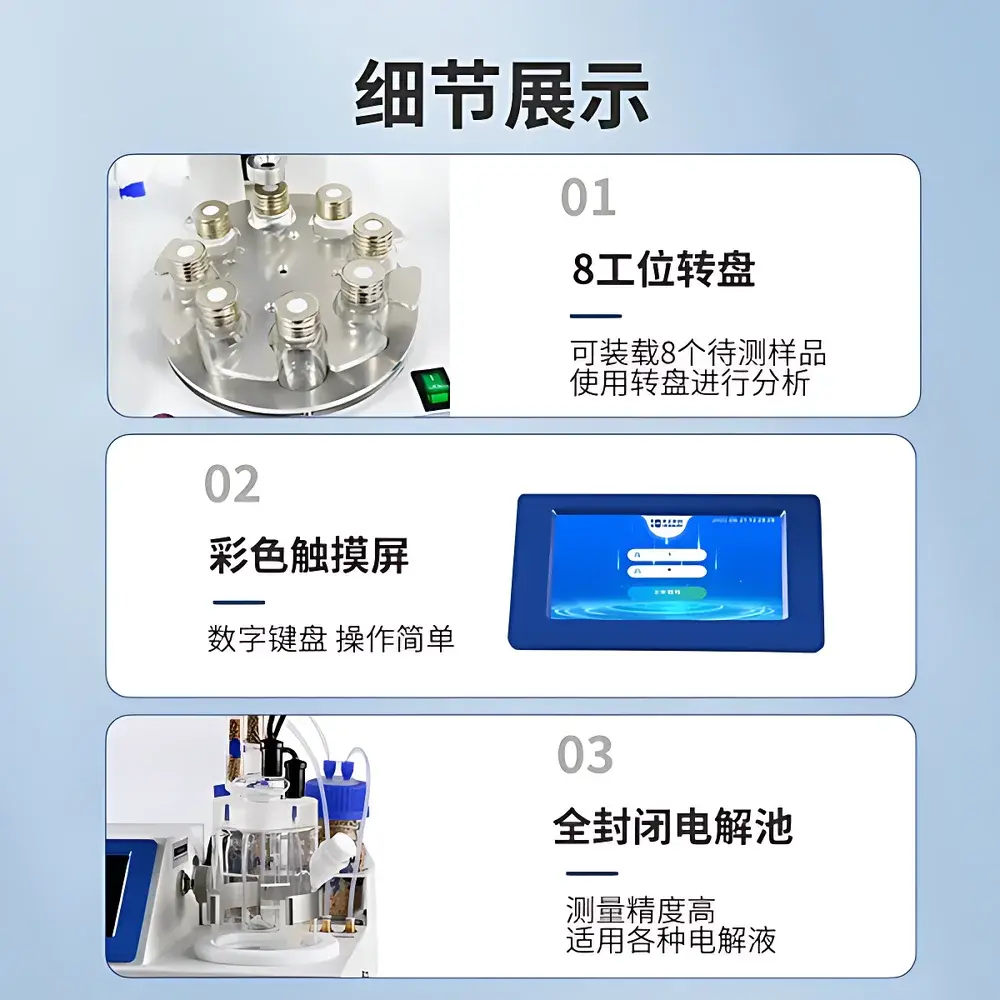
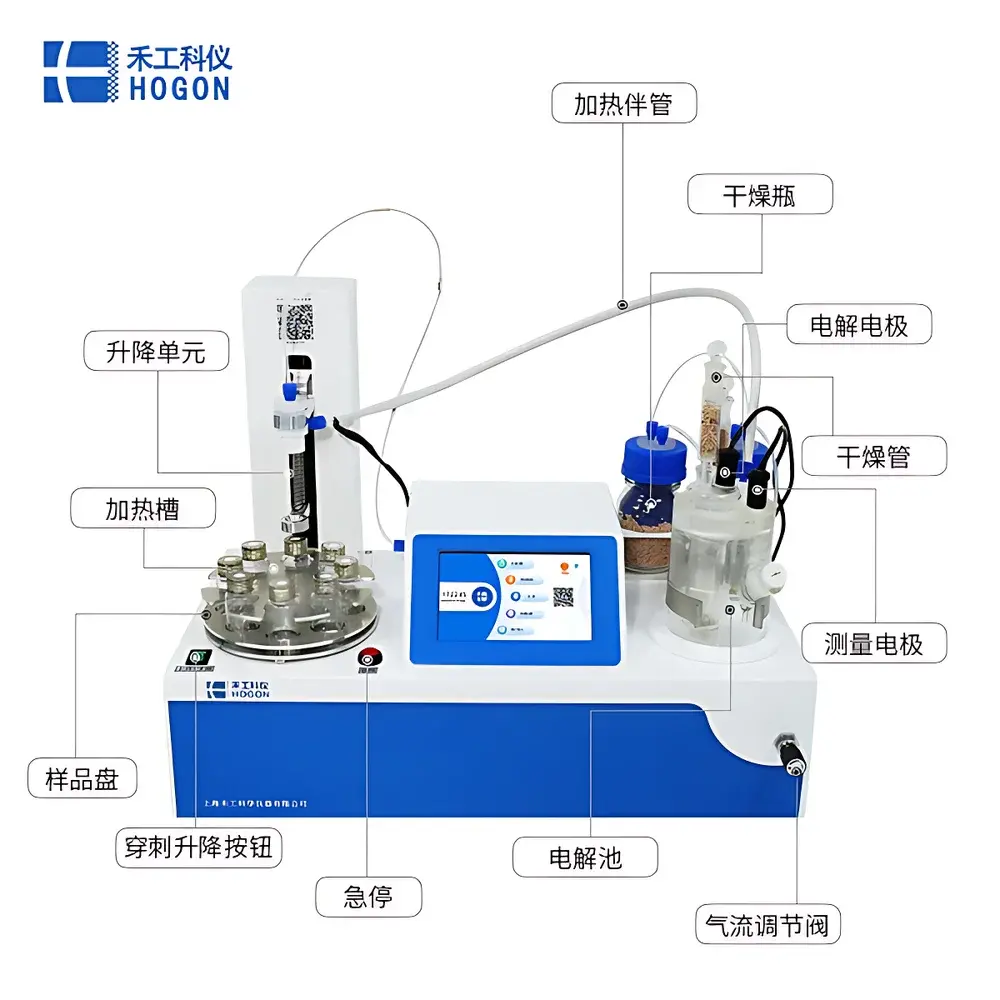
- Multi-station parallel analysis: Equipped with up to four independent, thermally isolated reaction cells and sample introduction ports, enabling simultaneous or sequential analysis of multiple MnFe powder samples without cross-contamination or manual intervention between runs.
- Integrated high-temperature sample oven: Precisely controlled heating module (ambient to 230 °C) ensures complete thermal release of bound water from dense, refractory metal powders prior to carrier-gas transfer into the titration cell.
- Polarographic dual-platinum electrode system: Self-calibrating, low-noise electrodes provide real-time endpoint detection with high signal-to-noise ratio, minimizing false endpoints caused by electrode passivation or reagent aging.
- Automated parameter optimization: Predefined method templates include auto-adjusted electrolysis current ranges and magnetic stirring speed profiles, eliminating manual optimization and ensuring consistent titration dynamics across varying sample matrices.
- Hermetically sealed titration cell architecture: Dual-seal design with molecular sieve drying tubes prevents ambient moisture ingress, maintaining reagent stability over extended operation cycles (>72 h typical reagent lifetime).
Sample Compatibility & Compliance
The AKF-CH7 is validated for direct analysis of metallurgical-grade manganese ferroalloy powders, silicon-manganese alloys, ferrosilicon, and other oxygen-sensitive iron-based powders requiring rigorous moisture control. Its thermal desorption interface accommodates particle sizes up to 500 µm and bulk densities ≥2.5 g/cm³. All operational protocols adhere to internationally recognized standards: ASTM E203 (Standard Test Method for Water Using Volumetric Karl Fischer Titration), ISO 8533 (Petroleum Products — Determination of Water — Coulometric Karl Fischer Method), and Chinese national standards GB/T 11133 and GB/T 6283. The system supports full GLP/GMP compliance through configurable audit trails, electronic signatures, and 21 CFR Part 11–ready software architecture—enabling seamless integration into regulated QA/QC laboratories in integrated steel mills and alloy producers.
Software & Data Management
The embedded Windows-based HOGON MoistureSuite™ software provides comprehensive instrument control, method development, and data governance. Each analysis session logs timestamped metadata—including operator ID, sample ID, weighing data (via RS232/USB scale interface), temperature profile, electrolysis curve, and raw coulombic charge integration. Data export is supported in CSV, PDF, and XML formats compliant with LIMS interfaces. User access levels (Administrator, Analyst, Viewer) enforce role-based permissions. All method changes and result modifications are immutably recorded with operator ID and timestamp, satisfying FDA and ISO 17025 documentation requirements for traceability and data integrity.
Applications
- Quality release testing of incoming MnFe powder batches prior to ladle addition in BOF/EAF steelmaking processes.
- In-process moisture monitoring during powder handling, storage, and pneumatic conveying to prevent caking and flow instability.
- Stability studies evaluating moisture uptake under controlled humidity conditions (e.g., accelerated aging per ICH Q1A).
- Method validation and transfer between central R&D labs and satellite production QC facilities.
- Supporting root-cause analysis of unexpected furnace slag foaming or inconsistent deoxidation ratios.
FAQ
What is the minimum detectable water mass using the AKF-CH7 for MnFe powder?
The system achieves a detection limit of 0.1 µg H₂O under standard operating conditions, corresponding to ~10 ppm in a 1.0 g sample.
Can the AKF-CH7 analyze samples containing reactive metals like aluminum or calcium?
No—samples must be chemically inert toward methanol and the KF reagent; MnFe powder is compatible due to its stable oxide layer, but elemental Al or Ca would consume iodine non-stoichiometrically.
Is external calibration required before each analysis?
No—coulometric systems are inherently absolute methods; calibration is performed once per reagent batch using certified water standards (e.g., 1.00 mg/mL H₂O in methanol), verified per ASTM E203 Annex A3.
How is moisture recovery validated for high-temperature desorption?
Recovery is confirmed via spiking experiments using dry MnFe powder spiked with known masses of water (e.g., 50–200 µg), demonstrating ≥98.5% recovery across the 100–230 °C range.
Does the system support remote diagnostics and firmware updates?
Yes—Ethernet connectivity enables secure remote access for technical support, log file retrieval, and over-the-air firmware upgrades compliant with IEC 62443 cybersecurity guidelines.




