
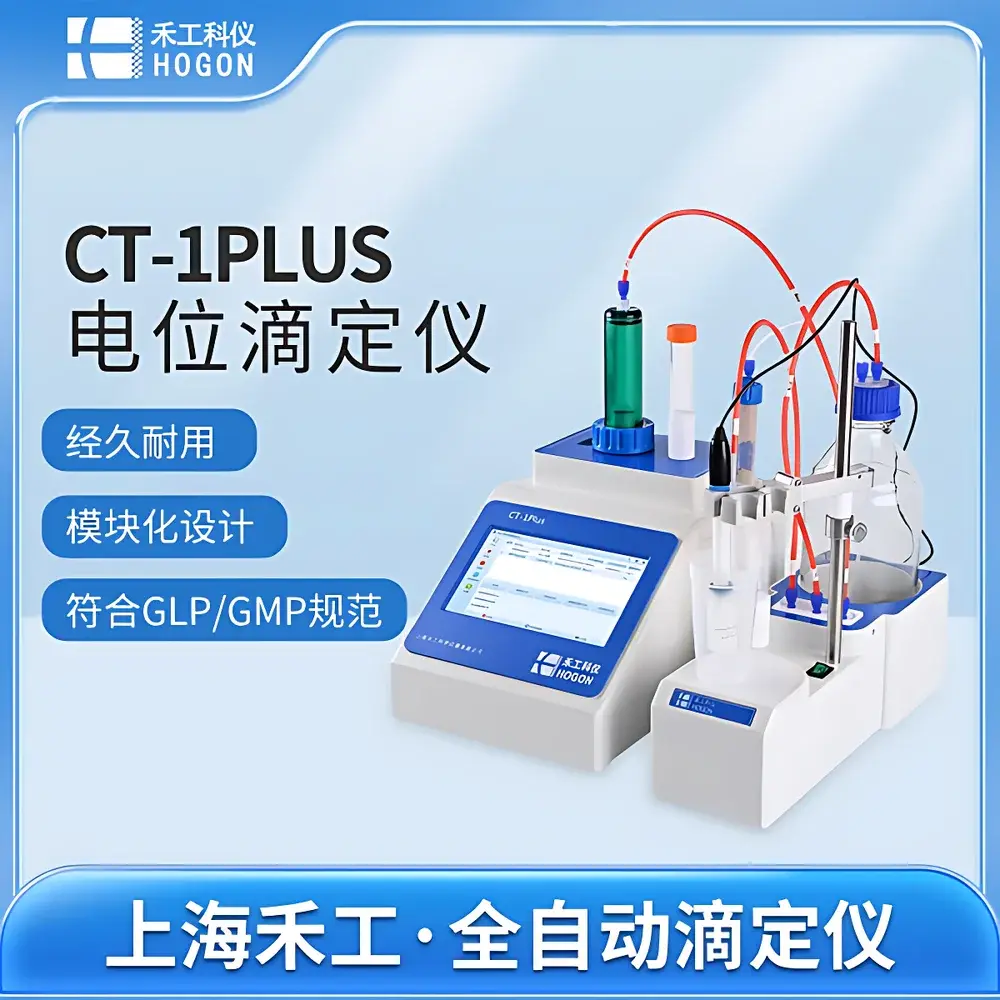
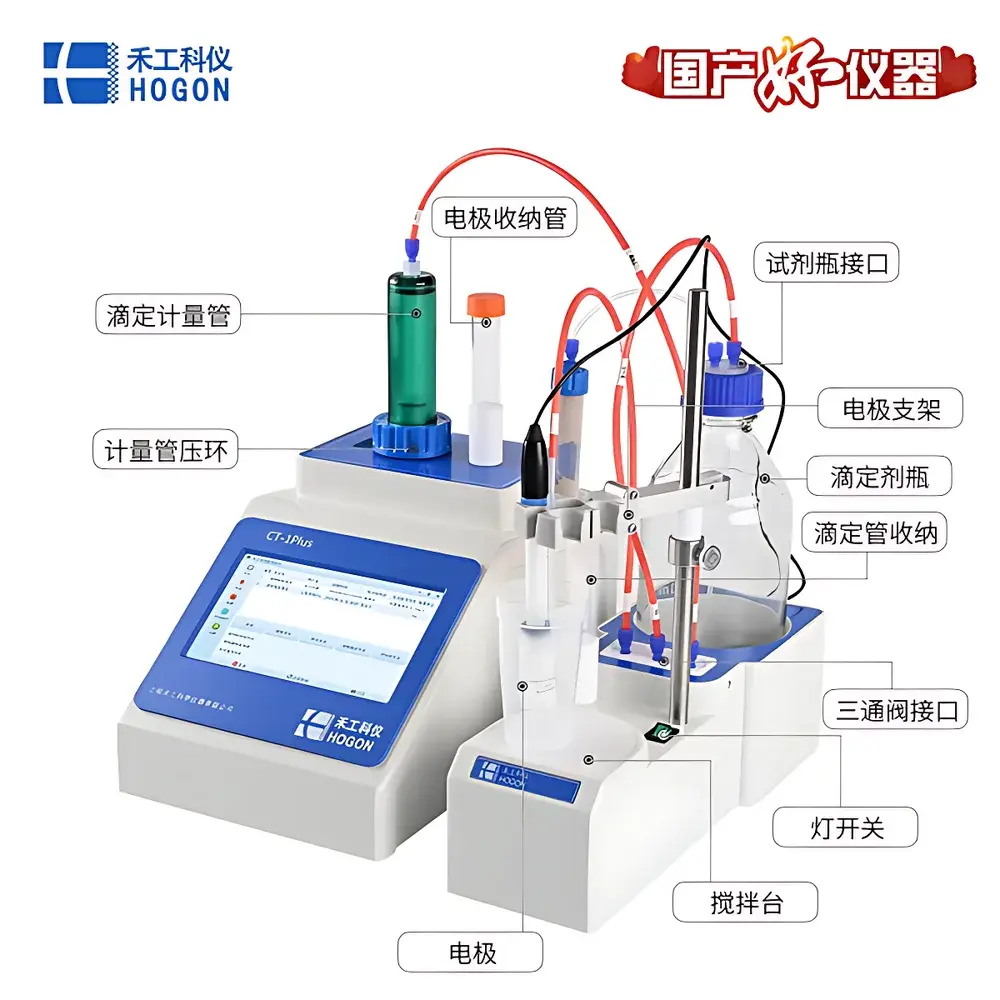
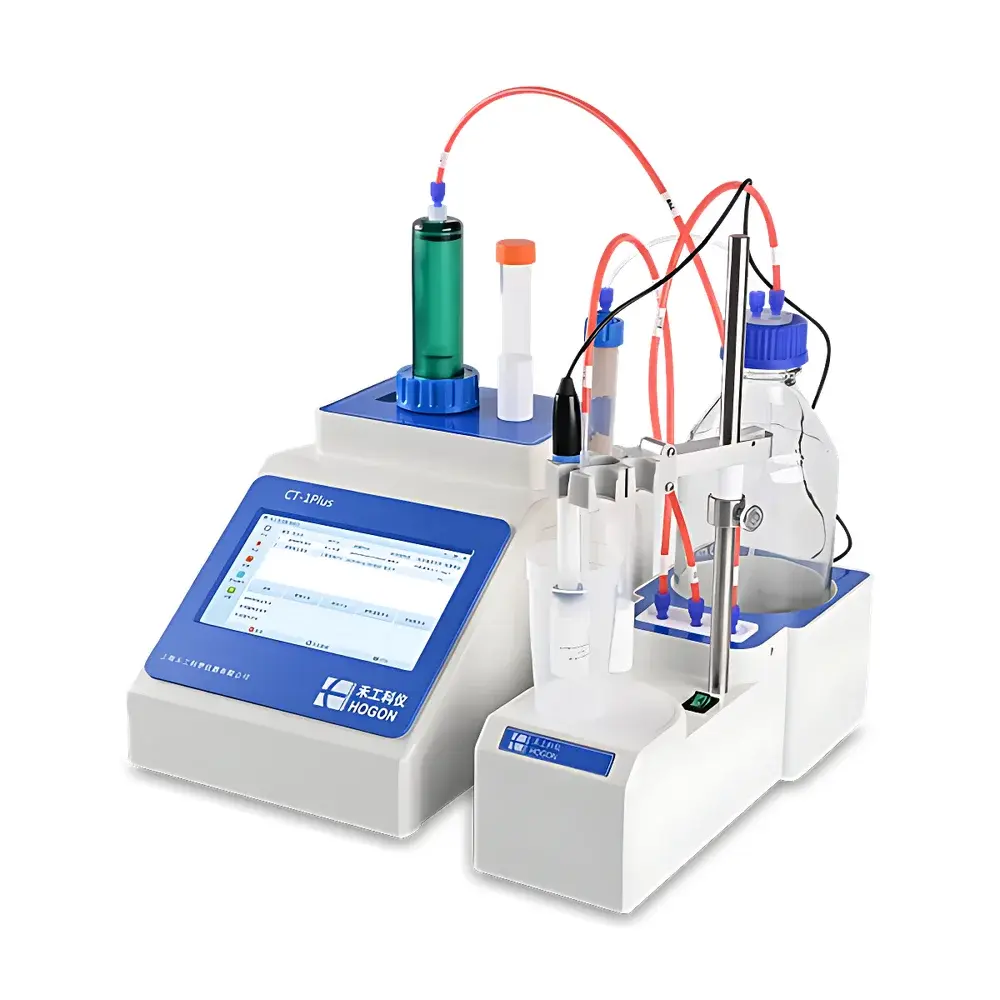
HOGON CT-1Plus Automatic Potentiometric Titrator for Methyl Methacrylate (MMA) Acid Number Determination
| Brand | HOGON |
|---|---|
| Origin | Shanghai, China |
| Manufacturer Type | Direct Manufacturer |
| Instrument Type | General-purpose Automatic Potentiometric Titrator |
| Application Scope | Universal |
| pH Measurement Range | 1–14 |
| mV Display Accuracy | ±0.2 mV |
| mV Display Resolution | 0.1 mV (within ±2000 mV range) |
| Burette Precision | 0.001 mL (20 mL standard burette) |
| Burette Resolution | 0.0005 mL (10 mL optional burette) |
Overview
The HOGON CT-1Plus Automatic Potentiometric Titrator is engineered for high-reproducibility acid number determination in reactive monomers—specifically optimized for methyl methacrylate (MMA), a critical raw material in acrylic resins, PMMA plastics, coatings, and adhesives. Acid number quantifies titratable acidic impurities (e.g., residual methacrylic acid, oxidation by-products, or hydrolysis derivatives) that directly impact polymerization kinetics, shelf life, and final product clarity. The CT-1Plus implements potentiometric titration based on the Nernstian response of a glass-reference electrode pair, measuring potential shifts (mV) as 0.09 mol/L NaOH is incrementally delivered into an ethanolic MMA solution. Unlike visual or pH-metric endpoint detection, this system employs first-derivative (dE/dV) analysis with configurable slope thresholds—ensuring objective, operator-independent endpoint identification even in low-buffering, non-aqueous systems where conventional pH endpoints are ill-defined.
Key Features
- High-stability pH-102 combination electrode with low-drift glass membrane and Ag/AgCl reference junction, calibrated per ASTM D974 and ISO 3682 for non-aqueous titrations.
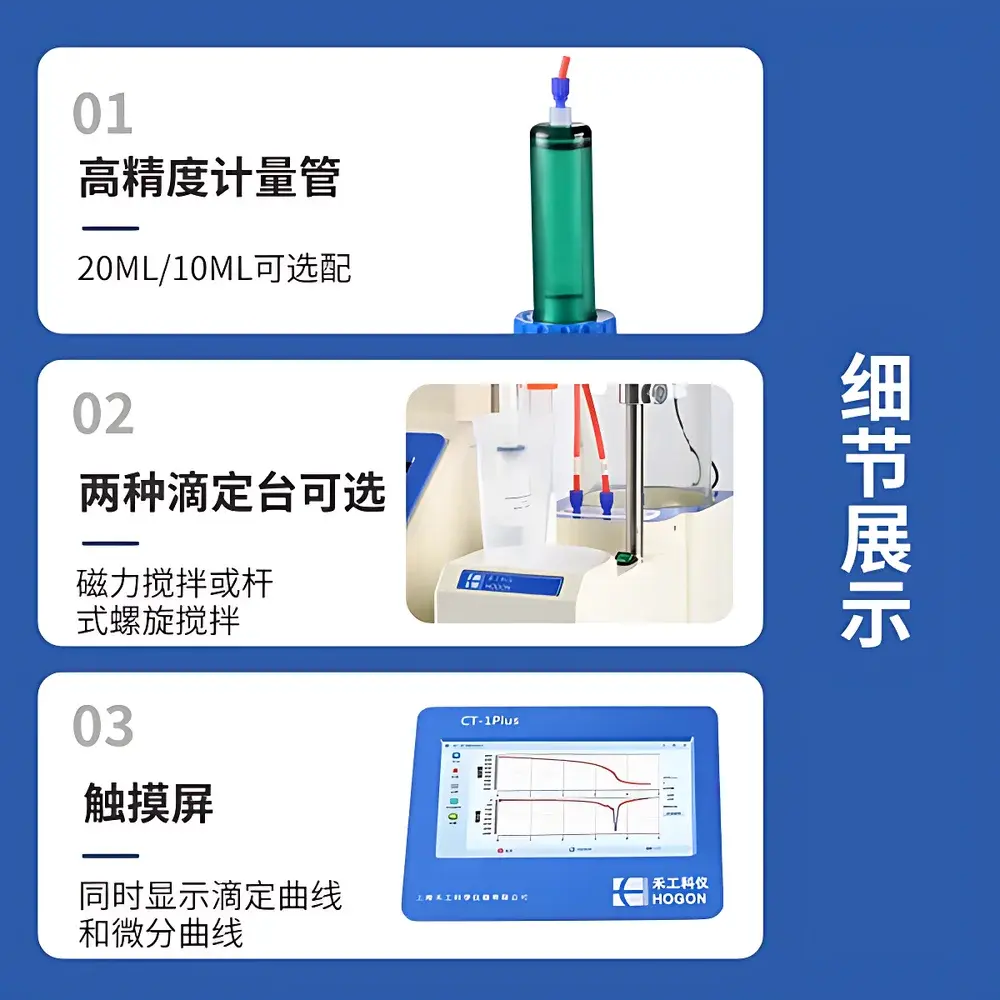
- Motor-driven precision burette assembly featuring dual-volume configuration: standard 20 mL burette (±0.001 mL delivery accuracy per IUPAC Guide to Titrimetry) and optional 10 mL burette (0.0005 mL resolution) for enhanced volumetric fidelity in trace-acid applications.
- Differential endpoint detection algorithm with adjustable derivative window (default setting: 200 data points), enabling robust recognition of inflection maxima in weak-acid titration curves typical of MMA matrices.
- Integrated 100 mL PTFE-coated titration vessel with magnetic stirring control, ensuring homogeneous mixing without emulsion formation or volatile loss during ethanol-based dissolution.
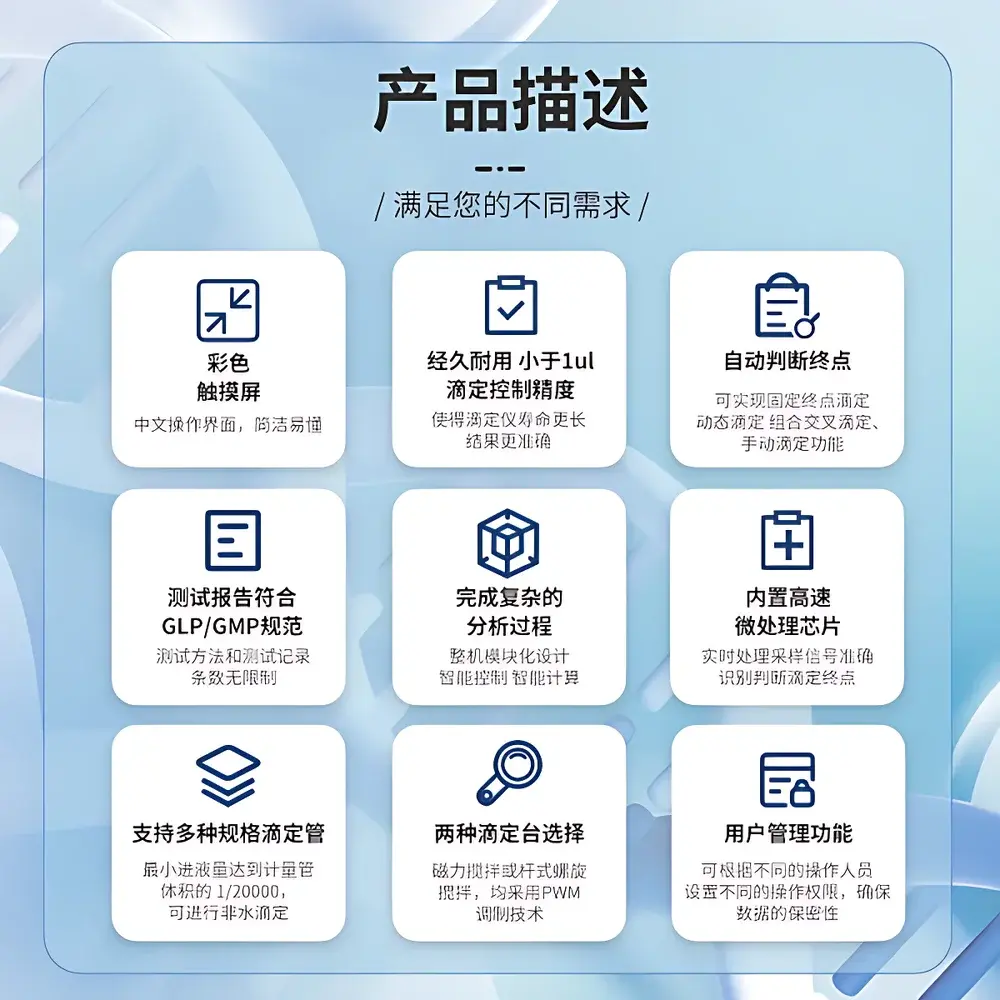
- Preloaded method library including validated SOPs for ASTM D664 (acid number in petroleum products), ISO 2114 (resins), and custom HOGON MMA protocol—fully editable and password-protected for GLP compliance.
Sample Compatibility & Compliance
The CT-1Plus supports direct acid number analysis of neat MMA and diluted samples dissolved in anhydrous ethanol (≥99.8% purity), conforming to the solvent matrix requirements specified in ASTM D1613 and ISO 2114. It accommodates sample masses from 2.0 to 10.0 g, with blank correction capability (typical blank volume: 0.05 mL under controlled 23 °C / 40% RH conditions). All hardware components—including burette tubing, electrode body, and stir bar—are chemically resistant to MMA monomer and alkaline ethanol solutions. The instrument meets CE electromagnetic compatibility (EMC) Directive 2014/30/EU and carries factory calibration certificates traceable to NIST-standard reference materials. Data integrity features align with FDA 21 CFR Part 11 requirements, including electronic signature support, audit trail logging, and user-access level management.
Software & Data Management
The embedded Windows-based HOGON TitraSoft™ v3.2 software provides real-time titration curve visualization, automatic blank subtraction, and acid number calculation using the formula: Acid Number = [(Vsample − Vblank) × CNaOH × 56.1] / msample (mg KOH/g). Raw mV vs. volume datasets are exportable in CSV and PDF formats; method files include metadata fields for analyst ID, batch number, and environmental conditions. Audit trails record all parameter modifications, method executions, and calibration events with timestamp, user ID, and IP address (when network-enabled). Optional LIMS integration via OPC UA ensures seamless data transfer to enterprise quality systems.
Applications
Beyond MMA quality control, the CT-1Plus serves diverse acid-base titration needs across chemical manufacturing: acid number profiling of unsaturated polyesters, epoxy resins, and alkyd binders; saponification value determination in fatty acid esters; chloride ion quantification via argentometric titration; and redox titrations using Ce(IV)/Fe(II) couples. Its modular electrode interface supports pH, redox, ion-selective (e.g., F⁻, Cl⁻), and conductometric sensors—enabling method expansion without hardware replacement. In-process QA/QC labs benefit from its <3-minute cycle time per sample, supporting throughput of ≥120 determinations per 8-hour shift.
FAQ
What solvent is required for MMA acid number analysis?
Anhydrous ethanol (≥99.8% purity) is mandatory to ensure complete monomer solubility and prevent water-induced side reactions.
Does the CT-1Plus comply with regulatory data integrity standards?
Yes—audit trail, electronic signatures, and role-based access control satisfy FDA 21 CFR Part 11 and EU Annex 11 requirements for regulated laboratories.
Can the instrument perform back-titration for samples with very low acid content?
Yes—method templates support excess base addition followed by standardized HCl back-titration, extending measurable acid number range down to 0.005 mg KOH/g.
Is temperature compensation available during titration?
No—non-aqueous titrations on the CT-1Plus are conducted at ambient lab temperature; precise thermal control is not required due to the kinetic stability of the NaOH–ethanol–MMA system.
How often must the pH-102 electrode be recalibrated?
Calibration is recommended before each analytical session using two-point buffer verification (pH 4.01 and 7.00 aqueous buffers), with electrode performance logged in the audit trail.




