

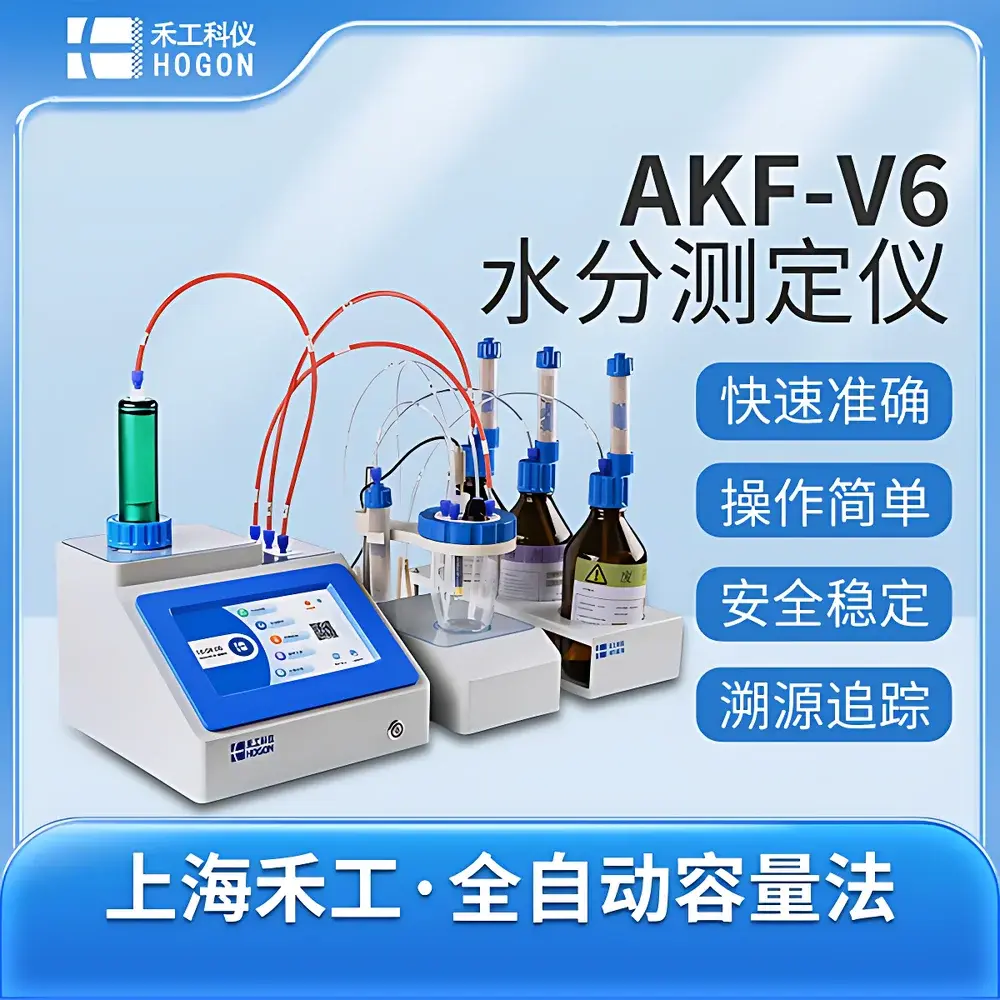
HOGON AKF-V6 Karl Fischer Moisture Analyzer
| Brand | HOGON |
|---|---|
| Origin | Shanghai, China |
| Manufacturer Type | Direct Manufacturer |
| Regional Category | Domestic (China) |
| Model | AKF-V6 |
| Pricing | USD 6,800 (FOB Shanghai) |
| Titration Mode | Fully Automated Volumetric Titration |
| Instrument Type | Dual-Mode Karl Fischer Analyzer (Volumetric & Coulometric Capable via Optional Module) |
| Measurement Resolution | 0.1 ppm |
| Water Content Range | 10 ppm – 100% (0.001% – 100% H₂O) |
| Accuracy | RSD ≤ 0.3% (at 1500 µL reagent consumption) |
| Minimum Dispensing Volume | 0.5 µL (with 20 mL burette) |
| Repeatability | ≤ 0.3% RSD |
| Linearity Correlation Coefficient | ≥ 0.999 |
| Polarization Voltage Adjustment Range | 0–120 mV |
| Burette Options | 20 mL / 10 mL |
| Titration Control Precision | ±0.5 µL (20 mL burette) |
| Power Supply | 110–240 V AC, 50–65 Hz |
| Data Storage Capacity | 200 test records (expandable via USB export) |
Overview
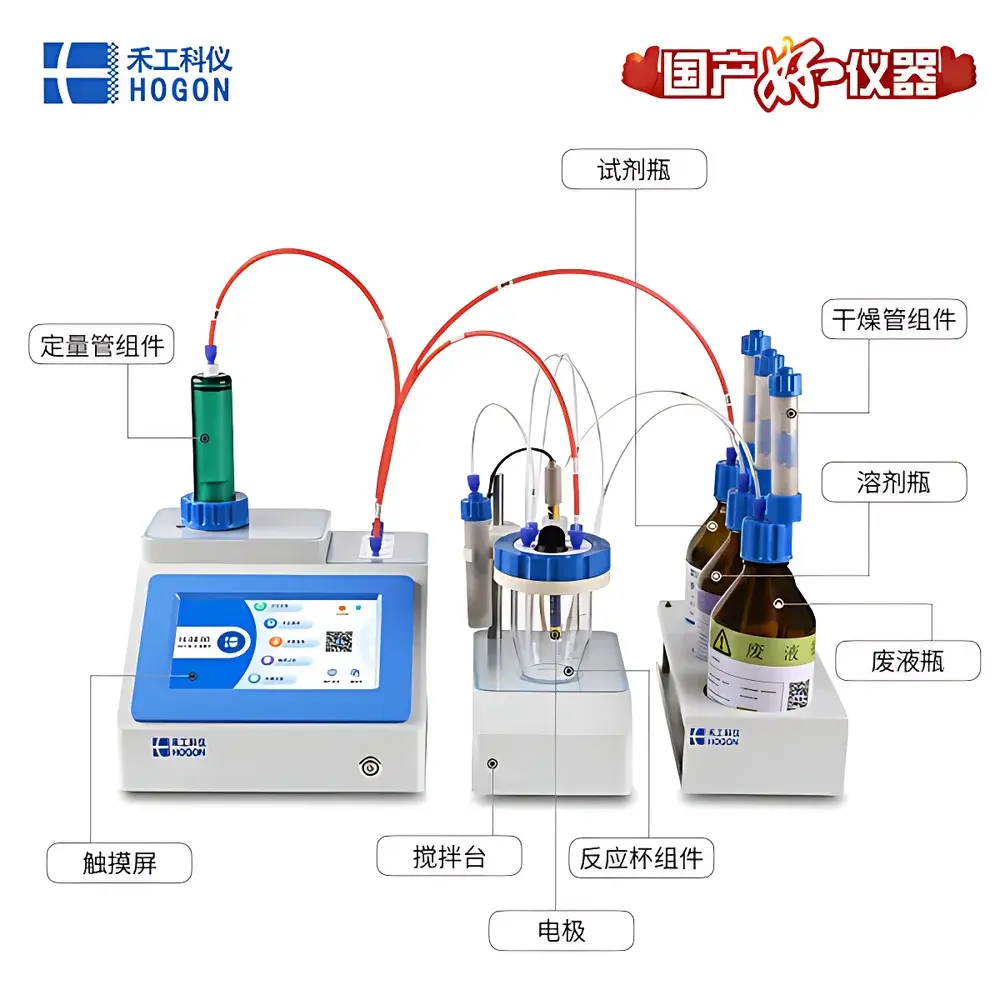
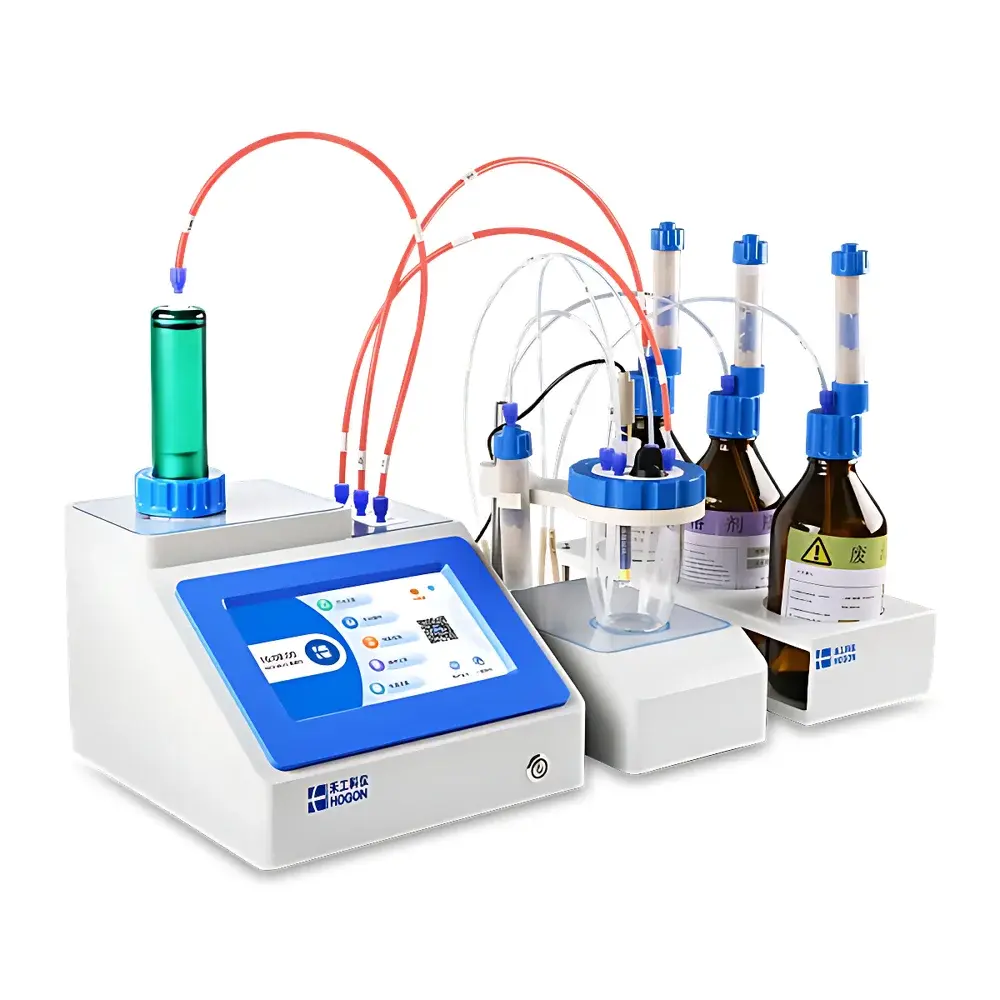
The HOGON AKF-V6 Karl Fischer Moisture Analyzer is a fully automated volumetric titration system engineered for high-precision, trace-to-bulk water quantification in solid, liquid, and gaseous samples. Based on the classical coulometric and volumetric Karl Fischer (KF) reaction—where iodine reacts stoichiometrically with water in the presence of sulfur dioxide, a base, and methanol—the AKF-V6 implements a dual-mode architecture optimized for volumetric analysis while supporting future coulometric expansion via optional hardware modules. Its core measurement principle relies on potentiometric endpoint detection with adaptive polarization voltage control (0–120 mV), enabling robust discrimination between true reaction endpoints and baseline drift caused by sample matrix interference or electrode passivation. Designed for compliance-critical environments, the instrument meets fundamental requirements of pharmacopeial and industrial standards including USP <921>, EP 2.5.12, ASTM E203, ISO 760, and Chinese Pharmacopoeia ChP IV General Chapter 0832 (Volumetric KF Method). The system operates without manual intervention from reagent aspiration to endpoint calculation, delivering reproducible results across diverse matrices—from hygroscopic lithium battery electrolytes to viscous polymer melts and volatile organic solvents.
Key Features
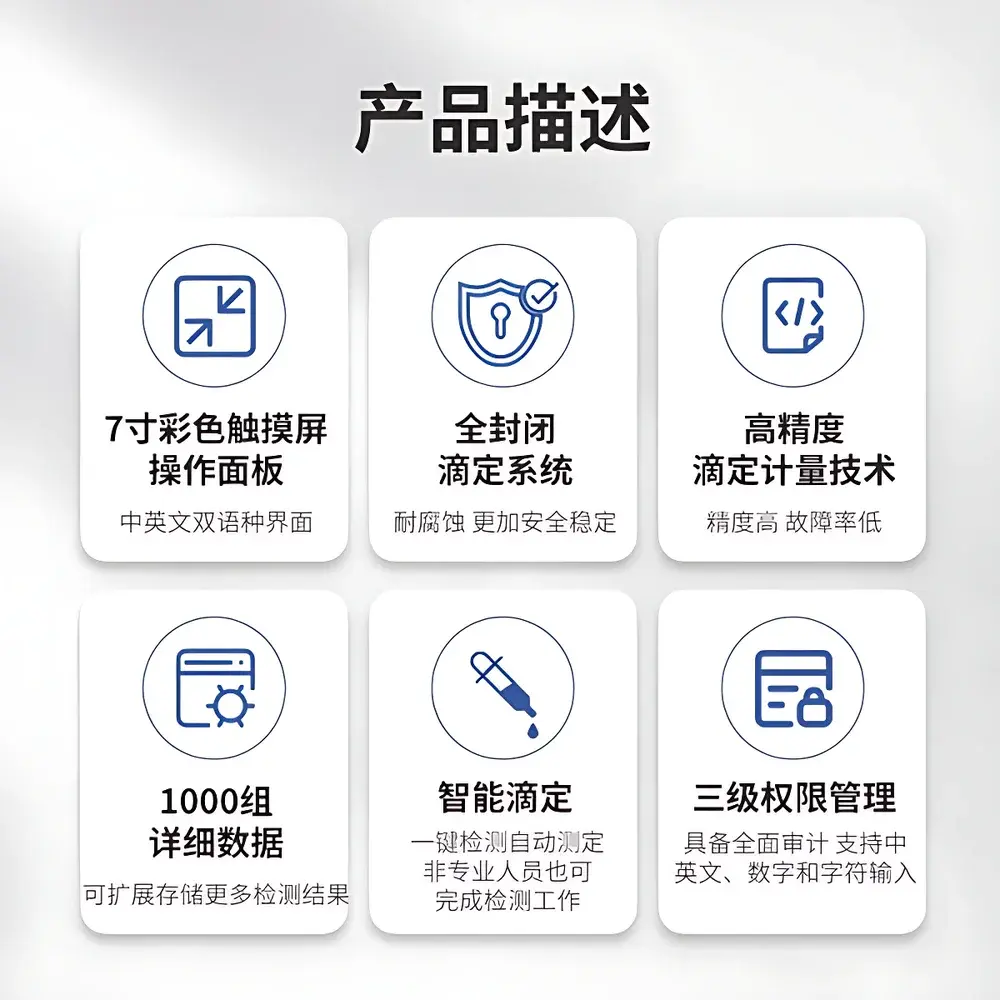
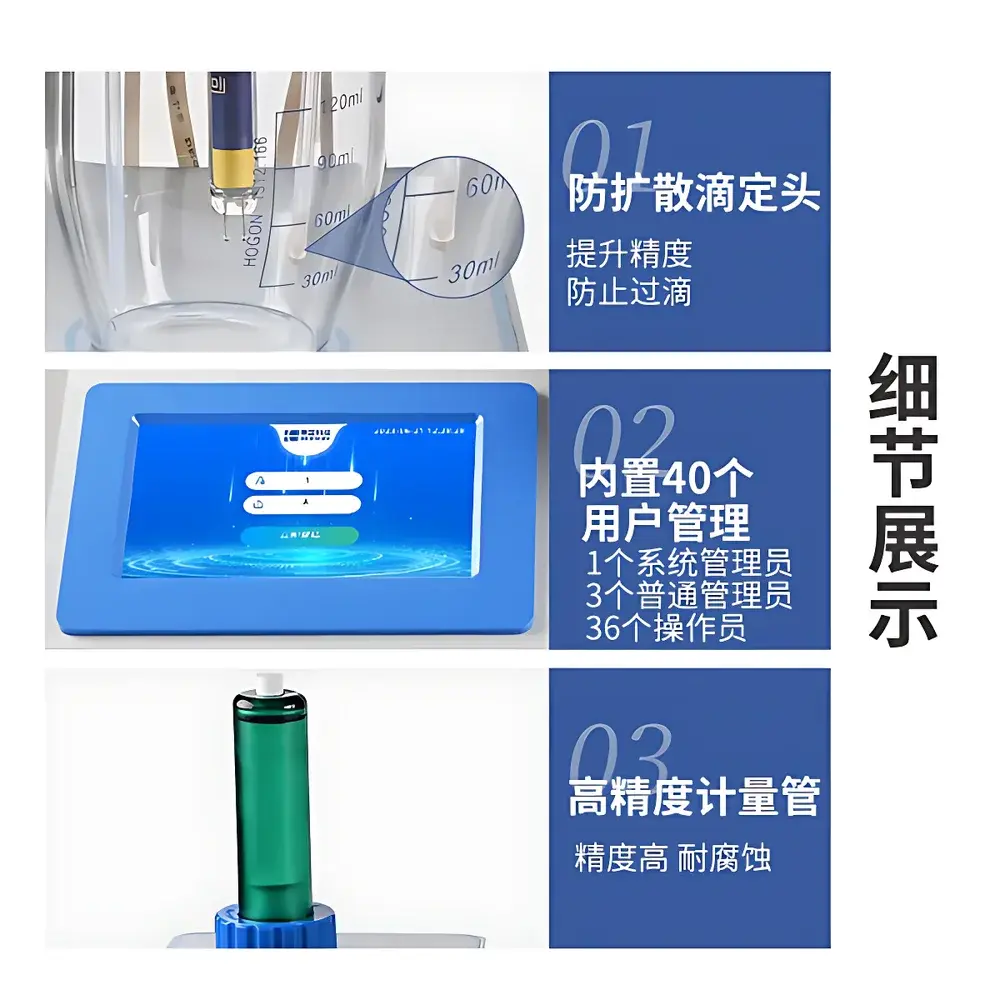
- 7-inch full-color capacitive touchscreen with intuitive bilingual UI (English/Chinese), real-time display of titration curve, potential value, reagent consumption, drift compensation, and endpoint kinetics
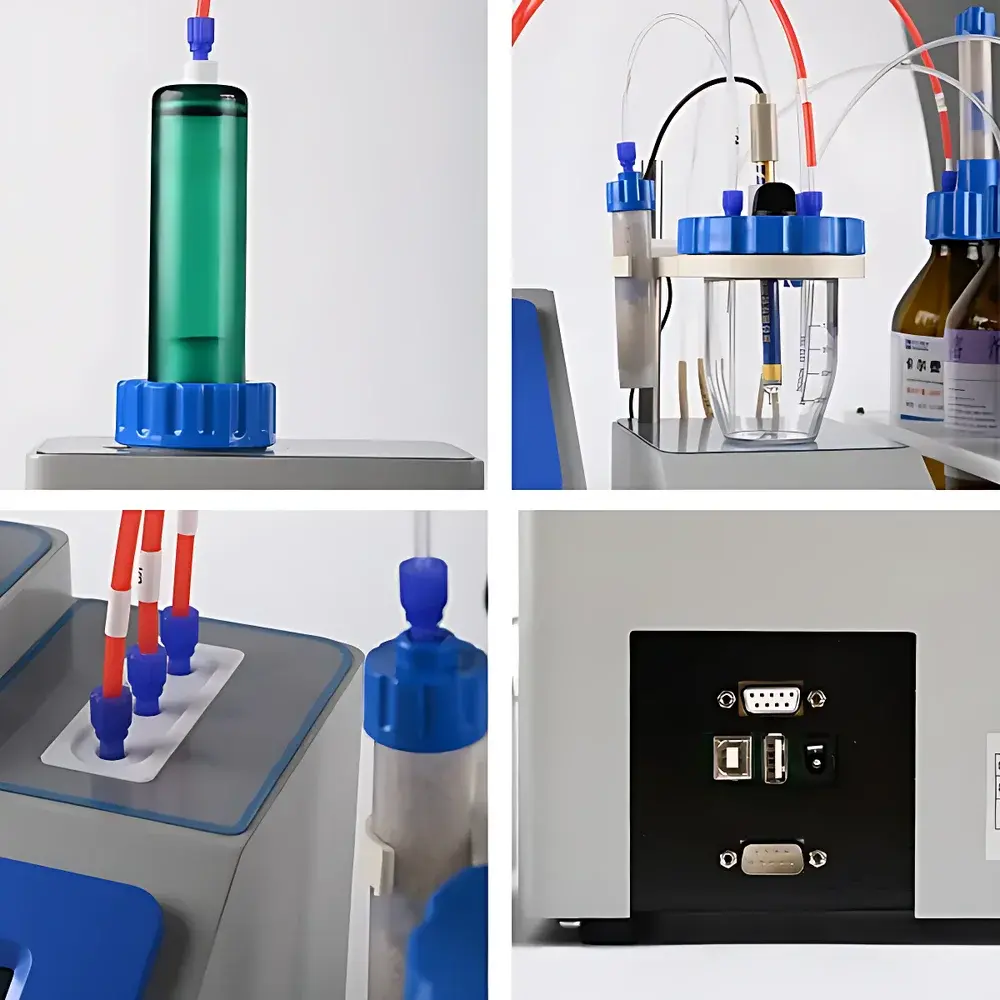
- Fully enclosed, chemically resistant titration cell assembly with integrated PTFE-coated stirrer, sealed reagent reservoirs, and vapor-tight sample port—minimizing ambient moisture ingress and operator exposure
- HOGON proprietary high-precision burette drive mechanism: ±0.5 µL dispensing accuracy (20 mL burette), 0.5 µL minimum step volume, and automatic backflush/cleaning cycles between analyses
- Intelligent endpoint recognition algorithm with multi-threshold adaptive logic—supports fixed potential, dynamic slope, and first-derivative modes to accommodate slow-reacting or unstable samples
- Comprehensive self-diagnostic suite: real-time reagent level monitoring, electrode impedance check, leak detection, and fault logging with actionable error codes
- Three-tier user access control (Administrator / Supervisor / Operator) with mandatory electronic signatures, timestamped audit trails, and immutable record retention per FDA 21 CFR Part 11 and GLP/GMP data integrity guidelines
Sample Compatibility & Compliance
The AKF-V6 accommodates a broad spectrum of sample types without modification: free-flowing powders (e.g., APIs, excipients), thermolabile solids (e.g., lyophilized biologics), viscous liquids (e.g., silicone oils, resins), and low-solubility matrices (e.g., polyolefins, carbon black). For challenging samples—including those requiring thermal release of bound water—the system integrates seamlessly with optional accessories: the HOGON KF-Headspace Oven (temperature-controlled up to 250 °C), magnetic stirring hotplate module, and micro-reaction vials (1–5 mL capacity). Regulatory alignment is embedded at the firmware level: built-in calculation templates conform to ChP 0832, GB/T 6283–2008, GB/T 2441.3–2010, GB 5009.3–2010, and ISO 12937 for petroleum products. All raw data—including raw mV readings, time-stamped titrant delivery events, and drift-corrected water mass calculations—are stored in encrypted binary format with SHA-256 checksum validation.
Software & Data Management
- Onboard storage retains 200 complete test records with full metadata (operator ID, sample ID, method name, environmental temperature/humidity, reagent lot number, calibration date)
- USB 2.0 interface enables secure export of CSV-formatted reports compliant with LIMS ingestion protocols; no cloud connectivity or remote telemetry enabled by default
- Method library supports up to 50 customizable protocols—each defining solvent selection, titrant concentration, stirring speed, endpoint sensitivity, drift correction window, and auto-zero parameters
- Audit trail logs every critical action: user login/logout, method edit, result override, calibration event, and system configuration change—with irreversible timestamps and operator attribution
- Raw data files include embedded digital signatures verifying authenticity and preventing post-acquisition tampering—fully satisfying ALCOA+ principles (Attributable, Legible, Contemporaneous, Original, Accurate, Complete, Consistent, Enduring, Available)
Applications
The AKF-V6 serves as a primary moisture verification tool in quality control laboratories across regulated industries. In lithium-ion battery manufacturing, it quantifies residual water in cathode/anode slurries and electrolyte solvents (target: <20 ppm), directly impacting SEI layer formation and cell cycle life. Pharmaceutical labs deploy it for excipient qualification (e.g., lactose monohydrate hydration state), final dosage form release testing (tablets, capsules), and stability study moisture mapping per ICH Q1A(R3). Petrochemical users apply it to monitor trace water in hydrocarbon streams (ASTM D6304), while polymer producers rely on its repeatability for polyol moisture specification (GB/T 22313–2008) and catalyst poisoning prevention. Academic research groups utilize its flexible endpoint logic for mechanistic studies of water–matrix interactions in MOFs, zeolites, and amorphous pharmaceuticals.
FAQ
Does the AKF-V6 support both volumetric and coulometric Karl Fischer methods?
Yes—while shipped as a volumetric-only system, the AKF-V6’s electronics architecture and firmware are pre-configured for coulometric module integration (optional HOGON AKF-CM1 cell and generator electrode kit), enabling sub-ppm detection limits for ultra-dry samples.
Can the instrument comply with FDA 21 CFR Part 11 requirements?
Fully compliant when operated in Administrator mode with enabled audit trail, electronic signatures, and password-protected user roles; all data exports include cryptographic hash verification.
What maintenance is required for long-term accuracy?
Daily: electrode cleaning with KF solvent and performance verification using certified 1.00 mg H₂O standard; quarterly: burette piston lubrication and seal inspection; annually: full system calibration with NIST-traceable standards.
Is method validation documentation provided?
HOGON supplies IQ/OQ protocol templates aligned with ISO/IEC 17025 and GMP Annex 15, plus raw data examples demonstrating specificity, linearity (r² ≥ 0.999), precision (RSD ≤ 0.3%), and robustness across pH and solvent polarity ranges.
How is sample carryover prevented during high-throughput analysis?
The system executes automated solvent flush (3× volume of titration cell), air purge, and electrode conditioning cycles between runs—validated to reduce cross-contamination to <0.1% of previous result.





