
Hogon AKF-CH6 Coulometric Karl Fischer Moisture Titrator for Surgical Sutures
| Brand | Hogon |
|---|---|
| Origin | Shanghai, China |
| Manufacturer Type | Direct Manufacturer |
| Regional Category | Domestic (China) |
| Model | AKF-CH6 |
| Price | USD 9,500 (approx. ¥68,000) |
Overview
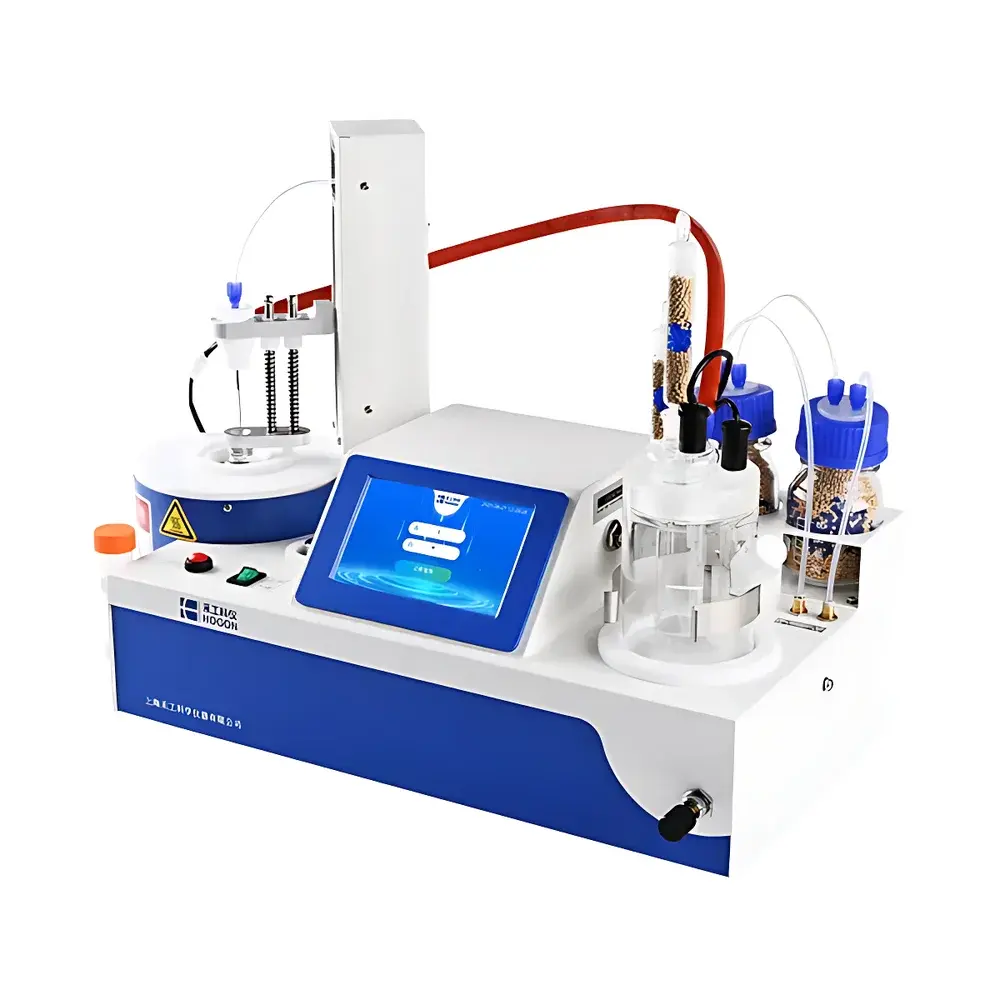
The Hogon AKF-CH6 is a high-precision coulometric Karl Fischer (KF) moisture titrator engineered specifically for trace water quantification in hygroscopic, thermally sensitive, and low-moisture medical polymers—most notably surgical sutures. Unlike volumetric KF systems, the AKF-CH6 employs controlled electrochemical generation of iodine within a sealed titration cell, enabling sub-microgram-level detection (down to 0.01 µg H₂O) without reagent consumption variability. This principle ensures stoichiometric accuracy per Faraday’s law, making it ideal for regulatory-compliant moisture verification where results directly impact biocompatibility, shelf-life stability, and sterilization efficacy. Designed for ISO 11357-2, USP , and ASTM E203–22 workflows, the instrument meets critical requirements for GMP-aligned quality control laboratories in medical device manufacturing and pharmaceutical packaging.
Key Features
- Ultra-low detection limit: 0.01 µg water resolution with ±0.3% relative standard deviation (RSD) across repeated injections (n ≥ 6) on suture samples.
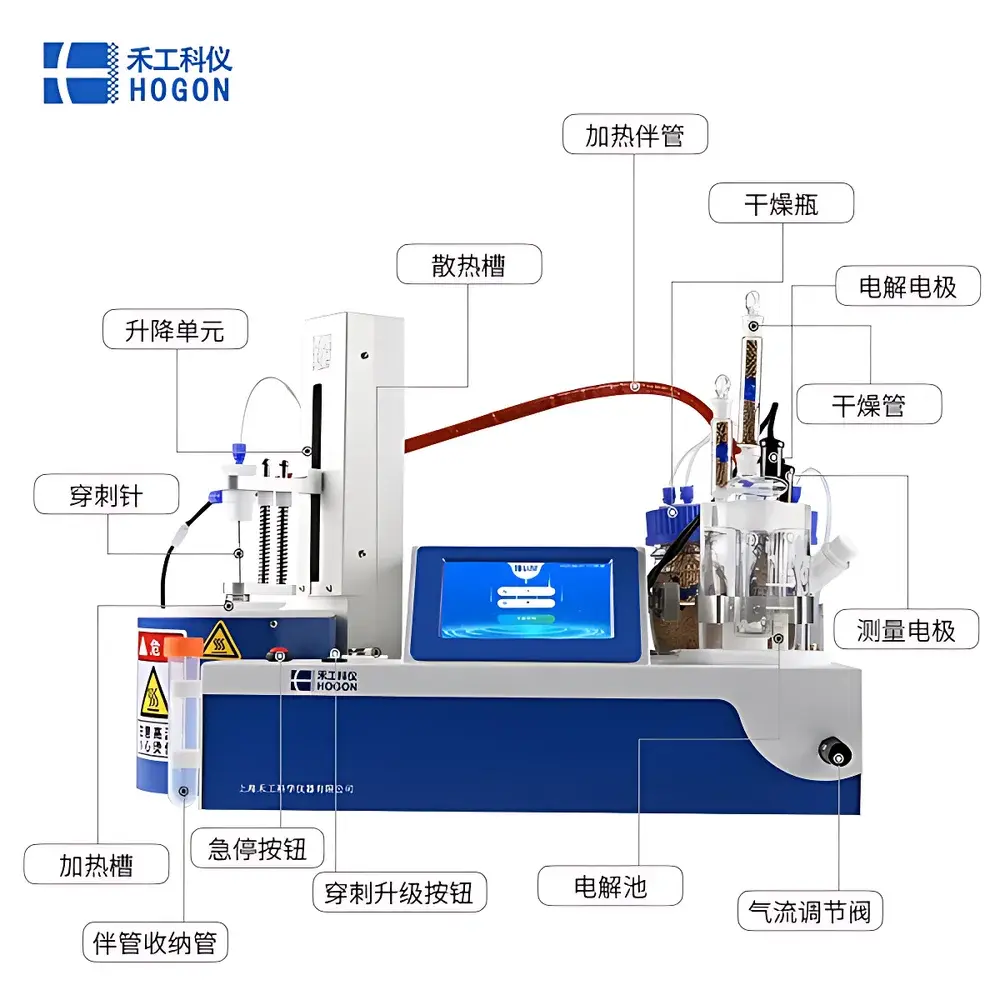
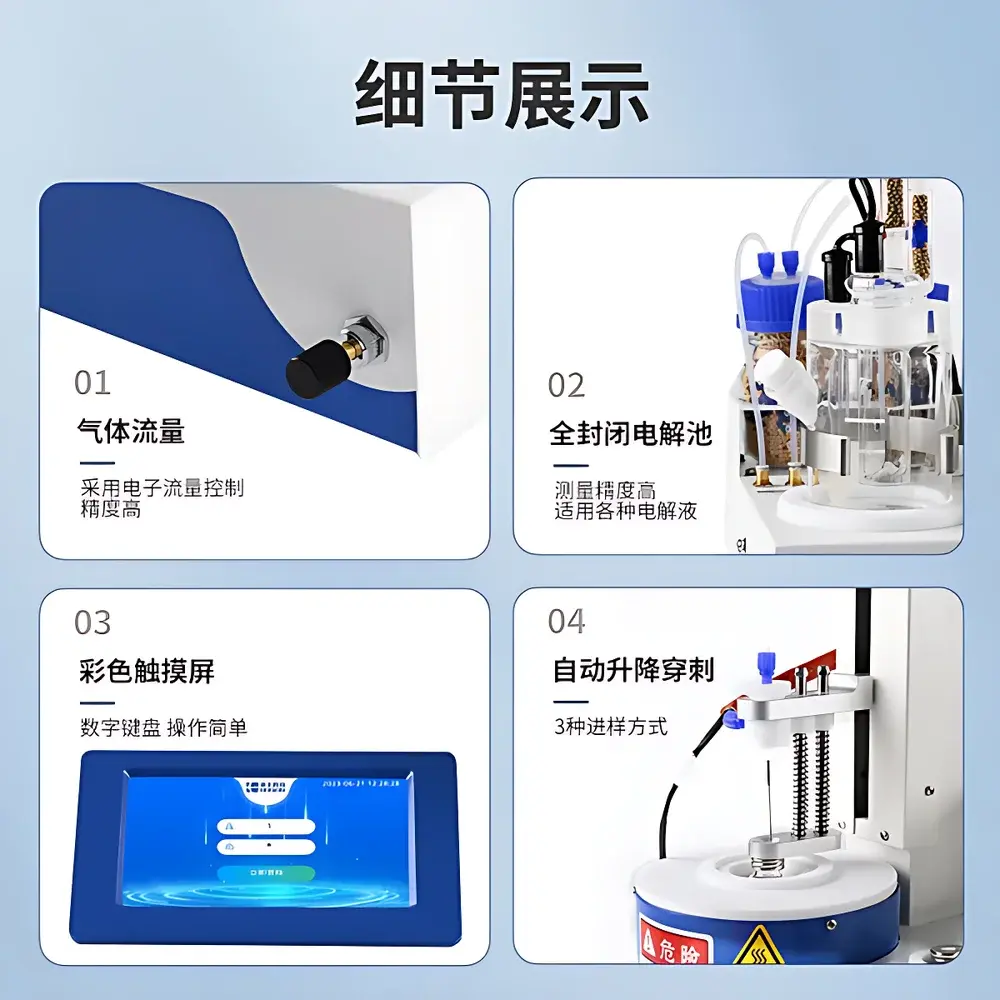
- Fully enclosed, argon-purged coulometric titration cell with integrated Pt generator/anode and dual Pt indicator electrodes—minimizing ambient moisture ingress and electrolyte degradation.
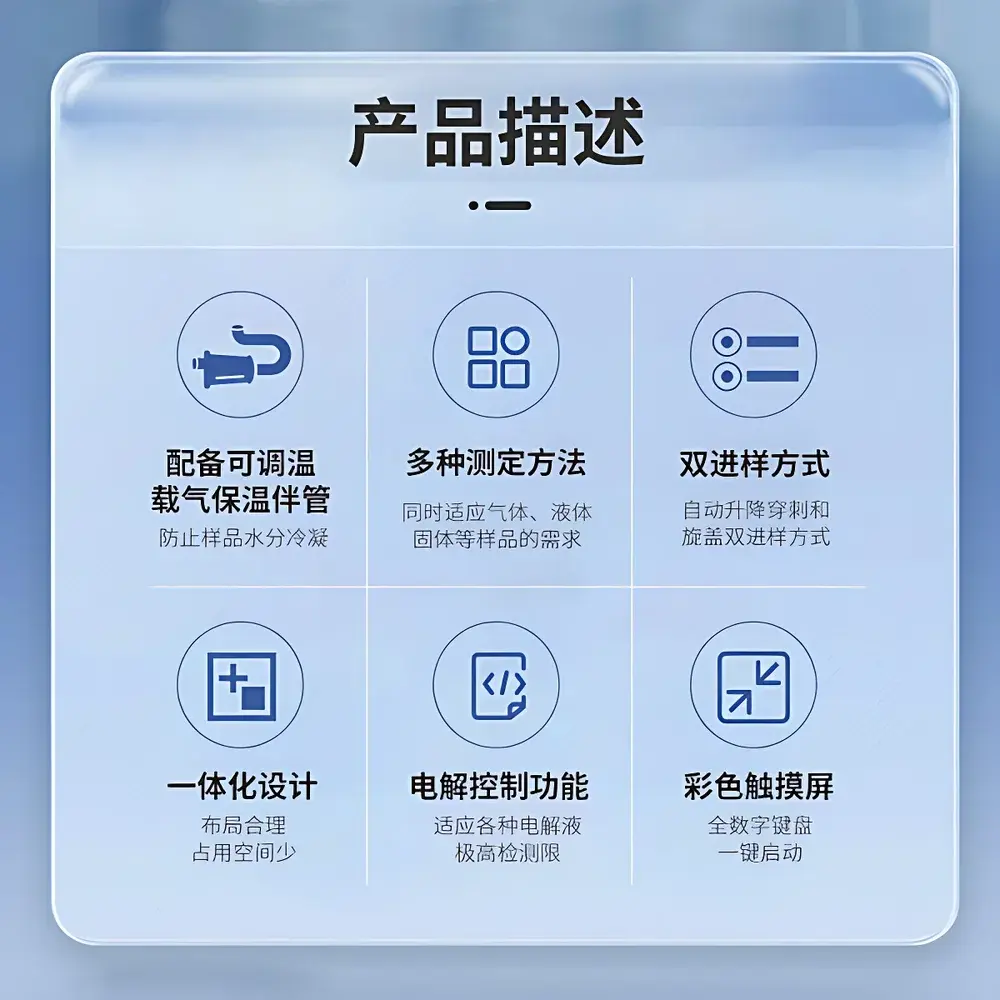
- Intelligent electrolysis control: Auto-adjusts current output and endpoint sensitivity based on real-time cell impedance and background drift; supports both conventional and stabilized KF reagents (e.g., Hydranal-Coulomat AG/AG-H).
- Hogon Adaptive Drift Compensation (HADC) algorithm: Continuously monitors and corrects for environmental humidity fluctuations and electrode polarization, maintaining measurement integrity without manual recalibration.
- 10.1-inch capacitive color touchscreen with intuitive icon-driven interface; full numeric keypad, one-touch method launch, and context-sensitive help overlays.
- Dual-mode sample introduction: Puncture-cap module for sealed vial sampling (ISO 12100 compliant), plus removable lid with purge gas (N₂ or dry air) pre-conditioning—enabling analysis of heat-labile monofilament and braided absorbable sutures (e.g., polyglycolic acid, polylactic acid, polydioxanone).
- Programmable temperature-controlled oven module: 25–285 °C range, ±0.1 °C stability, with three-stage ramp profiles to optimize water release kinetics from polymer matrices without thermal decomposition.
Sample Compatibility & Compliance
The AKF-CH6 is validated for direct analysis of non-aqueous, solid-phase biomaterials including synthetic absorbable sutures (PGA, PLA, PDO), natural collagen-based threads, and coated multifilament constructs. Sample mass ranges from 0.1–2.0 g, with typical suture testing performed at 0.22 ± 0.01 g (as demonstrated in internal validation reports). All hardware and firmware comply with IEC 61010-1:2010 safety standards. Data acquisition and storage conform to ALCOA+ principles; audit trail functionality satisfies FDA 21 CFR Part 11 requirements when paired with Hogon LIMS-Link software (optional). Method validation documentation aligns with ICH Q2(R2) guidelines for analytical procedure qualification.
Software & Data Management
Embedded firmware supports GLP-compliant data handling: automatic timestamping, user ID logging, method version tracking, and raw curve export (CSV/TXT). Integrated peak integration algorithms apply fixed or adaptive baseline correction per USP Annex A recommendations. Optional PC-based Hogon TitraSoft v4.2 enables multi-instrument fleet management, statistical process control (SPC) charting, and automated report generation (PDF/Excel) with customizable templates. All electronic records include immutable metadata: sample ID, operator, ambient RH/temperature, cell status, and reagent lot traceability.
Applications
- Quantitative moisture verification of surgical sutures prior to gamma/e-beam sterilization (moisture >200 ppm may induce polymer chain scission).
- Stability-indicating assay during accelerated aging studies (ICH Q1A).
- In-process QC of polymer extrusion batches for suture filament production.
- Comparative hygroscopicity screening of coating formulations (e.g., polyvinylpyrrolidone vs. hydroxypropyl cellulose).
- Supporting ISO 10993-1 biological evaluation dossiers through extractables and leachables moisture preconditioning protocols.
FAQ
What is the minimum detectable water content for surgical suture samples?
The system achieves reliable quantification down to 10 ppm (w/w) in 0.2 g samples, with linear dynamic range spanning 10–10,000 ppm.
Can the AKF-CH6 be used with non-suture medical devices?
Yes—it is routinely applied to wound dressings, drug-eluting stent coatings, hydrogel matrices, and lyophilized biologics excipients.
Is method transfer supported between AKF-CH6 units?
All instruments ship with identical firmware build versions and factory-calibrated cell constants; method files are fully portable via USB or network sync.
Does the system support 21 CFR Part 11 compliance out-of-the-box?
Audit trail, electronic signatures, and role-based access control require TitraSoft v4.2 with server deployment and IT infrastructure validation—available as a validated configuration package.
How often does the coulometric cell require maintenance?
Under standard suture testing conditions (≤5 analyses/day), electrode cleaning and electrolyte replacement are recommended every 6 months; full cell refurbishment is scheduled at 24-month intervals.





