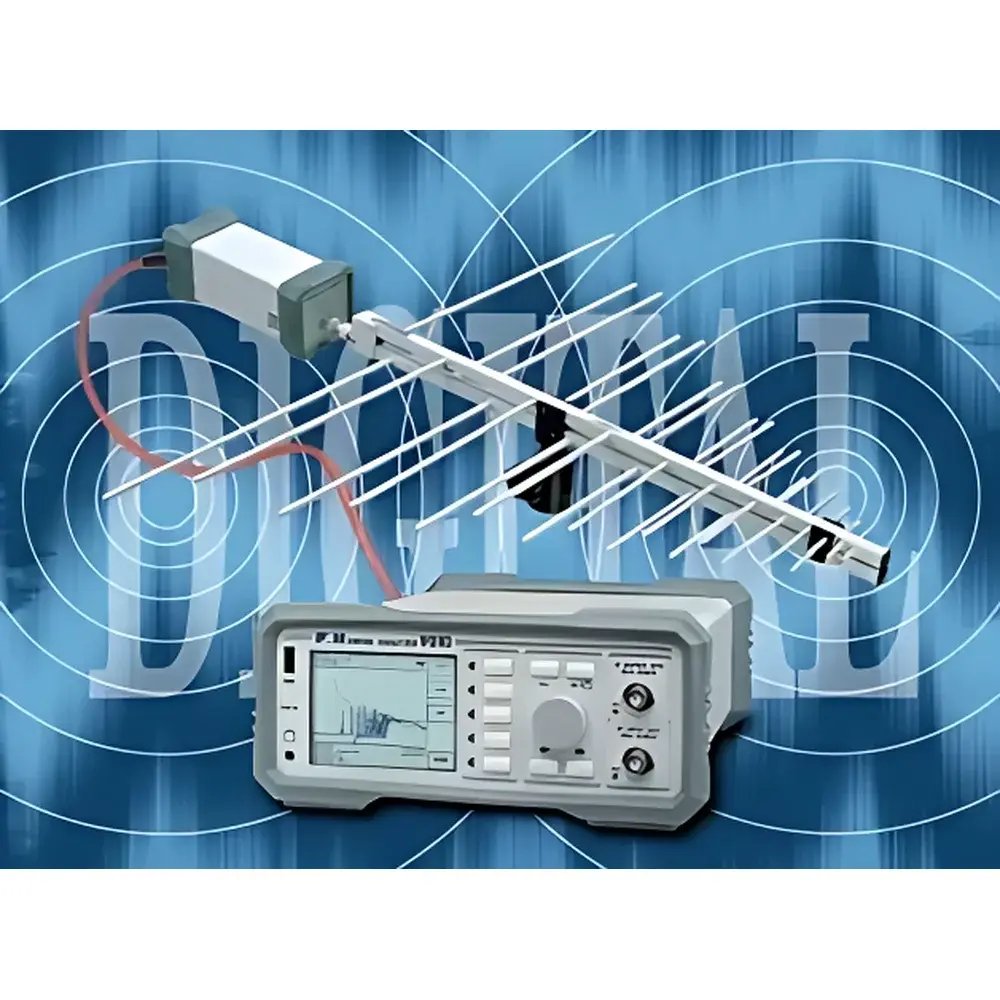
PMM 9010 + 9030 Digital EMC/EMI Test Receiver
| Brand | PMM |
|---|---|
| Origin | Italy |
| Model | PMM 9010 + 9030 |
| Frequency Range | 10 Hz – 3 GHz |
| Detection Modes | Peak (PK), Quasi-Peak (QP), Average (AVG), RMS |
| Interface | RS-232, Bluetooth (optional), High-Speed Optical Fiber (≥2.5 GB/s) |
| Compliance | CISPR 16-1-1, CISPR 16-2-3, MIL-STD-461G, EN 55032/55035, IEC 61000-4-3 |
| Built-in Signal Generator | 10 Hz – 50 MHz, programmable output |
| Scalar Network Analysis Capability | Yes |
| Real-Time FFT Processing | Yes |
| Internal Memory | High-capacity embedded storage |
| Preselector | Integrated analog preselector with pulse-handling capability |
| Digital LO Architecture | Fully synthesized complex digital IF local oscillator |
| Adaptive RF Attenuation | FPGA-controlled, DSP-driven automatic gain control |
| Click Analyzer | Optional (1-channel internal, 3-channel external) |
Overview
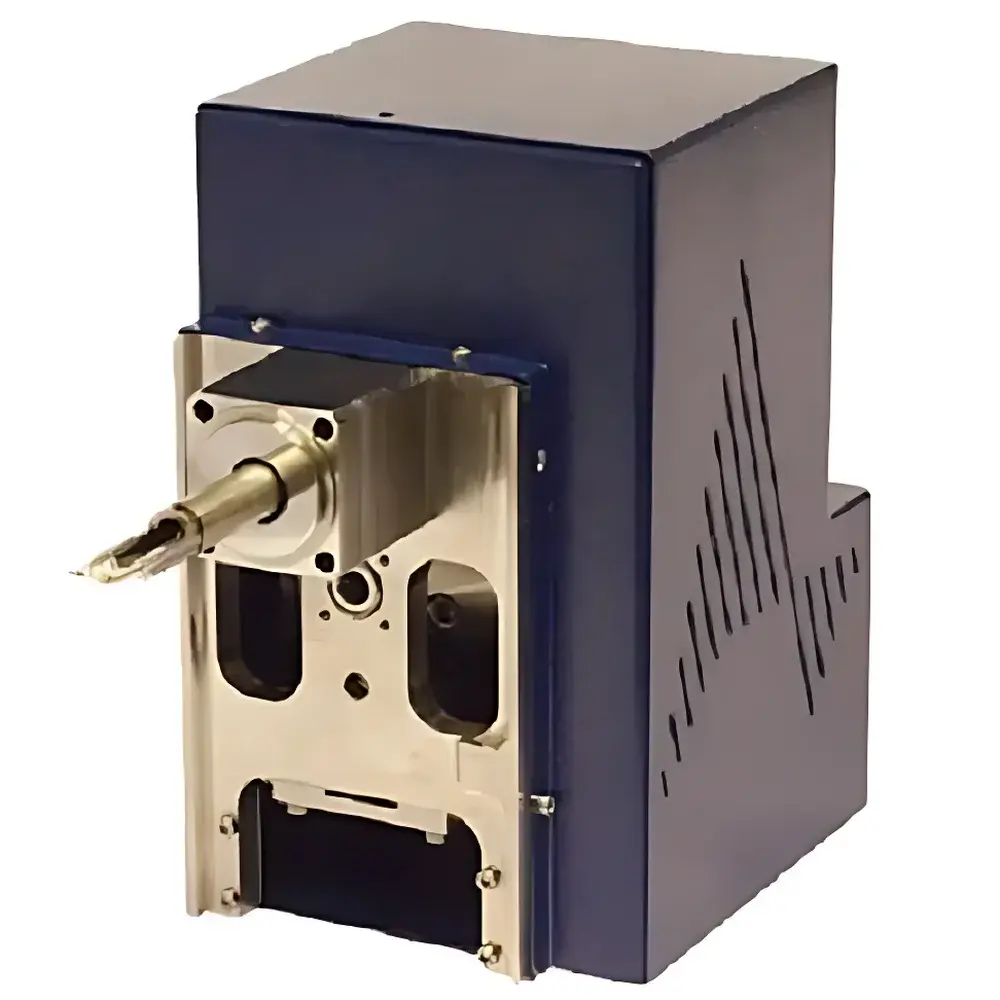
The PMM 9010 + 9030 Digital EMC/EMI Test Receiver is a fully digitized, dual-unit electromagnetic compatibility measurement system engineered for compliance testing in accordance with international standards including CISPR 16-1-1, EN 55032, EN 55035, IEC 61000-4-3, and MIL-STD-461G. The system comprises two tightly integrated modules: the PMM 9010 (10 Hz – 30 MHz), optimized for conducted emissions and low-frequency magnetic field immunity/radiation measurements, and the PMM 9030 (30 MHz – 3 GHz), a high-speed digital analysis unit capable of full-bandwidth spectral scanning in under 8 seconds. Unlike conventional swept-tuned or hybrid analog-digital receivers, this platform implements end-to-end signal digitization—except for the front-end preselector and input protection circuitry—enabling deterministic, repeatable, and traceable measurement outcomes. Its architecture leverages real-time FFT processing, a fully synthesized digital local oscillator with complex baseband generation (I/Q), and parallel digital detection pathways for PK, QP, AVG, and RMS simultaneously—eliminating analog detector drift and enabling standardized compliance evaluation without hardware recalibration between test modes.
Key Features
- Full digital signal path from IF stage onward, including numerically controlled complex LO synthesis supporting coherent demodulation and phase-sensitive analysis
- Parallel digital detection: simultaneous real-time computation of Peak, Quasi-Peak, Average, and RMS values per frequency bin, aligned with CISPR-defined time constants (e.g., 1 s QP reset interval)
- Integrated preselector with broadband pulse tolerance and dynamic limiting—critical for accurate transient and burst emission capture in radiated and conducted tests
- Adaptive RF attenuation controlled via FPGA-DSP co-processing, ensuring optimal dynamic range (up to 120 dB) while preserving signal integrity and preventing front-end saturation
- Built-in calibrated signal generator (10 Hz – 50 MHz), programmable in amplitude and frequency, supporting self-calibration routines and reference signal injection for LISN verification and probe calibration
- Scalar network analysis mode enabling insertion loss characterization, filter response validation, and antenna factor correction workflows
- High-speed optical fiber interface (≥2.5 GB/s) linking 9010 and 9030 units, enabling synchronized time-domain and frequency-domain data fusion across the full 10 Hz – 3 GHz span
- Embedded click analyzer option (1 internal + 3 external channels), compliant with CISPR 14-1 and EN 55014-1 for appliance noise assessment
Sample Compatibility & Compliance
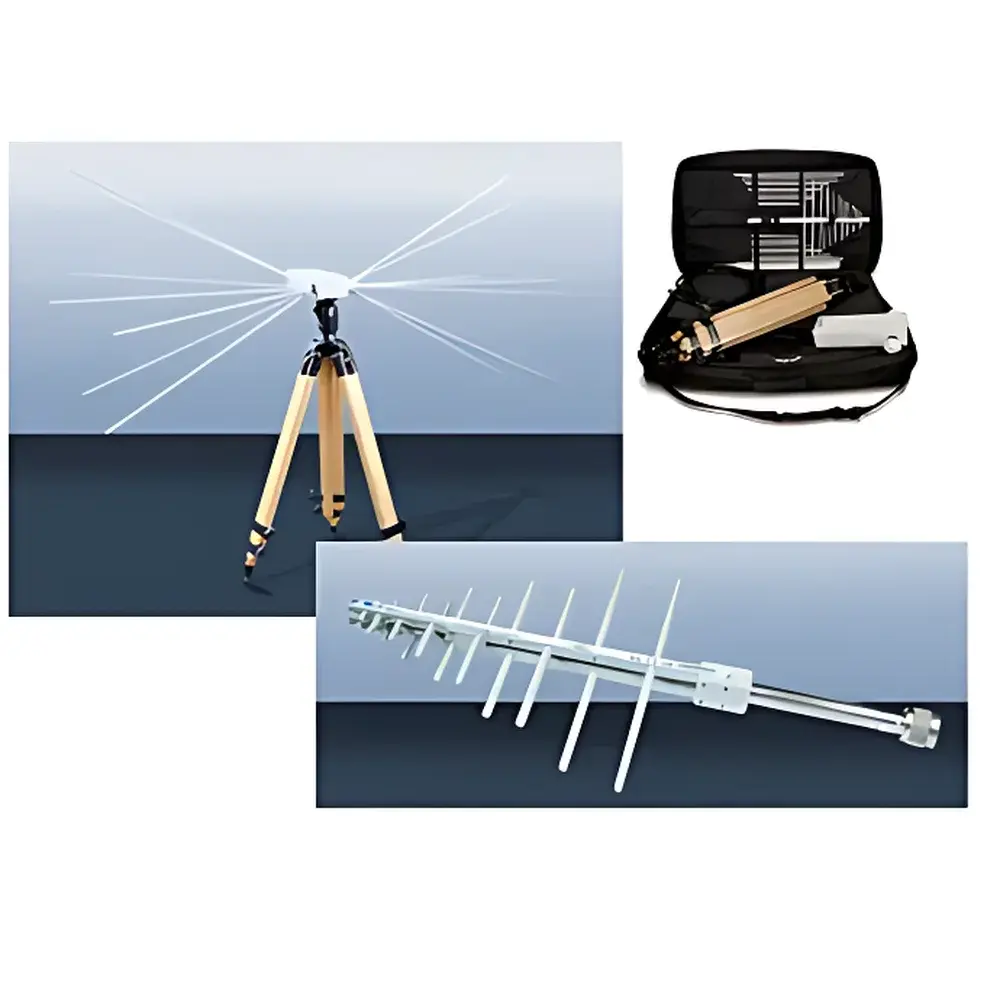
The PMM 9010 + 9030 supports comprehensive EMC test configurations across both conducted and radiated domains. For conducted emissions, it interfaces seamlessly with standardized LISNs (e.g., AMN, V-AMN), current probes (e.g., 100 kHz – 1 GHz), and voltage probes per CISPR 16-1-2. In radiated applications, it accepts signals from calibrated antennas (biconical, log-periodic, horn), E/H-field probes, and absorption clamps per CISPR 16-1-4 and ANSI C63.4. All measurement modes—including PK, QP, AVG, and RMS—are implemented in strict conformance with CISPR 16-1-1 Annex D timing requirements and detector weighting functions. The system’s firmware embeds immutable CISPR-compliant limit lines (e.g., Class B limits per EN 55032), stored in non-volatile memory and directly referenced during pass/fail evaluation. It meets GLP/GMP documentation requirements through audit-trail-enabled software logging and supports FDA 21 CFR Part 11 compliance when deployed with validated PC-based control suites.
Software & Data Management
The receiver operates an embedded real-time OS with a graphical user interface accessible via front-panel rotary encoder and tactile keys—enabling standalone operation without external PCs. Alternatively, remote control is supported via RS-232, USB virtual COM port, or optional Bluetooth 5.0 module. A dedicated Windows-based application (PMM EMCoS) provides advanced post-processing: time-gated FFT, spectrogram generation, multi-segment limit comparison, and automated report generation per ISO/IEC 17025 templates. All raw I/Q data, detector outputs, and metadata (timestamp, instrument ID, configuration hash) are stored in IEEE-compliant .SAF (Signal Analysis Format) files, ensuring long-term archival integrity and third-party interoperability. Firmware updates are delivered via signed binary packages with SHA-256 verification, maintaining cryptographic traceability for regulatory audits.
Applications
This system serves as the primary measurement engine in accredited EMC laboratories performing pre-compliance and full-certification testing for commercial, industrial, automotive, and defense electronics. Typical use cases include: verification of switching power supply emissions against EN 55032; radiated immunity sweeps per IEC 61000-4-3 using field probes; conducted disturbance analysis on automotive ECUs per ISO 7637-2 and CISPR 25; military platform EMI screening per MIL-STD-461G RS103 and CS114; and click/noise evaluation for household appliances under CISPR 14-1. Its sub-second A-band scan capability (1 s full 9–150 kHz sweep) makes it uniquely suited for detecting intermittent or duty-cycled interference sources—such as microcontroller clock harmonics, PWM motor drives, or wireless module burst transmissions—that evade conventional swept-receiver detection.
FAQ
Does the PMM 9010 + 9030 comply with CISPR 16-1-1 ed. 4.0 (2023)?
Yes—the firmware and detector algorithms are certified to CISPR 16-1-1:2023 Edition 4.0, including updated QP weighting curves and RMS detector definitions.
Can the system perform real-time spectrum monitoring across the full 10 Hz – 3 GHz range?
No—real-time bandwidth is limited to 40 MHz (via FFT) in the 9030 unit; however, overlapping segmented sweeps enable near-real-time coverage of wide spans with <100 ms dwell per segment.
Is external calibration required annually?
Annual calibration is recommended per ISO/IEC 17025, but the built-in signal generator and self-test routines reduce calibration uncertainty drift and extend verification intervals for routine QA checks.
What file formats are supported for data export?
Native .SAF (Signal Analysis Format), CSV (detector traces), PNG/JPEG (spectrograms), and PDF (automated compliance reports).
Does the system support remote operation in automated test benches?
Yes—SCPI command set over RS-232/USB and TCP/IP Ethernet (via optional adapter) enables integration into LabVIEW, Python, or custom CI/CD test orchestration environments.