
Stresstech xstress3000 Portable X-Ray Residual Stress Analyzer
| Brand | Stresstech Oy |
|---|---|
| Origin | Finland |
| Model | xstress3000 |
| Detector Type | MOS linear imaging detector (512-pixel) |
| Angular Resolution | 0.029°/pixel |
| 2θ Range | 117–170° continuous adjustment |
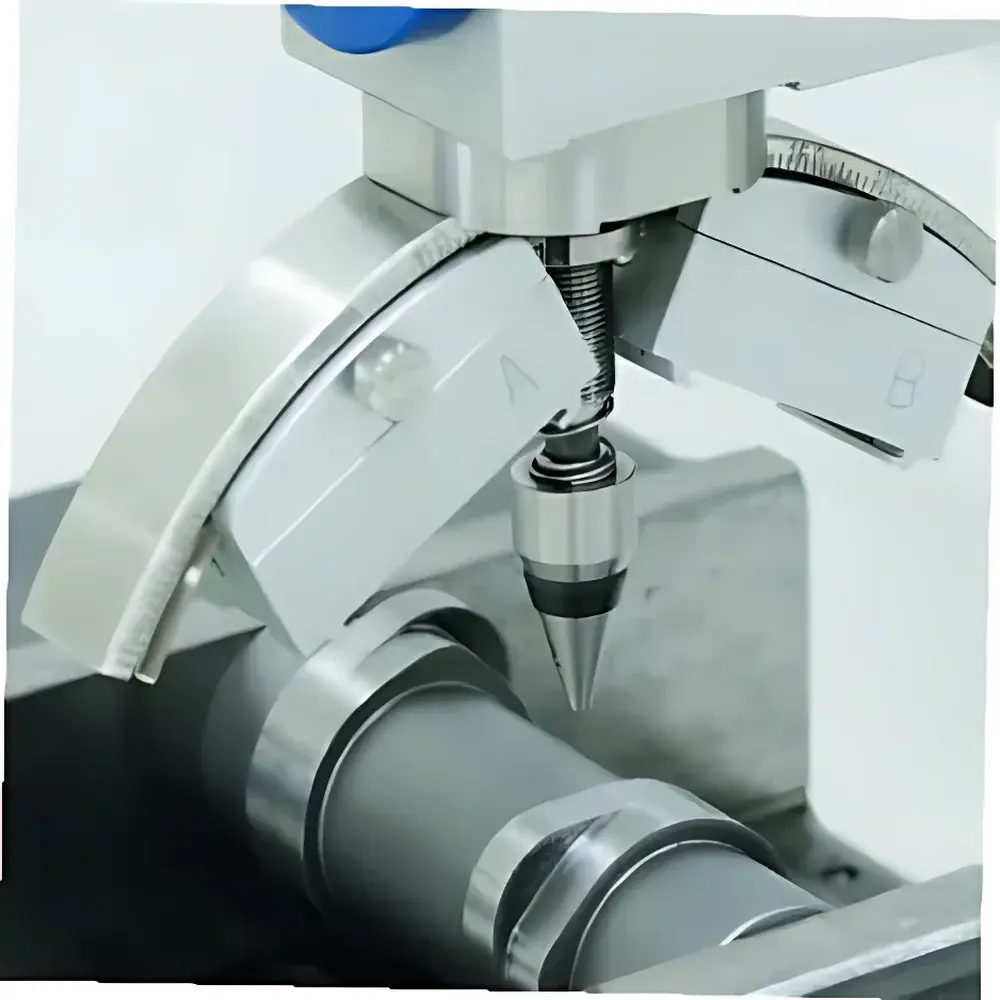
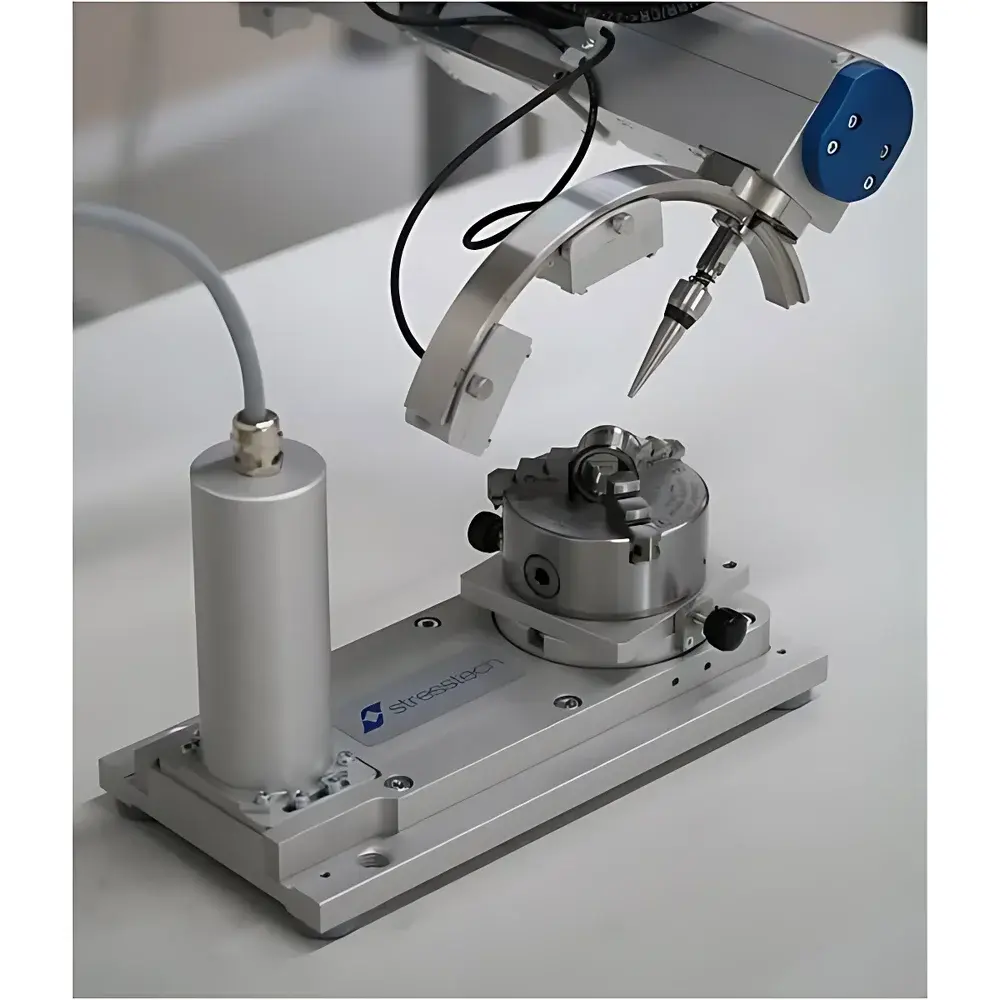
| Goniometer Geometry | Modified y-geometry (side-inclination) |
| Cooling | Sealed recirculating system with forced-air heat exchanger |
| Power Consumption | 1 mW (detector only) |
| Operating System | Windows-based control software |
| Compliance | Designed for ASTM E915, ISO 21432, and EN 15305-compliant residual stress measurement workflows |
Overview
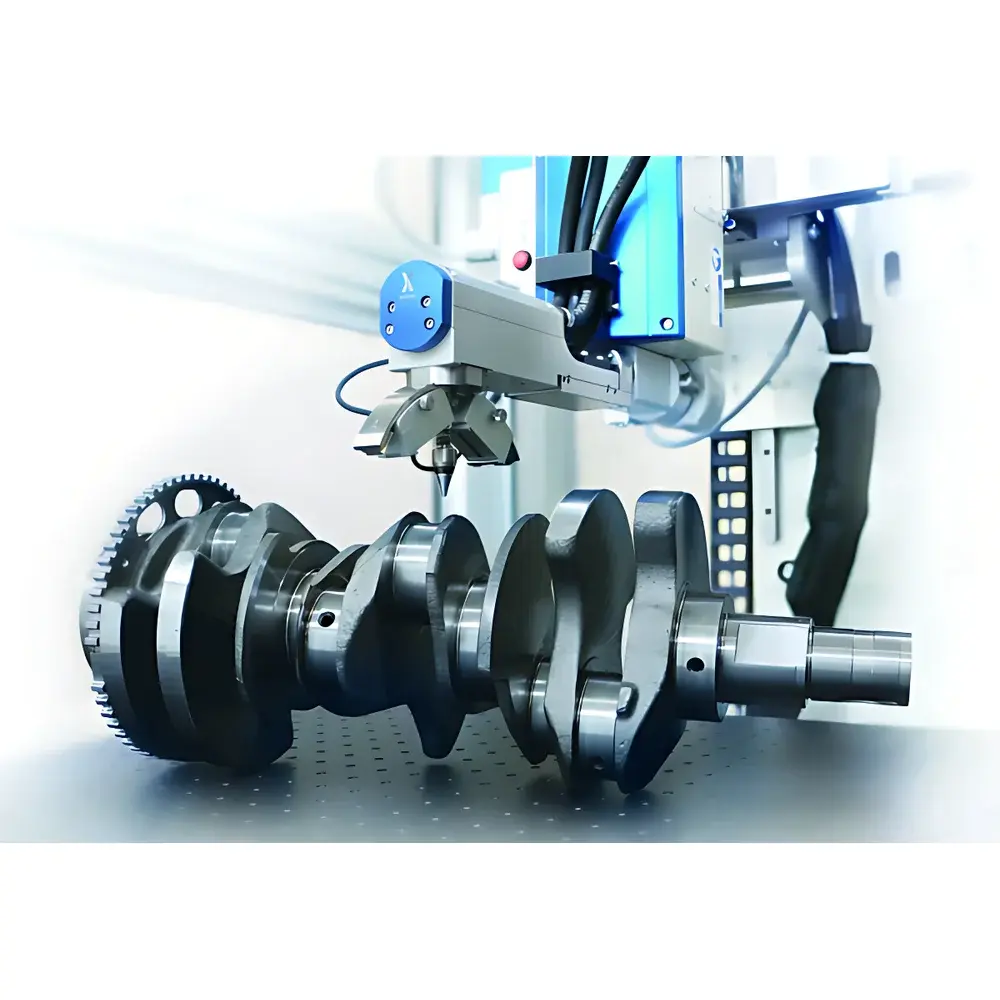
The Stresstech xstress3000 Portable X-Ray Residual Stress Analyzer is a field-deployable, microprocessor-controlled X-ray diffraction (XRD) system engineered for quantitative determination of near-surface residual stresses in polycrystalline metallic components. It operates on the sin²ψ method—based on lattice strain measurement via Bragg angle shift analysis—enabling non-destructive, point-specific evaluation of both macroscopic residual stress states and retained austenite phase fractions. Unlike laboratory-bound diffractometers, the xstress3000 integrates compact goniometry, solid-state position-sensitive detection, and real-time data processing into a single portable unit weighing under 25 kg. Its sealed recirculating cooling architecture eliminates dependency on external water supply or chiller infrastructure, making it suitable for use in production floors, maintenance hangars, power plants, pipeline right-of-ways, and offshore platforms—without compromising measurement traceability or repeatability.
Key Features
- Modified y-geometry goniometer enabling side-inclination measurements—optimized for accessibility on curved, recessed, or constrained surfaces including gear teeth, bearing races, turbine blades, and weld toes.
- Dual symmetrically mounted MOS linear imaging detectors (512-pixel resolution) delivering high signal-to-noise ratio and angular precision of 0.029° per pixel—critical for accurate peak centroid determination in low-intensity diffraction patterns.
- Continuously adjustable 2θ range from 117° to 170°, supporting multiple characteristic X-ray lines (e.g., Cr Kα, Co Kα, Fe Kα) across diverse alloy systems without mechanical reconfiguration.
- Automated goniometer calibration routine with sub-micron positional reproducibility (<0.003 mm linear error), ensuring long-term stability of stress calculations across thermal cycles and transport-induced vibration.
- Integrated Windows-based software suite with concurrent acquisition, stress tensor calculation, retained austenite quantification, and automated report generation—including audit trail logging compliant with GLP/GMP documentation requirements.
- Modular collimator system allowing rapid interchange between 1.0 mm, 2.0 mm, and 4.0 mm apertures to balance spatial resolution and intensity for varying grain sizes and surface conditions.
Sample Compatibility & Compliance
The xstress3000 supports residual stress analysis on ferrous and non-ferrous engineering alloys—including carbon steels, stainless steels, titanium alloys, nickel-based superalloys, and aluminum series—provided crystallite size exceeds ~20 nm and lattice parameters are well-defined. Surface preparation methods compatible with the system include mechanical grinding, electropolishing (when used with optional electrolytic polishing station), and laser ablation for depth-profiling applications. Measurement protocols align with internationally recognized standards: ASTM E915 (Standard Test Method for Verifying the Alignment of X-Ray Diffraction Instrumentation for Residual Stress Measurement), ISO 21432 (Non-destructive testing — Standard test method for determining residual stresses by X-ray diffraction), and EN 15305 (Non-destructive testing — Qualification and certification of NDT personnel — General principles). All stress results are traceable to NIST-certified reference materials where applicable, and raw diffraction data files retain full metadata for third-party validation.
Software & Data Management
Control and analysis are executed through Stresstech’s proprietary xstress software running on embedded Windows OS. The interface provides simultaneous operation of X-ray tube voltage/current control, goniometer motion sequencing, detector readout, and real-time peak fitting using cross-correlation algorithms. Multi-point exposure sequences support automated mapping of stress gradients across weld zones or heat-affected regions. A built-in material database contains over 180 preloaded crystallographic references (lattice parameters, reflection indices, absorption coefficients), editable by users for custom alloys. Data export formats include CSV, XML, and PDF reports with embedded signature fields, time-stamped audit logs, and configurable templates meeting FDA 21 CFR Part 11 electronic record requirements. Raw .xrd and .dat files are stored with full acquisition metadata—including tube settings, ψ-tilt angles, collimator ID, and environmental temperature—ensuring full analytical transparency.
Applications
- Verification of stress relief effectiveness after post-weld heat treatment (PWHT) in pressure vessel fabrication and pipeline girth welds.
- In-service monitoring of rolling contact fatigue precursors in railway axles, wind turbine main shafts, and aerospace landing gear components.
- Quantitative assessment of compressive residual stress profiles induced by shot peening, laser shock peening, or roller burnishing—supporting process qualification per SAE AMS 2430 and AMS 2432.
- Residual austenite quantification in case-hardened gears and bearings to predict dimensional stability and wear resistance.
- Root cause analysis of premature cracking in high-strength fasteners, turbine discs, and nuclear reactor internals.
- On-site validation of additive manufacturing build parameters—correlating local stress states with layer-by-layer deposition history.
FAQ
What X-ray tube options are supported by the xstress3000?
The system is factory-configured with either Cr or Co anode X-ray tubes; Fe anode variants are available upon request for specialized ferrous alloy applications.
Is radiation shielding required during operation?
Yes—users must comply with local regulatory requirements (e.g., IAEA Safety Standards Series No. GSR Part 3). The xstress3000 includes interlocked lead-lined housing and automatic beam shuttering; portable lead-acrylic shields (optional) meet ISO 6520-1 shielding performance criteria.
Can the instrument perform depth-resolved stress measurements?
Yes—when coupled with an electrolytic polishing unit or controlled electrochemical etching setup, sequential layer removal enables stepwise stress profiling to depths up to 100 µm.
Does the software support automated report generation for quality audits?
Yes—reports include operator ID, calibration certificate numbers, measurement date/time, environmental conditions, raw diffraction plots, stress tensor components (σ₁₁, σ₂₂, σ₃₃, τ₁₂), and uncertainty estimates per GUM (JCGM 100:2008) guidelines.
What maintenance intervals are recommended?
Annual verification of goniometer alignment and detector linearity is advised; X-ray tube lifetime is rated at ≥5,000 operating hours under nominal conditions. Full service documentation and remote diagnostics support are provided via Stresstech’s global technical network.





