
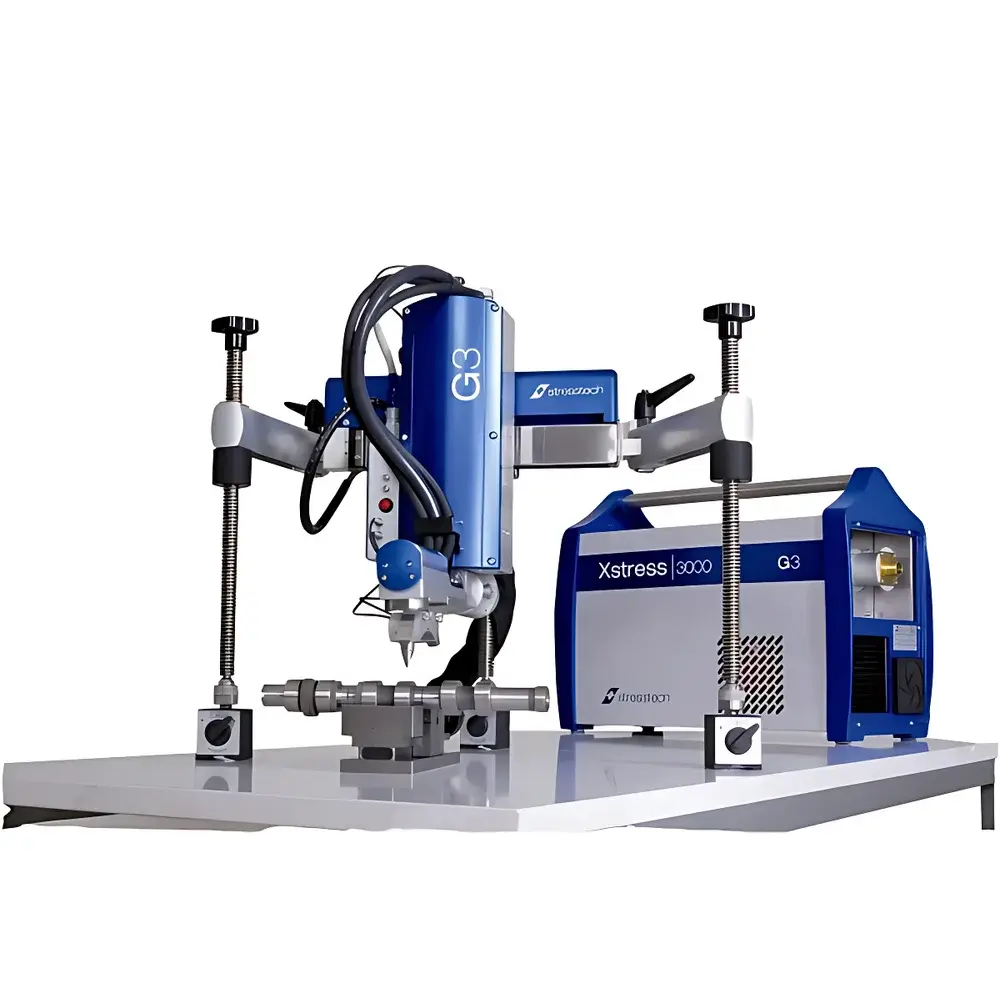
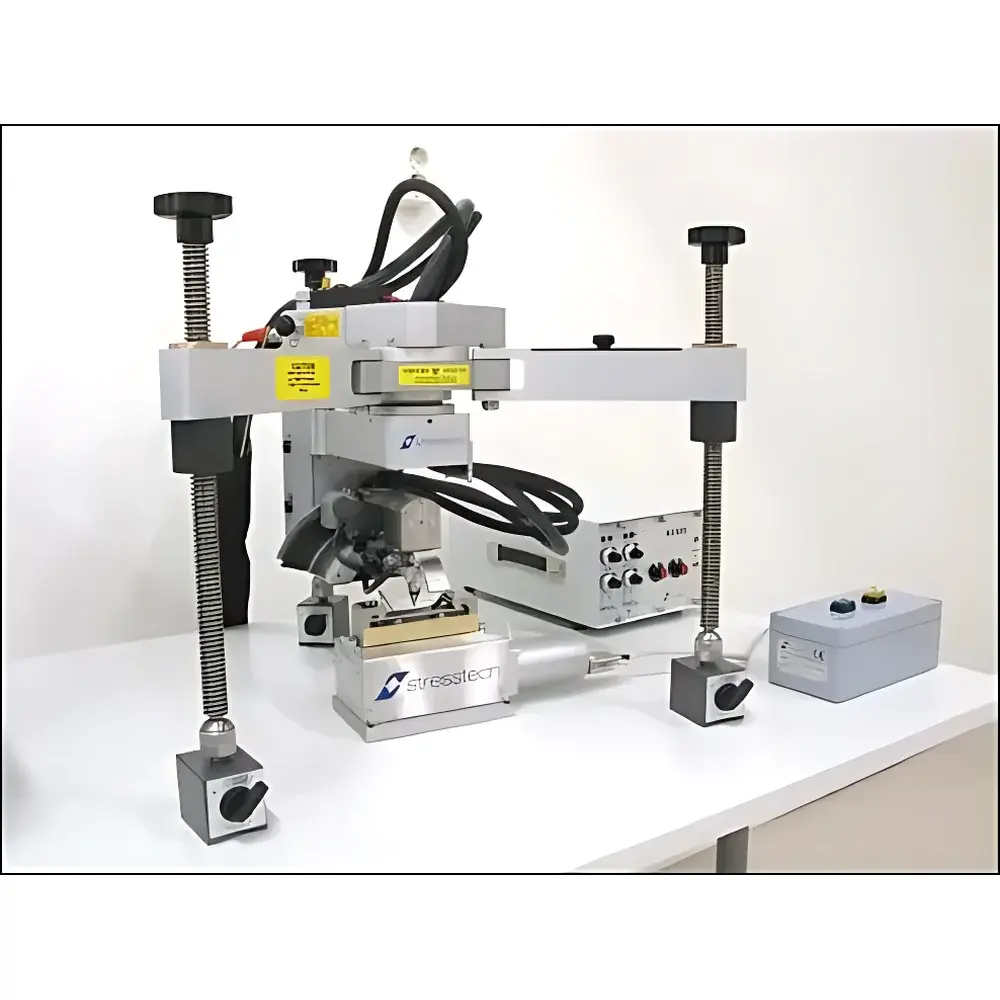
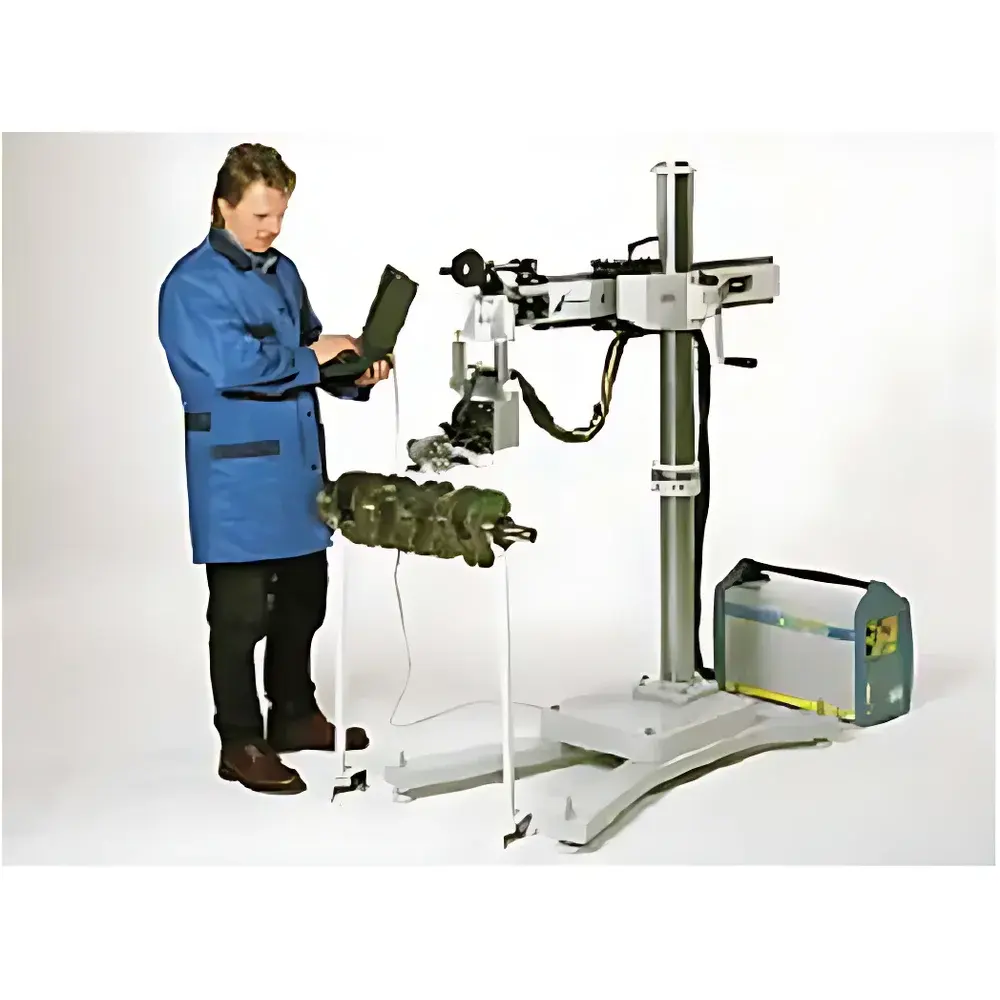
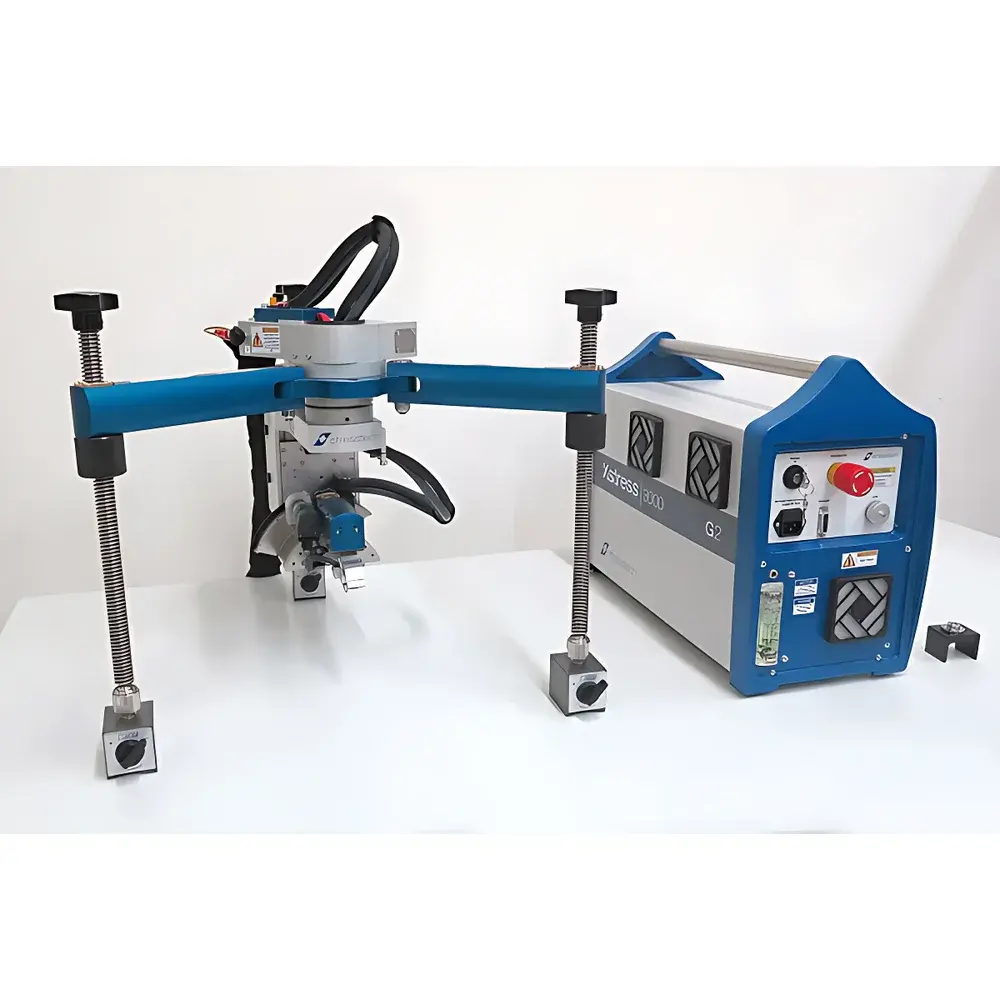
Stresstech XStress 3000 Portable X-Ray Residual Stress Analyzer
| Brand | Stresstech Oy |
|---|---|
| Origin | Finland |
| Model | XStress 3000 |
| Application | Residual stress measurement via X-ray diffraction (XRD) |
| Portability | Field-deployable, battery-optional operation |
| Power Requirement | Single AC source (100–240 V, 50/60 Hz) |
| Setup Time | ≤10 minutes |
| Communication Interface | Ethernet, USB, and embedded Windows-based controller |
| Compliance | Designed for ISO 21940, ASTM E915, and EN 15305-compliant residual stress evaluation |
Overview
The Stresstech XStress 3000 is a fully integrated, portable X-ray diffraction (XRD)-based residual stress analyzer engineered for high-precision, non-destructive determination of near-surface residual stresses in polycrystalline metallic components. It operates on the sin²ψ method—measuring lattice strain through angular shifts of Bragg diffraction peaks—and computes macroscopic residual stress using Hooke’s law and material-specific elastic constants. Unlike laboratory-bound diffractometers, the XStress 3000 delivers metrological-grade results in situ: on production floors, at maintenance sites, or within field service environments—without requiring sample removal, vacuum chambers, or fixed infrastructure. Its compact monochromator-equipped X-ray tube (Cr or Co anode, selectable), precision goniometer, and motorized alignment system ensure repeatable incident angle control and peak position resolution under variable ambient conditions.
Key Features
- True field-portable architecture: Weighing under 28 kg with integrated carrying handle and foldable support legs; operable on standard AC power or optional external battery pack for >2 hours of continuous measurement.
- Embedded Windows-based control unit: Runs proprietary Stresstech software natively—no external PC required for basic operation; full remote control and data acquisition enabled via Ethernet or USB 2.0.
- Automated d-sin²ψ multi-point acquisition: Supports up to 16 ψ-tilt positions per measurement point, with real-time peak fitting and automatic background subtraction using pseudo-Voigt profile modeling.
- Material-aware calibration engine: Integrates a built-in database of >120 crystalline phases (including common steels, aluminum alloys, titanium grades, and nickel superalloys) with user-definable elastic constants and X-ray absorption coefficients.
- Safety-certified radiation design: Complies with IEC 61010-1 and EU Directive 2013/59/Euratom; incorporates dual interlock systems, shutter-controlled beam gating, and real-time dose monitoring with audible/visual alerts.
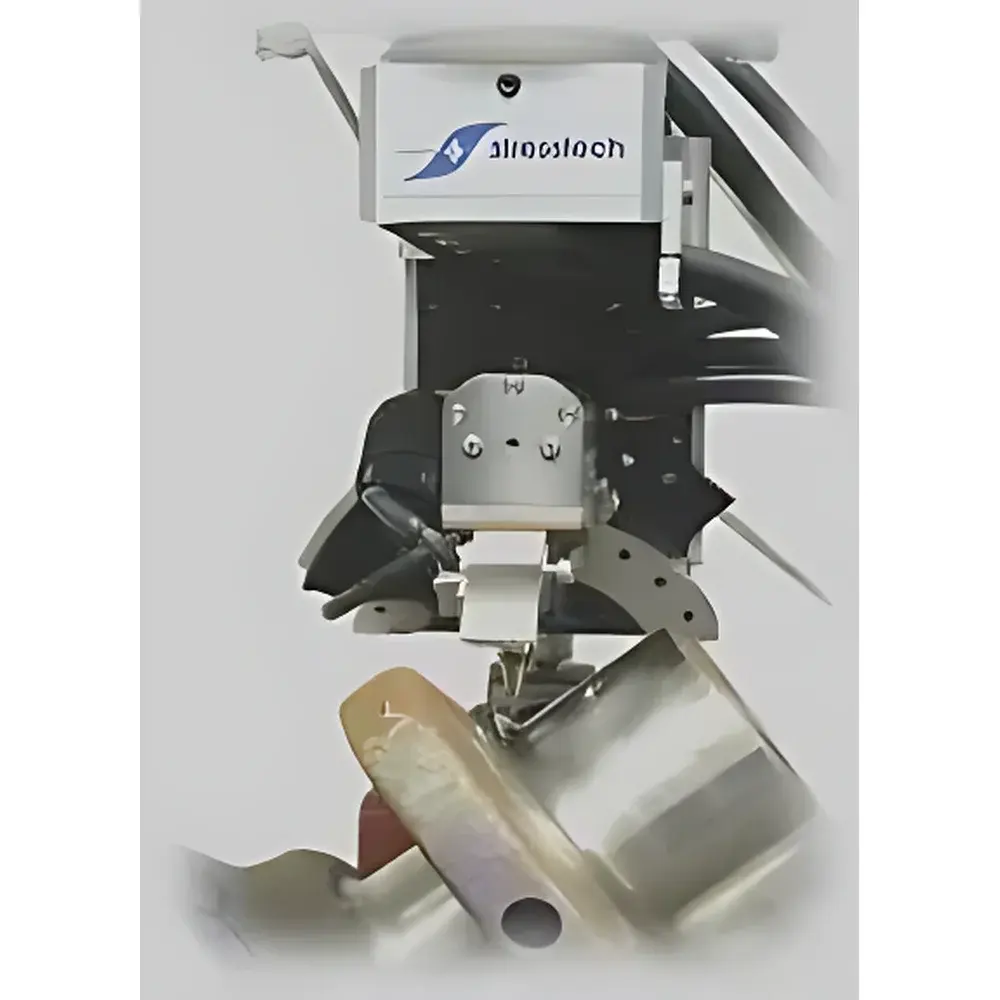
- Modular collimator system: Interchangeable 1–4 mm diameter collimators with automatic distance compensation—enabling rapid adaptation to surface curvature, roughness, or accessibility constraints.
Sample Compatibility & Compliance
The XStress 3000 accommodates flat, curved, or contoured surfaces (minimum radius: 25 mm) on ferrous and non-ferrous alloys—including hardened steels, austenitic stainless steels, cast iron, aluminum 6061/7075, Ti-6Al-4V, and Inconel 718. Surface preparation requirements are minimal: grinding or electropolishing to Ra < 0.8 µm suffices for reliable diffraction signal-to-noise ratio. All measurements adhere to internationally recognized standards: ASTM E915 (Standard Test Method for Verifying the Alignment of X-Ray Diffraction Instrumentation for Residual Stress Measurement), ISO 21940 (Mechanical vibration – Balance quality requirements of rotors), and EN 15305 (Non-destructive testing – Test method for residual stress analysis by X-ray diffraction). Audit-ready reporting includes full traceability of instrument parameters, operator ID, environmental logs (temperature/humidity), and raw diffraction spectra—supporting GLP/GMP documentation workflows.
Software & Data Management
Stresstech’s XStress Studio v5.x provides a unified interface for instrument control, real-time visualization, quantitative analysis, and report generation. The software implements four standardized stress calculation algorithms: centroid, parabolic fit, Gaussian fit, and full-width-at-half-maximum (FWHM)-weighted peak shift—each selectable per measurement point. Integrated data management supports hierarchical project structures, version-controlled measurement templates, and export to CSV, XML, or PDF formats compliant with FDA 21 CFR Part 11 requirements (electronic signatures, audit trails, and user access levels configurable). Raw .xrdml files preserve all detector metadata—including exposure time, tube voltage/current, collimator ID, and ψ/2θ motor positions—for third-party reprocessing or cross-platform validation.
Applications
- Weld integrity verification: Mapping heat-affected zone (HAZ) stresses in pipeline girth welds, pressure vessel seams, and offshore structural joints.
- Aerospace component certification: Residual stress profiling of turbine blades, landing gear forgings, and additive-manufactured (AM) parts pre- and post-hot isostatic pressing (HIP).
- Automotive powertrain QA: Quantifying grinding-induced tensile stresses in camshafts, crankshafts, and bearing races—correlating directly with fatigue life predictions.
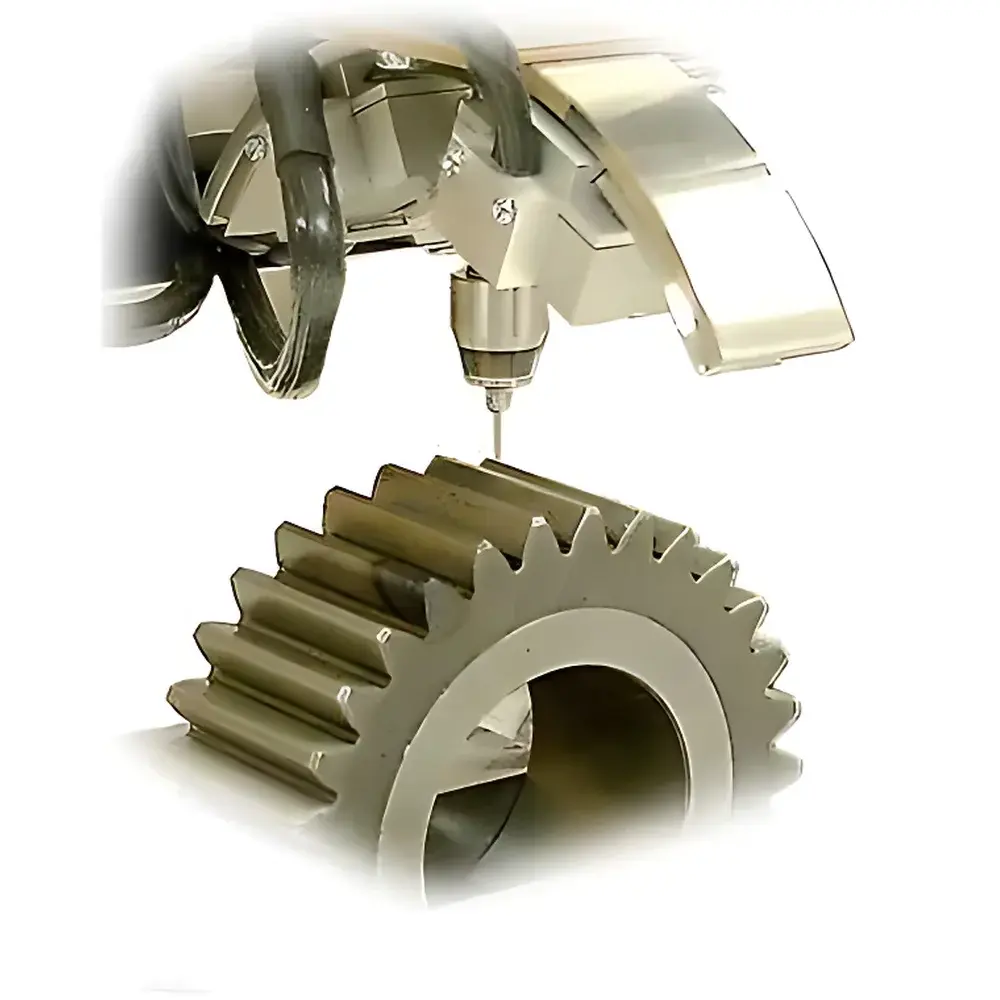
- Rolling mill and forging process validation: In-line stress assessment of cold-rolled strips, extruded profiles, and die-forged gears to detect undesirable compressive/tensile gradients.
- Research & development: Correlating thermo-mechanical processing parameters (e.g., shot peening intensity, laser shock peening fluence) with subsurface stress depth profiles (via incremental electrochemical layer removal).
FAQ
What X-ray tube options are available for the XStress 3000?
The system ships standard with a chromium (Cr) Kα source (λ = 2.2909 Å); cobalt (Co) Kα (λ = 1.7889 Å) is available as a factory-configurable option for improved penetration in low-absorption alloys such as aluminum or titanium.
Does the instrument support residual奥氏体 (austenite) quantification?
Yes—XStress Studio includes a dedicated retained austenite module that applies the ASTM E975 methodology using integrated intensity ratios of (200), (220), and (311) ferrite/austenite peaks.
Can measurement data be exported for statistical process control (SPC)?
All numerical outputs—including principal stress components (σ₁, σ₂, σ₃), von Mises equivalent stress, and measurement uncertainty estimates—are exportable in structured CSV format compatible with JMP, Minitab, and Python-based SPC libraries.
Is remote firmware update supported?
Firmware updates are delivered via encrypted .bin packages through Stresstech’s authorized service portal; updates preserve all user-defined calibration files and historical project archives.
What safety certifications does the XStress 3000 hold?
It carries CE marking under the EU Electromagnetic Compatibility (EMC) and Low Voltage Directives, complies with IEC 62471 (Photobiological Safety), and meets radiation safety requirements per IEC 61010-1:2010 and national regulations in the US (21 CFR 1020.40), UK, Germany, and Japan.






