
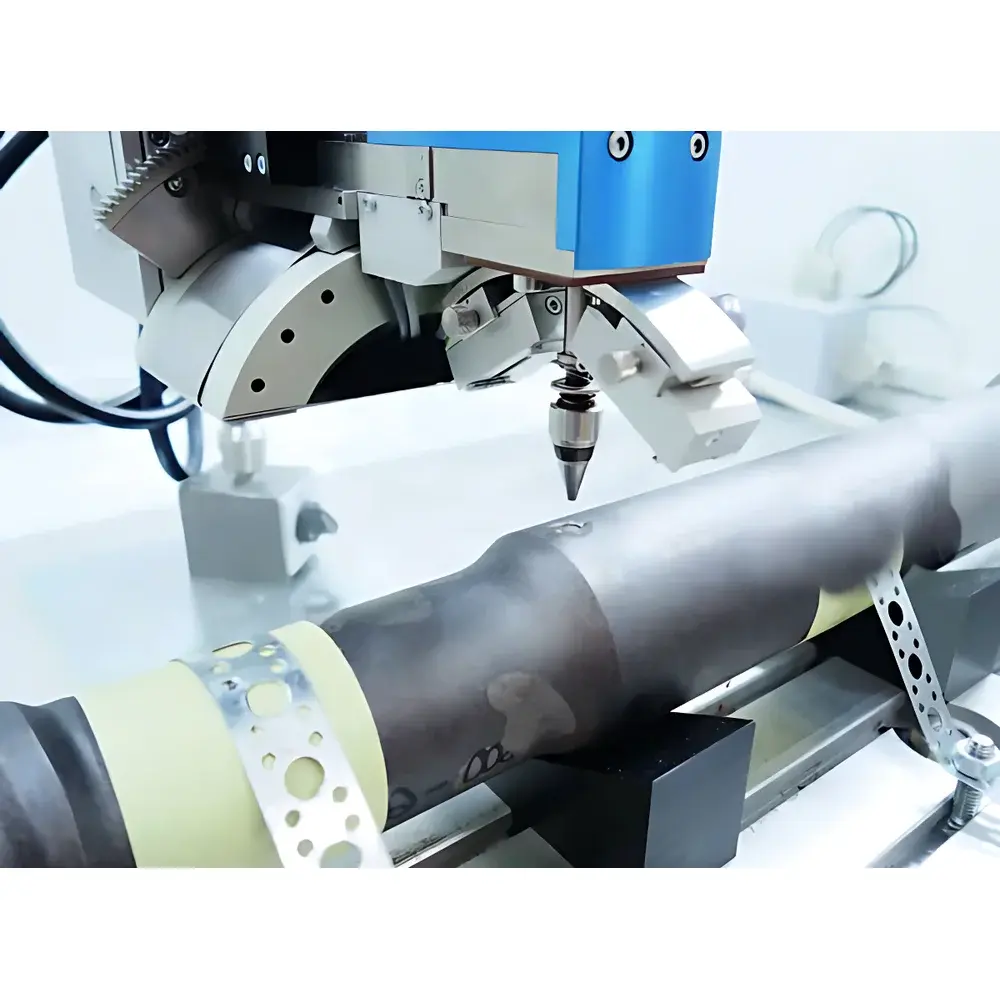
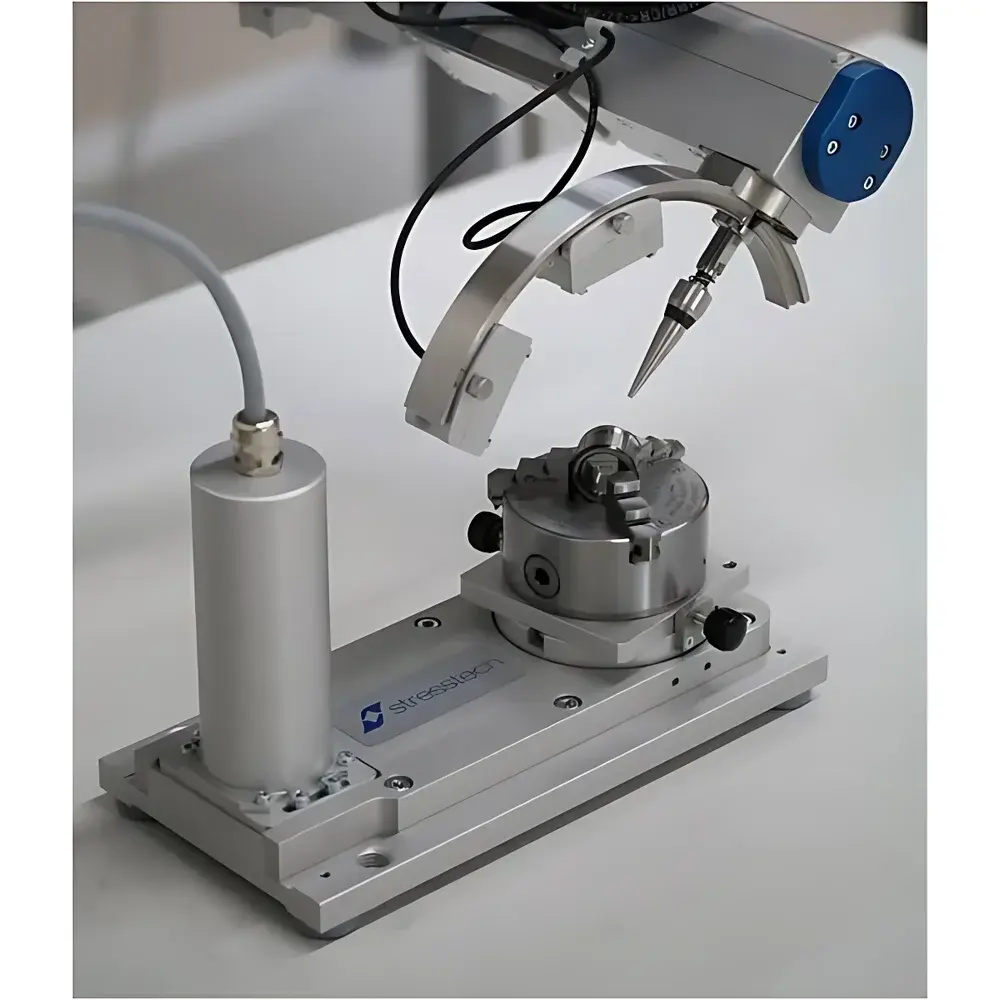
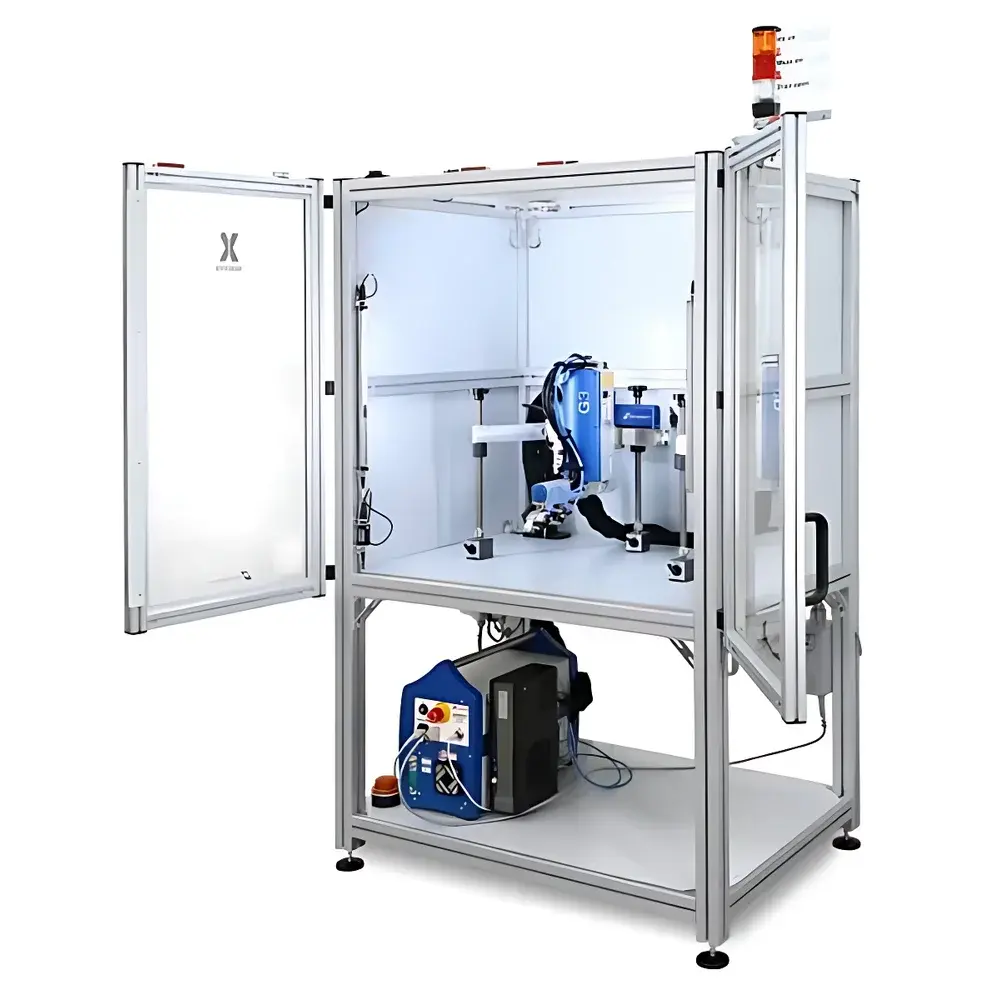
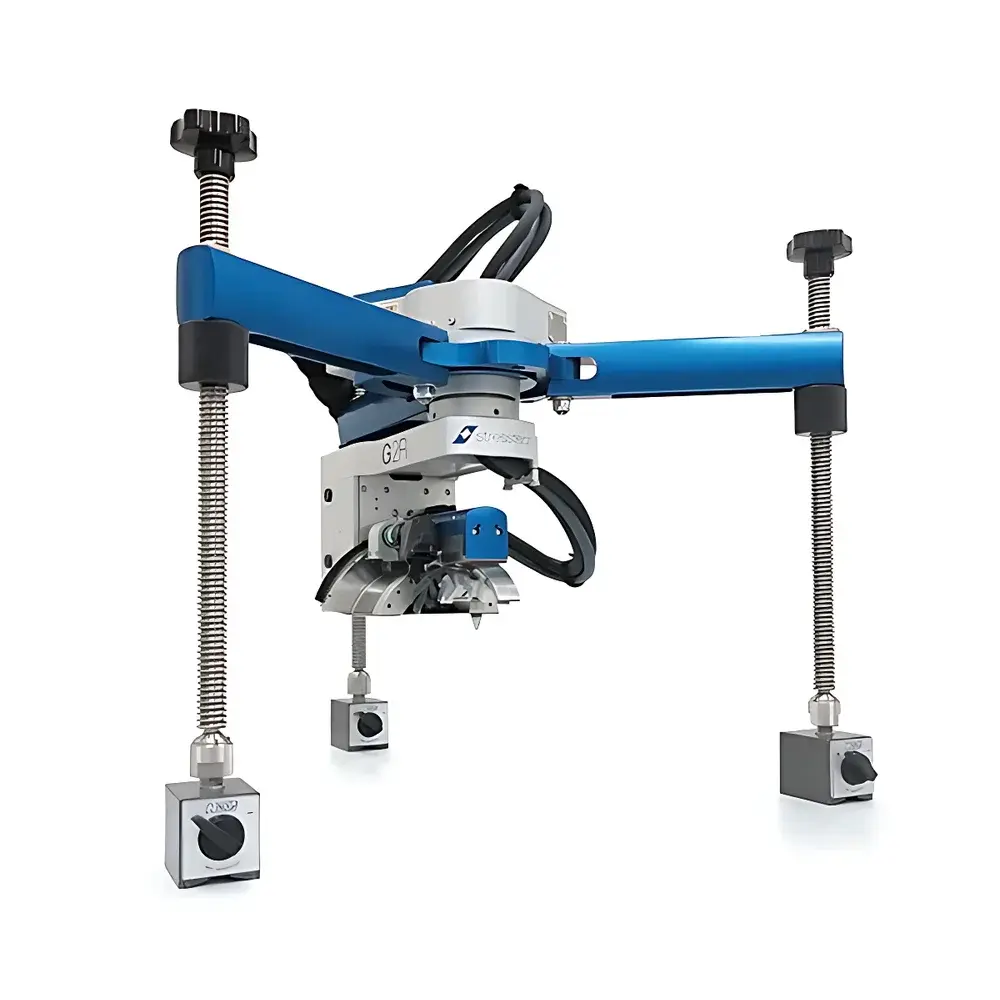
Stresstech xstress3000 Portable X-Ray Stress Analyzer
| Brand | Stresstech Oy |
|---|---|
| Origin | Finland |
| Model | xstress3000 |
| X-ray Tube | 5–30 kV / 0–10 mA, 300 W max |
| Target Materials | Cr, Cu, Co, Ti, Mn |
| Detector | MOS linear position-sensitive proportional counter (512 pixels, 0.029°/pixel angular resolution) |
| 2θ Range | 117–170° continuous adjustment |
| Goniometer Geometry | Modified y-geometry (side-inclination) with dual symmetric detectors |
| Collimators | Interchangeable |
| Calibration | Fully automated, positioning accuracy < 0.003 mm |
| Cooling | Closed-loop liquid cooling with active heat dissipation |
| Power Supply | 100–240 VAC, 50/60 Hz |
| Safety Compliance | Interlocked beam shutdown on window breach, coolant fault, or mechanical displacement |
Overview
The Stresstech xstress3000 Portable X-Ray Stress Analyzer is an industrial-grade, field-deployable instrument engineered for non-destructive residual stress measurement in metallic components using the sin²ψ X-ray diffraction (XRD) method. Based on Bragg’s law and lattice strain analysis, it quantifies elastic strain in crystalline materials by measuring angular shifts (Δ2θ) of diffraction peaks under controlled sample tilting (ψ-angle variation). Designed and manufactured by Stresstech Oy in Finland, the system complies with ASTM E915-22 (Standard Test Method for Verifying the Alignment of X-Ray Diffraction Instrumentation for Residual Stress Measurement) and supports ISO 21943:2020 (Non-destructive testing — Residual stress determination by X-ray diffraction). Its compact architecture enables high-precision stress mapping directly on production floors, maintenance bays, or outdoor infrastructure—eliminating the need for component removal and laboratory-based analysis.
Key Features
- Field-portable design weighing under 25 kg, with integrated battery option for cordless operation in remote or confined locations
- Microfocus X-ray tube (300 W max) with selectable anode targets (Cr, Cu, Co, Ti, Mn) optimized for diverse alloy systems including steels, nickel superalloys, titanium, and aluminum
- Dual symmetric detector configuration in modified y-geometry, enhancing signal-to-noise ratio and minimizing texture-induced peak broadening
- MOS linear position-sensitive detector (512-pixel resolution, 0.029° angular precision per pixel) enabling rapid, high-fidelity peak centroid determination via cross-correlation algorithms
- Fully automated goniometer with real-time 2θ scanning (117–170° range), motorized collimator exchange, and sub-micron positional repeatability (<0.003 mm)
- Integrated closed-loop liquid cooling system with thermal monitoring—ensures stable tube output and long-term operational consistency without external chillers
- Comprehensive hardware interlocks: automatic X-ray shutdown triggered by detector misalignment, coolant flow interruption, housing displacement, or viewport breach
Sample Compatibility & Compliance
The xstress3000 accommodates a wide range of ferrous and non-ferrous engineering components—including gears, crankshafts, camshafts, bearing races, pressure vessel welds, turbine blades, and cold-worked surfaces—without requiring surface polishing beyond standard metallographic preparation (e.g., electropolishing or fine grinding to remove deformed layers). It supports both surface and near-surface (up to ~30 µm depth, depending on material and radiation energy) stress profiling. The system meets essential regulatory requirements for industrial metrology: CE marking per EU Machinery Directive 2006/42/EC and Electromagnetic Compatibility Directive 2014/30/EU; compliant with IEC 61000-6-2/6-4 for immunity and emissions; and designed to facilitate GLP/GMP audit readiness through full traceability of calibration events, exposure parameters, and raw diffraction data archives.
Software & Data Management
Operated via Windows-based xstress software (v8.x), the platform provides full instrument control, real-time high-voltage monitoring, multi-mode exposure sequencing (time-based, intensity-threshold, or step-scan), and concurrent data acquisition, peak fitting, and stress tensor calculation. The software includes a validated material database covering over 200 crystalline phases with preloaded elastic constants (E, ν, d₀), Miller indices, and diffraction line intensities. All raw diffractograms, ψ-tilt series, and calculated stress values are stored in vendor-neutral HDF5 format with embedded metadata (operator ID, timestamp, environmental conditions, calibration certificate ID). Audit trail functionality logs every user action, parameter change, and calibration event—supporting compliance with FDA 21 CFR Part 11 when configured with electronic signature modules and network-based user authentication.
Applications
- Verification of stress relief effectiveness post-welding, heat treatment, or machining in aerospace landing gear and power generation components
- Quantification of compressive residual stress profiles induced by shot peening or roller burnishing on automotive transmission gears and cam lobes
- Root cause analysis of premature fatigue cracking in railway axle journals and turbine disk dovetails
- In-service monitoring of stress redistribution in pipeline girth welds subjected to cyclic thermal loading
- Process validation for additive manufacturing builds, particularly in Ti-6Al-4V and Inconel 718 parts where residual stress drives distortion and microcracking
- Quality gate assessment in high-value forging and casting supply chains prior to final machining or assembly
FAQ
What standards does the xstress3000 support for residual stress measurement?
ASTM E915-22, ISO 21943:2020, and EN 15305:2021 are fully implemented in measurement protocols and reporting templates.
Can the system measure stresses in coated or layered components?
Yes—using energy-selective excitation (e.g., Cr Kα for steel substrates vs. Ti Kα for titanium coatings) and controlled penetration depth via voltage/current tuning, provided the coating thickness exceeds ~5 µm and exhibits sufficient crystallinity.
Is operator certification required to run the instrument?
While no proprietary certification is mandated, users must complete Stresstech’s certified training program covering radiation safety, diffraction physics fundamentals, and measurement uncertainty estimation per ISO/IEC 17025 guidelines.
How often does the X-ray tube require recalibration or replacement?
The microfocus tube is rated for ≥5,000 operating hours; field replacement takes <5 minutes without tools. Annual performance verification against NIST-traceable reference samples is recommended.
Does the system support automated scanning across large-area components?
Yes—via optional motorized XY translation stage integration (sold separately), programmable scan paths, and stitchable map generation within the xstress software environment.





