
Stresstech xstress 3000 Portable X-ray Residual Stress Analyzer
| Brand | Stresstech Oy |
|---|---|
| Origin | Finland |
| Manufacturer Type | Authorized Distributor |
| Origin Category | Imported |
| Model | xstress 3000 |
| Pricing | Upon Request |
Overview
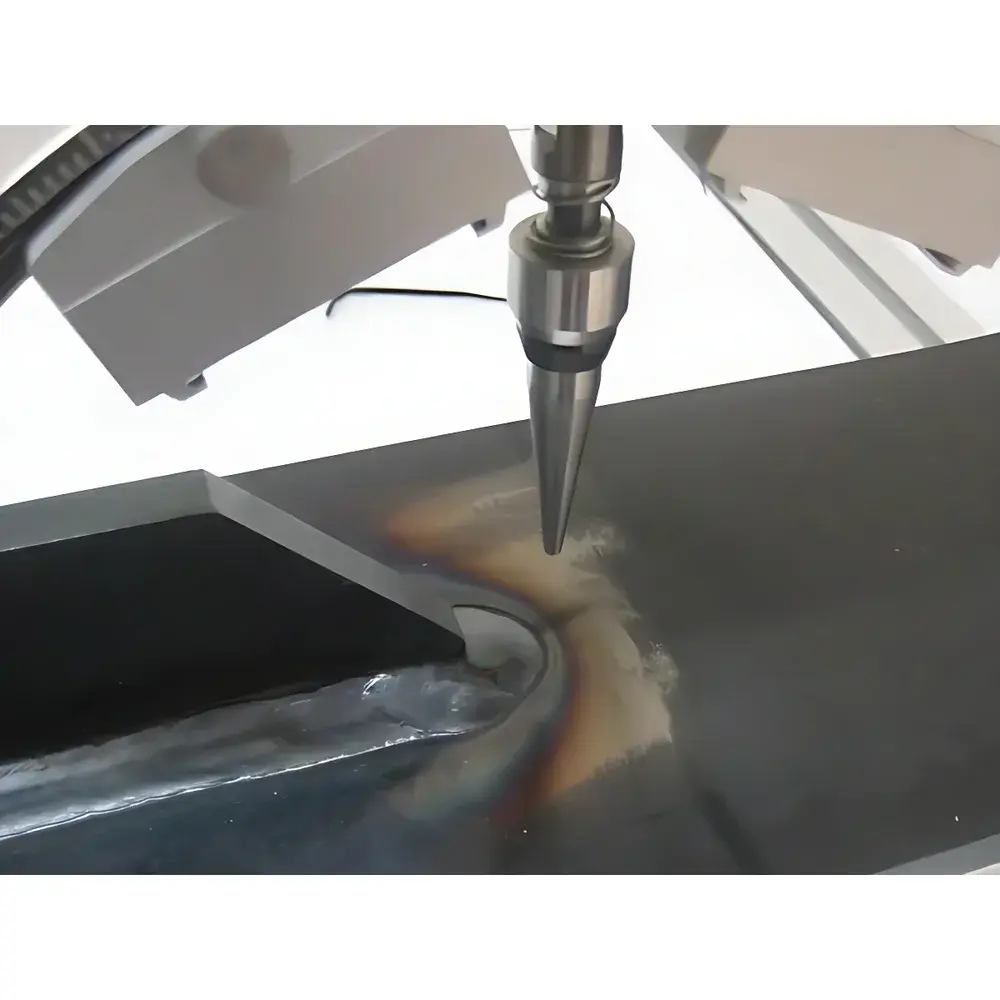
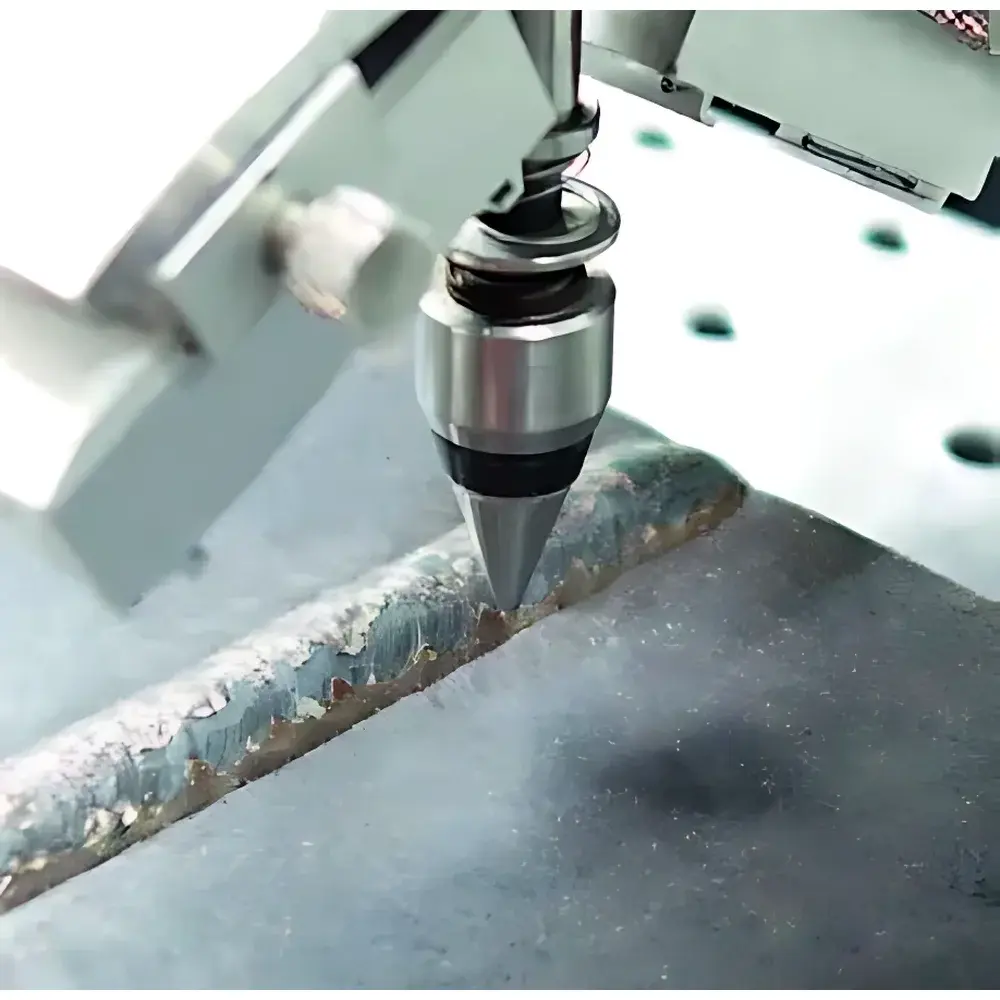
The Stresstech xstress 3000 is a field-deployable, high-precision portable X-ray diffraction (XRD) system engineered for non-destructive measurement of residual stress in welded joints and critical metallic components. It operates on the fundamental principle of lattice strain analysis: when residual stress is present in a crystalline material, it induces measurable shifts in the Bragg diffraction angles of characteristic X-ray reflections (e.g., Fe α-211 or Ni 311). By precisely quantifying these angular shifts using a monochromatic Cr-Kα or Co-Kα X-ray source and a position-sensitive detector, the instrument calculates surface and near-surface residual stress components—typically σ₁₁ (longitudinal), σ₂₂ (transverse), and τ₁₂ (shear)—in MPa with traceable uncertainty. Designed specifically for weld integrity assessment, the xstress 3000 addresses the root causes of structural failure in fabricated assemblies: thermally induced plastic deformation, phase transformation heterogeneity, and localized yield during rapid thermal cycling. Its portability enables in-situ evaluation directly at fabrication sites, offshore platforms, power plants, and rail infrastructure—eliminating the need for destructive sampling or component removal.
Key Features
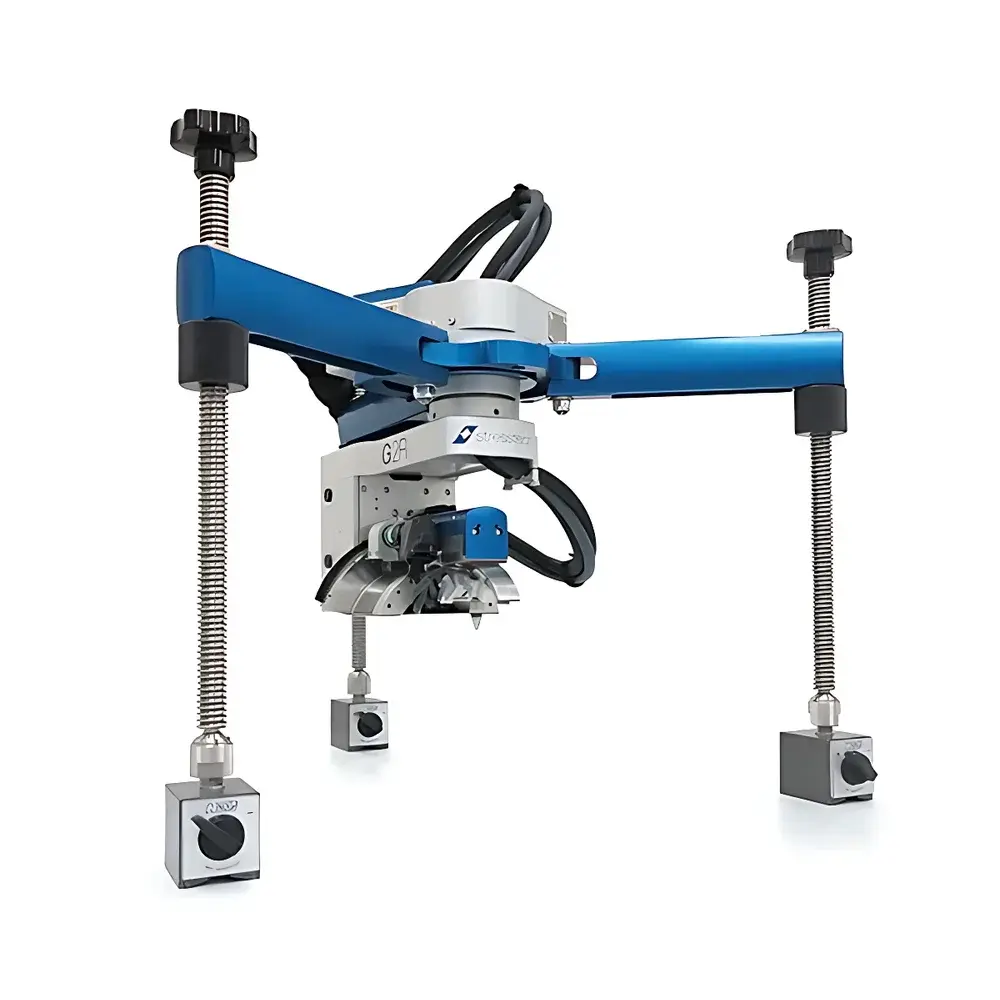
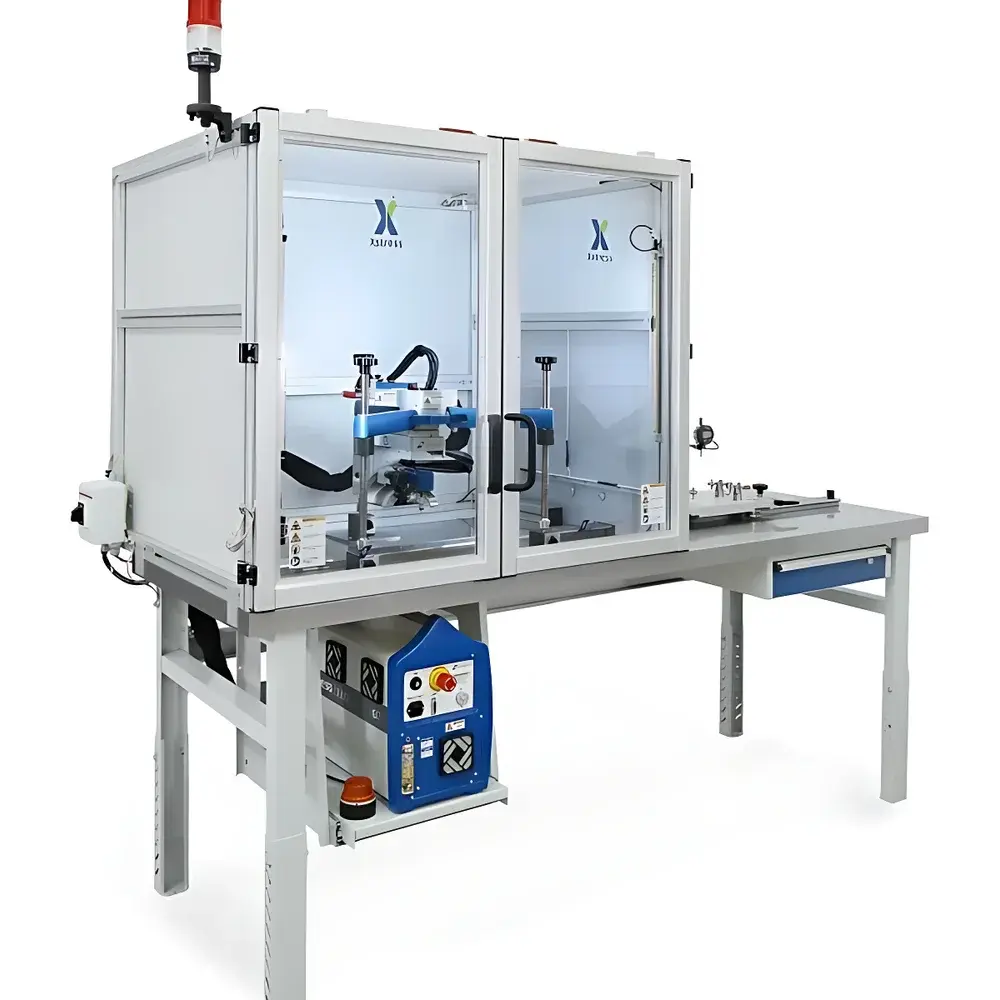
- Compact, battery-operated design with integrated X-ray tube, collimator, goniometer, and detector—fully self-contained for on-site deployment
- Automated robotic positioning system compatible with articulated arms or linear stages for precise, repeatable scanning across complex geometries (e.g., pipe girth welds, T-joints, fillet welds)
- Multi-axis stress tensor measurement capability using sin²ψ method with full ψ-tilt range (–45° to +45°) and automated azimuthal rotation
- Real-time diffraction pattern acquisition and on-device peak fitting using Voigt profile deconvolution for robust lattice strain determination
- Compliant with ASTM E915-22 “Standard Test Method for Verifying the Alignment of X-Ray Diffraction Instrumentation for Residual Stress Measurement” and ISO 21432:2020 “Non-destructive testing — Test method for residual stress analysis by X-ray diffraction”
- Ruggedized IP54-rated enclosure suitable for industrial environments including ambient temperatures from 5 °C to 40 °C and relative humidity up to 80% non-condensing
Sample Compatibility & Compliance
The xstress 3000 is validated for ferrous alloys (carbon steels, stainless steels, HSLA grades), nickel-based superalloys, titanium alloys, and aluminum series (e.g., 6061, 7075). Surface preparation requires only light grinding or electropolishing to achieve a mirror-like finish—no coating or vacuum chamber needed. For depth profiling, sequential electrochemical polishing (ECP) is supported per ASTM E915 Annex A3, enabling controlled material removal while preserving stress state integrity. All measurements adhere to GLP-aligned documentation workflows, with audit trails compliant with FDA 21 CFR Part 11 requirements when paired with Stresstech’s certified software suite. The system meets IEC 61000-6-2/6-3 for electromagnetic compatibility and carries CE marking under EU Machinery Directive 2006/42/EC and Radiation Protection Directive 2013/59/Euratom.
Software & Data Management
Controlled via Stresstech’s proprietary xstress Studio v5.x software, the platform provides full instrument orchestration, real-time diffraction visualization, automated peak search and refinement, and ISO-compliant stress calculation according to the generalized plane stress model. Data export supports CSV, XML, and HDF5 formats for integration into statistical process control (SPC) systems or finite element validation workflows. Each measurement record includes metadata: operator ID, GPS coordinates (optional), environmental sensor logs (temperature/humidity), exposure parameters, and raw intensity vs. 2θ data. Software licenses include calibration traceability certificates issued by accredited metrology labs (e.g., VTT Technical Research Centre of Finland), and optional IQ/OQ/PQ validation packages are available for regulated industries.
Applications
- Residual stress mapping across weld toes, heat-affected zones (HAZ), and fusion boundaries in pressure vessels, pipelines, and structural steelwork
- Validation of post-weld heat treatment (PWHT) efficacy by comparing pre- and post-treatment stress profiles
- Process qualification of advanced joining techniques—including laser beam welding, friction stir welding, and hybrid arc-laser processes
- Correlation studies between residual stress distribution and fatigue crack initiation thresholds per ASTM E647
- Supporting ASME BPVC Section VIII Div. 2 fatigue life assessments and EN 13445-3 Annex C structural integrity evaluations
- Research on high-strength low-alloy (HSLA) steels and duplex stainless steels where HAZ softening and stress relaxation mechanisms require quantitative characterization
FAQ
What is the typical measurement depth for surface stress using the xstress 3000?
The standard XRD measurement depth ranges from 5 to 25 µm, depending on material composition and X-ray energy; Cr-Kα is optimal for steels (~10 µm), while Co-Kα extends penetration slightly in heavier alloys.
Can the system measure stresses in curved or inaccessible weld geometries?
Yes—robotic articulation combined with a 6-degree-of-freedom alignment algorithm enables accurate positioning on pipes ≥150 mm diameter, flange welds, and internal vessel surfaces using custom fixtures.
Is radiation safety certification required for operators?
Operators must complete site-specific radiation safety training per local regulatory authority (e.g., NRC in the US, HSE in the UK); the system incorporates interlocked shuttering, dose rate monitoring (<0.5 µSv/h at 30 cm), and automatic beam cutoff upon motion detection.
How does electrochemical polishing enable depth-resolved stress profiling?
ECP removes material layer-by-layer with nanometer-scale uniformity and minimal cold work; after each polish step, the xstress 3000 remeasures surface stress, building a 1D depth profile that can be interpolated into 3D volumetric maps when combined with spatial robot scanning.
Does the system support automated reporting for quality documentation?
Yes—xstress Studio generates PDF reports conforming to ISO 17025 technical records, including uncertainty budgets, calibration history, raw data thumbnails, and pass/fail flags against user-defined acceptance criteria (e.g., EN 1090-2 Clause 6.3.2.2).





