
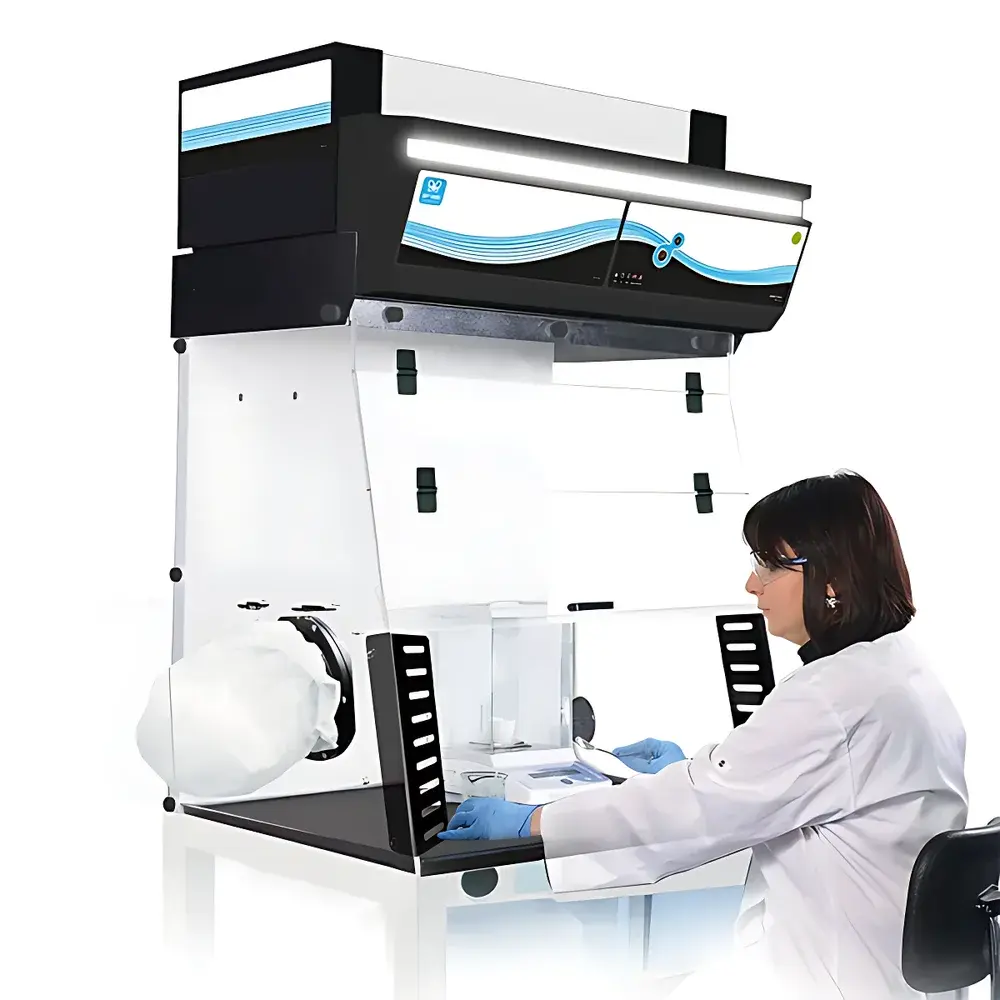
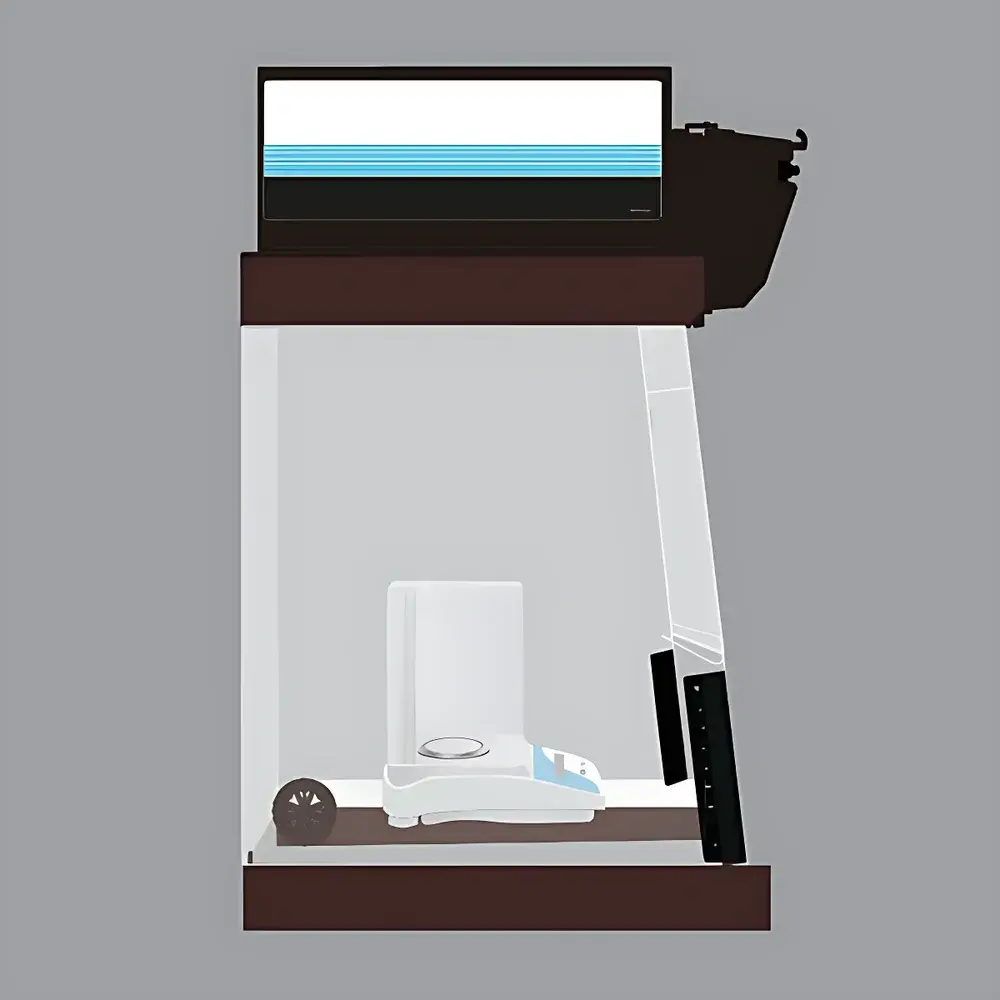
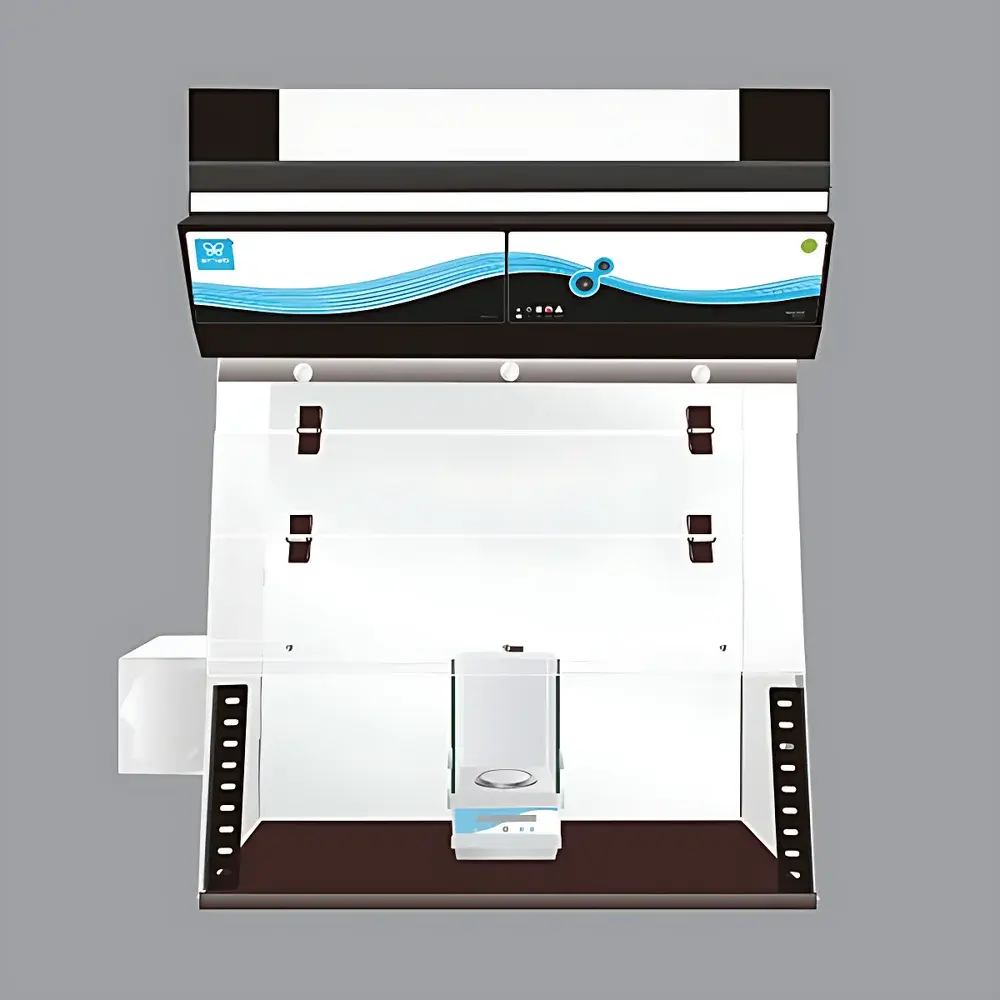
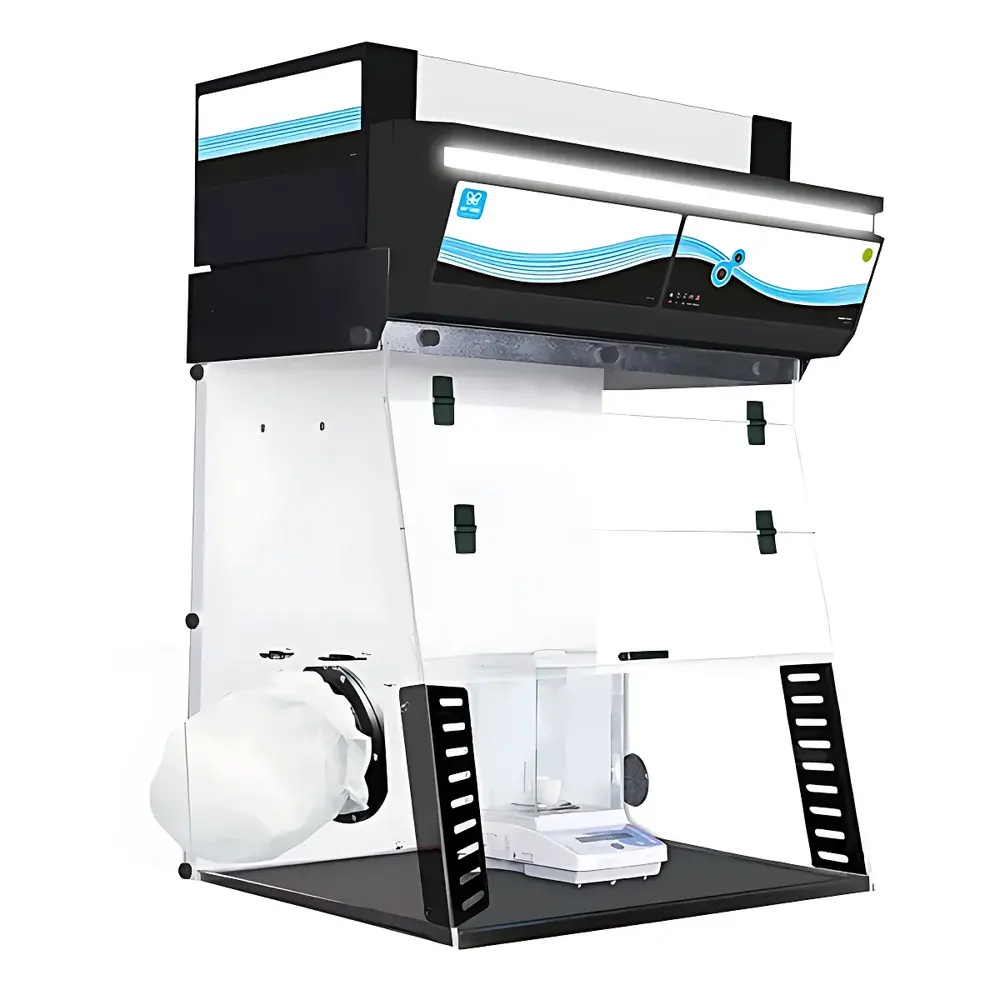
Erlab 321W Smart Filtered Balance Enclosure
| Brand | Erlab |
|---|---|
| Origin | Jiangsu, China |
| Manufacturer Type | Authorized Distributor |
| Origin Category | Domestic |
| Model | 321W Smart |
| Price Range | USD 2,800 – 7,000 |
| Construction Material | Fully Steel Enclosure |
| Configuration | Single-Face Operation |
| Air Intake Mode | Full Recirculation (Ductless) |
| Application Domain | Hazardous Chemicals Handling |
| Exhaust Position | Top-Mounted |
| Ducting Design | Ductless (Filtered Recirculation) |
| External Dimensions (W×D×H) | 804 mm × 615 mm × 1107–1289 mm |
| Average Face Velocity | 0.3–0.5 m/s |
| Airflow Volume | 220 m³/h |
| Illumination | LED |
| Rated Power | 65 W |
| Sound Pressure Level | <52 dB(A) |
| User Capacity | 1–2 Operators |
Overview
The Erlab 321W Smart Filtered Balance Enclosure is an engineered solution for precise, operator-protected weighing of highly potent and toxic chemical powders and reagents in laboratory environments. Designed in accordance with ISO 14644-1 Class 5 cleanroom air quality standards and aligned with occupational exposure banding (OEB) guidelines for OEB3–OEB5 substances, this ductless balance enclosure utilizes Erlab’s proprietary multi-stage filtration system—including pre-filters, activated carbon, and HEPA/ULPA-grade particulate filters—to capture volatile organic compounds (VOCs), fine particulates down to 0.3 µm, and reactive vapors at >99.995% efficiency. Unlike traditional fume hoods requiring external ductwork and HVAC integration, the 321W Smart operates via closed-loop recirculation, delivering consistent face velocity (0.3–0.5 m/s) across its single-face work area while maintaining stable thermal and aerodynamic conditions critical for analytical balance stability. Its compact footprint and plug-and-play installation make it suitable for QC labs, R&D facilities, and GMP-compliant pharmaceutical development suites where space, energy efficiency, and containment integrity are prioritized.
Key Features
- Integrated eGuard™ Smart Monitoring System: Real-time display of filter saturation status, airflow velocity, cabinet integrity alerts, and operational uptime—accessible locally or remotely via web interface with secure HTTPS encryption.
- Dual-Stage Filtration Architecture: Pre-filter extends main filter life; high-capacity activated carbon bed (≥1.8 kg) combined with ULPA filter (EN 1822 H14, 99.995% @ 0.1–0.3 µm) ensures compliance with ICH Q5C and USP environmental control requirements.
- Vibration-Damped Work Surface: Stainless steel weighing platform mounted on elastomeric isolators minimizes mechanical transmission from floor or adjacent equipment—critical for sub-milligram balance accuracy (e.g., Mettler Toledo XP series or Sartorius Entris).
- Energy-Efficient DC Motor Fan System: Consumes only 65 W nominal power while sustaining 220 m³/h airflow—reducing annual energy use by up to 70% versus conventional ducted hoods (ASHRAE 110-2016 benchmark).
- Ergonomic Height Adjustment: Vertical range 1107–1289 mm accommodates seated and standing operation; LED lighting (≥500 lux uniformity, CRI >80) eliminates shadowing over balance pan and sample vessels.
Sample Compatibility & Compliance
The 321W Smart is validated for handling OEB3–OEB5 compounds per ISPE Guide to Active Pharmaceutical Ingredient (API) Manufacturing (2022) and EU GMP Annex 1 (2022). It supports open-vessel weighing of cytotoxic agents (e.g., paclitaxel, imatinib), genotoxic intermediates, and low-dose hormonal APIs without cross-contamination risk. All internal surfaces are electropolished stainless steel (AISI 304L), non-porous and compatible with IPA, ethanol, and hydrogen peroxide vapor decontamination cycles. The unit complies with EN 14175-3 (fume hood performance), EN 61000-6-3 (EMC), and IEC 61010-1 (safety). Optional documentation packages include IQ/OQ protocols traceable to NIST standards and FDA 21 CFR Part 11–compliant audit trails for eGuard data logs.
Software & Data Management
The embedded eGuard firmware supports local SD-card logging (12-month retention) and cloud synchronization via TLS 1.2–secured MQTT protocol. Logged parameters include face velocity deviation (±0.02 m/s resolution), cumulative filter runtime, ambient temperature/humidity, and door position status. Data exports conform to ASTM E2500-13 structured CSV format for LIMS integration (e.g., LabWare, Thermo Fisher SampleManager). Role-based access control (RBAC) enables administrator, technician, and auditor permissions—supporting GLP/GMP audit readiness and electronic signature workflows compliant with ALCOA+ principles.
Applications
- Weighing of high-potency active pharmaceutical ingredients (HPAPIs) during formulation development and clinical batch manufacturing.
- Preparation of reference standards and calibration solutions under ISO/IEC 17025-accredited conditions.
- Handling of nanomaterials and metal-organic frameworks (MOFs) requiring inert atmosphere compatibility (optional nitrogen purge kit available).
- QC release testing of excipients prone to static-induced dispersion (e.g., microcrystalline cellulose, lactose monohydrate).
- Academic research involving neurotoxic or endocrine-disrupting compounds under NIH biosafety level 2 (BSL-2) containment policies.
FAQ
What filtration certifications does the 321W Smart hold?
It carries TÜV-certified filter efficiency reports per EN 1822 (ULPA H14), EN 15444-1 (carbon adsorption capacity), and ISO 16000-23 (formaldehyde removal). Third-party challenge testing with potassium iodide (KI) and dioctyl phthalate (DOP) aerosols confirms containment factor ≥10⁷.
Can it be integrated into a centralized lab monitoring system?
Yes—via Modbus TCP or RESTful API, enabling interoperability with BMS platforms (e.g., Siemens Desigo, Honeywell Experion) and enterprise EHS dashboards.
Is validation support provided for GMP environments?
Erlab offers optional IQ/OQ documentation kits, including test scripts, acceptance criteria, and raw data templates aligned with Annex 15 and ASTM E2500-13.
How often must filters be replaced?
Carbon filter service life averages 6–12 months depending on VOC load; ULPA filter replacement interval is 24–36 months under typical usage—both tracked automatically by eGuard.
Does it meet noise requirements for open-plan laboratories?
At <52 dB(A) at 1 m distance, it satisfies ISO 15710:2020 acoustic limits for analytical workspaces and exceeds NC-30 criteria for quiet zones.



