
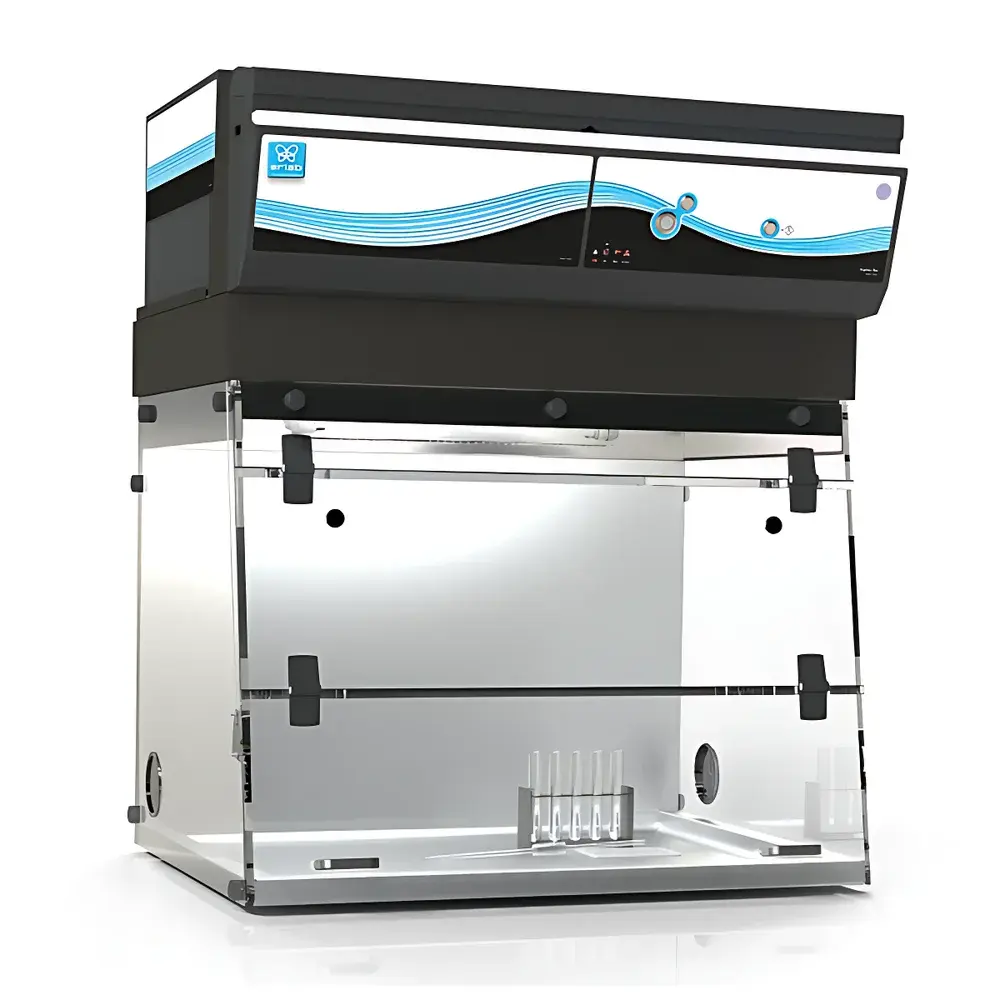
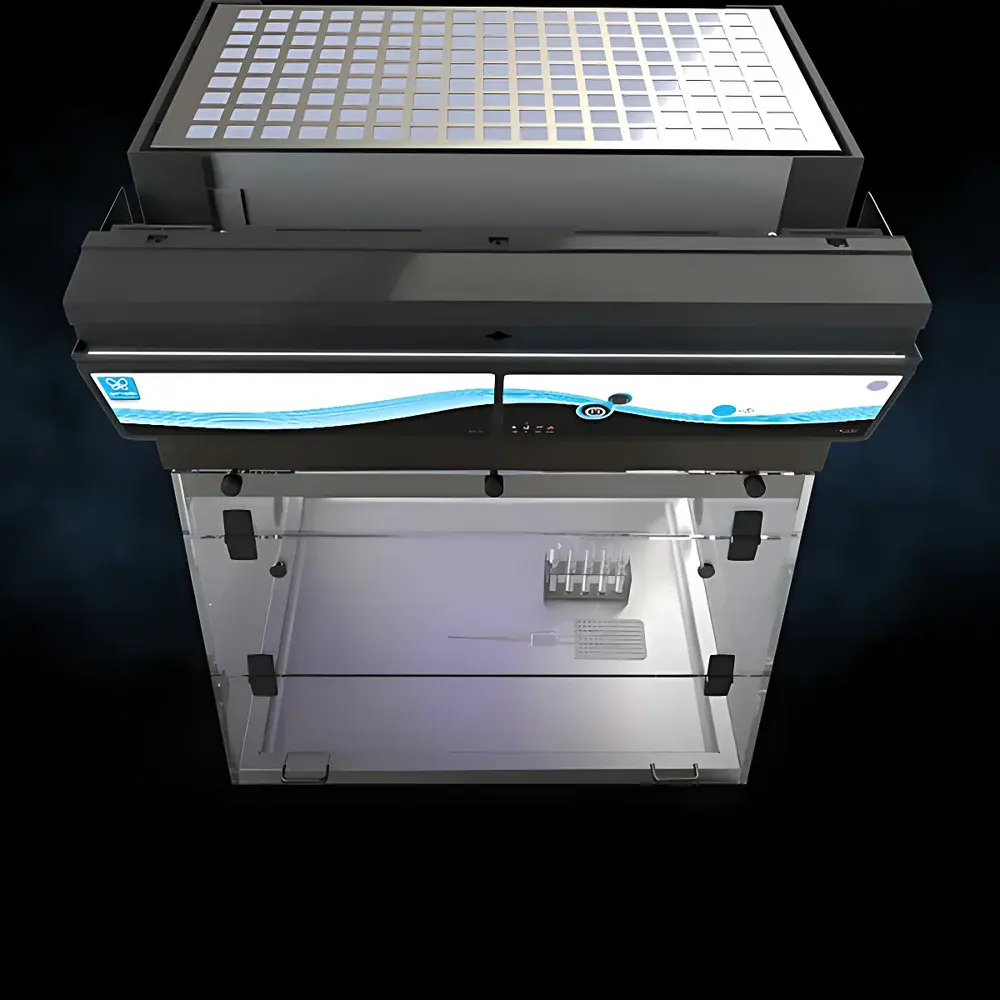
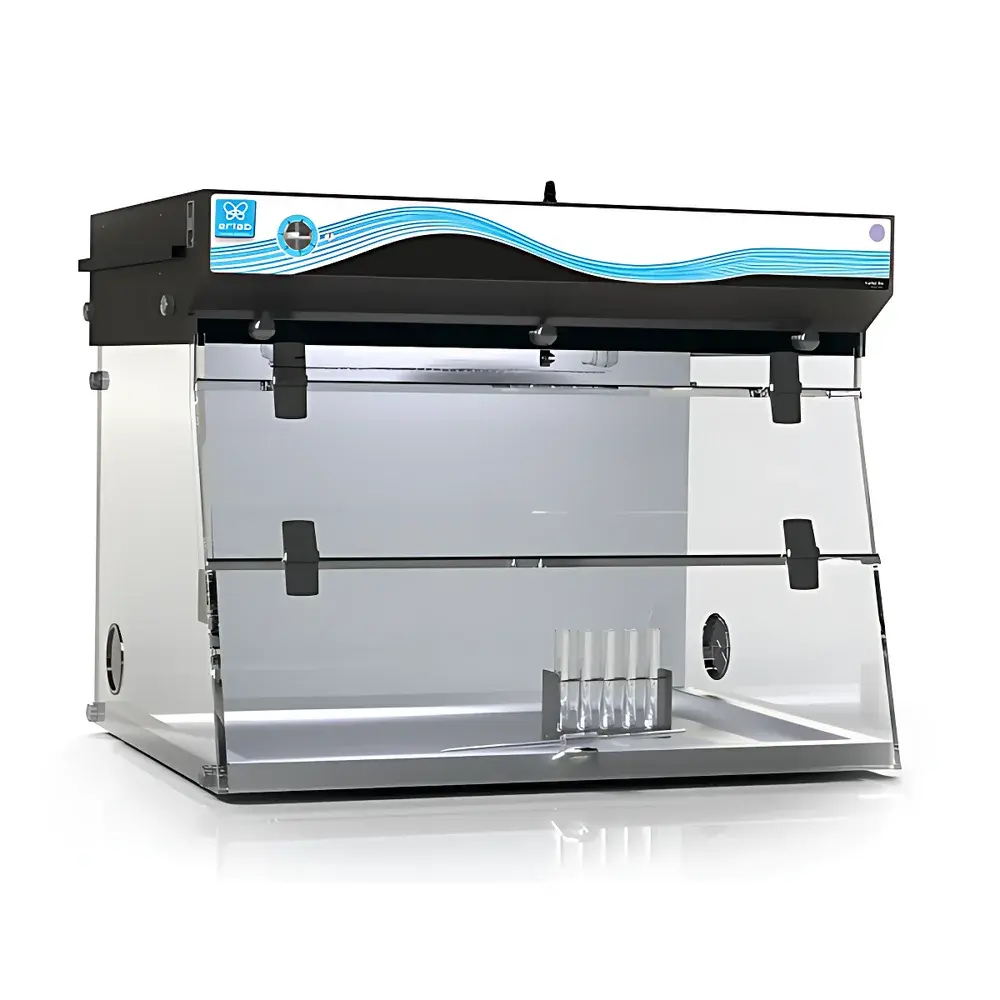
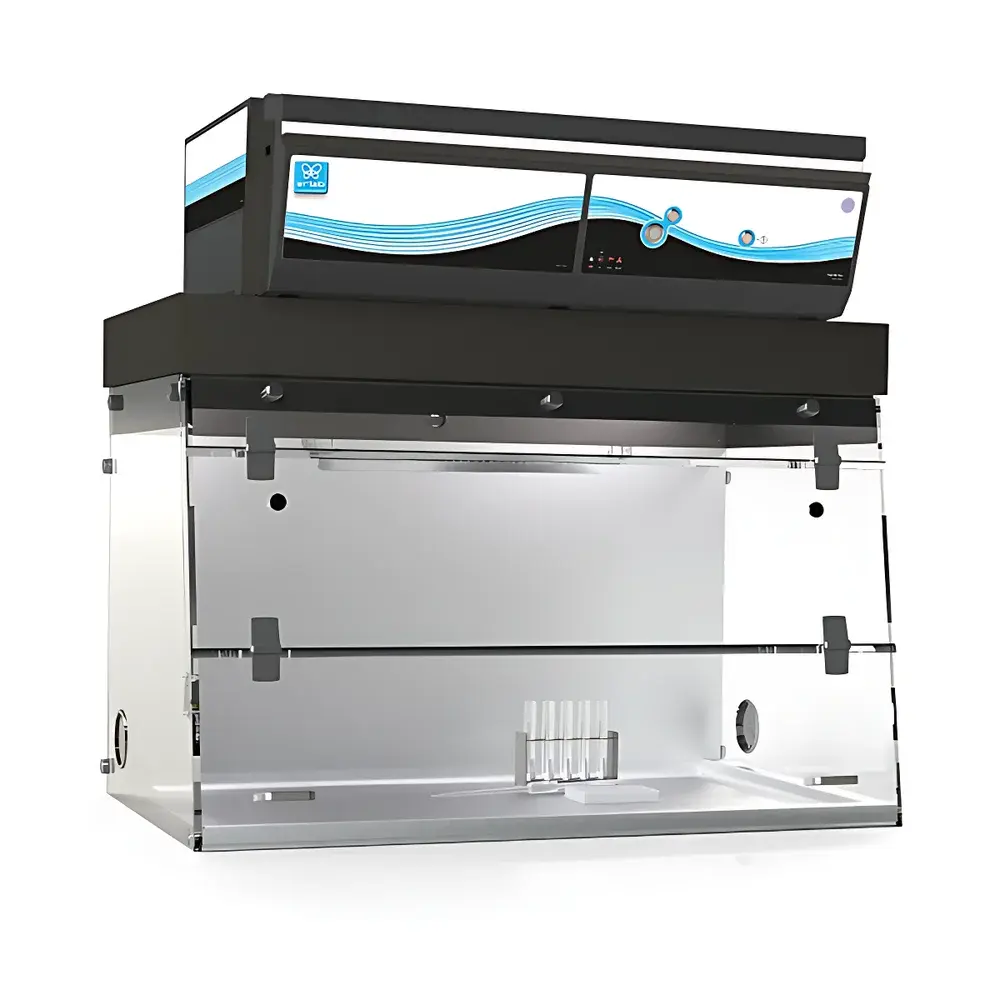
Erlab Captair Bio 321 Smart Vertical Laminar Flow Clean Bench
| Brand | Erlab |
|---|---|
| Origin | Jiangsu, China |
| Manufacturer Type | Authorized Distributor |
| Product Category | Domestic |
| Model | Captair Bio 321 Smart |
| Price Range | USD 2,800 – 7,000 |
| Instrument Type | Vertical Laminar Flow Clean Bench |
| Cleanliness Class | ISO Class 5 (equivalent to US FED STD 209E Class 100) |
| Noise Level | ≤52 dB(A) |
| User Configuration | Single-user, front-access |
| Airflow Pattern | Vertical Downflow |
| Filtration | ULPA U17 (≥99.999995% @ ≥0.1 µm) + optional activated carbon pre-filter |
| Safety Monitoring | Real-time differential pressure sensor for filter/fan status |
| Control Interface | Integrated touch panel with eGuard mobile/web remote management platform |
Overview
The Erlab Captair Bio 321 Smart is a vertically oriented laminar flow clean bench engineered for molecular biology laboratories requiring stringent particulate control during sensitive procedures such as PCR setup, plasmid handling, cell culture initiation, and low-bioburden reagent preparation. It operates on the principle of unidirectional vertical laminar airflow—generated by a brushless EC motor-driven centrifugal blower—passing through a certified ULPA U17 filter (EN 1822-1:2022 compliant) to deliver ISO Class 5 (Class 100) air quality at the work surface. Unlike biosafety cabinets, this unit provides product protection only—not personnel or environmental protection—and is therefore classified as a clean bench per ISO 14644-1 and NSF/ANSI 49 Annex A definitions. Its design prioritizes procedural integrity in applications where airborne particulates, aerosolized nucleic acids, or cross-contamination between sequential PCR runs pose critical risks to assay reproducibility and sample fidelity.
Key Features
- ULPA U17 filtration system delivering ≥99.999995% particle removal efficiency for particles ≥0.1 µm—validated per EN 1822-3 and traceable to accredited third-party certification reports
- Integrated differential pressure monitoring across both pre-filter and ULPA filter stages, triggering visual and audible alerts when pressure differentials exceed defined thresholds (indicating filter loading or fan performance deviation)
- High-intensity UV-C lamp (254 nm, ≥100 µW/cm² at 1 m) with interlocked safety cutoff and programmable exposure cycles for routine decontamination of interior surfaces and filter housings
- Smart touch interface with real-time display of airflow velocity (m/s), filter life index (%), UV lamp operational hours, and system fault codes
- eGuard cloud-connected platform enabling remote monitoring via web browser or native iOS/Android application—including push notifications for maintenance events, configuration changes, and alarm conditions
- Ergonomic sash height adjustment with position memory and soft-stop mechanism; seamless stainless steel 304 work surface with rounded edges and integrated drip channel
Sample Compatibility & Compliance
The Captair Bio 321 Smart supports open-vessel operations involving sterile media, lyophilized reagents, oligonucleotides, cDNA libraries, and enzymatic master mixes. It is not suitable for handling volatile organic compounds without optional activated carbon filtration, nor for any procedure generating biohazards requiring containment. The unit complies with IEC 61000-6-3 (EMC emissions), IEC 61000-6-1 (immunity), and meets CE marking requirements under the EU Machinery Directive 2006/42/EC. While not certified to NSF/ANSI 49 (as it lacks negative-pressure containment), its airflow uniformity (±15% across work surface per ISO 14644-3 Annex B.4) and filter integrity testing protocols align with GLP-aligned laboratory validation practices. Documentation packages include Factory Acceptance Test (FAT) reports, filter certification data sheets, and calibration records for pressure sensors.
Software & Data Management
The embedded firmware supports audit-trail-enabled operation logging, storing timestamps for all user-initiated actions (e.g., UV activation, sash movement, parameter adjustments) with immutable records retained for ≥12 months. eGuard provides role-based access control (RBAC), configurable alert thresholds, and exportable CSV logs compatible with LIMS integration via RESTful API. All remote commands—including firmware updates and alarm silencing—are cryptographically signed and require two-factor authentication. Data transmission adheres to TLS 1.2+ encryption standards, and local storage conforms to GDPR-compliant anonymization protocols for non-PII operational metadata.
Applications
- Pre-PCR reaction assembly in genomics core facilities to prevent amplicon carryover contamination
- Preparation of CRISPR-Cas9 ribonucleoprotein complexes under ultra-low particulate conditions
- Handling of primary human cells prior to transfection or single-cell sequencing library prep
- Quality control staging for diagnostic kit manufacturing under ISO 13485 environments
- Microinjection setup for zebrafish or C. elegans studies requiring sterility without chemical sterilants
- Storage and manipulation of cryopreserved stem cell vials before thawing and plating
FAQ
Does the Captair Bio 321 Smart meet ISO Class 5 requirements for particle concentration?
Yes—validated airflow velocity (0.45 ± 0.05 m/s) and particle counts (≤3,520 particles/m³ ≥0.1 µm) satisfy ISO 14644-1:2015 Class 5 criteria when operated within specified ambient conditions (20–25°C, 30–60% RH).
Can the unit be integrated into a laboratory’s centralized building management system (BMS)?
It supports Modbus TCP communication protocol for basic status polling (fan speed, alarm state, UV status); full BMS integration requires Erlab’s optional gateway module (part no. EG-BMS-GW).
Is ULPA filter replacement a user-serviceable task?
Filter replacement must be performed by Erlab-certified technicians to maintain airflow certification; improper installation voids ISO compliance documentation and invalidates warranty coverage.
What validation documentation is supplied with shipment?
Each unit ships with a Certificate of Conformance, Filter Efficiency Test Report (per EN 1822), Airflow Uniformity Map, and FAT summary signed by Erlab Quality Assurance.
How frequently should the pre-filter be replaced under standard lab use?
Under typical ISO 8 ambient conditions with daily 8-hour operation, the washable aluminum pre-filter requires cleaning every 2 weeks and replacement every 12 months—or sooner if differential pressure exceeds 120 Pa.



