
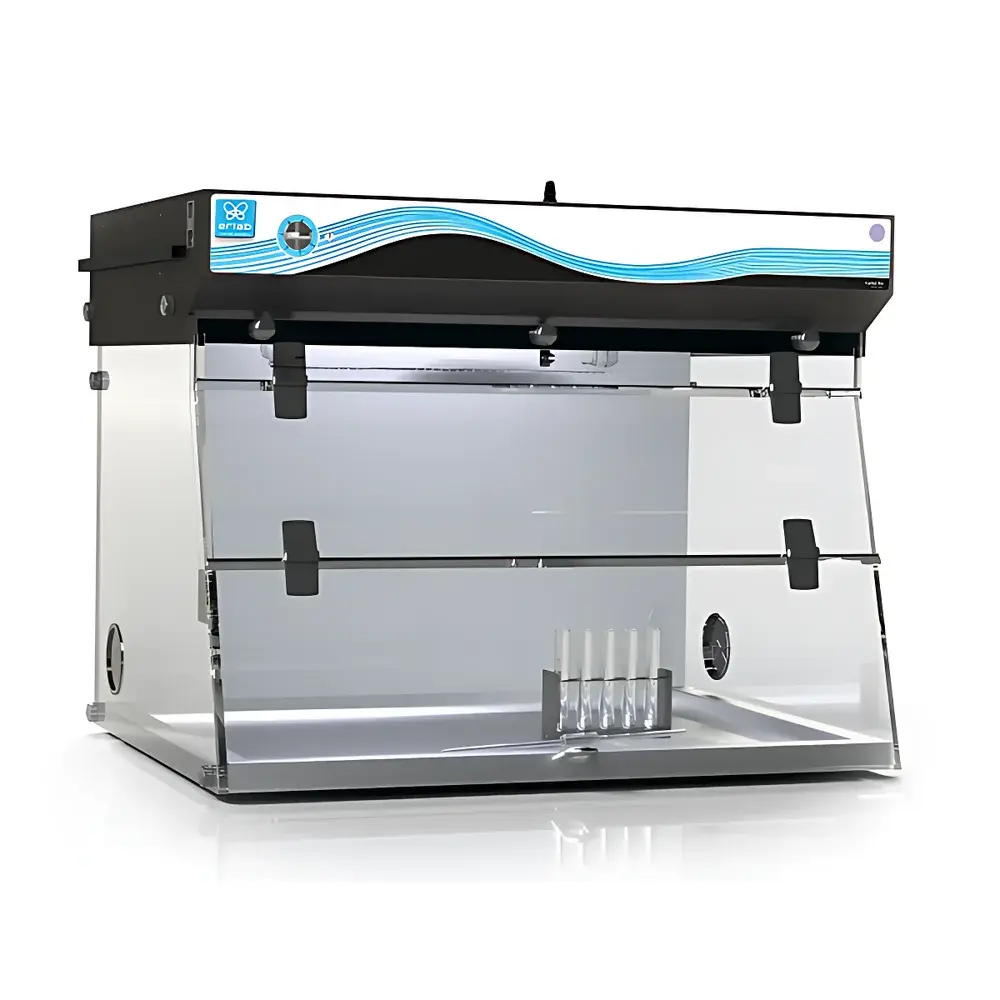
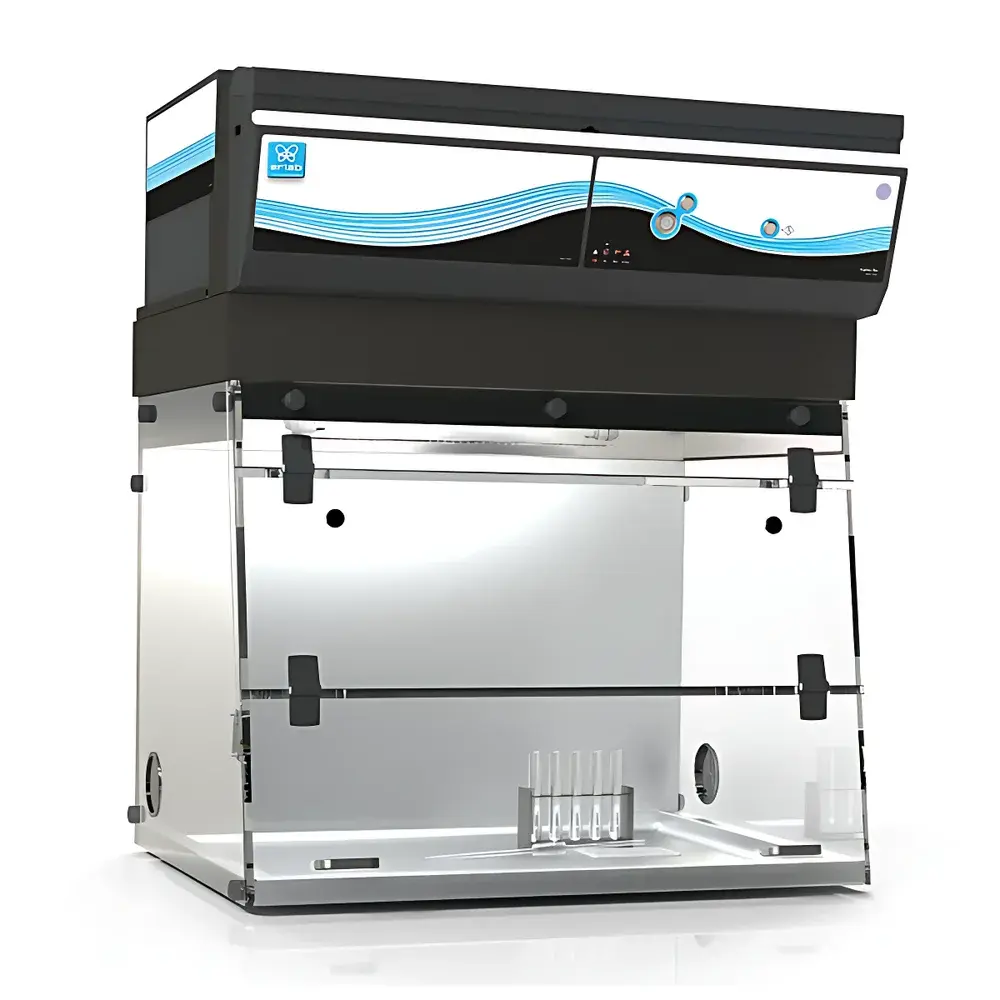
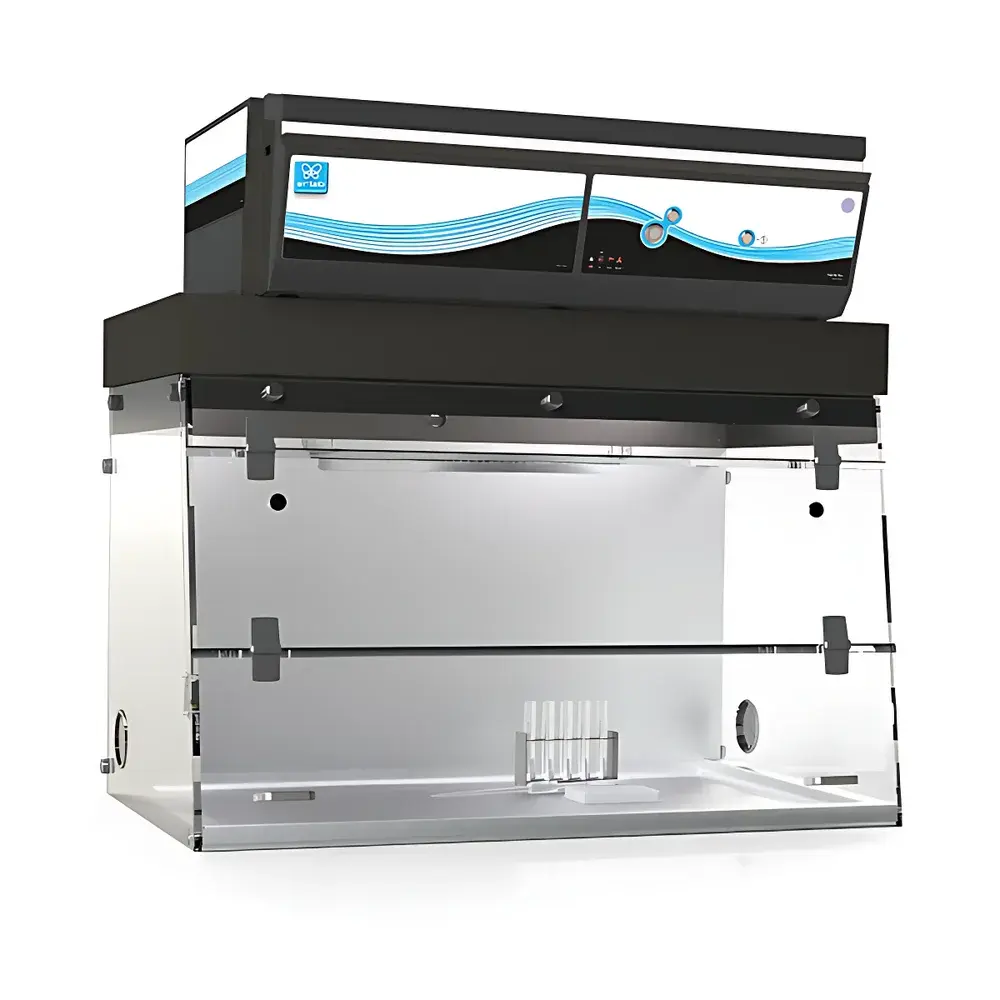
Erlab Captair Bio 320 PCR Laminar Flow Hood
| Brand | Erlab |
|---|---|
| Origin | Jiangsu, China |
| Manufacturer Type | Authorized Distributor |
| Country of Origin | China |
| Model | Captair Bio 320 |
| Price Range | USD 7,000 – 14,000 |
| Construction Material | Fully Steel Enclosure |
| Ventilation Type | Ductless (Recirculating) |
| Application Scope | Molecular Biology, PCR, DNA/RNA Handling |
| Filtration System | HEPA (H14) or ULPA (U17) + Optional Activated Carbon Molecular Filter |
| Rated Power | 25 W |
| User Capacity | 1–2 Operators |
| Dimensions (W × D × H) | 825 mm × 630 mm × 647 mm |
| Lighting | LED with Smart Status Indication |
| Compliance | EN 14175-3, NSF/ANSI 49 Class II Type A2 Equivalent (Recirculating Mode), ISO 14644-1 Class 5 (at work surface) |
Overview
The Erlab Captair Bio 320 is a ductless, recirculating laminar flow hood engineered specifically for molecular biology laboratories performing polymerase chain reaction (PCR), nucleic acid amplification, cloning, and other contamination-sensitive procedures. Unlike traditional fume hoods or biosafety cabinets requiring external ducting or complex HVAC integration, the Captair Bio 320 operates as a self-contained unit—drawing ambient laboratory air through a dual-stage filtration system: a pre-filter followed by a certified HEPA (H14, ≥99.995% @ 0.3 µm) or optional ULPA (U17, ≥99.99995% @ 0.12 µm) filter. This ensures unidirectional, particle-free airflow across the work surface at a uniform velocity of 0.45 m/s ± 20%, maintaining ISO 14644-1 Class 5 (formerly Class 100) cleanroom conditions directly within the operator’s workspace. Its compact footprint and low power consumption (25 W) make it suitable for benchtop deployment in core facilities, teaching labs, and GMP-compliant QC environments where space and energy efficiency are critical.
Key Features
- Fully steel construction with epoxy-powder-coated finish for chemical resistance and long-term durability under routine decontamination protocols.
- Ductless design eliminates need for building modifications, exhaust ductwork, or dedicated make-up air systems—reducing total cost of ownership and installation lead time.
- Smart LED status lighting provides real-time visual feedback: green indicates normal operation; amber signals filter saturation warning; red denotes service required or safety interlock activation.
- Integrated UV-C germicidal lamp (254 nm) with automatic safety cutoff upon sash opening ensures validated surface decontamination between runs—supporting GLP-aligned workflow continuity.
- Optional activated carbon molecular filter module mitigates volatile organic compounds (VOCs), ozone, and trace gaseous contaminants that may interfere with sensitive enzymatic reactions or degrade reagents over time.
- Ergonomic height-adjustable base (standard on Bio 321/391 Smart variants) and optimized sash geometry reduce operator fatigue during extended procedures without compromising containment integrity.
Sample Compatibility & Compliance
The Captair Bio 320 is validated for use with standard PCR consumables—including 0.2 mL tube strips, 96-well plates, pipettes, and microcentrifuges—without airflow disruption. It is not designed for handling infectious agents requiring BSL-2 containment; rather, it serves as an environmental control device to prevent exogenous nucleic acid contamination (e.g., amplicon carryover). The unit complies with EN 14175-3 for performance testing of laboratory fume hoods and meets functional equivalence to NSF/ANSI 49 Class II Type A2 criteria in recirculating mode per independent third-party verification. All filtration components are certified to ISO 16890 and tested per EN 1822. Documentation packages support audit readiness for ISO 17025-accredited labs and FDA-regulated environments operating under 21 CFR Part 11-compliant data management frameworks.
Software & Data Management
While the Captair Bio 320 operates without embedded firmware or cloud connectivity, its Smart lighting interface supports manual logbook integration via timestamped visual alerts. For laboratories implementing digital quality systems, Erlab provides optional calibration and maintenance records compliant with ISO/IEC 17025 requirements—including filter change logs, UV intensity validation reports, and annual airflow certification templates. These documents are structured to integrate into existing LIMS or ELN platforms via standardized PDF or CSV export. No proprietary software installation is required, ensuring compatibility with validated IT infrastructures in regulated pharmaceutical or clinical diagnostics settings.
Applications
- Pre-PCR setup: Template preparation, primer dilution, master mix assembly, and plate loading under particle-free conditions.
- Post-PCR analysis: Gel loading, capillary electrophoresis sample introduction, and sequencing library preparation where aerosolized DNA must be excluded.
- CRISPR/Cas9 editing workflows: Guide RNA handling, ribonucleoprotein (RNP) complex formation, and transfection reagent preparation.
- Forensic DNA labs: Evidence processing stations requiring strict separation of pre- and post-amplification zones.
- Academic teaching labs: Safe, low-maintenance platform for introducing students to sterile technique and contamination control principles.
FAQ
Does the Captair Bio 320 require external ducting or exhaust connection?
No—it is a fully self-contained, ductless laminar flow hood. All air is filtered and recirculated within the unit.
What is the recommended filter replacement interval?
HEPA filters should be replaced every 12–18 months depending on usage frequency and ambient particulate load; molecular filters every 6–12 months when VOC exposure is significant.
Can this unit be used for handling hazardous chemicals?
It is not rated for toxic or highly volatile chemicals. For such applications, Erlab recommends the Captair Flex line of ducted fume hoods or hybrid ductless/ducted models with enhanced chemical filtration.
Is UV validation documentation provided?
Yes—Erlab supplies a UV irradiance test report (measured at 254 nm) with each unit, traceable to NIST standards, supporting compliance with ISO 15190 and CLSI EP29-A guidelines.
How does the Captair Bio 320 differ from a Class II Biosafety Cabinet?
It provides personnel and product protection only—not environmental protection. It lacks inward inflow velocity and downflow balancing mechanisms required for BSL-2 agent containment; its primary function is particulate exclusion, not bioaerosol containment.



