
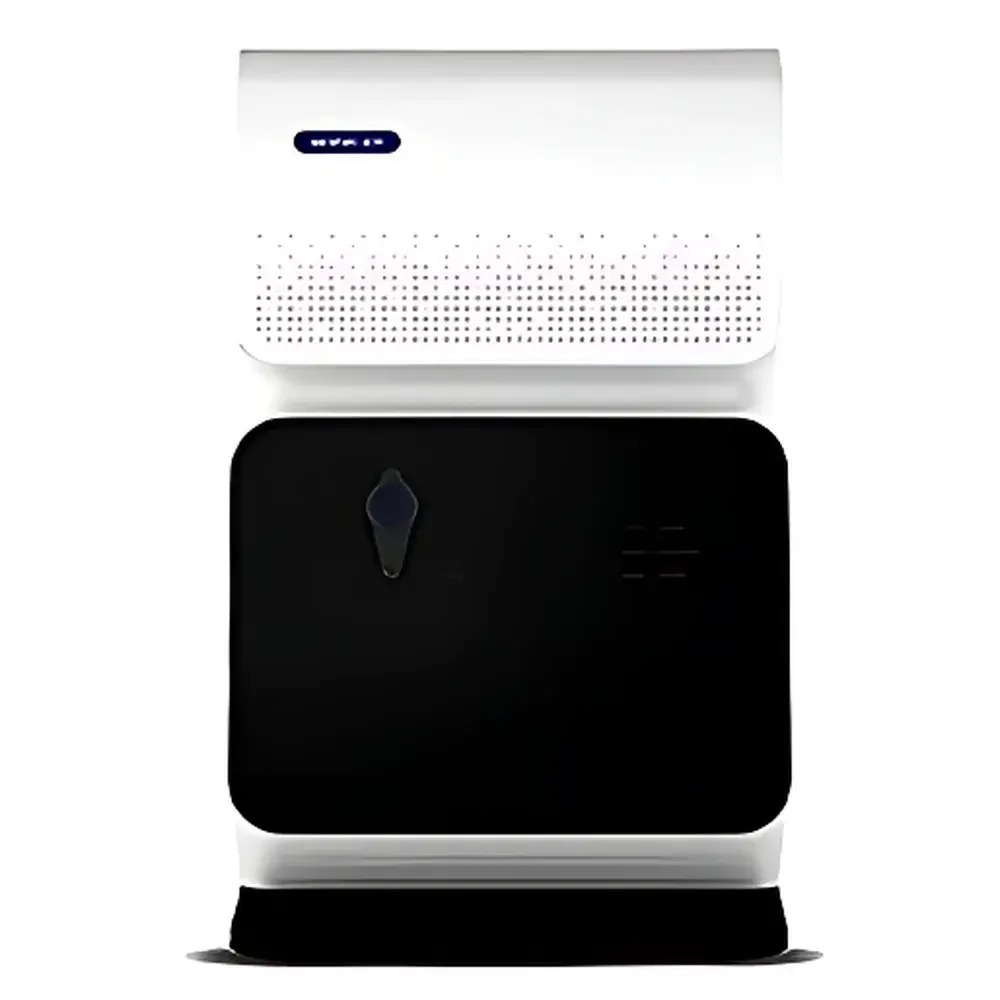
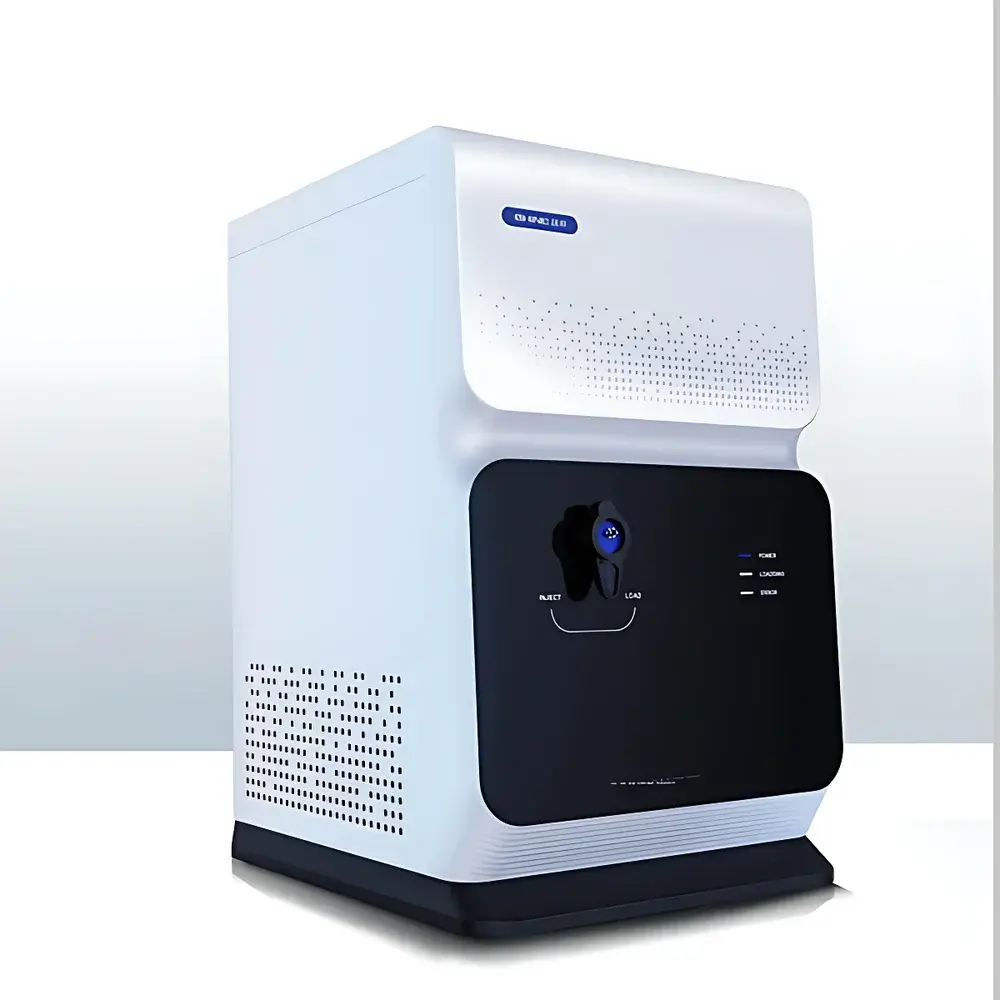
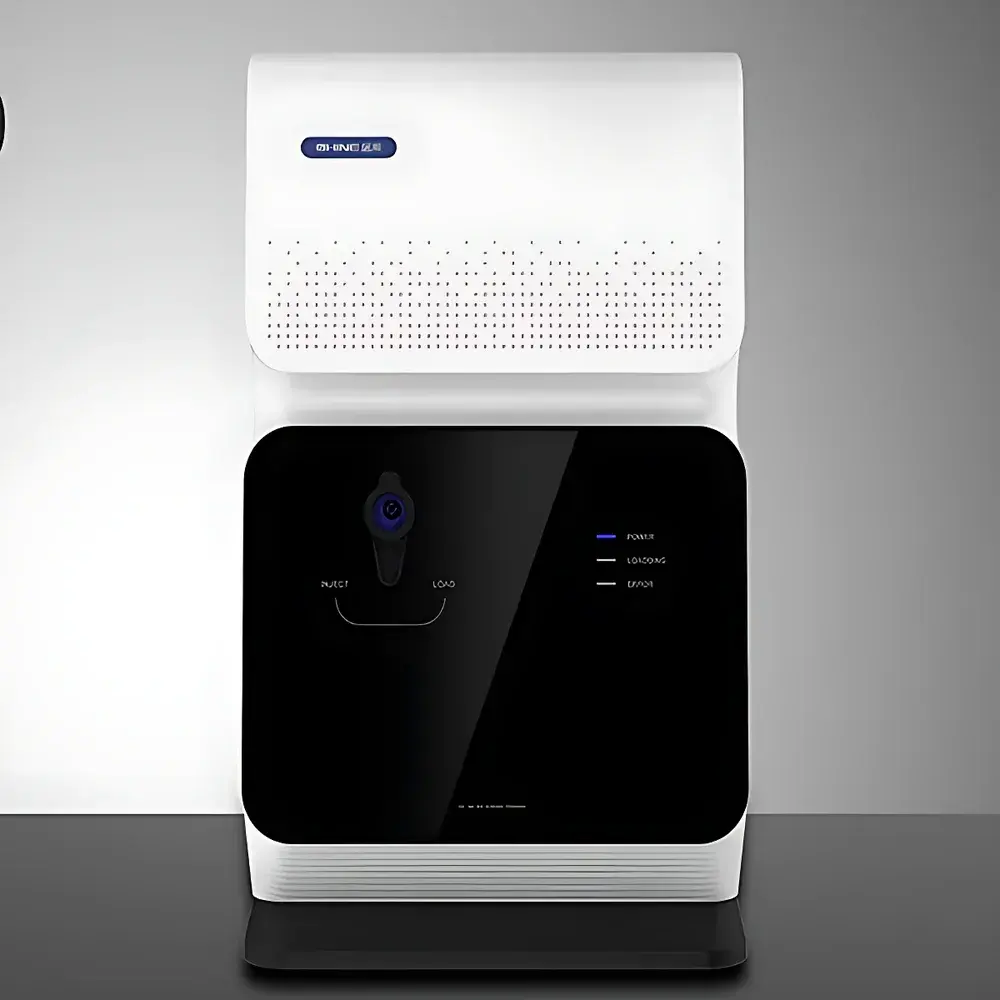
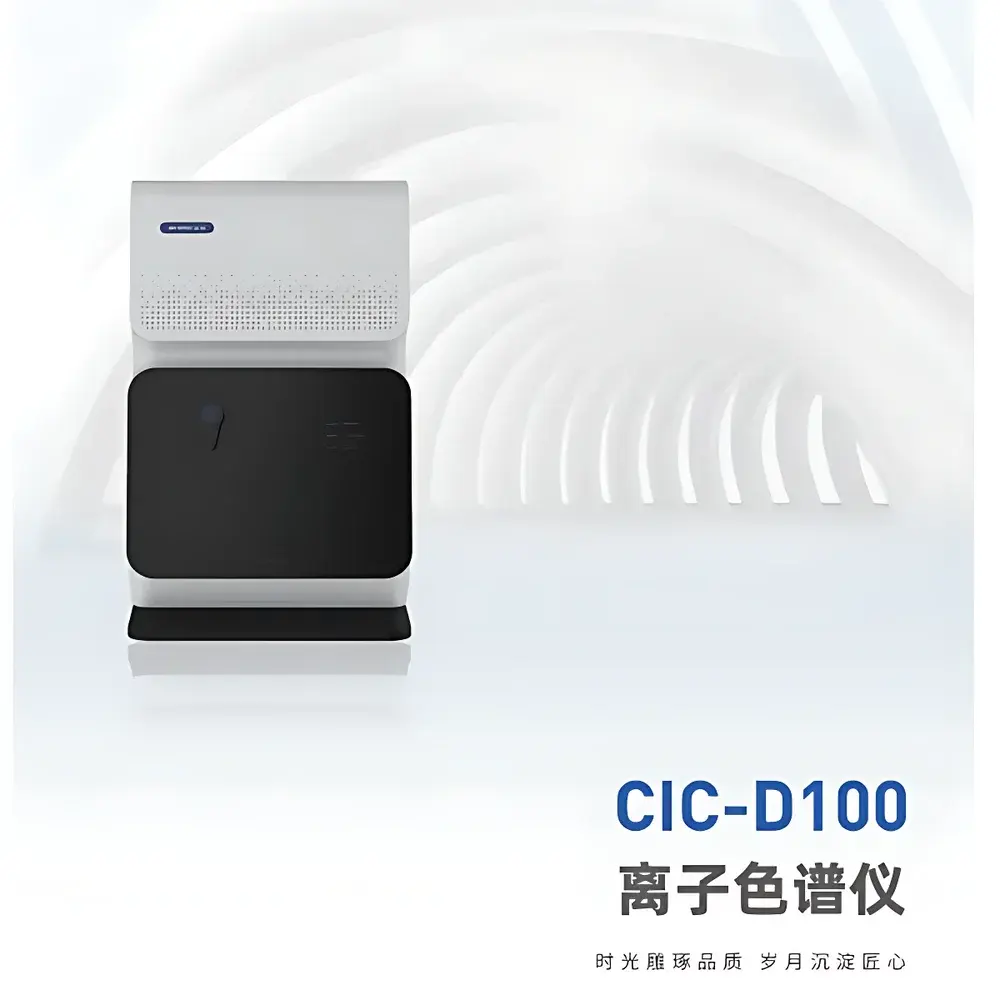
Shine CIC-D100 Ion Chromatograph
| Brand | Shine / SHINE |
|---|---|
| Origin | Shandong, China |
| Manufacturer Type | Original Equipment Manufacturer (OEM) |
| Product Category | Domestic |
| Model | CIC-D100 |
| Instrument Type | Laboratory Benchtop |
| Application Scope | General-Purpose Ion Analysis |
| Maximum Pump Pressure | 42 MPa |
| Flow Rate Range | 0.001–9.999 mL/min |
| Eluent Flow Rate Range | 0.001–9.999 mL/min |
| Maximum Operating Pressure | 42 MPa |
| Column Oven Temperature Range | 20–60 °C |
| Eluent Concentration Range | 0.01–100 mM |
Overview
The Shine CIC-D100 Ion Chromatograph is a laboratory-grade, general-purpose analytical system engineered for high-precision separation and quantification of inorganic anions, cations, and other polar ionic species in diverse sample matrices. Based on suppressed conductivity detection and eluent generation principles, the CIC-D100 employs high-pressure, low-pulsation dual-plunger PEEK pumps and a thermally stabilized separation path to ensure reproducible retention times and robust baseline stability. Its design complies with fundamental requirements for regulated environments—including ISO/IEC 17025-accredited testing laboratories—and supports method development aligned with ASTM D4327, EPA Method 300.0/300.1, and ISO 14911 for drinking water and environmental analysis. The system’s modular architecture enables seamless integration of optional electrochemical detection modules, facilitating expanded application coverage across quality control, environmental monitoring, and industrial process validation.
Key Features
- Auto-ranging Conductivity Detector: Dual-pulse, temperature-compensated detector with built-in thermostatic control (±0.05 °C); delivers linear response across 4 orders of magnitude (ppb to ppm) without manual range switching—eliminating signal saturation or loss of sensitivity during gradient or multi-analyte runs.
- Electrolytic Micro-membrane Suppressor: Self-regenerating, chemical-free suppression technology compatible with carbonate, hydroxide, nitric acid, and methanesulfonic acid eluent systems; operates continuously at up to 6 MPa without leakage; exhibits low background conductivity (95%), and resistance to organic solvent exposure (up to 100% acetonitrile or methanol).
- High-Pressure Dual-Plunger Pump: PEEK-wetted, pulse-dampening design delivering flow accuracy ≤±0.1% RSD over full range (0.001–9.999 mL/min); includes real-time pressure monitoring, automatic over/under-pressure shutdown, and multi-point flow calibration correction.
- Integrated Column Compartment: Embedded PID-controlled oven with pre-heating module for eluent stream; maintains column temperature stability within ±0.2 °C across 20–60 °C operating range; minimizes thermal mismatch between eluent and column, enhancing peak symmetry and retention time reproducibility (RSD <0.15% over 24 h).
- One-Touch System Control: Unified software interface enabling single-button startup/shutdown sequences—including pump priming, detector equilibration, column conditioning, and system purge—reducing operator dependency and procedural variability.
Sample Compatibility & Compliance
The CIC-D100 accommodates aqueous extracts from environmental (soil leachates, wastewater, rainwater), industrial (process streams, catalyst washes), food (dairy, beverages, infant formula), and pharmaceutical (excipient purity, counterion profiling) samples. It supports direct injection of clarified, filtered (0.22 µm nylon membrane), and matrix-matched standards. All fluidic pathways are chemically inert (PEEK, PTFE, and titanium components), ensuring compatibility with acidic, basic, and mixed organic-aqueous eluents. The system meets mechanical safety requirements per IEC 61010-1 and electromagnetic compatibility per EN 61326-1. Data integrity features—including user-level access control, electronic signatures, and audit-trail-enabled event logging—are configurable to align with GLP and FDA 21 CFR Part 11 expectations when paired with validated software deployment.
Software & Data Management
Shine IC Control Software provides full instrument reverse control, real-time parameter monitoring, and automated sequence execution. It supports quantitative workflows using external standard calibration curves, single-point bracketing, and internal standard correction. Raw data files (.icd) are stored in vendor-neutral formats with embedded metadata (instrument ID, method name, operator, timestamp, audit trail). Export options include CSV, PDF reports, and XML-compliant output for LIMS integration. The software architecture allows concurrent control of up to four independent detectors (conductivity + amperometric), enabling simultaneous anion/cation analysis or multi-modal detection strategies. All method files are digitally signed and version-controlled to support traceable reanalysis and regulatory submission readiness.
Applications
- Environmental: Quantification of F⁻, Cl⁻, NO₂⁻, Br⁻, NO₃⁻, PO₄³⁻, SO₄²⁻, and AsO₄³⁻ in surface water per EPA Method 300.1; determination of Li⁺, Na⁺, NH₄⁺, K⁺, Mg²⁺, Ca²⁺ in groundwater per ISO 10304-1.
- Industrial QA/QC: Monitoring of chloride and sulfate impurities in lithium battery electrolytes; analysis of amine-based corrosion inhibitors in cooling water; speciation of Cr(III)/Cr(VI) in electroplating baths.
- Food & Beverage: Nitrate/nitrite in cured meats; iodide in dairy products; sulfite residues in wines; sodium/potassium profiling in infant formulas.
- Pharmaceutical: Counterion verification (e.g., Na⁺ in sodium heparin, Cl⁻ in ciprofloxacin HCl); residual acetate and phosphate in bioprocess buffers.
FAQ
Does the CIC-D100 support both anion and cation analysis on the same platform?
Yes—the system is fully configurable for either mode via interchangeable suppressors, columns, and eluents. Anion and cation separations can be performed sequentially on the same hardware without physical modification.
Is the electrolytic suppressor compatible with organic solvents?
Yes—it tolerates up to 100% methanol, acetonitrile, or ethanol in the eluent stream, enabling enhanced selectivity for highly retained or hydrophobic ions.
Can the software generate 21 CFR Part 11-compliant audit trails?
When deployed under validated conditions with enabled user authentication and electronic signature modules, the software logs all critical events—including method edits, calibration updates, and result approvals—with immutable timestamps and operator attribution.
What is the minimum detectable concentration for common anions?
Under optimized conditions (25 µL injection, carbonate eluent, suppressed conductivity detection), typical MDLs range from 0.05 µg/L (F⁻) to 0.2 µg/L (SO₄²⁻), consistent with EPA-defined reporting limits.
Is column temperature control mandatory for reproducible results?
While ambient operation is possible, column oven use is strongly recommended: temperature fluctuations >±1 °C induce measurable retention shifts (>0.5% RSD), particularly for weakly retained ions like formate or acetate.





