
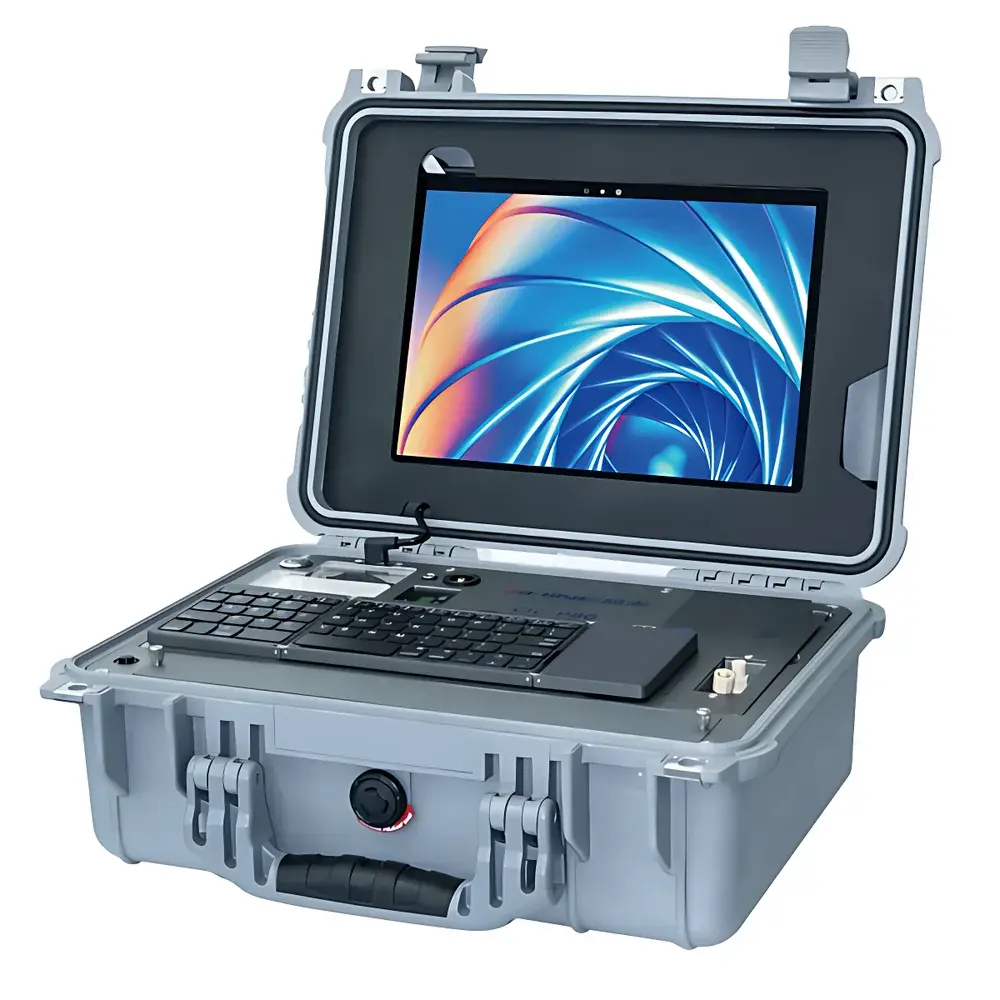
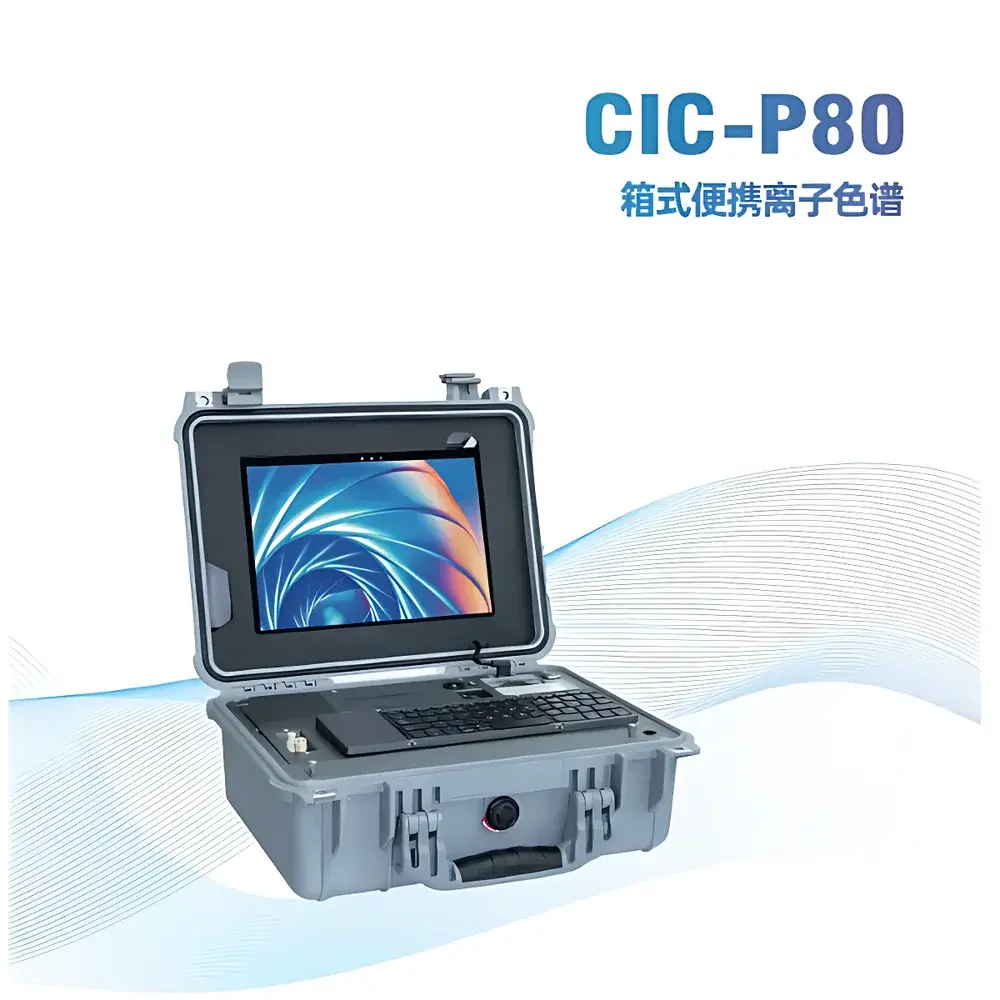
Shine CIC-P80 Portable Box-Type Ion Chromatograph
| Brand | Shine |
|---|---|
| Origin | Shandong, China |
| Manufacturer Type | Direct Manufacturer |
| Instrument Type | Portable Ion Chromatograph |
| Model | CIC-P80 |
| Application Scope | Field-Deployable General-Purpose Inorganic Anion/Cation Analysis |
| Power Supply | Dual-mode (AC Mains or External Power Bank, 4 h per bank, hot-swap enabled) |
| Sample Introduction | Integrated Syringe-Free Suction-Based Autosampler |
| Fluidic Architecture | Electrically Isolated Water/Electrical Circuit Layout with Sealed Enclosure |
| User Interface | 7-inch Capacitive Touchscreen + Optional Bluetooth Keyboard/Mouse Support |
| Compliance Context | Designed for field use under ISO/IEC 17025-aligned operational practices |
Overview
The Shine CIC-P80 Portable Box-Type Ion Chromatograph is a purpose-engineered field-deployable analytical system designed for on-site qualitative and quantitative determination of inorganic anions (e.g., F⁻, Cl⁻, NO₂⁻, NO₃⁻, SO₄²⁻, PO₄³⁻) and cations (e.g., Li⁺, Na⁺, NH₄⁺, K⁺, Mg²⁺, Ca²⁺) in complex environmental and forensic matrices. Built upon suppressed conductivity detection and low-flow eluent delivery (typically 0.3–1.0 mL/min), the instrument leverages miniaturized high-pressure dual-piston pumps, thermally stabilized separation columns, and a compact electrochemical suppressor module to deliver laboratory-grade chromatographic resolution under non-laboratory conditions. Its sealed enclosure, shock-absorbing chassis, and IP54-rated ingress protection enable reliable operation in outdoor environments—including accident scenes, landfill perimeters, industrial fence lines, and mobile crime labs—where temperature fluctuations, dust, humidity, and limited infrastructure are common constraints.
Key Features
- True Portability: Fully integrated into a ruggedized carry-case (dimensions: 420 × 320 × 210 mm; mass: ≤12.5 kg), enabling single-operator transport and rapid deployment without external carts or mounting fixtures.
- Low-Flow High-Sensitivity Architecture: Optimized fluidic path minimizes eluent consumption (≤15 mL/day for standard carbonate/bicarbonate eluents), extends cartridge-based suppressor lifetime, and enhances signal-to-noise ratio for trace-level analytes (detection limits typically <0.1 µg/L for Cl⁻ under optimized conditions).
- Electrical/Water Circuit Isolation: Physically segregated high-voltage detector circuitry and low-conductivity eluent pathways eliminate ground-loop interference and reduce risk of short-circuiting in humid or conductive field settings.
- Suction-Based Sample Introduction: Eliminates need for disposable syringes or vial racks; draws sample directly from field containers (1–50 mL volume range) via PTFE-lined tubing, minimizing carryover and cross-contamination between sequential analyses.
- Dual-Mode Power System: Operates continuously from AC mains or external 12 V DC power banks (USB-C PD compatible); hot-swap capability allows uninterrupted analysis during battery replacement—critical for time-sensitive incident response protocols.
- Sealed Environmental Enclosure: Gasketed aluminum housing with conformal-coated PCBs resists particulate ingress, condensation, and incidental splashes, supporting operation across −10 °C to +45 °C ambient ranges.
Sample Compatibility & Compliance
The CIC-P80 accepts aqueous extracts, leachates (e.g., TCLP, SPLP), air filter rinsates, soil pore water, and liquid effluent samples without pre-filtration when using inline 0.22 µm nylon filters (included). It complies with method requirements outlined in EPA Method 300.0, ASTM D4327, ISO 10304-1, and Chinese HJ 84-2016 for inorganic ion analysis. Data integrity is maintained through timestamped raw chromatogram storage, user-accessible audit logs, and configurable electronic signatures—enabling alignment with GLP documentation standards and internal QA/QC workflows. While not certified to FDA 21 CFR Part 11 out-of-the-box, its software architecture supports export of .cdf and .csv files for integration into validated LIMS environments.
Software & Data Management
Control and data processing are managed via Shine IC-Link v3.x firmware, running natively on the embedded ARM-based touchscreen interface. The software provides real-time chromatogram visualization, peak integration with baseline correction algorithms (tangent skim, vertical drop), retention time locking, and customizable reporting templates (PDF/Excel). All method parameters—including gradient profiles, detector gain, column temperature setpoints, and integration thresholds—are saved as encrypted .icm files. Raw data (.raw) and processed results (.rpt) are stored locally on removable microSD card (Class 10, up to 128 GB) with optional automatic cloud backup via Wi-Fi (WPA2-secured) to customer-designated NAS or FTP servers.
Applications
- Environmental Emergency Response: Rapid identification and quantification of nitrate, sulfate, and chloride spikes in surface water following chemical spills or dam breaches.
- Forensic Toxicology & Crime Scene Investigation: Detection of gunshot residue anions (ClO₃⁻, NO₃⁻) or accelerant-derived ions in fire debris extracts.
- Hazardous Waste Characterization: On-site screening of leachate from landfills or contaminated soils per regulatory extraction protocols.
- Petrochemical Field Monitoring: Measurement of corrosive anions (e.g., Cl⁻, S²⁻) in cooling water circuits or produced water streams.
- Public Health Surveillance: Mobile testing of drinking water sources in remote or disaster-affected regions for compliance with WHO guideline values.
FAQ
Is the CIC-P80 compliant with ISO/IEC 17025 for field testing?
Yes—the instrument’s calibration traceability, documented uncertainty budgets for key measurements (e.g., retention time, peak area), and built-in system suitability checks support implementation within ISO/IEC 17025-accredited field testing programs.
Can I validate my own analytical methods on this platform?
Absolutely. The system includes method development utilities for gradient optimization, column selection guidance, and spike recovery assessment tools—fully compatible with ICH Q2(R2) validation parameters.
What maintenance is required between deployments?
Daily: Flush with deionized water post-analysis; weekly: inspect suppressor cartridge pressure drop and replace if >20% increase observed; quarterly: verify pump seal integrity and detector baseline stability.
Does it support external autosamplers or column ovens?
No—its design prioritizes self-contained portability; all critical modules (pump, injector, column, detector, suppressor) are integrated within the main enclosure.
How is data security ensured during wireless transfer?
Wi-Fi transmission uses TLS 1.2 encryption; local storage employs AES-256 full-disk encryption; user accounts enforce role-based access control (administrator, operator, viewer) with password complexity policies.
Related Products






