
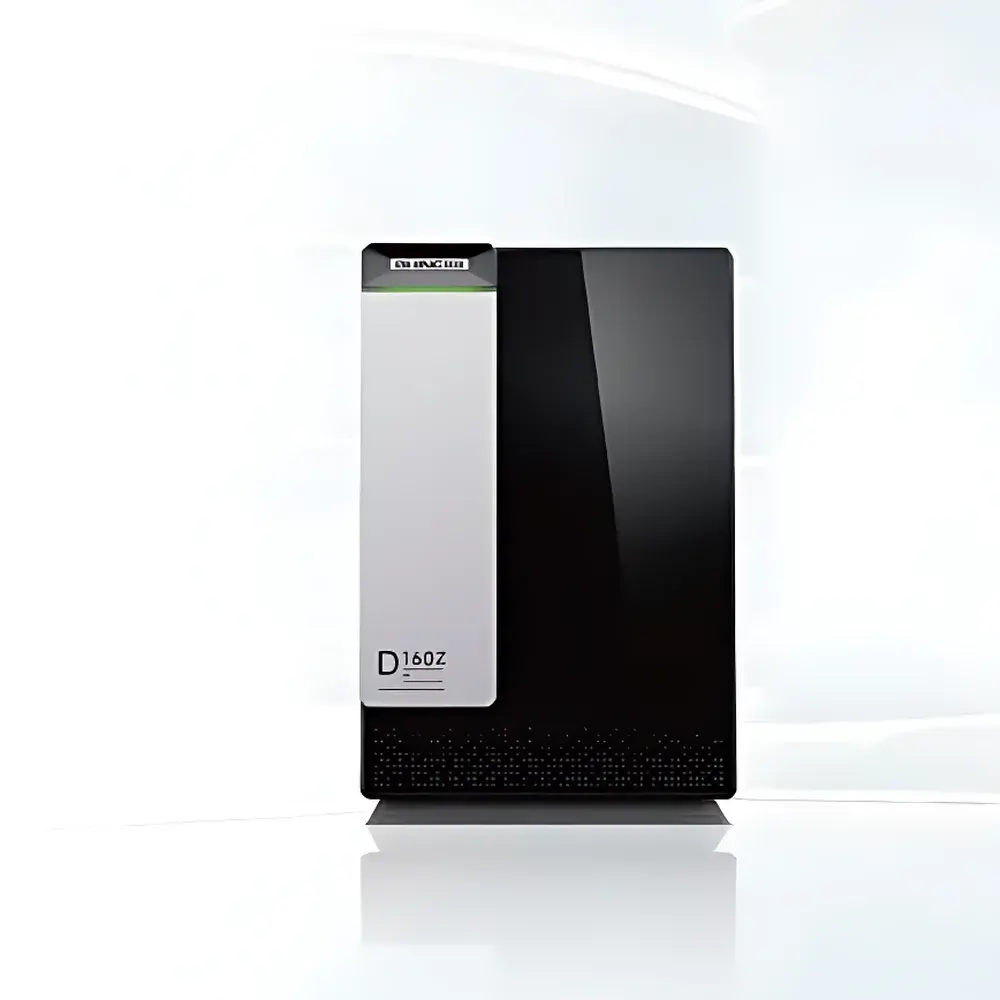
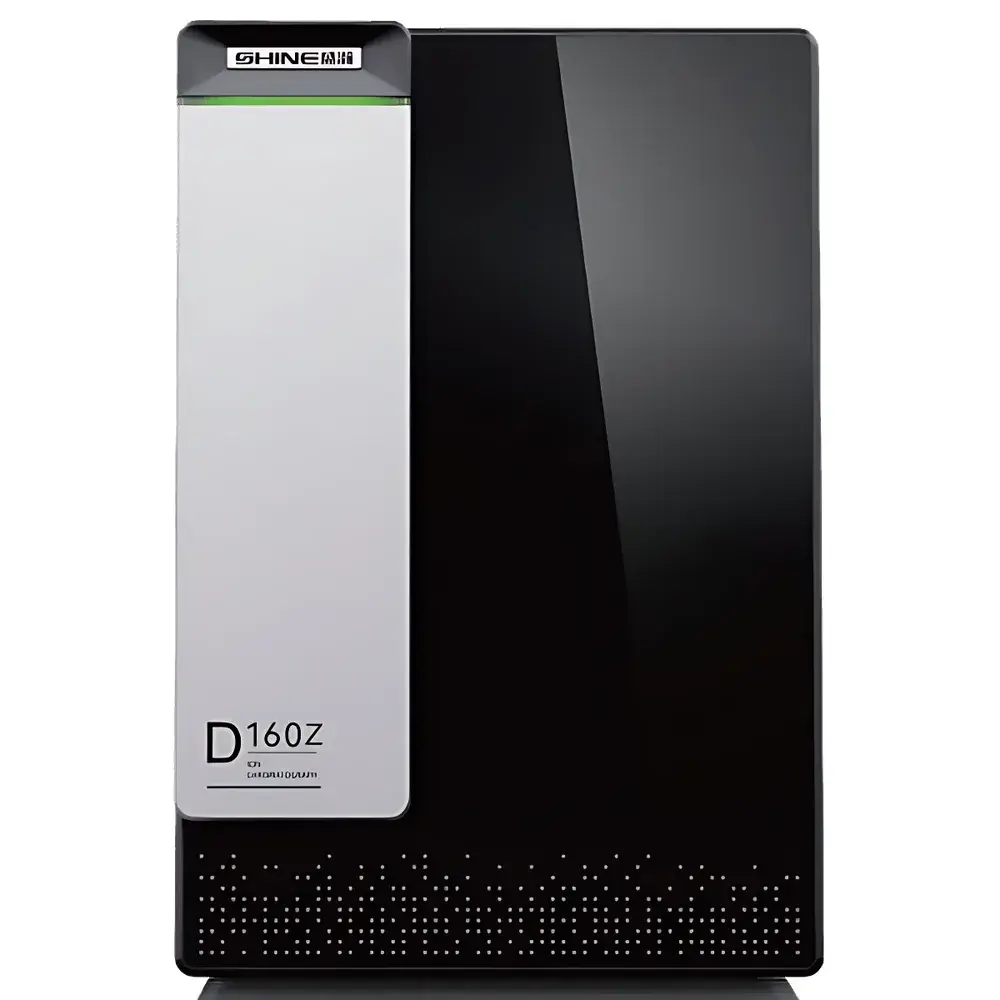
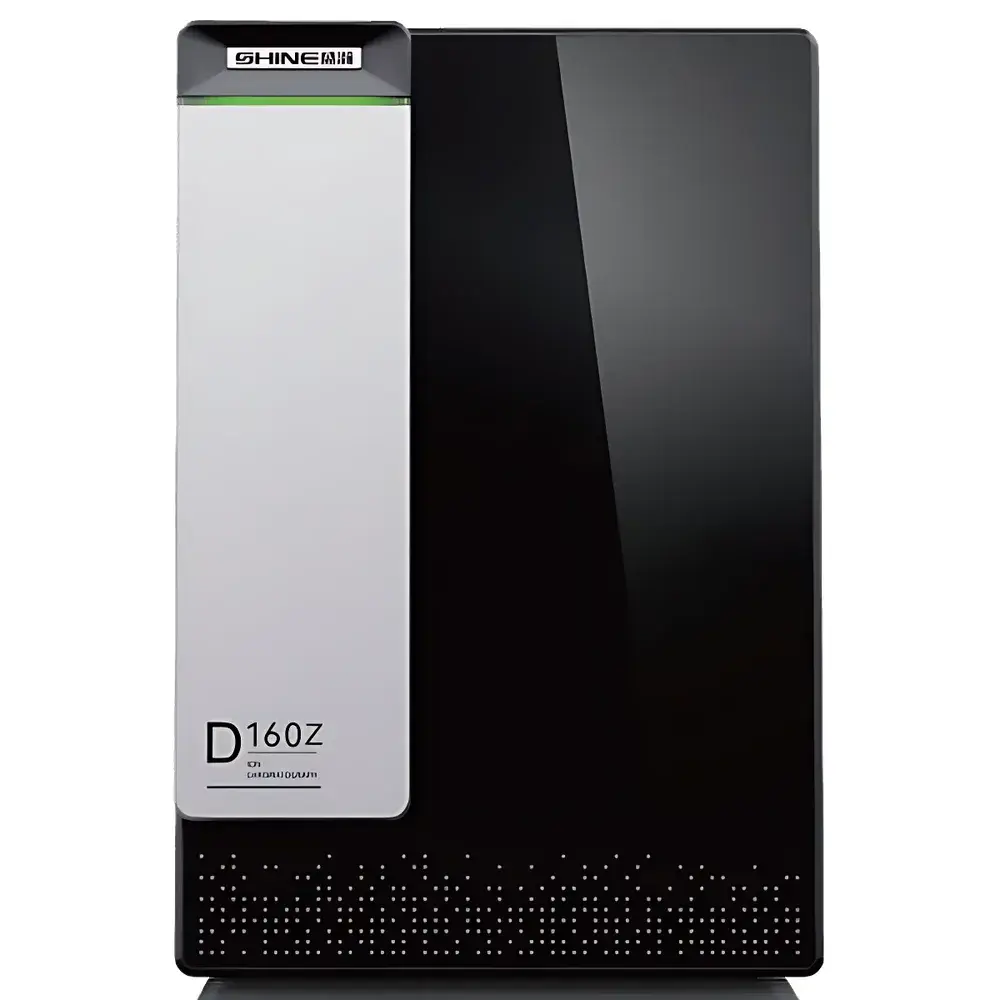
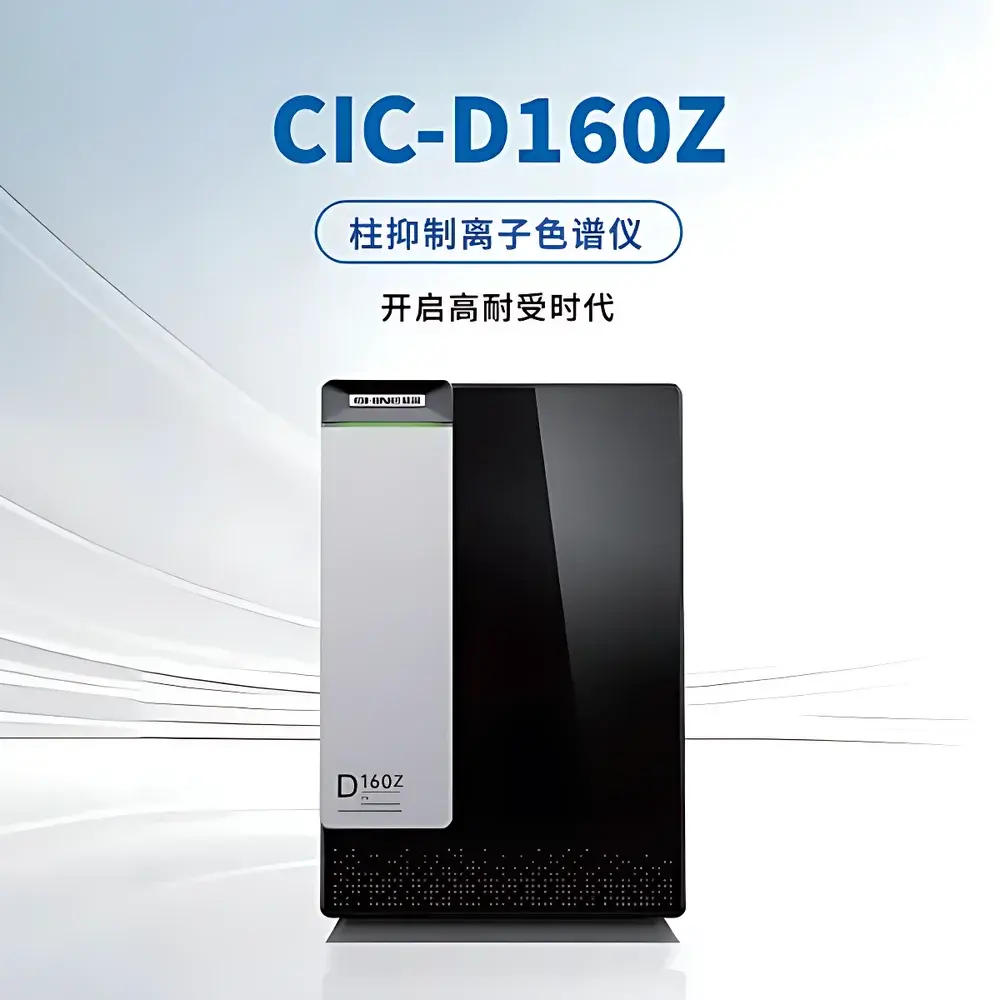
Shine CIC-D160Z Ion Chromatograph
| Brand | Shine |
|---|---|
| Origin | Shandong, China |
| Manufacturer Type | Direct Manufacturer |
| Product Category | Domestic |
| Model | CIC-D160Z |
| Instrument Type | Laboratory |
| Application Scope | General-Purpose |
| Maximum Pump Pressure | 42 MPa |
| Operating Temperature Range | 15–60 °C |
| Suppressor Design | Integrated High-Pressure Chemical Regeneration Suppressor |
| Eluent Generation | Built-in Hydroxide Eluent Generator (water-fed, current-controlled) |
| Column Oven | Integrated Bidirectional Thermostatic Control (15–60 °C, programmable) |
| Fluidic Path | All-PEEK, pH 0–14 Compatible |
| Detector | Embedded Constant-Temperature Conductivity Detector with Auto-Ranging (ppb–ppm linear dynamic range) |
| CO₂ Removal | Integrated Post-Suppression CO₂ Degassing Module |
| Degasser | Built-in Low-Pressure Online Degasser |
| Suppressor Architecture | Triple-Cartridge Rotating Suppressor (120° step rotation, acid-regenerated, real-time cartridge switching) |
| Suppressor Lifetime | ≥10 years under typical operating conditions |
| Organic Solvent Tolerance | Compatible with high-percentage methanol and acetonitrile eluents |
Overview
The Shine CIC-D160Z Ion Chromatograph is a fully integrated, laboratory-grade analytical platform engineered for high-precision anion and cation analysis in demanding research, quality control, and regulatory environments. It operates on the principle of suppressed conductivity detection following ion-exchange chromatography—where analyte ions are separated on a high-efficiency ion-exchange column and quantified via a temperature-stabilized, auto-ranging conductivity detector. The system incorporates a proprietary triple-cartridge rotating chemical regeneration suppressor, enabling continuous suppression without carryover or baseline drift. Unlike conventional single-suppressor configurations, the CIC-D160Z’s 120° rotational architecture ensures that each analysis cycle engages a fresh suppressor cartridge—eliminating cross-contamination at the source and delivering exceptional reproducibility across extended run sequences. Its all-PEEK fluidic path supports full pH compatibility (0–14), organic solvent tolerance (including >40% v/v methanol or acetonitrile), and resistance to aggressive eluents such as carbonate/bicarbonate and hydroxide-based systems—making it suitable for applications ranging from environmental water testing to high-purity semiconductor process monitoring and lithium-ion battery electrolyte characterization.
Key Features
- Integrated high-pressure rotating suppressor (rated to 8 MPa), featuring three independently regenerable cartridges with automated 120° indexing per analysis cycle
- Built-in hydroxide eluent generator: produces KOH or NaOH eluents on-demand from deionized water via electrochemical generation; enables precise isocratic and gradient elution without manual eluent preparation
- Programmable column oven with bidirectional thermostatic control (15–60 °C, ±0.1 °C stability), minimizing thermal drift and enhancing retention time reproducibility for trace-level quantitation
- All-PEEK flow path—including pump heads, valves, tubing, and detector cell—ensuring long-term chemical inertness, zero metal leaching, and compatibility with strong acids, bases, and organic modifiers
- Embedded constant-temperature conductivity detector with auto-ranging capability (linear response across ppb to ppm concentration ranges); no manual gain adjustment required during multi-level calibration or complex matrix analysis
- Dedicated post-suppression CO₂ removal module: eliminates carbonate interference in both carbonate- and hydroxide-based eluent systems, improving peak symmetry and lowering detection limits for low-conductivity anions (e.g., F⁻, acetate)
- Integrated low-pressure online degasser: removes dissolved gases from eluent streams prior to pump intake, preventing bubble-induced baseline noise and pressure fluctuations
- Vacuum-assisted conductivity cell design: reduces background conductance to <1 μS/cm and improves signal-to-noise ratio by 20–50%, directly extending method detection limits
Sample Compatibility & Compliance
The CIC-D160Z supports aqueous, digested, and partially organic extracts across diverse sample matrices—including drinking water, wastewater, pharmaceutical excipients, food extracts, battery electrolytes, and high-purity chemicals. Its robust suppressor design and CO₂ management system ensure reliable performance in high-carbonate or high-bicarbonate backgrounds. From a regulatory standpoint, the instrument architecture aligns with data integrity requirements outlined in FDA 21 CFR Part 11 (when paired with compliant LIMS or chromatography data systems), ISO/IEC 17025 method validation frameworks, and USP guidelines for conductivity-based water quality testing. All hardware components—including PEEK wetted parts and electropolished stainless-steel housings where applicable—meet ASTM F2239 biocompatibility standards and pass extractables testing per USP . Routine operation requires no hazardous regeneration reagents, supporting green chemistry objectives and reducing waste disposal burden.
Software & Data Management
The CIC-D160Z operates under Shine IC Navigator™—a Windows-based acquisition and processing platform compliant with GLP/GMP workflows. The software provides full audit trail functionality, electronic signatures, user role-based access control, and automatic metadata capture (including column lot numbers, suppressor usage cycles, and eluent generation parameters). Raw data files adhere to ASTM E1957-compliant .icd format, ensuring interoperability with third-party processing tools and enterprise LIMS integrations. Method development tools include gradient optimization wizards, peak purity assessment via spectral deconvolution (when coupled with optional UV detector), and automated system suitability checks aligned with ICH Q2(R2) expectations. All detector signals are timestamped with microsecond precision, and detector temperature, suppressor status, and flow rate telemetry are logged continuously for retrospective troubleshooting and compliance review.
Applications
The CIC-D160Z delivers validated performance in regulated and industrial settings requiring rigorous ion quantification. Key application domains include: (1) Environmental analysis per EPA Methods 300.0, 300.1, and ISO 10304-1 for anions (Cl⁻, NO₃⁻, SO₄²⁻) and cations (Na⁺, NH₄⁺, K⁺); (2) Pharmaceutical water testing per USP , EP 2.2.38, and JP 2.05; (3) Battery electrolyte impurity profiling—quantifying HF, PF₆⁻, and organic acid degradation products in LiPF₆-based formulations; (4) Semiconductor ultrapure water (UPW) monitoring for trace chloride, sulfate, and fluoride per SEMI F63; (5) Food and beverage analysis per AOAC 998.12 for preservatives (sorbate, benzoate) and additives (nitrite, phosphate); and (6) Clinical research applications involving organic acid profiling in urine and serum samples using organic-modified hydroxide eluents.
FAQ
What eluent systems are supported by the CIC-D160Z?
The system natively supports carbonate/bicarbonate, methanesulfonic acid (MSA), and hydroxide-based eluents—both manually prepared and generated on-demand via the built-in eluent generator.
Is the suppressor truly maintenance-free for 10 years?
Under typical operating conditions (≤2 mL/min, ≤40 °C, standard eluents), the triple-cartridge suppressor achieves ≥10 years of functional service life without replacement—validated through accelerated aging studies and field deployment data from over 120 laboratories.
Can the CIC-D160Z be integrated into an existing LIMS environment?
Yes—via OPC UA or HL7-compliant API interfaces; raw data export in ASTM E1957 format enables seamless ingestion into major LIMS platforms including LabVantage, Thermo Fisher SampleManager, and Waters Empower.
Does the instrument meet FDA 21 CFR Part 11 requirements out-of-the-box?
Hardware and firmware comply with technical controls; full Part 11 compliance requires configuration of IC Navigator™ with enabled audit trails, electronic signatures, and secure user authentication—documented in the system validation package provided with each unit.
How does the CO₂ removal module improve detection sensitivity?
By eliminating dissolved CO₂-derived carbonate/bicarbonate background conductivity, the module reduces baseline noise by up to 70% and improves peak resolution for low-conductivity anions—particularly critical in hydroxide-eluent applications where CO₂ ingress is unavoidable.
Related Products




