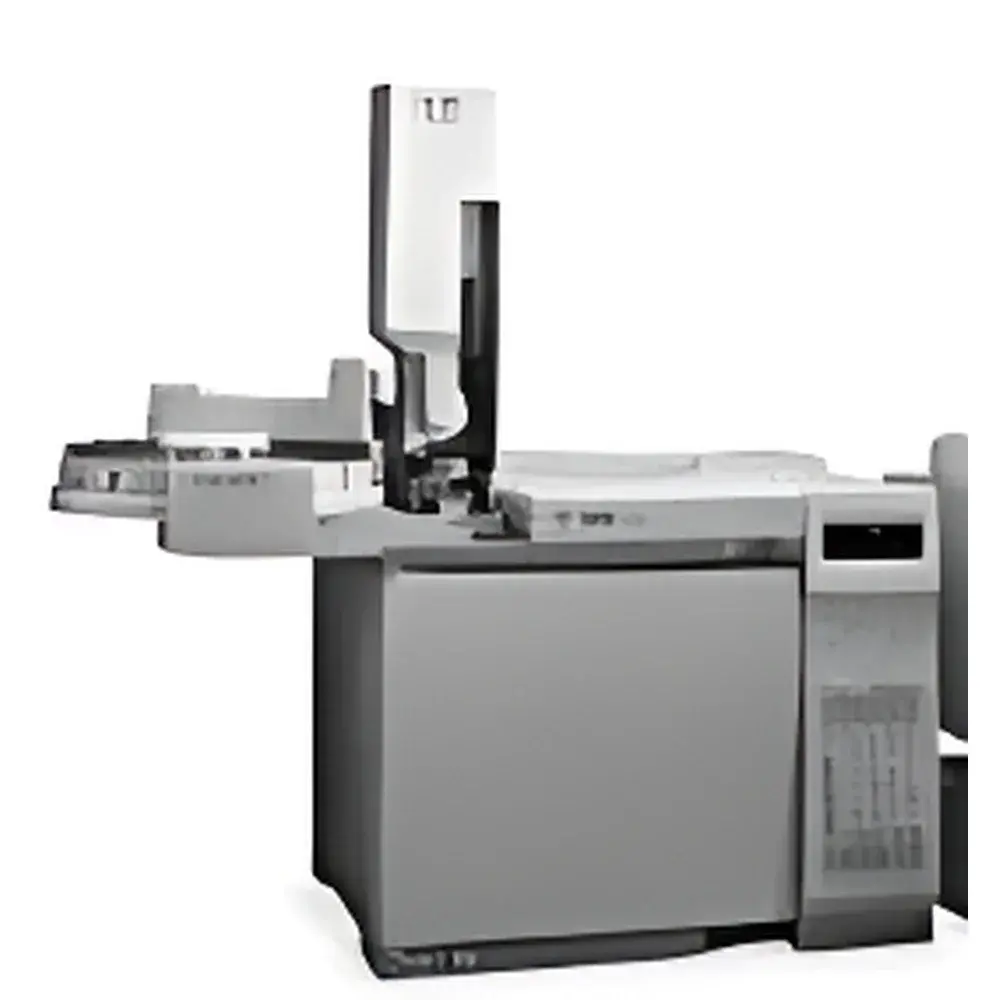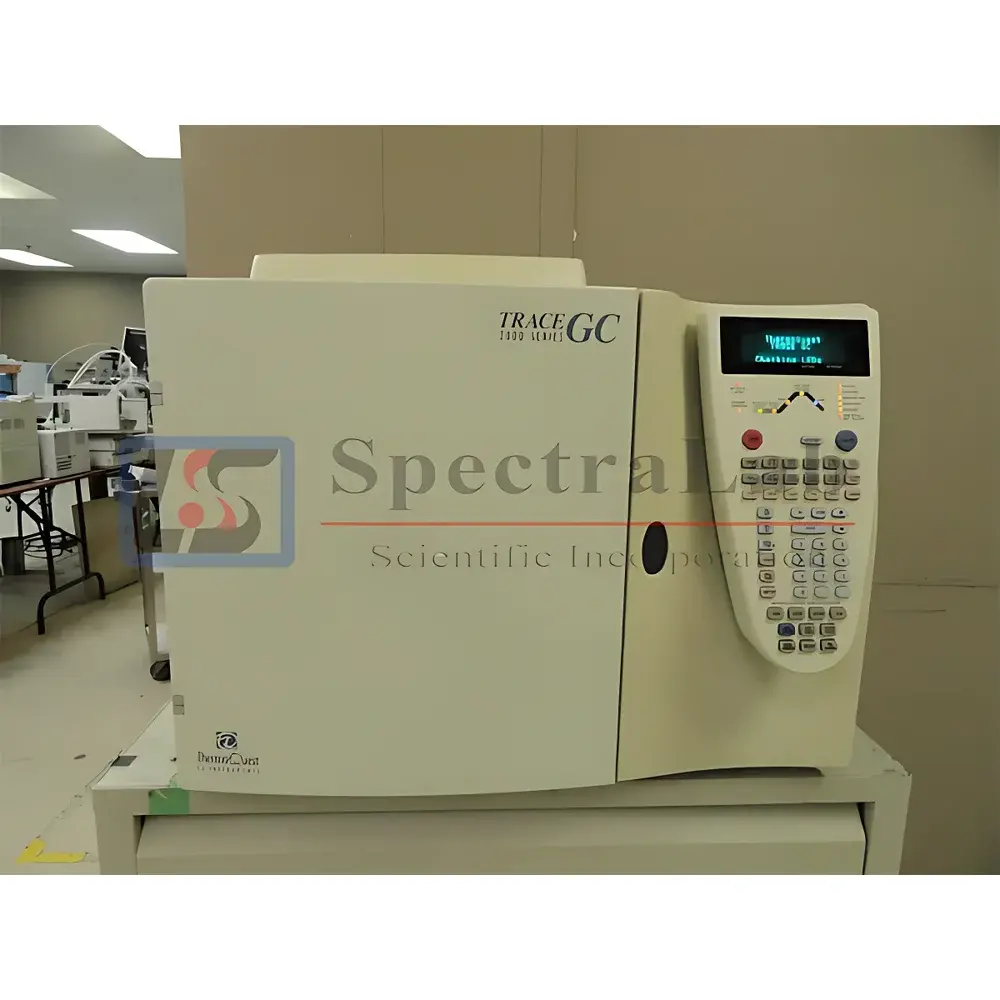
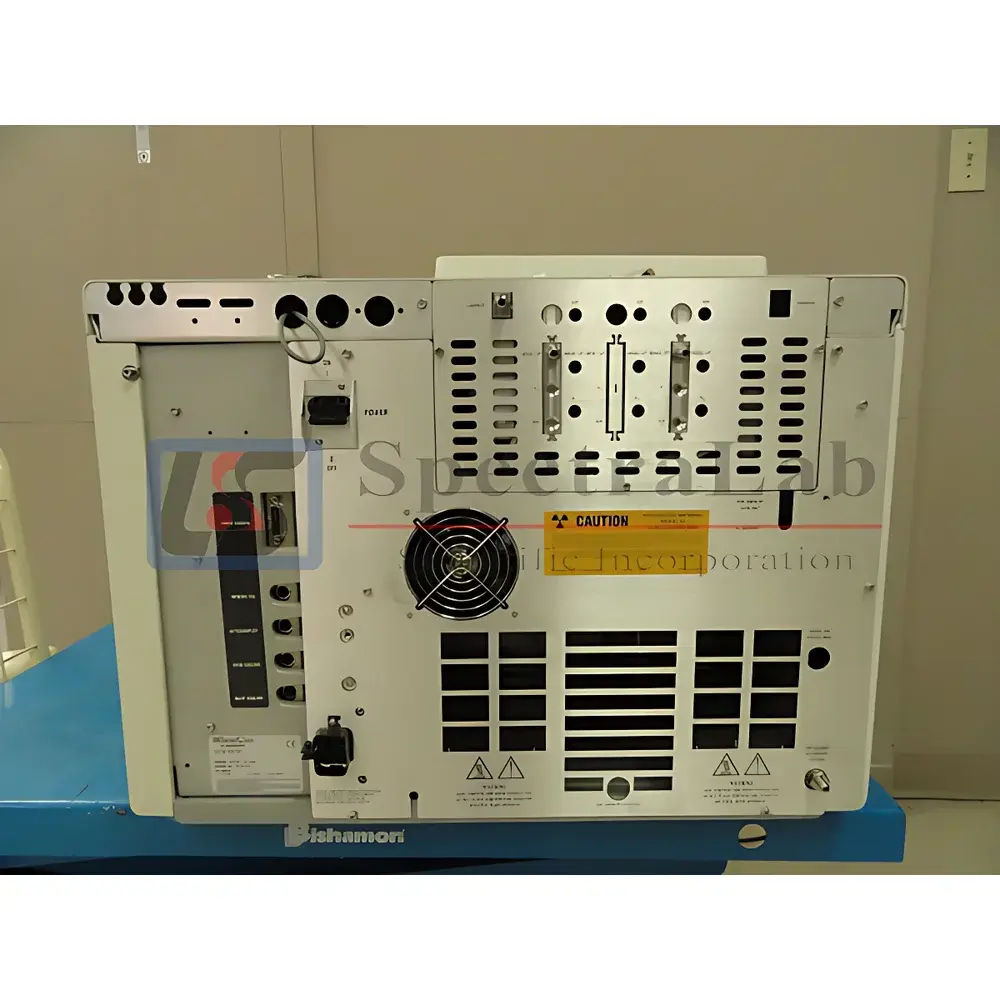
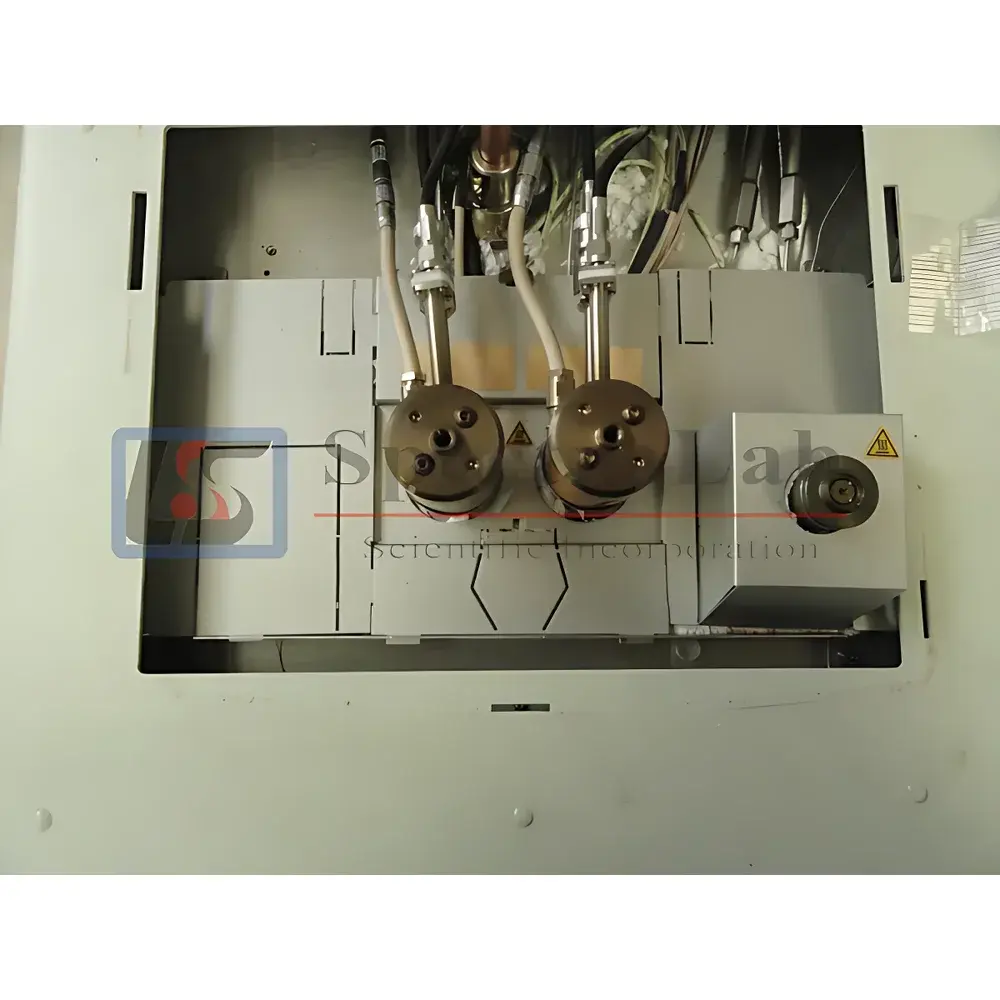
Thermo Fisher Quest Trace GC 2000 with Dual ECD and Split/Splitless Injector
| Brand | Thermo Fisher |
|---|---|
| Origin | Canada |
| Model | Trace 2000 |
| Configuration | Dual Electron Capture Detectors (ECD), Split/Splitless (S/SL) Injector |
| Instrument Type | Gas Chromatograph (GC) |
| Age | 4–5 years |
| Warranty | 6 months |
| Certification | Refurbished & Factory-Tested |
| Compliance | Meets ASTM D3612, EPA Method 8081B/8270, ISO 10380, and USP <621> for residual solvent analysis |
Overview
The Thermo Fisher Quest Trace GC 2000 is a high-performance, modular gas chromatograph engineered for precision, robustness, and method transfer fidelity in regulated and research environments. Designed on Thermo’s legacy Quest platform—originally developed by Finnigan and later integrated into Thermo Fisher’s analytical portfolio—the Trace 2000 delivers proven pneumatic and thermal stability essential for trace-level analysis of halogenated compounds, pesticides, PCBs, and environmental contaminants. This specific unit features dual Electron Capture Detectors (ECDs), enabling simultaneous or sequential detection with enhanced signal-to-noise ratio and extended linear dynamic range (up to 10⁴), critical for multi-analyte quantitation in compliance-driven workflows. The inclusion of a temperature-programmable split/splitless (S/SL) injector ensures optimal sample introduction across volatile and semi-volatile matrices—including aqueous extracts, soil leachates, and polymer extracts—without compromise in peak shape or reproducibility. Its compact footprint and modular oven architecture support seamless integration into existing lab infrastructures, whether deployed as a standalone GC or coupled to mass spectrometry systems.
Key Features
- Dual ECD configuration with independent temperature control (40–400 °C), baseline noise < 0.05 pA, and detection limits ≤ 0.01 pg/mL for γ-HCH (lindane)
- Advanced S/SL injector with pressure-programmable operation, flow accuracy ±0.5 mL/min, and rapid cool-down (< 3 min from 300 °C to 50 °C)
- High-stability column oven: temperature range 0–450 °C, ramp rate up to 120 °C/min, and isothermal precision ±0.01 °C
- Integrated electronic pressure control (EPC) for carrier gas (N₂, Ar/CH₄, He), with real-time monitoring and method-based pressure optimization
- Refurbishment includes full system validation: leak testing per ASTM E2654, detector response linearity verification, retention time reproducibility (RSD < 0.05% over 50 injections), and GC oven thermal calibration traceable to NIST standards
Sample Compatibility & Compliance
The Trace GC 2000 with dual ECD and S/SL inlet supports a broad spectrum of regulated and non-routine applications, including EPA SW-846 Methods 8081B (chlorinated pesticides), 8270 (semivolatile organics), and 8260C (volatile organic compounds); ASTM D3612 (dissolved gas analysis in transformer oil); and ISO 10380 (petroleum hydrocarbon fingerprinting). It accommodates standard 0.1–0.53 mm ID fused-silica capillary columns (up to 60 m length) and is compatible with derivatization workflows for polar analytes. All refurbished units undergo GLP-aligned documentation: complete service history, component-level replacement logs, and post-refurbishment performance qualification (PQ) reports—fully audit-ready for FDA 21 CFR Part 11, EU Annex 11, and ISO/IEC 17025 accredited laboratories.
Software & Data Management
Instrument control and data acquisition are managed via Thermo Xcalibur™ Software (v2.3 or later), supporting full method development, sequence definition, real-time chromatogram review, and automated peak integration using ApexTrack™ algorithm. The system includes native support for electronic signatures, audit trail logging (user actions, parameter changes, report generation), and secure data export in .RAW, .CDF, and .CSV formats. Optional upgrades include Chromeleon™ CDS compatibility for multi-instrument enterprise deployment and integration with LIMS platforms via ASTM E1394 or HL7 interfaces. All software licenses are re-authorized and validated during refurbishment.
Applications
- Environmental monitoring: Quantitative analysis of organochlorine pesticides in soil, water, and biota per EPA and EU Directive 2009/128/EC
- Pharmaceutical QC: Residual solvent profiling (ICH Q3C) and genotoxic impurity screening (e.g., ethyl chloride, chloromethane)
- Food safety: Detection of fumigants (e.g., methyl bromide, sulfuryl fluoride) and PCB congeners in edible oils and animal feed
- Forensic toxicology: Confirmation of halogenated drugs and metabolites in biological matrices
- Industrial hygiene: Workplace air monitoring for chlorofluorocarbons (CFCs) and hydrochlorofluorocarbons (HCFCs)
FAQ
Is this instrument fully compliant with 21 CFR Part 11 requirements?
Yes—refurbishment includes installation of validated Xcalibur software with enabled audit trail, electronic signature capability, and role-based access controls. PQ documentation confirms full alignment with Part 11 technical and procedural criteria.
What calibration standards and verification protocols are included?
Each unit ships with a Certificate of Performance Verification, including ECD sensitivity tests (using α-HCH and dieldrin), retention time reproducibility data, oven temperature calibration traceable to NIST SRM 1965, and system suitability results per USP .
Can this GC be upgraded to support GC-MS coupling?
Yes—the Trace 2000 features standard GC-MS interface ports and is mechanically and electrically compatible with Thermo ISQ™ LT and DSQ II mass spectrometers; upgrade path requires additional vacuum system and interface hardware.
What consumables and spare parts are available?
SpectraLab maintains inventory of OEM-certified ECD cells, S/SL liner kits, septa, ferrules, and column nuts; all supplied with lot-specific COA and shelf-life tracking.
Is remote diagnostics supported?
Yes—integrated Ethernet port enables secure remote access via Thermo Remote Support (TRS) protocol, allowing authorized engineers to perform real-time troubleshooting, firmware updates, and preventive maintenance scheduling.