
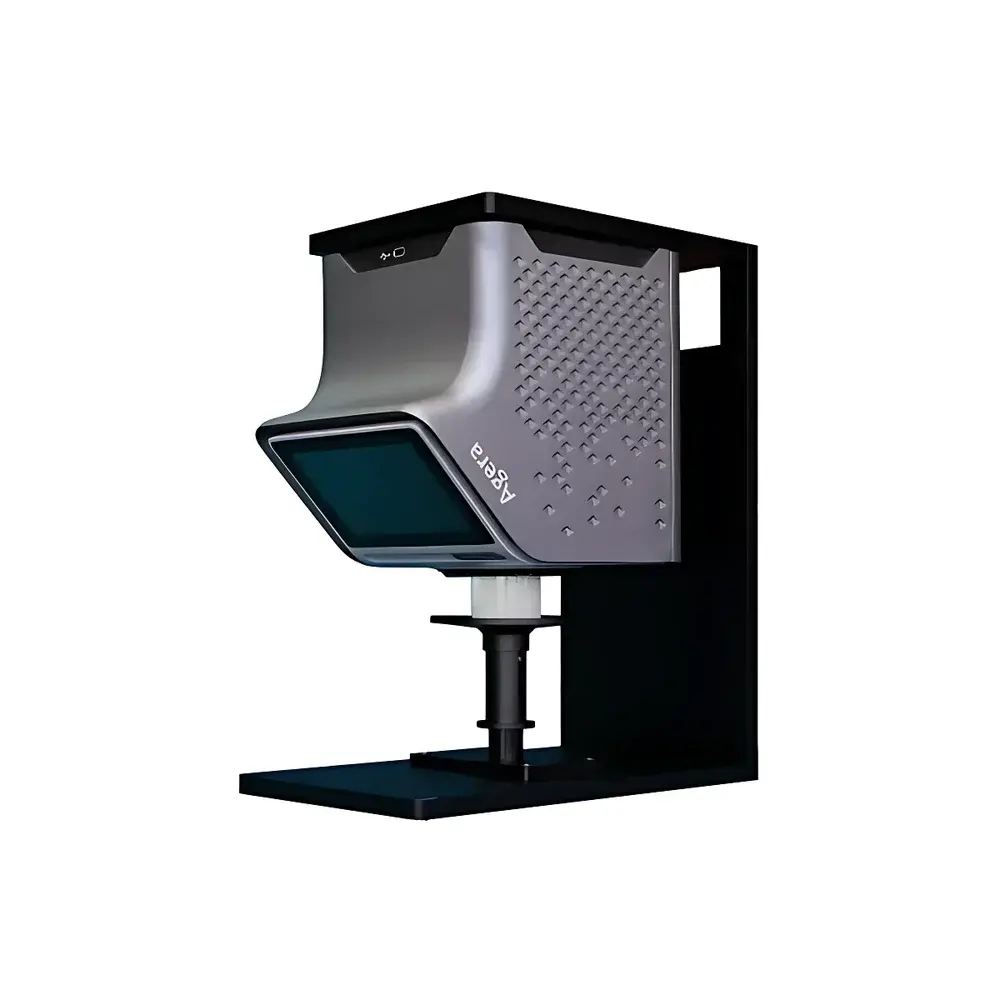
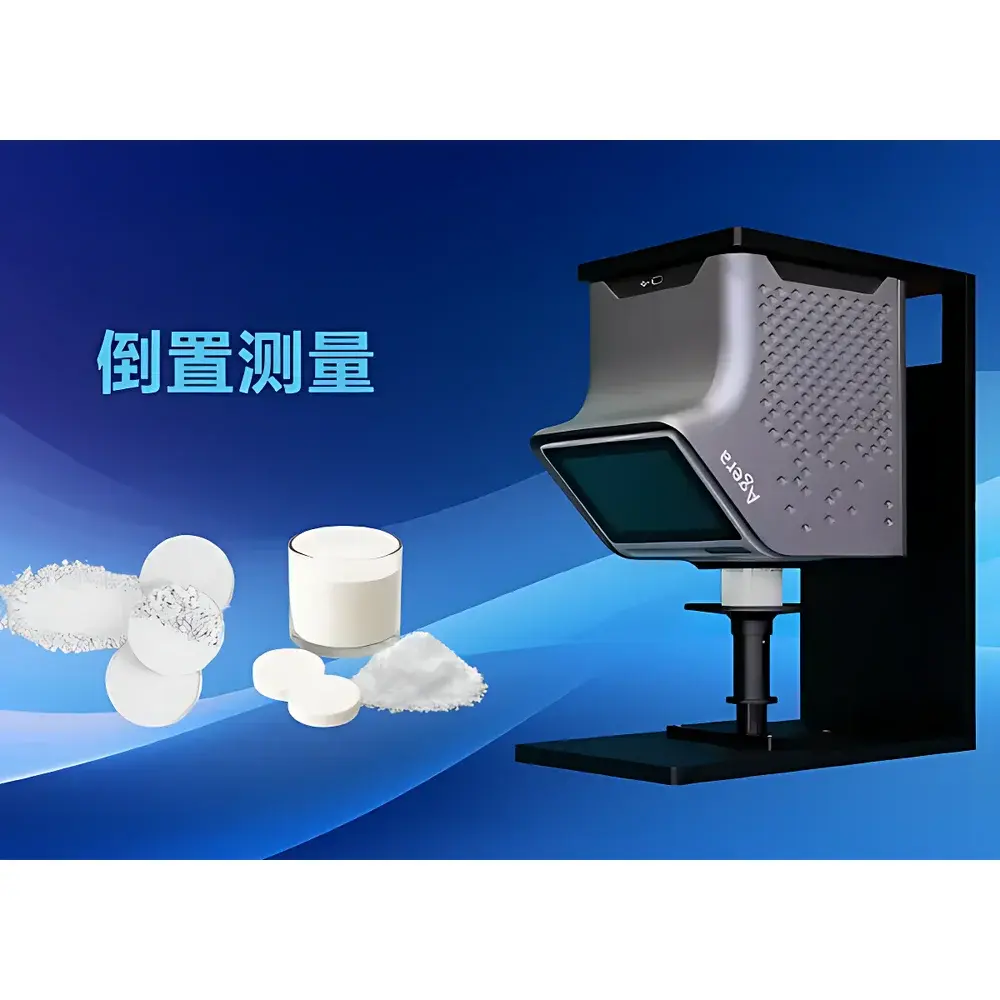
HunterLab Agera Inverted Powder & Pellet Measurement Stand
| Brand | HunterLab |
|---|---|
| Origin | USA |
| Manufacturer Type | Authorized Distributor |
| Origin Category | Imported |
| Model | Inverted Measurement Stand |
| Product Type | Spectrophotometric Colorimeter |
| Instrument Type | Benchtop |
| Optical Geometry | 0/45° Integrating Sphere |
| Light Source | Full-Spectrum Balanced LED Array |
| Spectral Range | 400 nm – 700 nm |
| Repeatability | ΔE*ab ≤ 0.03 |
Overview
The HunterLab Agera Inverted Powder & Pellet Measurement Stand is a purpose-engineered mechanical accessory designed to enable robust, contamination-free color measurement of opaque solid samples—particularly pressed powder tablets and plastic pellets—using HunterLab’s benchtop 0/45° spectrophotometric colorimeters (e.g., Agera, UltraScan VIS, or MiniScan EZ platforms). Unlike conventional top-down sample placement, this stand reorients the instrument’s optical head downward, allowing the sample to be positioned *beneath* the measurement port. This inverted configuration eliminates direct contact between loose particulates (e.g., TiO₂, PTA, or polymer granules) and the critical optical aperture, thereby preventing lens fouling, spectral drift, and calibration instability. The design adheres to core metrological principles of geometric consistency and stray-light control, ensuring that measurements conform to the fundamental assumptions of CIE 15:2018 and ASTM E308–22 for reflectance-based colorimetry.
Key Features
- Inverted optical orientation: Positions the instrument’s 0/45° measurement port facing downward, enabling secure, gravity-stabilized placement of pressed tablets or pellet beds directly beneath the aperture.
- Contamination mitigation architecture: Physically isolates fine powders and granular materials from the integrating sphere entrance and primary optics—reducing maintenance frequency and extending calibration interval stability.
- Standardized sample interface: Compatible with 40–50 mm diameter pressed tablets (per GB/T 1706 and GB/T 5211 series), supporting consistent path-length geometry and minimizing edge-scatter artifacts.
- Integrated height adjustment: Precision-machined base allows fine vertical positioning to ensure optimal working distance (typically 1.5–2.0 mm gap) between the aperture plane and tablet surface—critical for maintaining specular component exclusion in 0/45° geometry.
- Material compatibility: Constructed from anodized aluminum and chemically inert PTFE-coated contact surfaces to prevent sample adhesion, oxidation, or UV-induced degradation during repeated use.
Sample Compatibility & Compliance
This stand supports routine compliance with national and international standards governing white pigment and polymer intermediate color evaluation. It is explicitly referenced in method protocols for titanium dioxide (TiO₂) per GB/T 1706–2019 (“Pigments — Determination of white pigments”) and PTA (purified terephthalic acid) per GB/T 5211.15–2014 (“Pigments and extenders — Part 15: Determination of color using CIELAB scale”). Its mechanical configuration satisfies the sample presentation requirements of ASTM D1925 (yellowness index), ASTM E313 (color indices), and ISO 11475:2019 (paper and board color measurement under controlled geometry). When used with NIST-traceable calibration standards (e.g., certified white tiles, UV-fluorescent reference plates), measurement data meets GLP documentation requirements and supports FDA 21 CFR Part 11–compliant audit trails when integrated with HunterLab’s EasyMatch QC software.
Software & Data Management
The Inverted Measurement Stand operates transparently within HunterLab’s EasyMatch QC v5.x and newer platforms. No firmware modification is required; the accessory is recognized as a standard sample presentation mode. Software automatically applies geometric correction factors for inverted acquisition and retains full metadata tagging—including sample ID, pressing pressure (if logged externally), operator, timestamp, and environmental conditions (via optional integrated temperature/humidity sensor). All L*a*b*, ΔE*ab, Yellowness Index (YI E313), Whiteness (Ganz or CIE), and TCX/SCX values are exportable in CSV, XML, or PDF report formats compliant with ISO/IEC 17025 laboratory information management system (LIMS) interfaces. Audit logs record every calibration event, user action, and parameter change—supporting GMP traceability and internal quality audits.
Applications
- Titanium dioxide (TiO₂) quality control: Quantitative assessment of b* value shifts indicating iron or chromium impurities; monitoring batch-to-batch consistency in rutile/anatase grades.
- PTA (purified terephthalic acid) purity verification: Detection of yellowing due to 4-carboxybenzaldehyde (4-CBA) or fluorenones via b* and YI E313 trending.
- Pharmaceutical excipient color screening: Evaluation of microcrystalline cellulose, lactose, or starch tablets per USP uniformity of dosage units color criteria.
- Pigment masterbatch validation: Measurement of color dispersion homogeneity in polyolefin or PVC pellet blends prior to extrusion.
- Research-grade spectral analysis: Enabling repeatable reflectance collection from fragile or low-density pressed compacts without binder interference.
FAQ
Is this stand compatible with non-HunterLab instruments?
No—it is mechanically and optically engineered for precise alignment with HunterLab Agera and UltraScan VIS series instruments only. Interchangeability with other brands is not supported.
Does the stand require recalibration of the host spectrophotometer?
No. The inverted geometry does not alter the instrument’s factory calibration; however, users must perform routine verification using the supplied NIST-traceable white tile before each measurement session.
Can it accommodate irregularly shaped pellets or granules?
Yes—when combined with the optional ring-and-disk kit (sold separately), the stand supports standardized 25 mL liquid or semi-solid samples in glass cuvettes, maintaining fixed optical path length for transmission-mode applications.
What is the recommended tablet thickness for optimal measurement?
Per GB/T 1706, pressed tablets should be 2.0 ± 0.2 mm thick and 40–50 mm in diameter to ensure opacity and minimize subsurface scattering effects.
How often should the stand’s contact surfaces be cleaned?
After each sample batch, using lint-free wipes moistened with isopropyl alcohol (IPA); avoid abrasive cleaners or ultrasonic baths to preserve PTFE coating integrity.





