
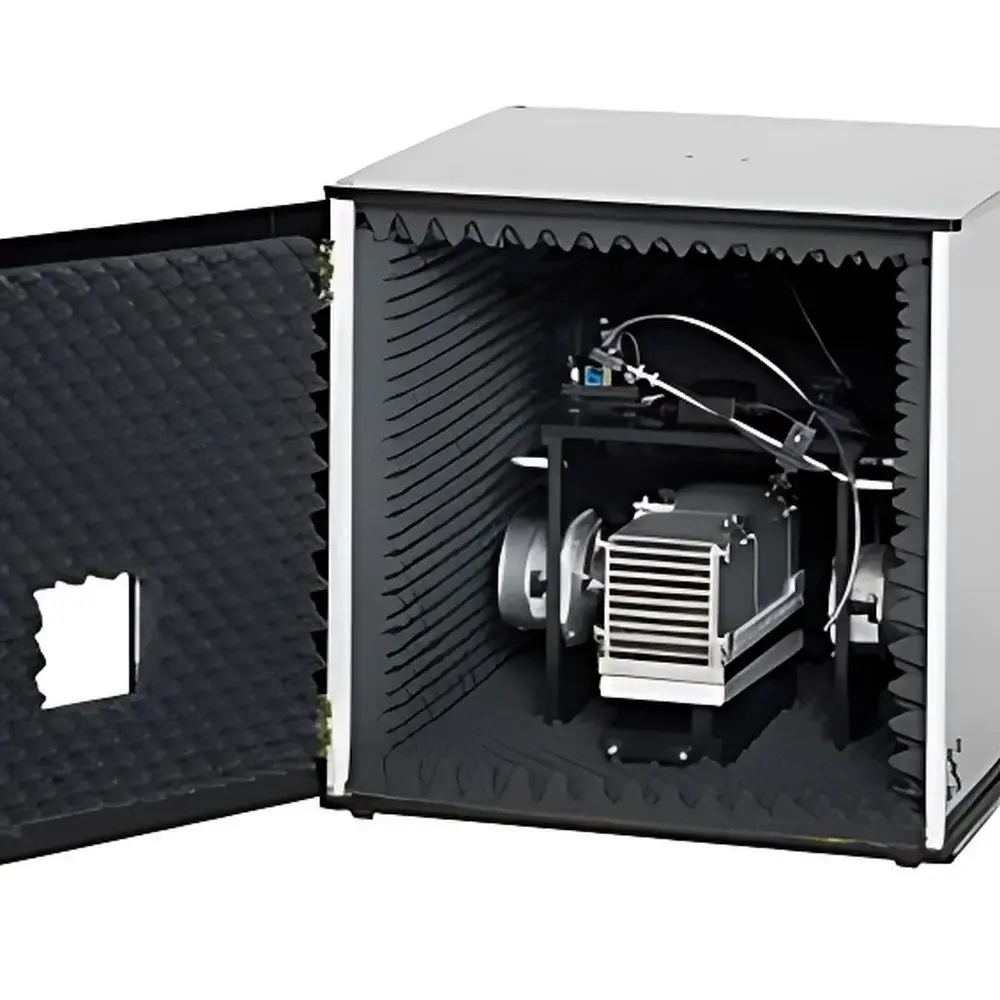
TSE Systems Startle / Fear-Potentiated Startle System for Rodent Sensorimotor Gating Research
| Brand | TSE Systems |
|---|---|
| Origin | Germany |
| Model | Startle / Fear-Potentiated Startle |
| Application | Acoustic, tactile, and shock-based startle response & prepulse inhibition (PPI) testing in mice and rats |
| Compliance | Designed for GLP-compliant behavioral phenotyping environments |
| Software | Fully computer-controlled protocol generation with latency/amplitude quantification and multi-animal comparative visualization |
Overview
The TSE Systems Startle / Fear-Potentiated Startle System is a rigorously engineered platform for quantitative assessment of sensorimotor gating mechanisms in laboratory rodents—primarily mice and rats. It operates on the well-established neurobehavioral principle that a weak, non-startling sensory stimulus (the prepulse) presented 30–500 ms before a strong, startling stimulus significantly attenuates the magnitude of the subsequent startle reflex. This phenomenon—termed Prepulse Inhibition (PPI)—serves as a robust translational endophenotype for disorders involving disrupted information filtering, including schizophrenia, Huntington’s disease, and certain anxiety-related conditions. The system integrates high-fidelity acoustic delivery, calibrated tactile and aversive stimuli, and real-time force transduction to capture both the latency and amplitude of whole-body startle responses under controlled environmental conditions. All hardware components—including stimulus generators, transducers, and environmental enclosures—are designed to minimize mechanical coupling artifacts and ensure inter-session reproducibility across longitudinal studies.
Key Features
- Acoustic stimulation module featuring dual high-fidelity speakers capable of delivering broadband noise bursts and pure-tone sine waves at intensities up to 130 dB SPL, with programmable rise/fall times and spectral shaping.
- Computer-controlled digital signal generation enabling precise, millisecond-accurate timing between prepulse onset, interstimulus interval (ISI), and startle pulse delivery—critical for PPI parametric analysis.
- Species-specific restraint chambers mounted on precision load-cell platforms with sub-millisecond sampling resolution, optimized for weight ranges from 15–60 g (mice) to 200–500 g (rats).
- Optional pneumatic air-puff unit for standardized tactile startle induction, fully synchronized with acoustic protocols and adjustable for pressure and duration.
- Integrated foot-shock module compliant with IACUC guidelines for fear-potentiated startle paradigms, supporting configurable voltage, pulse width, and inter-trial intervals.
- Sound-attenuating chamber constructed with double-wall acoustic foam and RF shielding, meeting ANSI S1.4 Class 1 sound pressure calibration standards.
Sample Compatibility & Compliance
The system is validated for use with C57BL/6, BALB/c, DBA/2, and Sprague-Dawley strains under standard vivarium housing conditions. Protocols adhere to NIH Guide for the Care and Use of Laboratory Animals and support compliance with GLP documentation requirements—including full audit trails, user-access logging, and electronic signature capability per FDA 21 CFR Part 11 when paired with validated software configurations. Data output formats (CSV, HDF5) are compatible with third-party statistical packages (e.g., R, MATLAB, GraphPad Prism) and institutional data management systems. All stimulus calibrations are traceable to NIST-certified reference microphones and accelerometers.
Software & Data Management
The proprietary TSE Startle Control Software provides a modular, GUI-driven interface for protocol design, real-time monitoring, and post-hoc analysis. Users define complex trial structures—including variable prepulse intensities, ISIs, habituation blocks, and fear-conditioning sessions—with full parameter validation prior to execution. Raw transducer signals are sampled at ≥1 kHz and processed using adaptive baseline correction and peak-detection algorithms. Output metrics include startle amplitude (mV or g-force equivalent), response latency (ms), %PPI, and trial-by-trial coefficient of variation. Batch analysis tools enable cross-group comparisons with automated outlier detection and export of publication-ready figures (SVG/PNG). Audit logs record operator ID, timestamp, protocol version, and hardware calibration status for each session.
Applications
- Pharmacological screening of antipsychotics, anxiolytics, and NMDA receptor modulators via PPI modulation assays.
- Genetic phenotyping of transgenic and knockout mouse models with known deficits in cortico-striato-pallido-thalamic circuitry.
- Longitudinal evaluation of sensorimotor gating deficits during disease progression in neurodegenerative models.
- Validation of fear conditioning paradigms through fear-potentiated startle (FPS) amplitude enhancement relative to neutral contexts.
- Multi-modal integration studies combining acoustic PPI with optogenetic or chemogenetic interventions.
FAQ
What species and strain types are supported?
The system is optimized for adult mice (15–60 g) and rats (200–500 g), with chamber inserts and calibration profiles validated for C57BL/6, BALB/c, DBA/2, and Sprague-Dawley strains.
Is the software compatible with Windows 10/11 and networked lab environments?
Yes—the software runs natively on 64-bit Windows 10/11 and supports domain authentication, remote desktop access, and centralized license management via LAN.
Can PPI data be exported for statistical analysis in external software?
All raw and processed data are exportable in CSV, TXT, and HDF5 formats, preserving metadata such as trial ID, stimulus parameters, and animal ID for traceability.
How frequently does the system require recalibration?
Acoustic output is verified daily using a Class 1 sound level meter; transducer sensitivity is validated quarterly using NIST-traceable shaker calibration. Full system certification is recommended annually.
Does the system support simultaneous recording of physiological signals (e.g., EMG, ECG)?
While the core platform focuses on startle kinetics, analog input channels are available for synchronized acquisition of external biosignals via optional DAQ integration.
Related Products




