
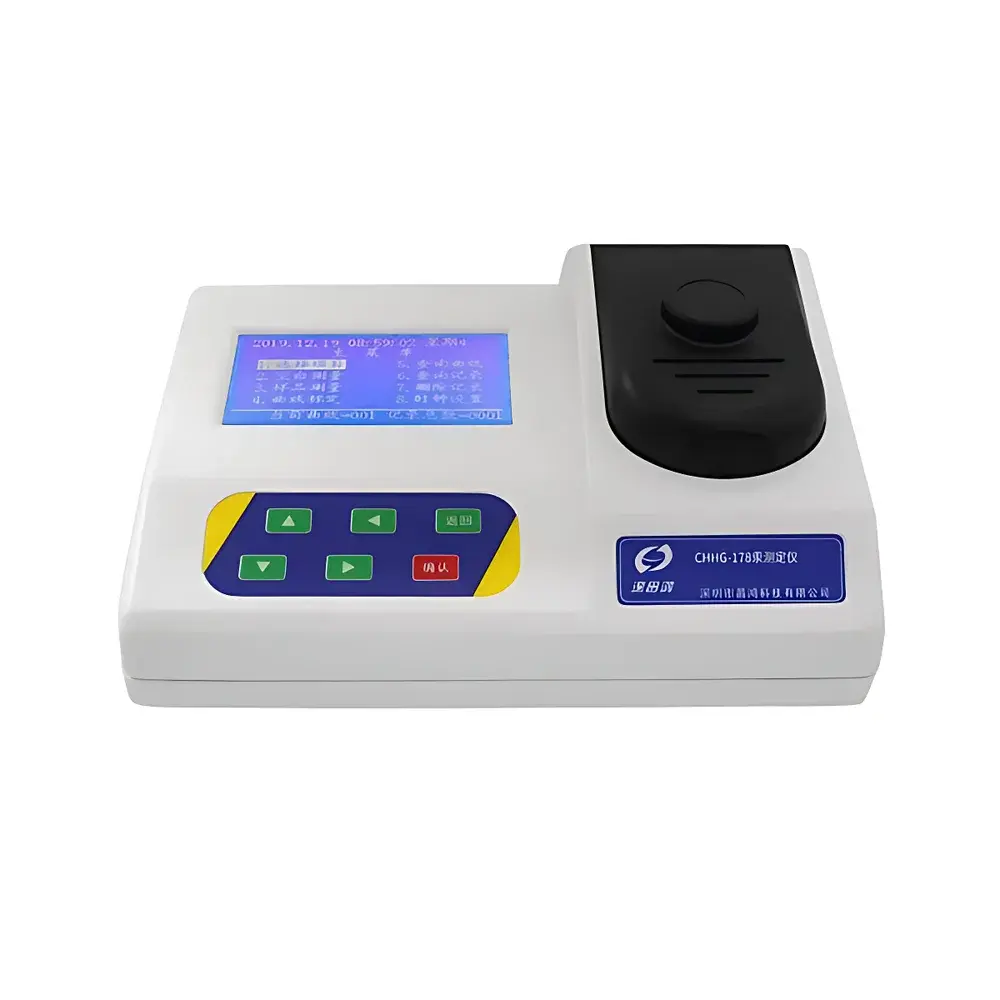
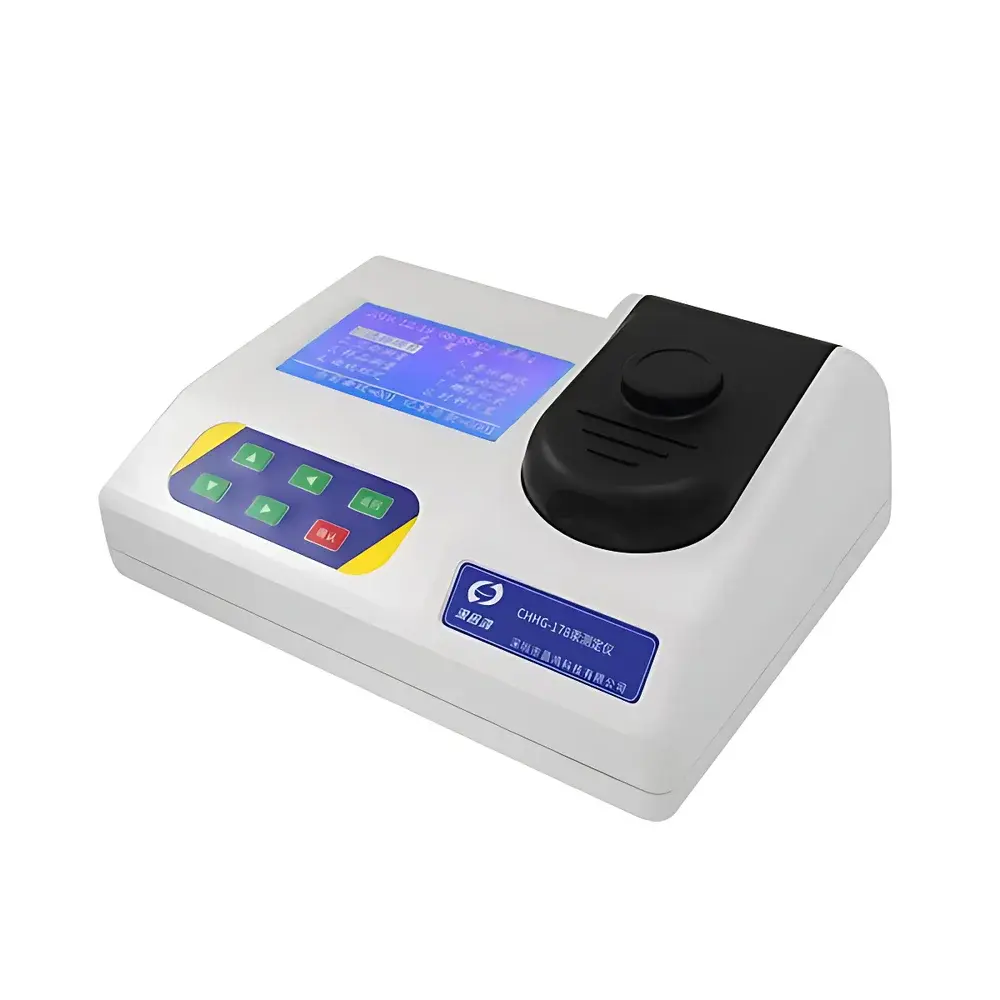
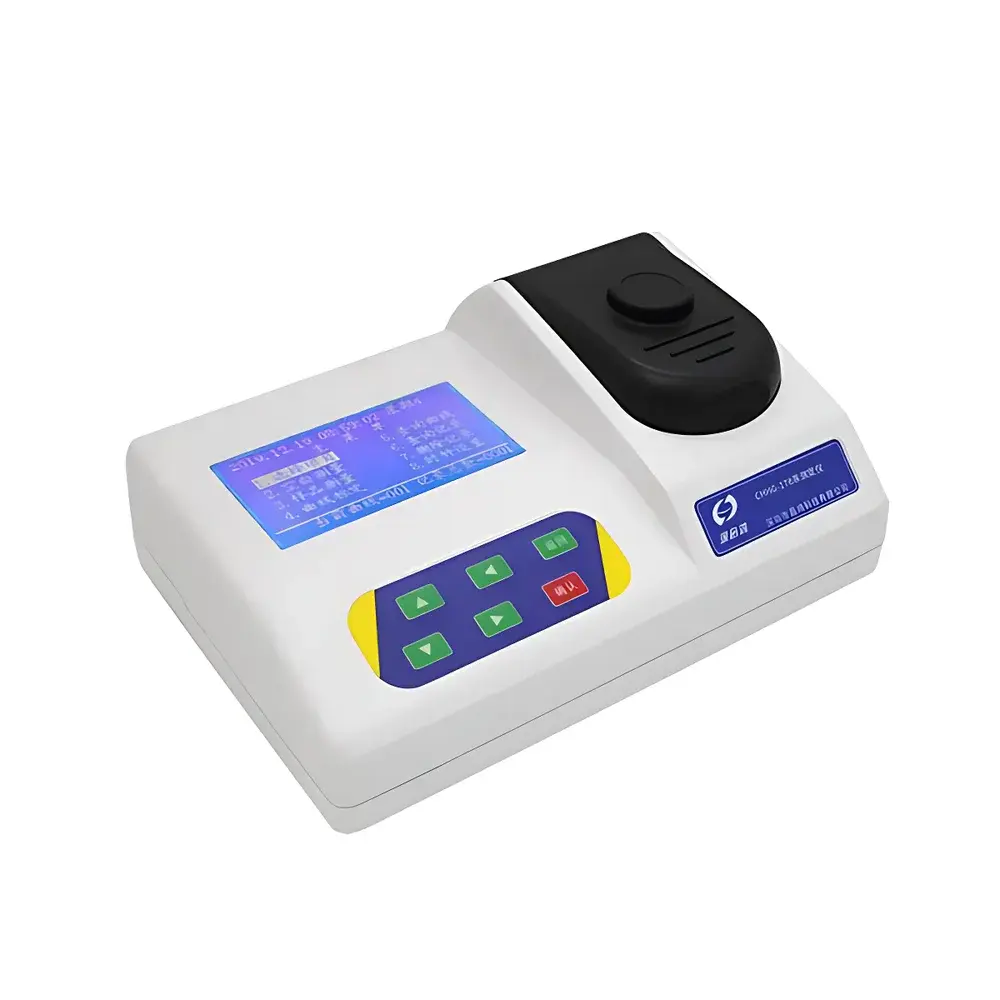
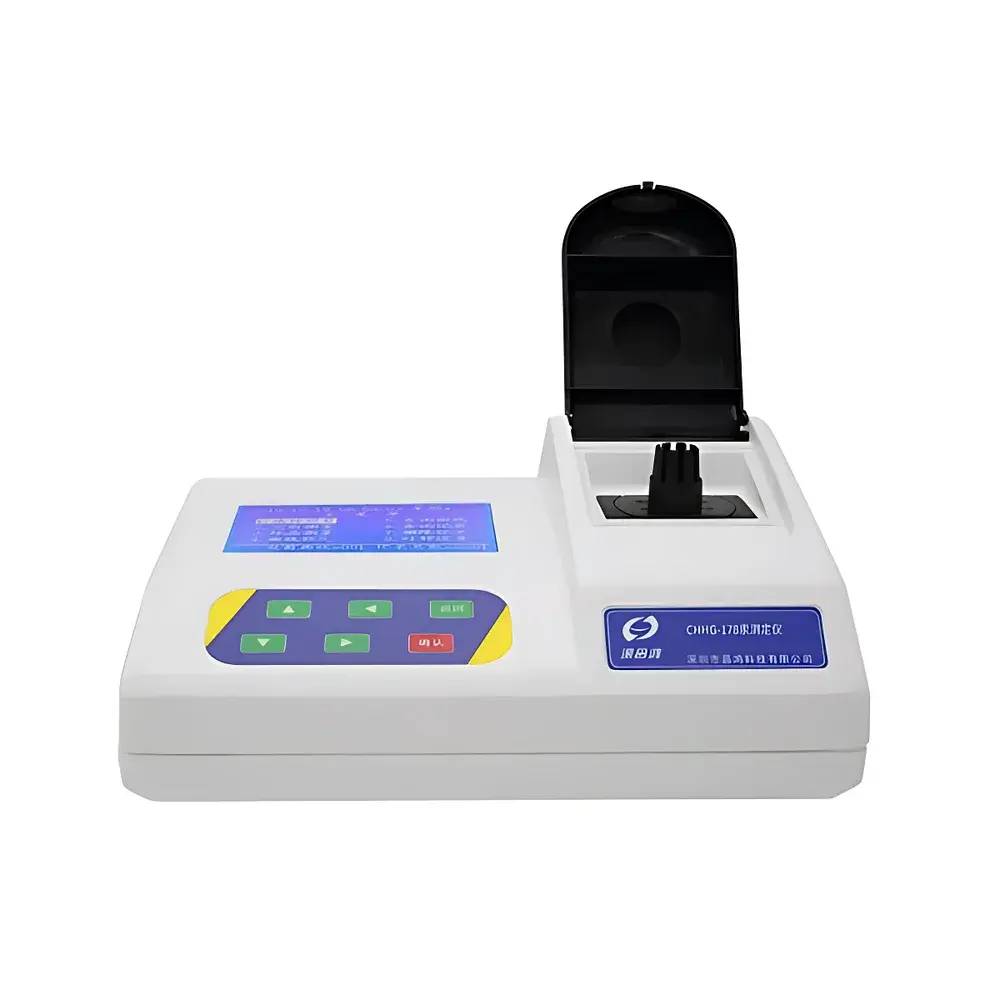
Shenchanghong CHHG-178 Mercury Analyzer for Water Quality
| Brand | Shenchanghong |
|---|---|
| Origin | Guangdong, China |
| Manufacturer Type | Direct Manufacturer |
| Origin Category | Domestic (China) |
| Model | CHHG-178 |
| Instrument Type | Benchtop Laboratory Analyzer |
| Detection Principle | Photometric Method (Visible Absorption Spectrophotometry) |
| Target Analyte | Mercury (Hg²⁺ in aqueous solution) |
| Analysis Time | 20 min per sample |
| Accuracy | ≤ ±5% of full scale |
| Repeatability | ≤ 3% RSD |
| Resolution | 0.002 mg/L |
| Measurement Range | 0.002–0.50 mg/L |
| Optical Drift | < 0.002 A over 20 min |
| Dimensions (W×D×H) | 266 × 200 × 130 mm |
| Weight | 1.0 kg |
| Operating Temperature | 5–40 °C |
| Relative Humidity | ≤ 85% RH |
| Power Supply | AC 220 V ± 10%, 50 Hz ± 0.5 Hz |
| Housing Material | Corrosion-Resistant ABS |
| Light Source | High-Brightness, Long-Life (100,000 h) LED with Narrow-Band Interference Filter |
| Display | Backlit LCD with Chinese Interface |
| Data Storage | Internal non-volatile memory for calibration curves and measurement history |
| Microcontroller | 16-bit low-power MCU |
Overview
The Shenchanghong CHHG-178 Mercury Analyzer is a dedicated benchtop photometric instrument engineered for the quantitative determination of total mercury (as Hg²⁺) in water matrices using standardized colorimetric chemistry. It operates on the principle of visible absorption spectrophotometry: mercury ions in acidified samples react with a proprietary chromogenic reagent—typically a dithizone or thiol-based complexing agent—to form a stable colored complex with defined molar absorptivity in the visible range (commonly 480–520 nm). The instrument employs a precision single-wavelength cold LED light source coupled with a narrow-band optical filter to isolate the optimal detection wavelength, minimizing spectral interference from turbidity, organic color, or coexisting metal ions. Absorbance is measured via a calibrated silicon photodetector, and concentration is calculated in real time using preloaded or user-defined calibration functions. Designed explicitly for routine compliance monitoring and quality control in environmental laboratories, the CHHG-178 meets foundational performance requirements for mercury screening under national standard methods such as HJ 694-2014 (China) and aligns with the methodological framework of EPA Method 245.1 and ISO 8692 for trace metal photometric analysis.
Key Features
- Stable optical architecture: High-intensity, 100,000-hour lifetime LED light source with <0.002 A absorbance drift over 20 minutes—ensuring high reproducibility across sequential measurements.
- Dual calibration capability: Factory-installed reference curve plus two user-definable calibration sets (up to 10-point linear or polynomial fits), supporting method validation and matrix-matched standardization.
- Robust mechanical design: Injection-molded ABS housing with chemical resistance to common laboratory reagents (e.g., HNO₃, HCl, KI–SnCl₂ solutions), suitable for shared lab environments.
- Embedded 16-bit microcontroller platform: Optimized for low power consumption (<5 W), noise immunity, and deterministic response—critical for field-deployable lab instrumentation.
- Intuitive human interface: Backlit monochrome LCD with full Chinese menu navigation, real-time concentration readout (mg/L), and on-screen prompts for reagent addition, blanking, and calibration verification.
- Integrated data management: Non-volatile memory stores ≥500 test records with timestamps, operator ID fields (via manual entry), and calibration metadata—supporting basic GLP documentation needs.
Sample Compatibility & Compliance
The CHHG-178 is validated for use with clarified, filtered aqueous samples including potable water, surface water, groundwater, municipal wastewater, and pretreated industrial effluents. Sample preparation follows standard acid digestion protocols (e.g., HNO₃/H₂SO₄/KMnO₄ oxidation or microwave-assisted digestion) to ensure complete conversion of organomercury species to Hg²⁺ prior to analysis. The instrument complies with key operational prerequisites of ISO/IEC 17025:2017 for testing laboratories, particularly regarding measurement uncertainty estimation (≤±5% at mid-range), repeatability verification (≤3% RSD), and environmental operating limits (5–40 °C, ≤85% RH). While not certified to FDA 21 CFR Part 11, its audit-trail-capable data logging supports internal QA/QC workflows aligned with GMP Annex 11 principles for non-regulated environmental testing.
Software & Data Management
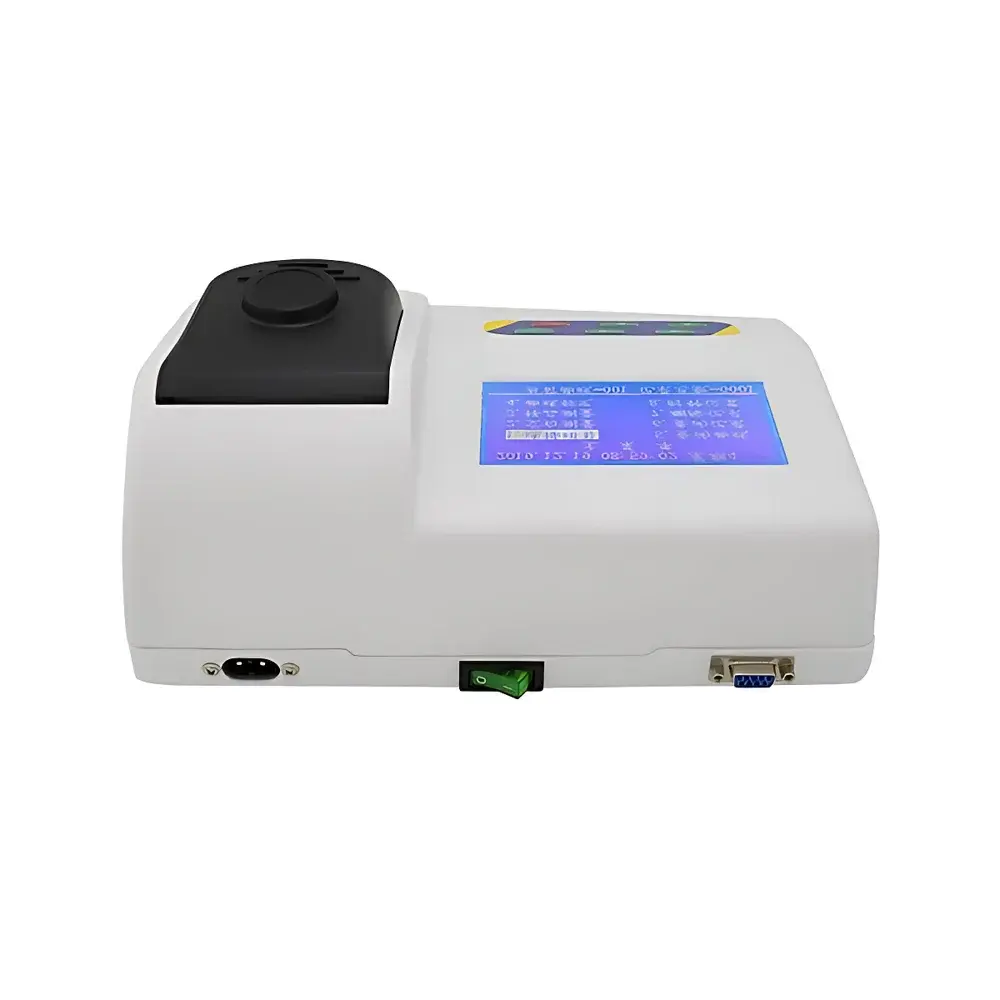
No external PC software is required for operation; all functions are executed onboard. Calibration curves are stored in EEPROM with write-protection flags to prevent accidental overwriting. Measurement results include date/time stamp, sample ID (user-entered), calibration ID, and raw absorbance value. Data export is performed manually via visual transcription or optional RS-232 serial output (hardware-ready, firmware-upgradable). Firmware supports periodic recalibration checks using NIST-traceable mercury standard solutions (e.g., 0.100 mg/L Hg²⁺ in 2% HNO₃), enabling labs to maintain documented traceability without third-party software dependency.
Applications
- Regulatory compliance testing for mercury discharge limits under local environmental protection statutes (e.g., China’s GB 3838-2002 Class III/IV standards).
- Drinking water safety verification in municipal treatment plants and rural water supply systems.
- Pre-treatment and post-treatment monitoring in electroplating, chlor-alkali, and fluorescent lamp manufacturing wastewater streams.
- Field-deployable lab support for environmental impact assessments (EIAs) requiring rapid mercury screening prior to ICP-MS confirmation.
- Educational use in university environmental science laboratories for teaching spectrophotometric quantification and heavy metal speciation fundamentals.
FAQ
What sample pretreatment is required before analysis?
Acid digestion (e.g., hotplate or microwave-assisted with HNO₃/H₂SO₄) is mandatory to oxidize methylmercury and elemental mercury to Hg²⁺. Clarification via 0.45-µm filtration is recommended for turbid samples.
Can the CHHG-178 measure other heavy metals?
No—it is optimized exclusively for mercury using a mercury-specific chromogenic reaction. Cross-reactivity with lead, cadmium, or arsenic is negligible when protocol is followed correctly.
Is the instrument compatible with international calibration standards?
Yes. It accepts NIST SRM 3133 (Mercury in Aqueous Solution) and equivalent CRM materials for calibration verification and method validation.
How often should optical alignment be verified?
The fixed-optics design eliminates manual alignment; only annual verification of LED intensity and filter transmission using manufacturer-supplied reference filters is recommended.
Does the analyzer meet ISO 17025 traceability requirements?
When used with certified reference materials and documented calibration procedures, it supports ISO/IEC 17025 clause 6.4.10 (measurement traceability) for in-house environmental testing scopes.
Related Products







