
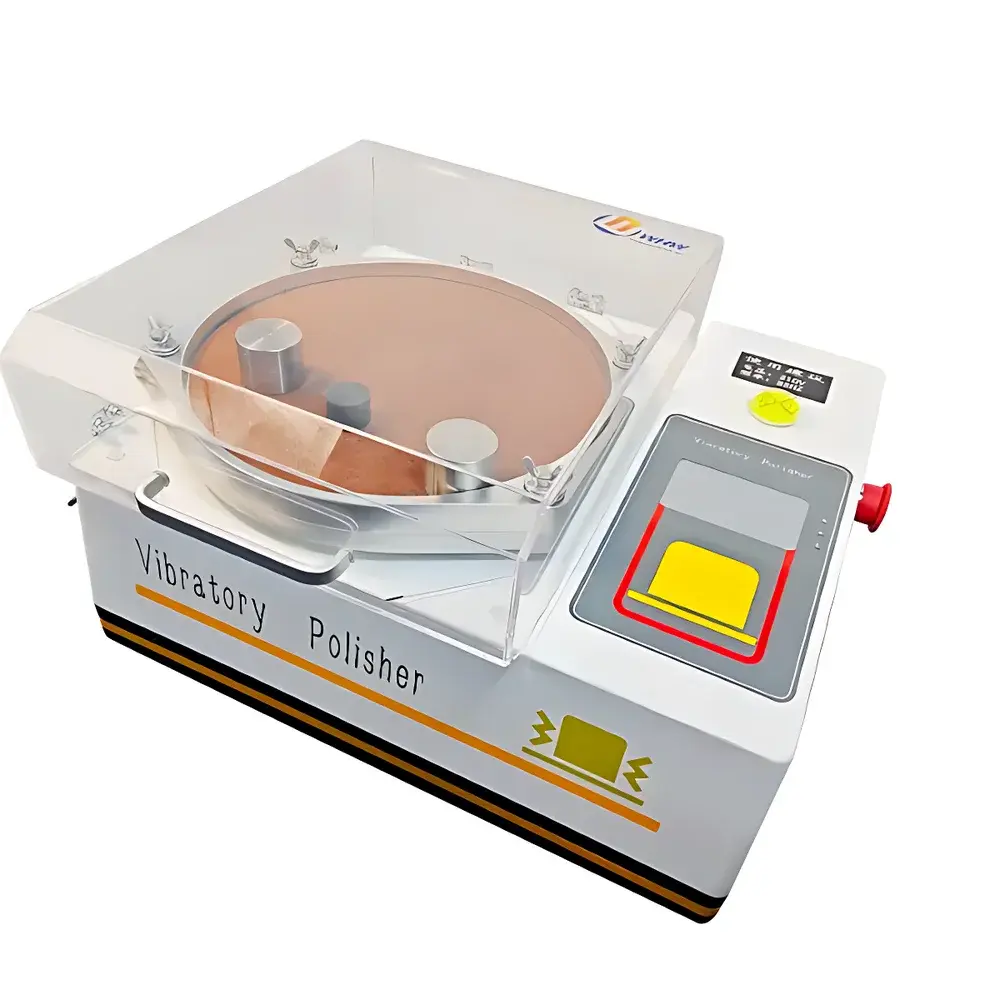
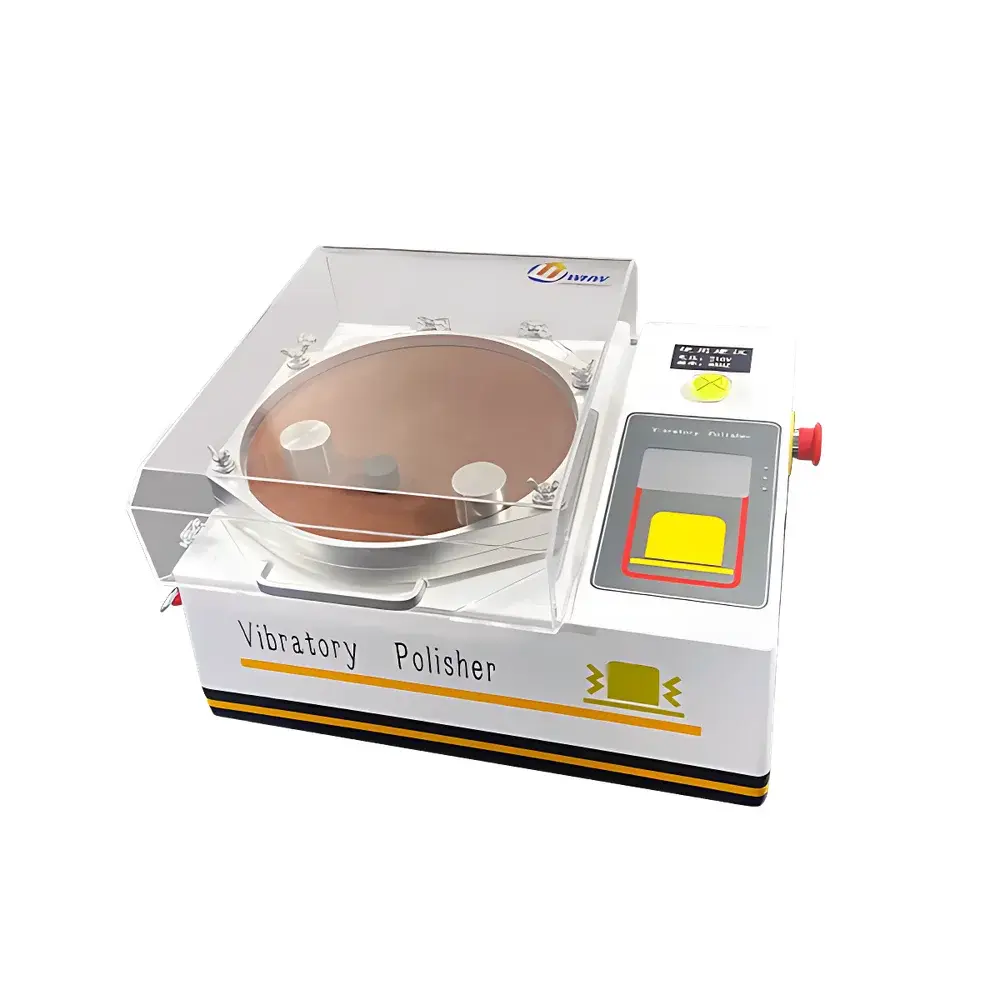
YANRUN ZDP-300 Vibratory Polishing Machine
| Brand | YANRUN |
|---|---|
| Origin | Shanghai, China |
| Manufacturer Type | Direct Manufacturer |
| Country of Origin | China |
| Model | ZDP-300 |
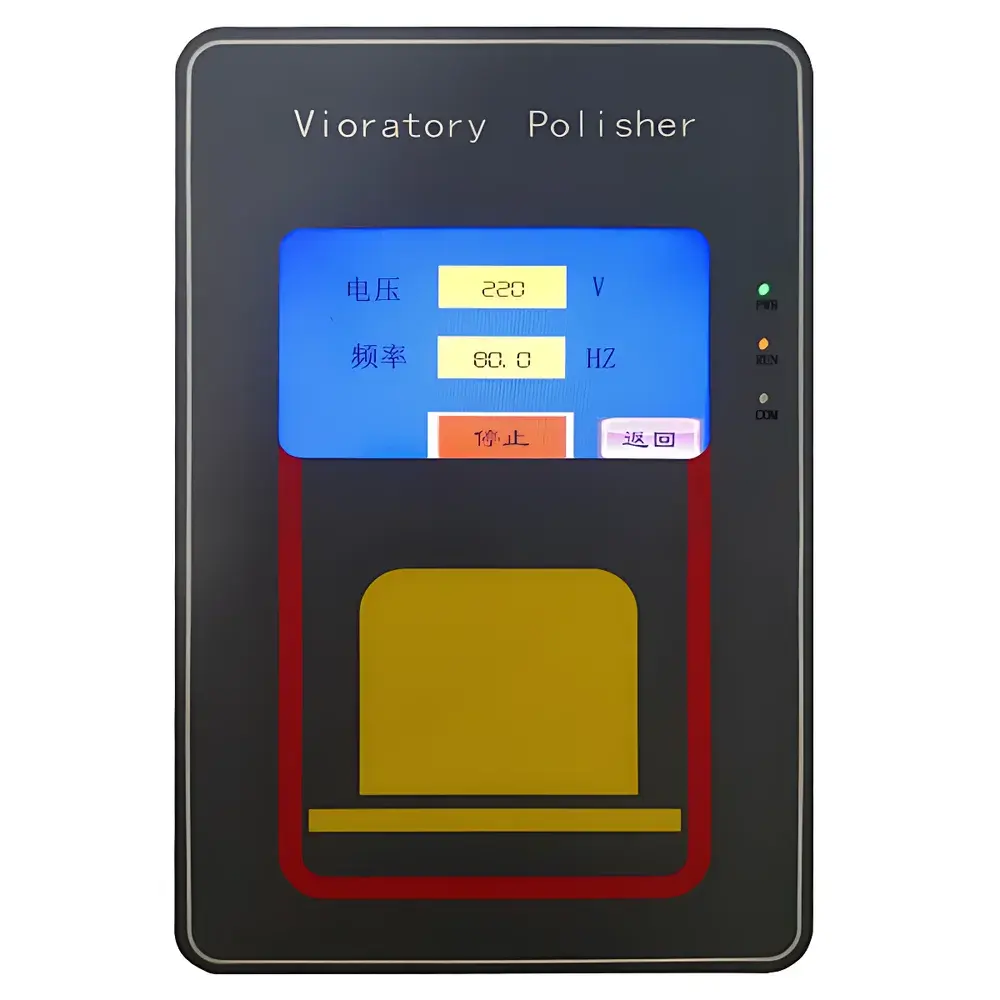
| Control Interface | Touchscreen |
| Platen Diameter | 305 mm |
| Effective Polishing Diameter Range | 8–50 mm (customizable beyond standard range) |
| Motor Power | 1.5 kW |
| Frequency Regulation | Automatic |
| Voltage Regulation | Automatic |
| Input Voltage | 220 V AC |
Overview
The YANRUN ZDP-300 Vibratory Polishing Machine is an engineered solution for high-fidelity sample preparation in advanced materials characterization workflows. Designed specifically to support electron backscatter diffraction (EBSD), scanning electron microscopy (SEM), and transmission electron microscopy (TEM) specimen preparation, the ZDP-300 employs controlled vibratory motion—rather than rotational or unidirectional abrasion—to achieve ultra-low-stress surface finishing. This principle minimizes subsurface deformation, preserves crystallographic integrity, and eliminates edge rounding or relief artifacts commonly introduced by conventional grinding or rotating polishing systems. Its vibration-based kinematics generate uniform, multi-directional micro-oscillations across the sample–abrasive interface, enabling reproducible removal rates and nanoscale surface planarity (<5 nm Ra typical on polished metal alloys after final colloidal silica step). The system operates within a rigid, damped base frame to isolate mechanical resonance and ensure long-term stability during extended polishing cycles.
Key Features
- Touchscreen HMI with programmable polishing profiles—including time, vibration amplitude, and suspension feed rate parameters—enabling method reproducibility across operators and shifts.
- 305 mm diameter stainless-steel platen with precision-machined mounting interface for universal compatibility with standard polishing cloths (e.g., synthetic napped, woven, or diamond-impregnated pads).
- Adjustable effective polishing zone (8–50 mm diameter) accommodates single specimens, multi-sample holders, or custom fixtures; optional adapter plates support wafer-level (up to 4″ Si/Ge/GaN) and cross-section mount preparation.
- 1.5 kW brushless induction motor with integrated automatic frequency and voltage regulation ensures consistent vibratory energy delivery under variable load conditions—critical for maintaining removal rate linearity across diverse material classes (ceramics, intermetallics, geological thin sections, and polymer composites).
- IP54-rated enclosure with removable splash guard and integrated drainage channel simplifies cleaning and supports compliant use in ISO 17025-accredited laboratories.
Sample Compatibility & Compliance
The ZDP-300 is validated for use with conductive and non-conductive specimens requiring EBSD-ready surfaces—including but not limited to aluminum alloys, titanium Grade 5, austenitic stainless steels, silicon carbide ceramics, and geological mineral mounts. It complies with ASTM E3-22 (Standard Guide for Preparation of Metallographic Specimens) and supports alignment with ISO/IEC 17025:2017 clause 7.2.2 (method validation) when paired with documented polishing protocols. For regulated environments (e.g., aerospace component QA or medical device R&D), the system’s repeatable parameter logging and operator traceability (via touchscreen user login) facilitate GLP/GMP-aligned documentation practices. While not inherently 21 CFR Part 11-compliant, its digital control architecture permits integration with third-party LIMS or ELN platforms supporting electronic signature and audit trail requirements.
Software & Data Management
The embedded control firmware stores up to 99 user-defined methods, each with timestamped execution logs (start/end time, duration, applied amplitude, and error flags). Exportable CSV reports include cycle count, total operational hours, and fault history—enabling preventive maintenance scheduling per ISO 55001 asset management guidelines. No proprietary software installation is required; configuration and diagnostics are accessible via local touchscreen only. Firmware updates are delivered via USB flash drive with SHA-256 checksum verification to ensure integrity. All data remains resident on-device; no cloud connectivity or remote telemetry is implemented—preserving data sovereignty in sensitive research or defense applications.
Applications
- Preparation of orientation-sensitive specimens for EBSD pattern indexing and grain boundary mapping in metallurgical failure analysis.
- Routine polishing of cross-sectional samples for FIB-SEM lamella lift-out and subsequent TEM foil thinning.
- Surface planarization of brittle ceramics and semiconductor wafers prior to AFM or XRD texture analysis.
- Standardized polishing of geological thin sections (30 µm thickness) for quantitative petrographic imaging and modal analysis.
- Development of polishing protocols for novel composite materials where mechanical stress-induced phase transformation must be avoided.
FAQ
What types of polishing suspensions are compatible with the ZDP-300?
Standard aqueous colloidal silica (e.g., OP-S, MasterMet), diamond slurries (0.25–6 µm), and alumina suspensions (0.05–3 µm) are supported. Non-aqueous media require verification of chemical compatibility with the platen gasket material (EPDM standard).
Can the ZDP-300 be used for electrolytic polishing?
No. The ZDP-300 is strictly a mechanical vibratory polisher and does not provide electrical current output or electrolyte containment.
Is calibration certification provided with the instrument?
A factory-verified performance report—documenting platen runout (<0.02 mm TIR), vibration amplitude linearity (±3% across 0–100 Hz), and power draw consistency—is included. NIST-traceable calibration services are available upon request.
What maintenance intervals are recommended?
Lubrication of the eccentric drive mechanism every 1,000 operating hours; inspection of suspension feed tubing and platen seal integrity every 200 hours; full vibration isolation mount torque check annually.
Related Products



