
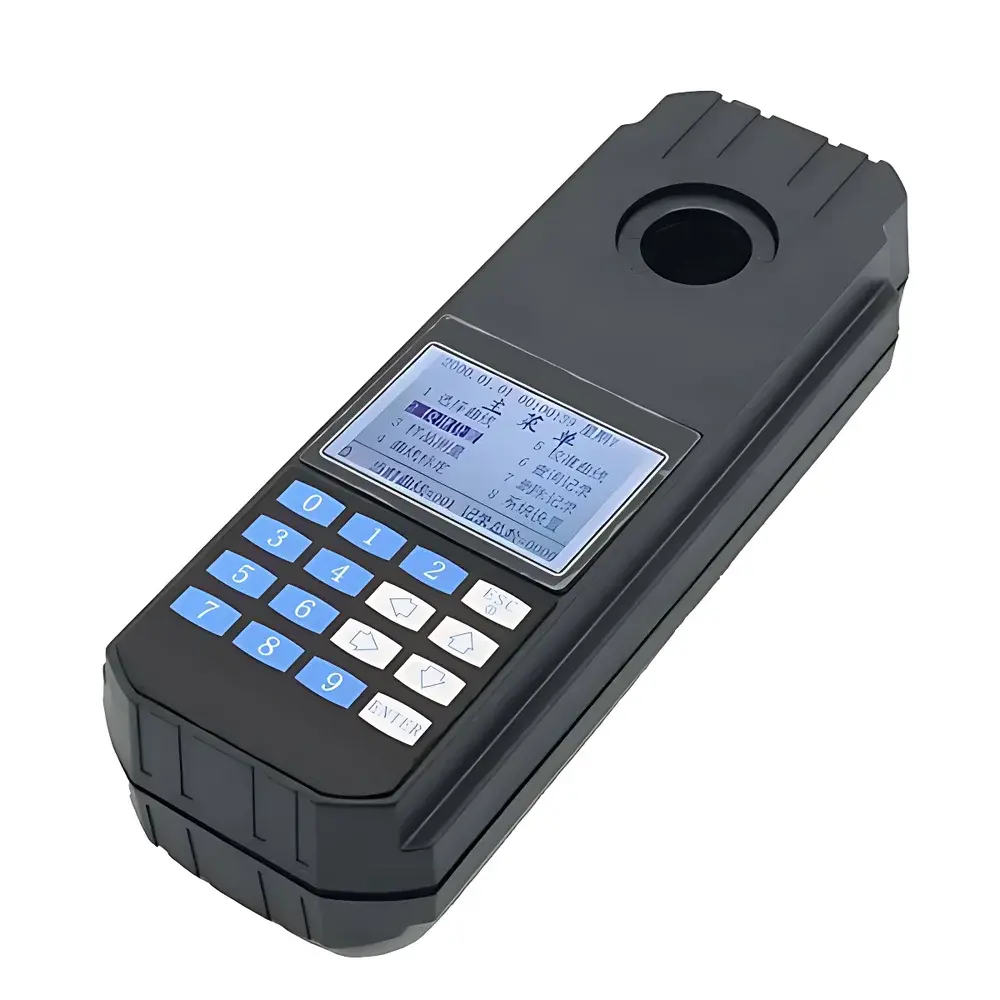
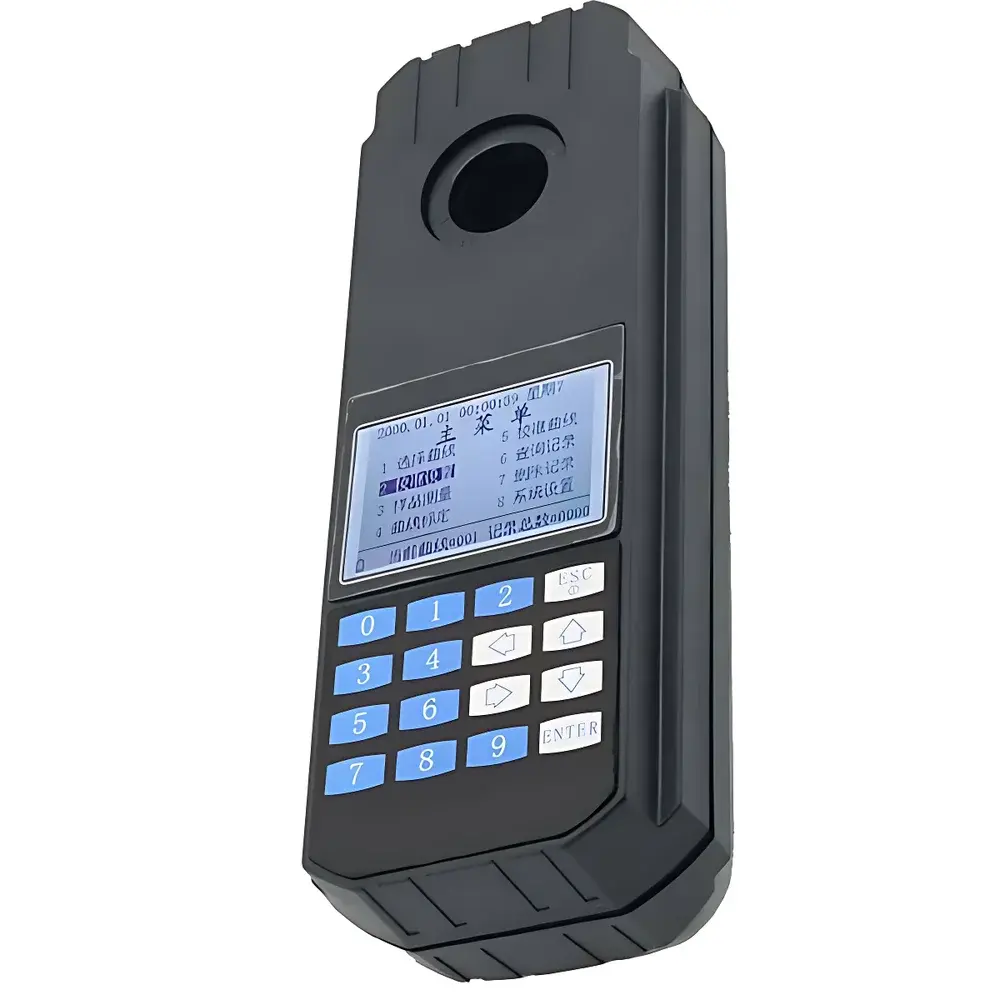
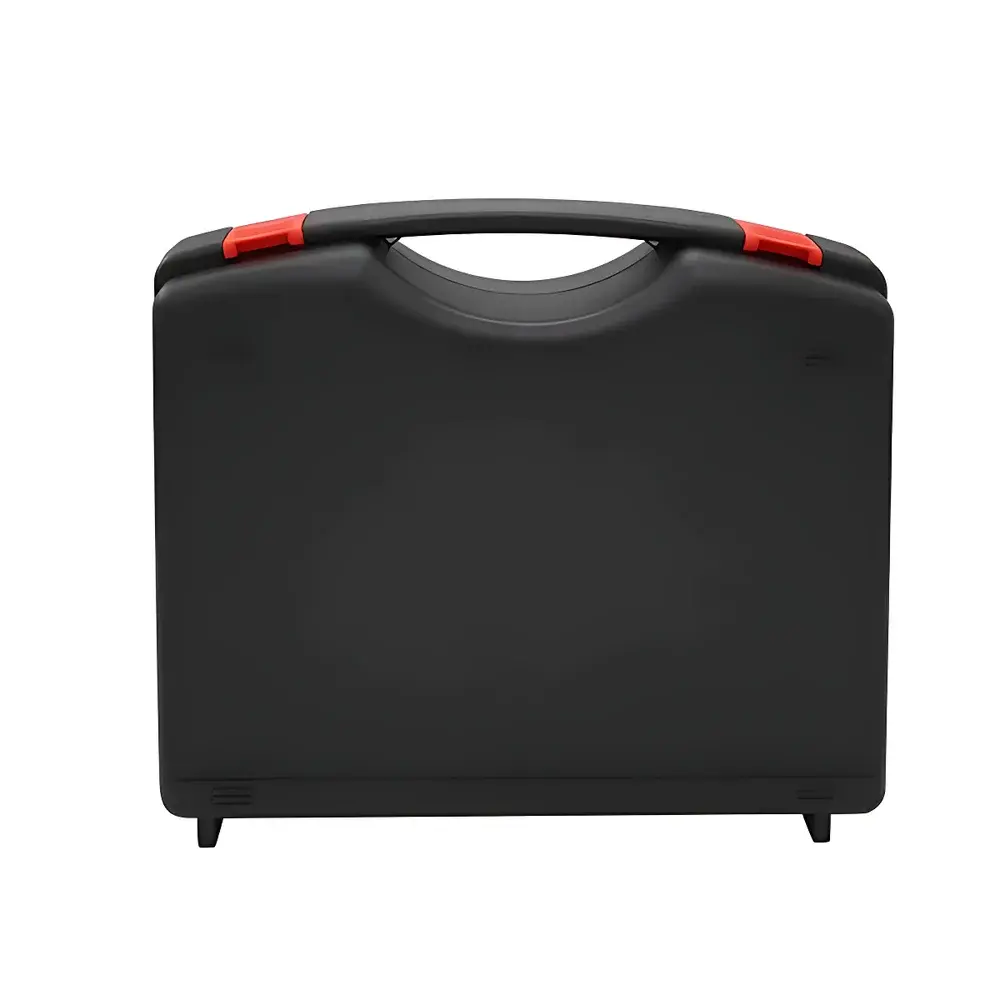
Shenchanghong PWS-1000 Portable Free Chlorine Analyzer
| Brand | Shenchanghong |
|---|---|
| Origin | Guangdong, China |
| Manufacturer Type | Direct Manufacturer |
| Country of Origin | China |
| Model | PWS-1000 |
| Instrument Type | Portable / Handheld Water Quality Analyzer |
| Measured Parameter | Free Available Chlorine in Water |
| Measurement Range | 0.00–100.00 mg/L |
| Accuracy | ≤ ±3% F.S. |
| Repeatability | ≤ 3% |
| Weight | 500 g |
| Dimensions | 80 mm × 230 mm × 55 mm |
| Operating Temperature | 5–40 °C |
| Relative Humidity | ≤ 85% RH |
| Power Supply | 4 × AA batteries |
| Optical System | Cold Light Source with Narrow-Band Interference Filter |
| Data Storage | 20 Calibration Curves + 199 Sample Records (with Timestamp: YYYY-MM-DD HH:MM:SS, Absorbance & Transmittance) |
| Enclosure Rating | IP65 |
| Housing Material | Molded ABS |
Overview
The Shenchanghong PWS-1000 Portable Free Chlorine Analyzer is a field-deployable photometric instrument engineered for rapid, on-site quantification of free available chlorine in aqueous matrices. It operates on the principle of colorimetric analysis using the DPD (N,N-diethyl-p-phenylenediamine) method—standardized under ISO 7393-2 and APHA Standard Methods 4500-Cl G—where free chlorine oxidizes DPD to form a stable pink-colored complex measurable at 515 nm. The analyzer integrates a cold LED light source and narrow-band interference optical path to ensure long-term photometric stability, minimal drift, and immunity to ambient light interference. Designed for routine compliance verification and emergency response scenarios, the PWS-1000 delivers laboratory-grade repeatability (≤3%) and accuracy (≤±3% F.S.) without requiring benchtop infrastructure or external calibration standards during daily use.
Key Features
- Ultra-low-power 16-bit microcontroller architecture enabling ≥6 months of standby operation on four standard AA alkaline batteries—ideal for extended field deployments without charging infrastructure.
- Backlit LCD display with intuitive menu navigation and real-time parameter feedback, supporting both absorbance and transmittance readouts alongside concentration values.
- Compact ergonomic form factor (80 × 230 × 55 mm; 500 g) housed in IP65-rated molded ABS—providing certified protection against dust ingress, water splashes, and chemical corrosion during outdoor or industrial site use.
- Dual-mode data retention: non-volatile memory stores up to 20 user-defined calibration curves and 199 timestamped measurement records—including full ISO 8601 timestamps (YYYY-MM-DD HH:MM:SS), absorbance, transmittance, and computed concentration (mg/L).
- Optical system optimized for robustness: cold LED illumination eliminates thermal drift; narrow-band interference filter ensures spectral selectivity at 515 nm, minimizing interferences from turbidity or residual colorants.
- Built-in power-loss recovery: automatic data preservation during battery replacement or unexpected shutdown, compliant with GLP data integrity expectations for field instruments.
Sample Compatibility & Compliance
The PWS-1000 is validated for use with potable water, wastewater effluent, swimming pool water, cooling tower water, and process rinse solutions—provided samples are clarified (turbidity < 5 NTU) and free of strong oxidants other than free chlorine (e.g., monochloramine does not interfere). It conforms to key regulatory frameworks governing disinfectant residual monitoring: EPA Method 334.0 (DPD colorimetric), ISO 7393-2:2012 (determination of free chlorine), and Chinese Standard HJ 586–2010. While not FDA 21 CFR Part 11–certified out-of-the-box, its audit-trail-capable timestamped storage supports traceability requirements under ISO/IEC 17025 and GMP-aligned environmental monitoring programs.
Software & Data Management
Data export is performed manually via visual transcription or optional USB-to-serial adapter (not included). All stored measurements include full temporal metadata and raw photometric values, enabling retrospective recalibration or trend analysis in external spreadsheet or LIMS environments. Firmware supports curve validation through reference point checks and alerts users when calibration drift exceeds preset thresholds (±5% deviation from initial slope). No proprietary software installation is required; instrument configuration and calibration are executed entirely via onboard keypad interface.
Applications
- Routine verification of residual disinfectant levels at municipal water distribution points and household tap outlets.
- On-site QA/QC for bottled water and beverage production lines—ensuring chlorine residuals remain within USP and NSF/ANSI 60 limits.
- Emergency response screening following natural disasters or infrastructure failures where rapid assessment of disinfection efficacy is critical.
- Environmental health inspections of public swimming pools and hot tubs per CDC Model Aquatic Health Code (MAHC) guidelines.
- Field validation of point-of-use (POU) and point-of-entry (POE) chlorination systems in remote or off-grid facilities.
FAQ
What chlorine species does the PWS-1000 measure?
It measures free available chlorine (hypochlorous acid and hypochlorite ion), not total chlorine or combined chlorine (chloramines).
Can the instrument be calibrated with NIST-traceable standards?
Yes—users may perform multi-point calibration using certified chlorine standard solutions traceable to NIST SRM 3100 series or equivalent national metrology institutes.
Is the DPD reagent supplied with the instrument compatible with international methods?
The included reagent kit follows APHA 4500-Cl G formulation and is functionally equivalent to Hach DPD No. 1 tablets.
Does the device require annual factory recalibration?
No—optical and electronic performance remains stable over time; users verify functionality via blank and standard checks before each measurement session per ISO/IEC 17025 clause 7.7.
How is instrument validation documented for audit purposes?
Each measurement record includes immutable timestamp, operator ID (manually entered), and raw photometric values—sufficient for internal QA review and third-party audit evidence generation.
Related Products







