
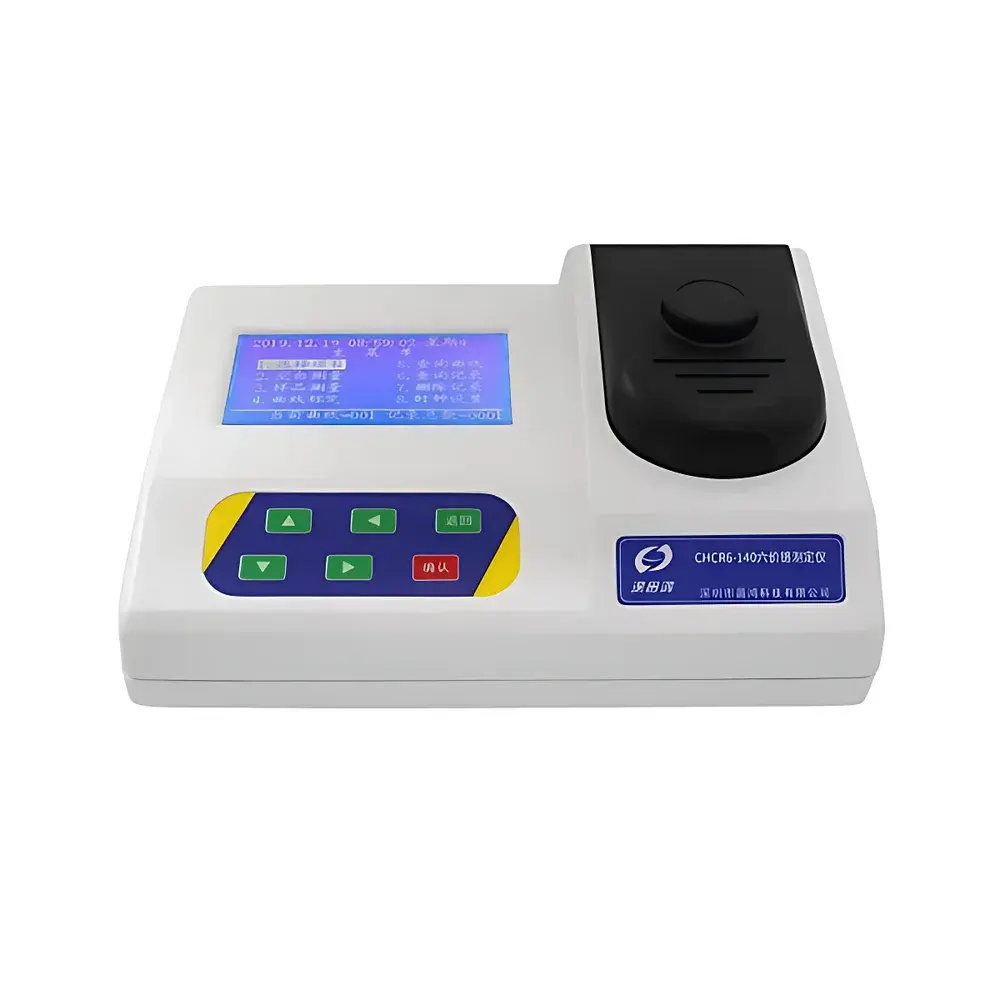
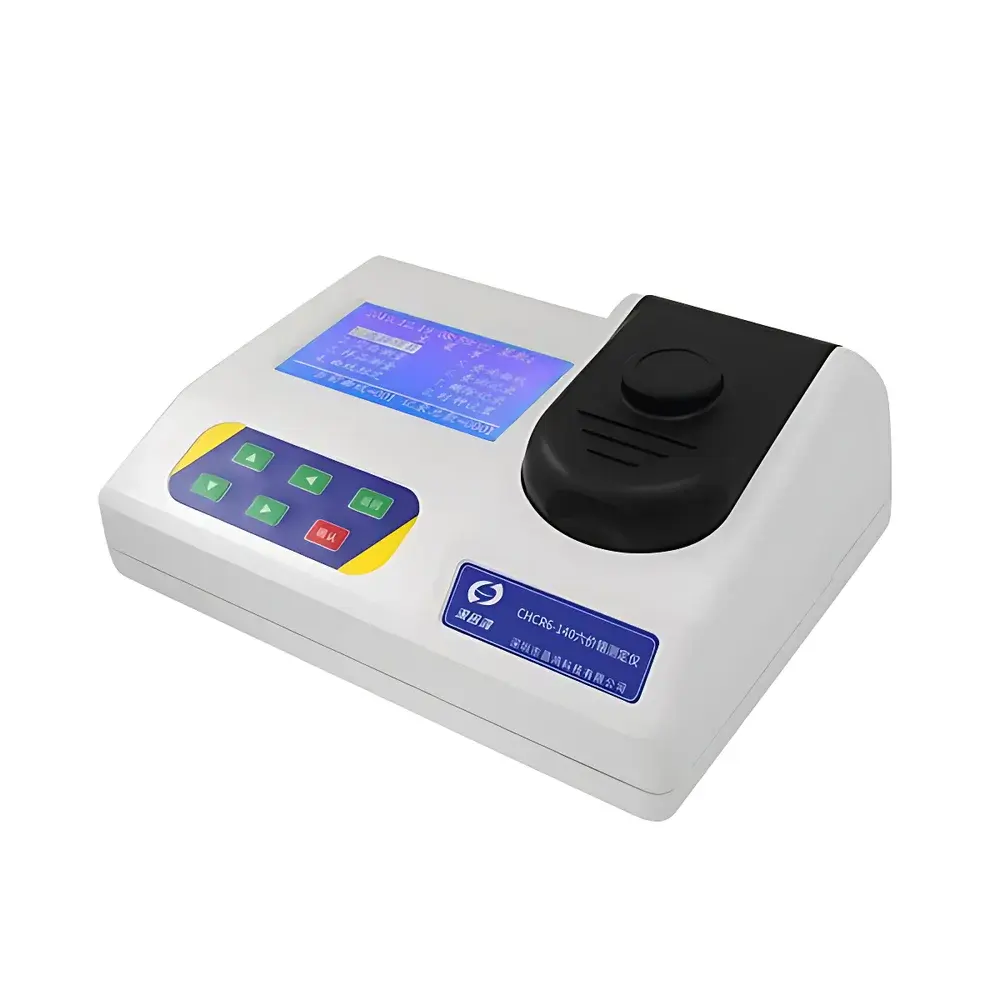
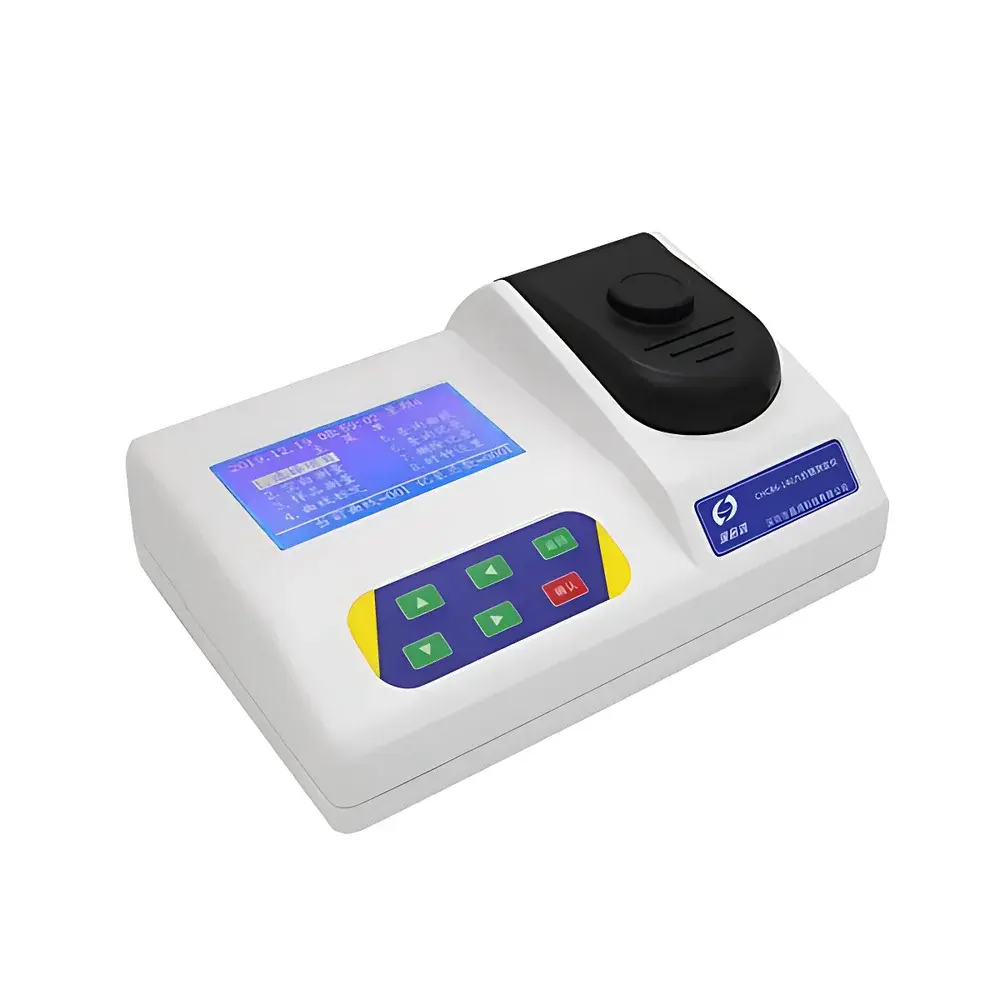
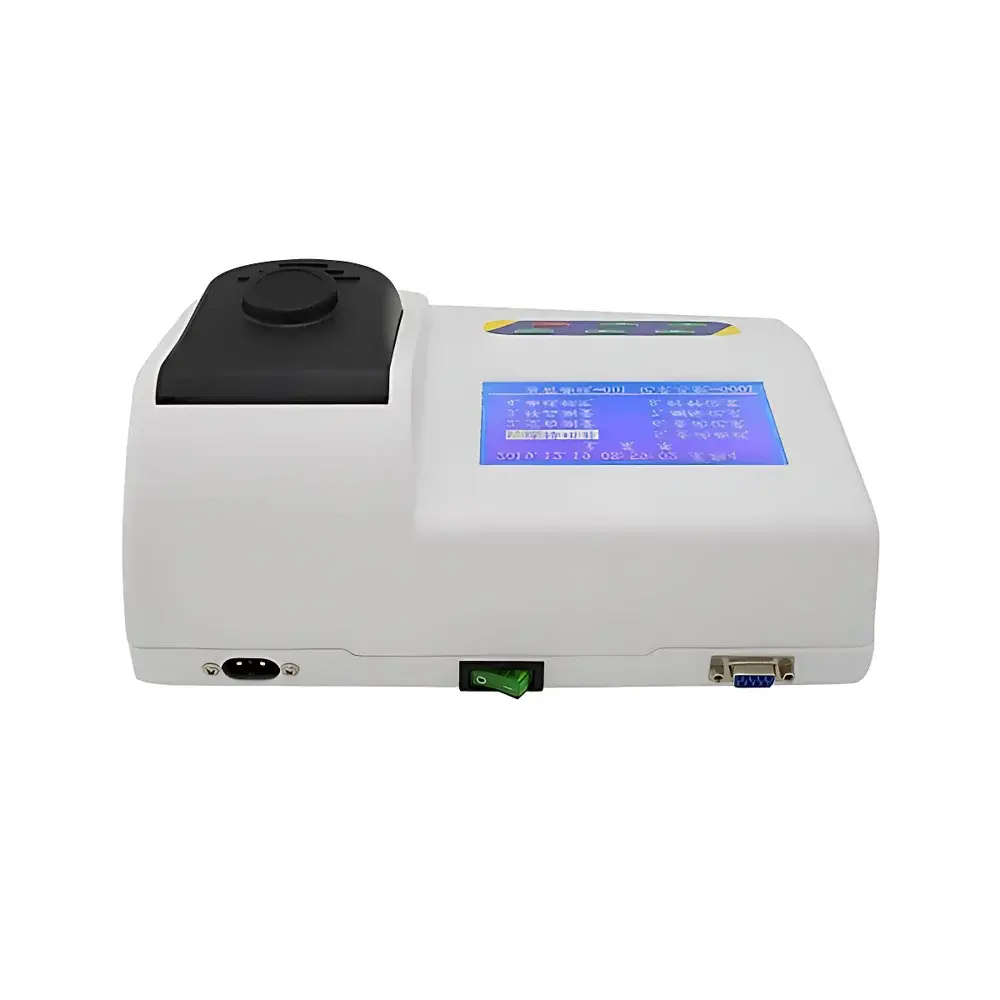
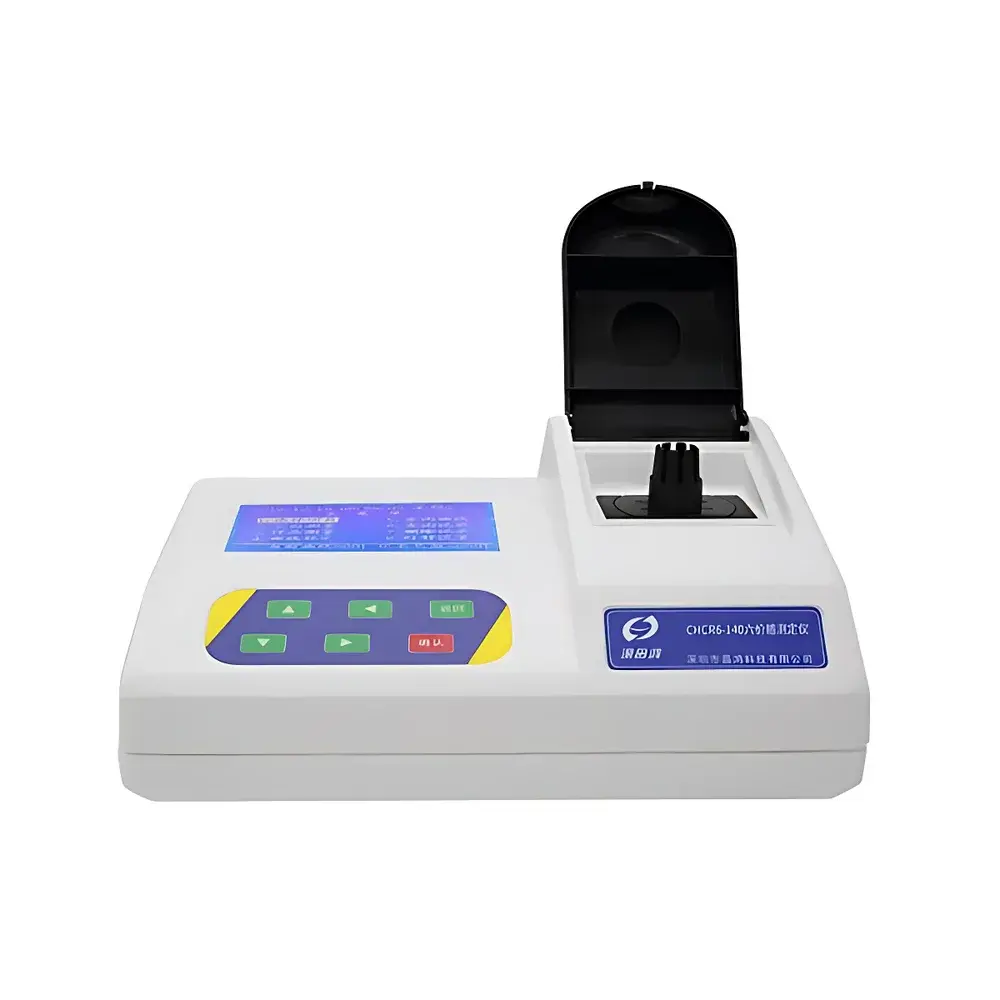
Shenchanghong CHCR6-140 Hexavalent Chromium Analyzer
| Brand | Shenchanghong |
|---|---|
| Origin | Guangdong, China |
| Manufacturer Type | Direct Manufacturer |
| Origin Category | Domestic (China) |
| Model | CHCR6-140 |
| Instrument Type | Benchtop Laboratory Analyzer |
| Detection Principle | Photometric Method (Diphenylcarbazide Colorimetry) |
| Target Analyte | Chromium(VI) |
| Analysis Time | 30 min |
| Accuracy | ≤ ±5% for aqueous samples |
| Precision (Repeatability) | ≤ 3% RSD |
| Resolution | 0.01 mg/L |
| Measurement Range | 0.01–1.00 mg/L Cr(VI) |
| Optical Drift | < 0.002 A over 20 min |
| Dimensions (W×D×H) | 266 × 200 × 130 mm |
| Weight | < 1 kg |
| Operating Temperature | 5–40 °C |
| Relative Humidity | ≤ 85% RH |
| Power Supply | AC 220 V ± 10%, 50 Hz ± 0.5 Hz |
| Environmental Requirements | Low vibration, minimal electromagnetic interference, no direct sunlight |
Overview
The Shenchanghong CHCR6-140 Hexavalent Chromium Analyzer is a dedicated benchtop photometric instrument engineered for the quantitative determination of hexavalent chromium (Cr(VI)) in water samples—primarily surface water, groundwater, wastewater effluents, and drinking water sources. It operates on the internationally standardized diphenylcarbazide (DPC) colorimetric method (e.g., EPA Method 7196A, ISO 11083, and GB/T 7467–1987), wherein Cr(VI) reacts with DPC under acidic conditions to form a stable violet-colored complex with maximum absorbance at 540 nm. The analyzer integrates a high-brightness, long-life imported LED light source with a precision narrow-band optical filter system and a temperature-stabilized photodetector, ensuring robust baseline stability and low photometric drift (<0.002 A over 20 min). Designed for routine environmental laboratories operating under GLP or ISO/IEC 17025 frameworks, the CHCR6-140 delivers trace-level sensitivity (detection limit ≈ 0.01 mg/L) and reproducible quantification across its linear dynamic range (0.01–1.00 mg/L), supporting compliance with national discharge standards (e.g., China’s GB 8978–1996, EU Directive 2013/39/EU) and industrial pretreatment monitoring requirements.
Key Features
- Imported high-intensity, low-drift LED light source coupled with a thermally stabilized narrow-band optical path, minimizing spectral interference and enhancing long-term photometric reliability.
- Integrated 16-bit microcontroller architecture enabling precise analog-to-digital conversion, real-time signal compensation, and low power consumption without sacrificing measurement fidelity.
- Large backlit LCD display with full Chinese menu interface—designed for intuitive navigation, parameter entry, calibration execution, and result review by non-specialist operators.
- Dual-curve storage capability: retains factory-preloaded calibration curves compliant with standard reference materials (SRMs), plus up to five user-defined calibration sets for method validation or matrix-matched standardization.
- Corrosion-resistant ABS polymer housing with reinforced structural integrity, suitable for humid or chemically exposed laboratory environments; meets IP20 ingress protection for indoor benchtop use.
- Compact footprint (266 × 200 × 130 mm) and sub-kilogram mass facilitate deployment in space-constrained QC labs, mobile environmental testing units, or field-deployable station setups with auxiliary power.
Sample Compatibility & Compliance
The CHCR6-140 is validated for use with clarified, filtered aqueous matrices—including raw influent, treated effluent, potable water, and leachates—provided turbidity is 2 mg/L, Mo⁶⁺, V⁵⁺) are pre-treated per standard protocols. Sample preparation follows APHA Standard Methods 3500-Cr B or EPA 7196A, including pH adjustment, masking with phosphate buffer, and reaction time control at ambient temperature. The instrument supports documentation traceability aligned with ISO/IEC 17025:2017 clause 7.7 (result reporting) and provides audit-ready output logs (date/time stamp, operator ID placeholder, calibration status flag). While not FDA 21 CFR Part 11–certified out-of-the-box, its data retention architecture allows integration into validated LIMS environments where electronic records meet ALCOA+ principles (Attributable, Legible, Contemporaneous, Original, Accurate, Complete, Consistent, Enduring, Available).
Software & Data Management
Data handling is implemented via embedded firmware—not external PC software—ensuring deterministic response and eliminating driver compatibility issues. All measurements are timestamped and stored internally with capacity for ≥500 sample records, including absorbance values, concentration results, curve IDs, and manual annotation fields. Export functionality is supported through optional RS-232 serial interface (ASCII protocol) for connection to laboratory information systems or spreadsheet-based QA/QC tracking. Calibration history—including date, standard concentrations used, correlation coefficient (R² ≥ 0.999), and operator notes—is retained separately and accessible via maintenance mode. Firmware updates are delivered via USB flash drive using signed binary packages to preserve system integrity.
Applications
- Regulatory compliance monitoring of Cr(VI) in municipal wastewater treatment plant (WWTP) discharges and industrial effluent streams subject to local environmental permits.
- Drinking water safety verification in distribution networks and source water assessment prior to coagulation/filtration stages.
- Leachate analysis from landfill monitoring wells and soil extraction studies under GB 16889–2008 or TCLP protocols.
- Process control in electroplating, leather tanning, and pigment manufacturing facilities requiring real-time Cr(VI) feedback for reduction unit optimization.
- Educational use in university environmental science laboratories for method validation exercises and inter-laboratory comparison studies.
FAQ
What is the detection principle used by the CHCR6-140?
It employs the diphenylcarbazide (DPC) colorimetric reaction under acidic conditions, measuring absorbance at 540 nm using a stabilized LED-optical system.
Can the instrument measure total chromium, or only Cr(VI)?
The CHCR6-140 is specifically calibrated for hexavalent chromium only; total chromium requires separate digestion and valence-speciation steps not supported by this platform.
Is periodic recalibration required, and how often?
Calibration verification with certified reference standards is recommended before each analytical batch; full multi-point calibration is advised weekly or after reagent lot changes.
Does the analyzer support automatic zeroing or blank subtraction?
Yes—it performs automatic zero adjustment using deionized water or method blank prior to sample measurement, with user-initiated blank memory retention.
What maintenance is required for long-term optical stability?
Routine cleaning of the cuvette chamber and optical window with lint-free tissue and ethanol; annual verification of LED intensity and filter transmission using NIST-traceable photometric standards.
Related Products







