
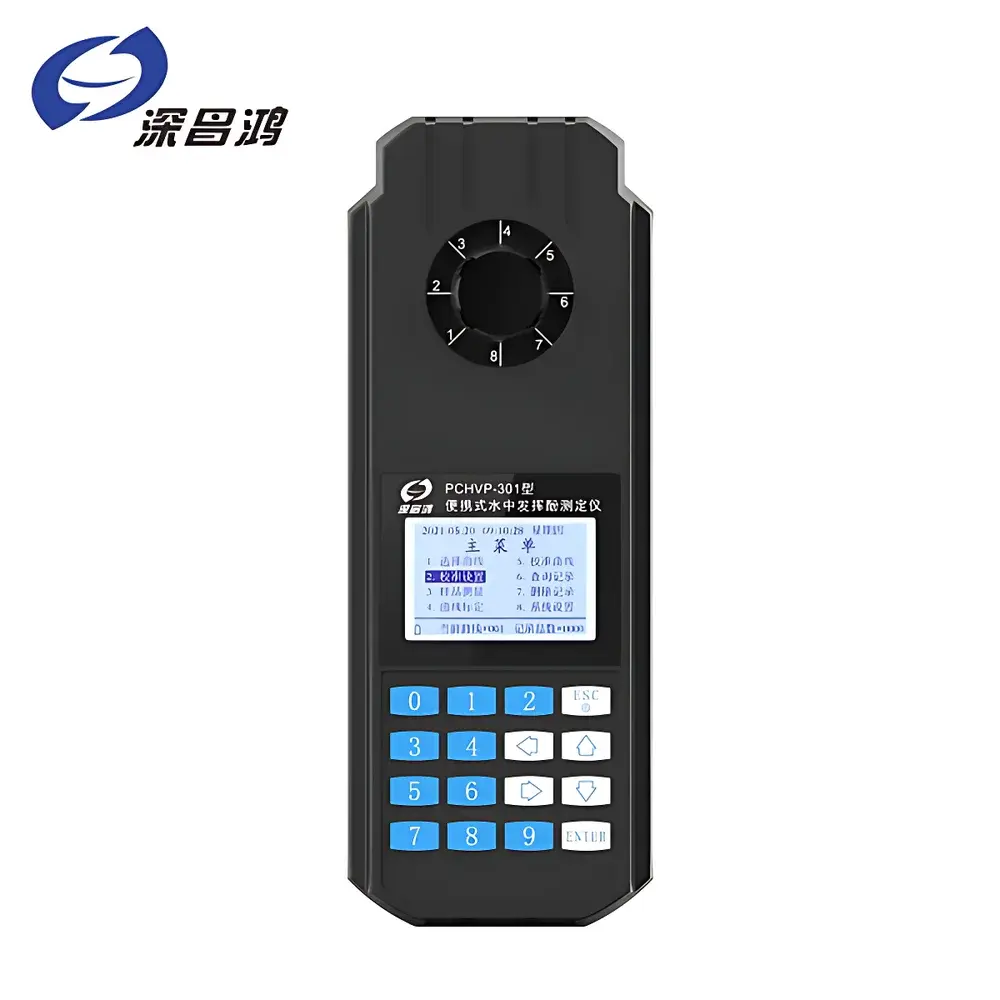
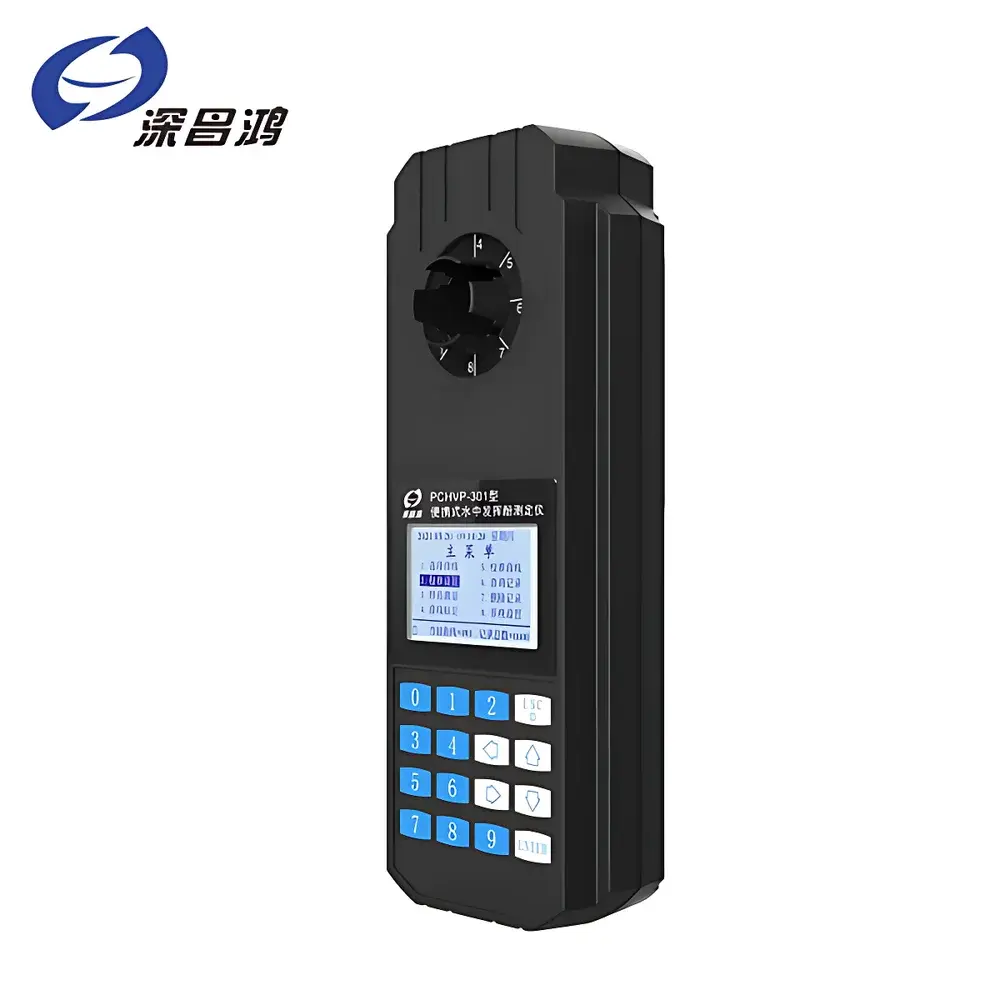
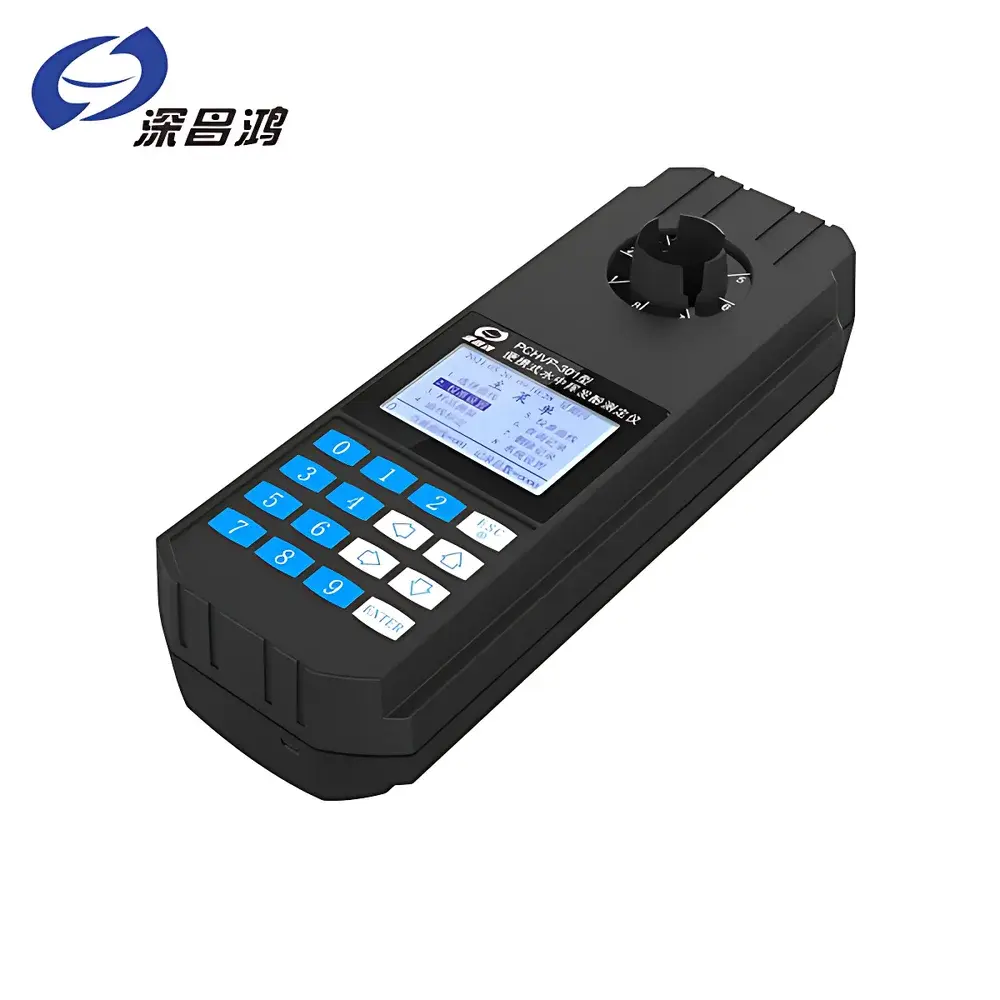
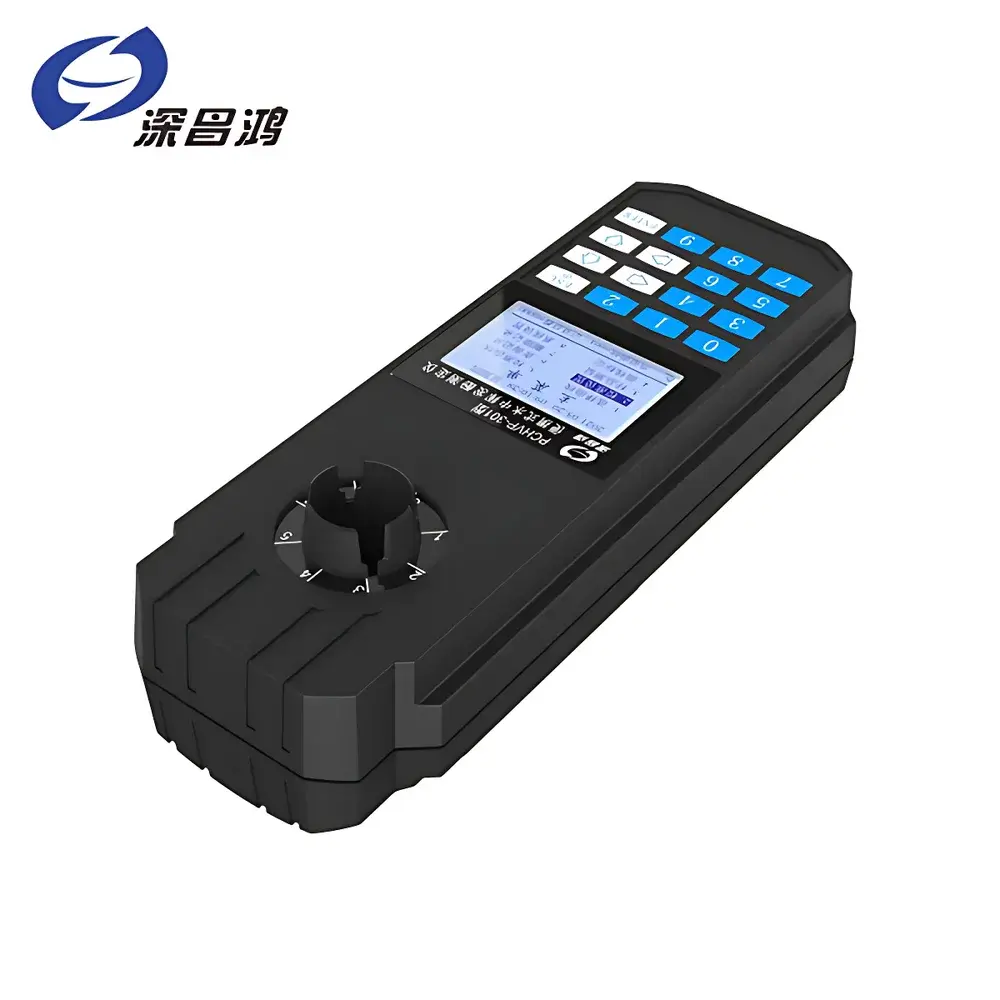
Shenchanghong PCHVP-301 Portable Volatile Phenol Analyzer for Water
| Brand | Shenchanghong |
|---|---|
| Origin | Guangdong, China |
| Manufacturer Type | Direct Manufacturer |
| Country of Origin | China |
| Model | PCHVP-301 |
| Instrument Type | Portable/Handheld Water Quality Analyzer |
| Measured Parameter | Volatile Phenol in Water |
| Measurement Range | 0.20–10.0 mg/L (dilution applicable beyond range) |
| Minimum Resolution | 0.01 mg/L |
| Accuracy | ≤5% FS |
| Repeatability | ≤3% |
| Optical Stability | ≤0.002 A/20 min |
| Dimensions | 80 mm × 230 mm × 55 mm |
| Power Consumption | 30 W |
| Weight | 500 g |
Overview
The Shenchanghong PCHVP-301 Portable Volatile Phenol Analyzer is a field-deployable photometric instrument engineered for quantitative determination of volatile phenolic compounds in aqueous matrices using the 4-aminoantipyrine (4-AAP) colorimetric method per standard environmental analytical protocols. It operates on the principle of visible-light absorbance measurement at a fixed wavelength (typically 500–510 nm), where phenol reacts with 4-AAP and potassium ferricyanide under buffered alkaline conditions to form a stable pink-colored quinoneimine dye. The intensity of absorbance is directly proportional to phenol concentration within the linear dynamic range. Designed for rapid, on-site assessment without laboratory infrastructure, the PCHVP-301 complies with foundational methodological requirements aligned with ISO 6439:1984 (Water quality — Determination of phenolic compounds — Spectrophotometric method using 4-aminoantipyrine) and serves as a practical implementation tool for preliminary screening in regulatory monitoring workflows.
Key Features
- High-stability optical system featuring imported long-life (100,000-hour) high-luminance LED source coupled with precision narrow-band interference filters, minimizing stray light influence and ensuring robust photometric reproducibility.
- Integrated 16-bit low-power microcontroller architecture delivering deterministic real-time signal processing, optimized battery management, and consistent operational performance across ambient temperature gradients (10–35 °C).
- Backlit monochrome LCD display with full Chinese-language interface and hierarchical menu navigation—designed for intuitive operation by field technicians with minimal training.
- Onboard calibration memory supporting up to 50 user-defined or factory-loaded standard curves; all curves stored non-volatilely with EEPROM backup to prevent data loss during power interruption.
- Durable housing fabricated from post-molded ABS polymer with enhanced resistance to chemical splashes, humidity, and mechanical abrasion—validated for IP54-rated environmental resilience.
- Compact ergonomic form factor (80 × 230 × 55 mm) and lightweight design (500 g) enabling single-hand operation and seamless integration into mobile environmental sampling kits.
Sample Compatibility & Compliance
The PCHVP-301 is validated for use with clarified, non-turbid water samples—including potable water, wastewater effluents, surface water, aquaculture discharge, and industrial process streams—provided turbidity remains below 5 NTU and interfering substances (e.g., oxidants, sulfides, high iron/manganese concentrations) are removed or masked per standard pretreatment procedures (e.g., distillation per EPA Method 420.1 or ISO 6439). While not certified to ISO/IEC 17025 or accredited for definitive compliance reporting, the instrument supports GLP-aligned field documentation when used in conjunction with traceable reference standards and documented chain-of-custody practices. Its measurement uncertainty profile meets typical QA/QC thresholds for Level 2 screening applications under national environmental monitoring frameworks.
Software & Data Management
All measurement data—including concentration (mg/L), absorbance (A), transmittance (%T), date/time stamps (YYYY-MM-DD HH:MM:SS), and operator ID—are logged internally with automatic timestamping and retained indefinitely in non-volatile flash memory (500-sample capacity). Data export is supported via USB interface to external PCs for CSV-formatted batch retrieval. The embedded firmware implements audit-trail–capable event logging (power cycles, calibration updates, curve modifications), satisfying basic 21 CFR Part 11–aligned record integrity expectations for internal quality systems. No proprietary software installation is required; exported files are natively compatible with Excel, LabArchives, and LIMS platforms.
Applications
- Routine surveillance of drinking water distribution networks for phenol breakthrough following accidental contamination or disinfection byproduct formation.
- Pre-discharge verification testing at municipal and industrial wastewater treatment plants prior to environmental release.
- Field-based assessment of leachate quality from landfill sites and remediation zones.
- Process control support in petrochemical, pharmaceutical, and resin manufacturing facilities where phenol is used as intermediate or solvent.
- Academic and research field studies evaluating phenolic compound fate and transport in aquatic ecosystems.
- Emergency response deployment during chemical spill incidents involving phenol or substituted phenols (e.g., cresols, xylenols) where semi-quantitative triage is required.
FAQ
What sample pretreatment is required before analysis?
Samples must be free of suspended solids (via filtration through 0.45 µm membrane) and oxidizing agents (e.g., residual chlorine, which should be quenched with sodium thiosulfate). For complex matrices, steam distillation per ISO 6439 is recommended to isolate volatile phenols from non-volatile interferences.
Can the instrument measure total phenols or only volatile phenols?
The PCHVP-301 is specifically configured for volatile phenol determination. Total phenol quantification requires acid hydrolysis and distillation steps not supported by this platform’s hardware or reagent set.
Is calibration verification traceable to NIST or equivalent national standards?
The instrument accepts user-prepared calibration standards traceable to certified reference materials (CRMs) such as those from AccuStandard or Sigma-Aldrich. Shenchanghong provides no direct NIST-traceable calibration kit; end users are responsible for establishing metrological traceability per their internal QA requirements.
How often must the optical system be recalibrated?
Factory calibration remains stable for ≥12 months under normal field use. Annual verification against a primary standard is recommended; drift exceeding ±0.002 A over 20 minutes warrants optical alignment check or LED replacement.
Does the device support Bluetooth or Wi-Fi connectivity?
No. Data transfer is exclusively via wired USB connection to ensure electromagnetic compatibility in industrial and outdoor environments where RF interference may compromise wireless reliability.
Related Products







