

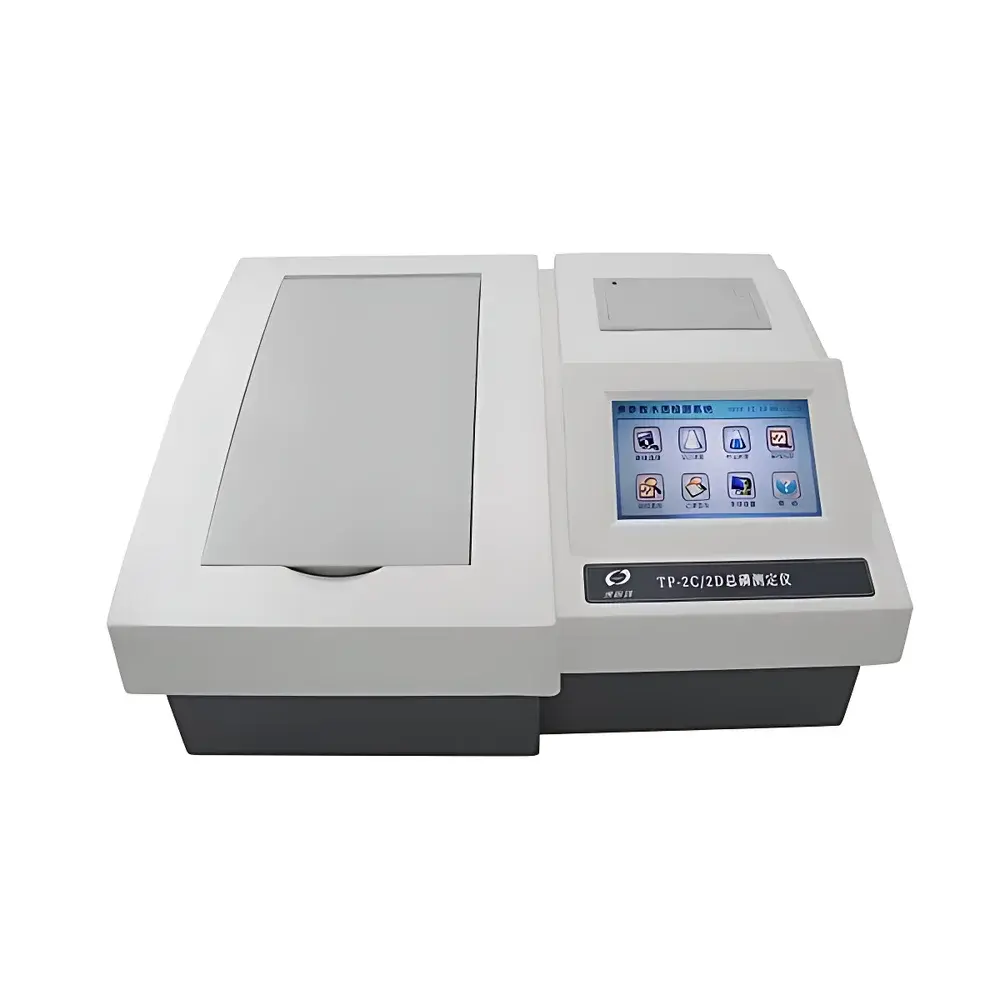
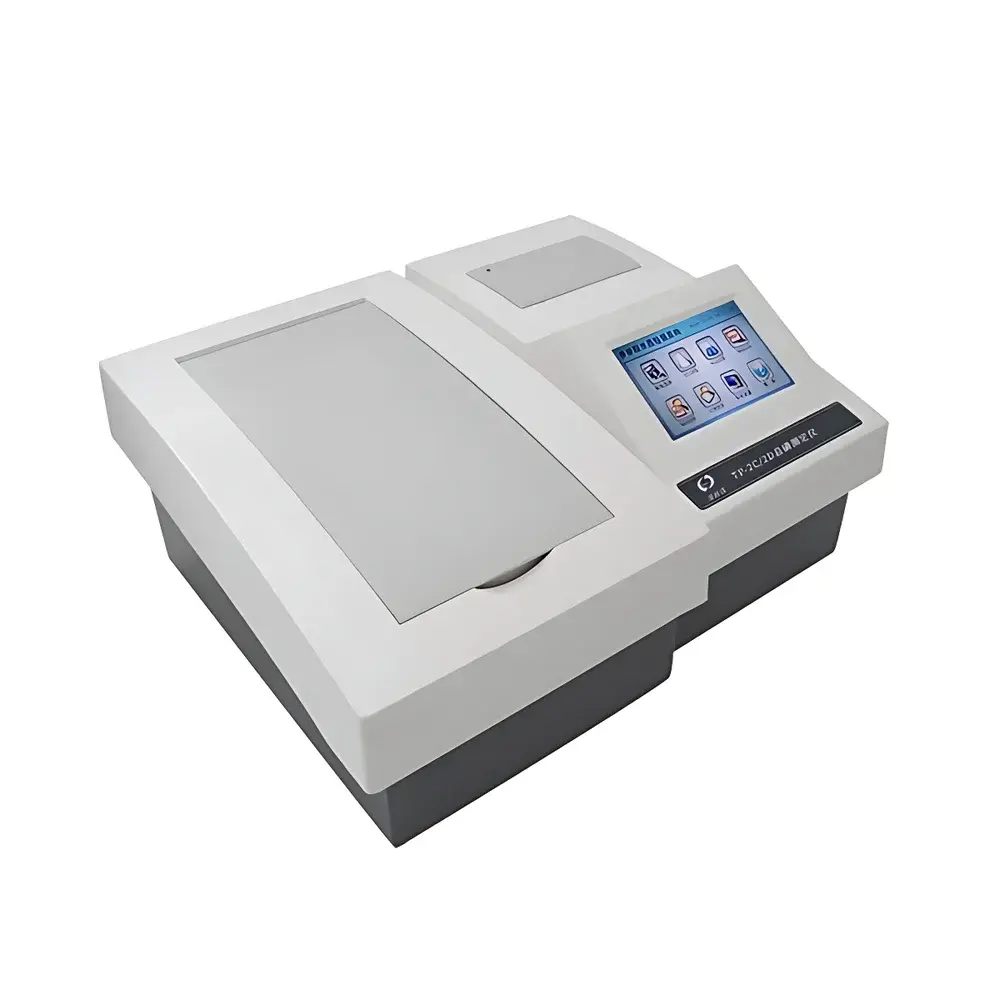
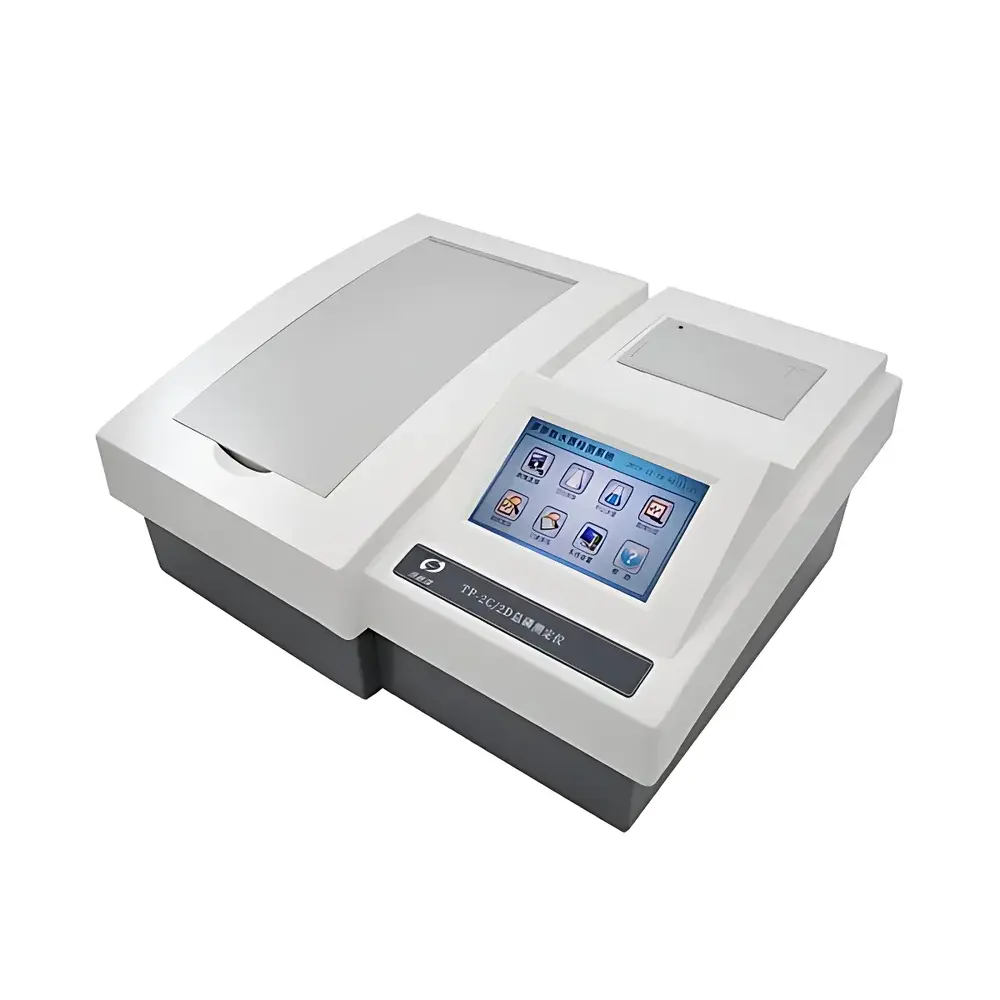
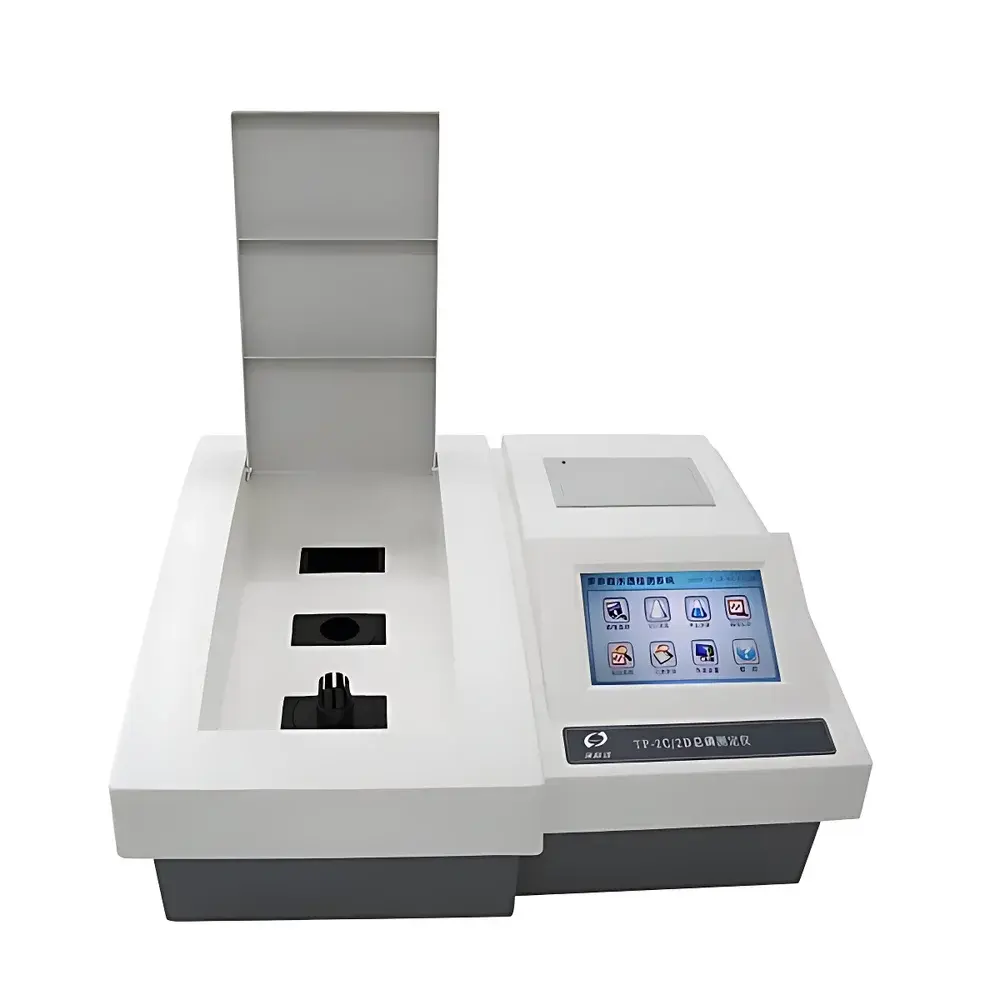
Shenchanghong TP-2C/2D Total Phosphorus Analyzer
| Brand | Shenchanghong |
|---|---|
| Origin | Guangdong, China |
| Manufacturer Type | Manufacturer |
| Product Category | Domestic |
| Model | TP-2C / TP-2D |
| Measurement Parameter | Total Phosphorus (TP) |
| Instrument Type | Benchtop Laboratory Analyzer |
| Measurement Principle | Sealed High-Temperature Digestion + Colorimetric Detection (Molybdenum Blue Method) |
| Measurement Range | TP-2C: 0.02–10 mg/L (dilutable beyond range) |
| Accuracy | ≤ ±5% of Full Scale |
| Repeatability | ≤ ±3% |
| Detection Limit | 0.02 mg/L |
| Resolution | 0.001 mg/L |
| Optical Stability | ≤ 0.002 A / 20 min |
| Digestion Temperature Control | PID-controlled, 25–200 °C (standard TP digestion at 120 °C) |
| Digestion Time | 30 min (user-adjustable) |
| Batch Capacity | 16 samples (optional 20/25/36-position blocks) |
| Display | 5-inch color TFT touchscreen with bilingual (Chinese/English) UI |
| Data Storage | TP-2C: 300 calibration curves + 1,000 measurement records |
| TP-2D | 3,500 curves + 100,000 records |
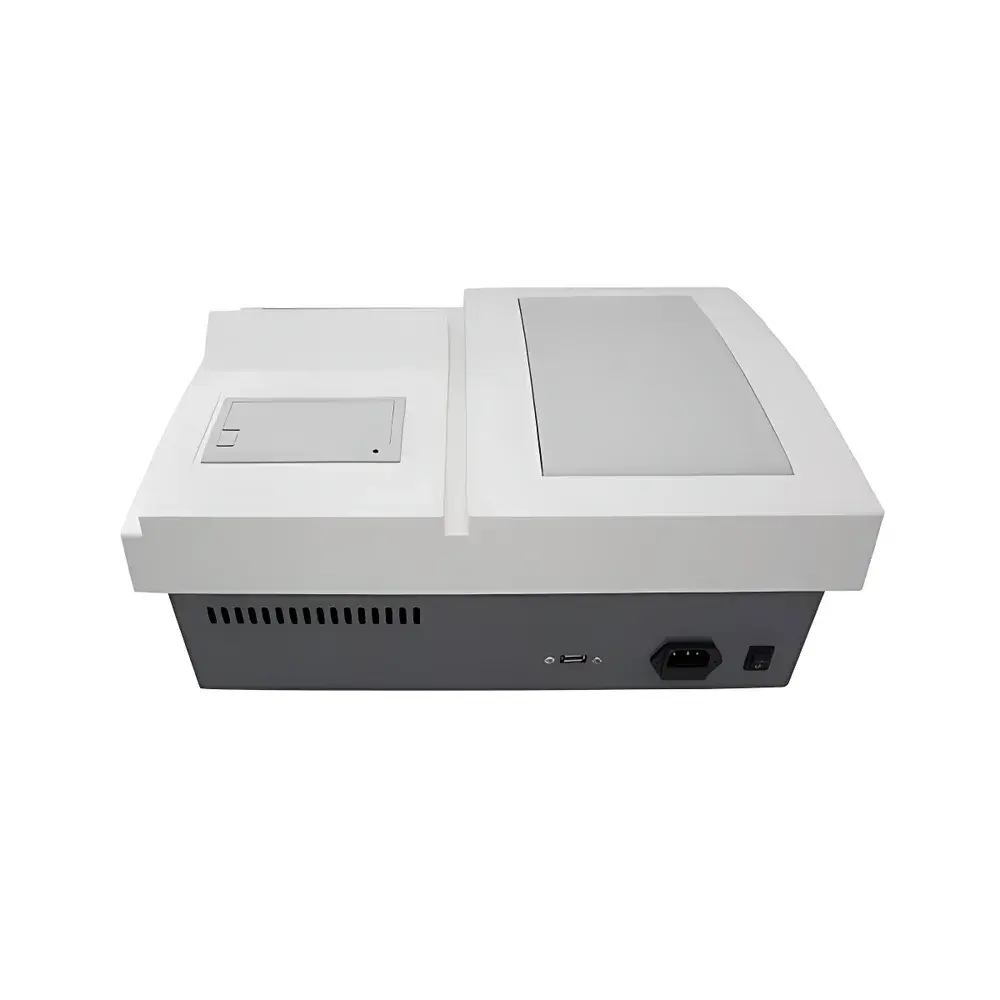
| Connectivity | USB port for data export and printer interface |
| Security | Password-protected system access and configuration |
| Calibration | Built-in auto-zero and reference calibration routines |
| Physical Dimensions (Analyzer) | 400 × 310 × 158 mm |
| (Digestor) | 355 × 260 × 135 mm (excl. shield) |
| Weight | Analyzer: 5.0 kg |
| Digestor | 5.5 kg |
Overview
The Shenchanghong TP-2C/2D Total Phosphorus Analyzer is a dedicated benchtop laboratory instrument engineered for precise, reproducible quantification of total phosphorus (TP) in aqueous environmental and wastewater samples. It operates on the standardized molybdenum blue colorimetric method—compliant with ISO 6878:2004 and EPA Method 365.1—following sealed high-temperature acid digestion to convert all phosphorus species (orthophosphate, condensed phosphates, organophosphorus compounds) into orthophosphate. The digested sample is then reacted with ammonium molybdate and ascorbic acid under controlled pH, forming a phosphomolybdenum blue complex. Absorbance is measured at 700 nm using a stable, long-life imported LED light source and a precision optical path optimized for minimal drift. Microprocessor-based signal processing delivers direct concentration readouts in mg/L, eliminating manual calculation while maintaining full traceability to NIST-traceable phosphate standards.
Key Features
- Modular architecture: Independent digestion unit and photometric analyzer prevent thermal interference with optical stability—critical for long-term repeatability.
- PID-controlled digestion block with programmable temperature (25–200 °C) and time (1–120 min), enabling method flexibility beyond TP (e.g., total nitrogen per ISO 11908 or COD per ISO 6060).
- High-stability optical system featuring a 700 nm narrow-band LED source and matched silicon photodetector, delivering ≤0.002 A drift over 20 minutes.
- 5-inch capacitive color touchscreen with intuitive bilingual (English/Chinese) GUI, supporting touch-driven calibration, curve management, and real-time status monitoring.
- Robust data governance: Password-protected system settings, audit-ready calibration logs, automatic backup of user-defined curves and measurement history.
- Onboard self-diagnostic routines—including auto-zero, blank validation, and reference absorbance verification—to correct for optical drift and reagent aging.
- One-touch recovery function restores factory calibration curves and default configurations without firmware reset or service intervention.
Sample Compatibility & Compliance
The TP-2C/2D accepts standard 16-mm borosilicate glass digestion tubes and accommodates raw, filtered, or clarified water matrices—including surface water, municipal wastewater effluent, industrial discharge, and treated drinking water. Its digestion protocol meets ISO 6878:2004 requirements for total phosphorus determination and supports adaptation to ASTM D515-89 (for total P in water) and Chinese standard HJ 670–2013. The instrument’s design aligns with GLP principles: all measurements are timestamped, operator-ID logged (when enabled), and raw absorbance values retained alongside final concentrations. Optional USB export generates CSV files compatible with LIMS integration and FDA 21 CFR Part 11-compliant electronic record systems when paired with validated software workflows.
Software & Data Management
No external PC is required for operation: all calibration, measurement, and reporting functions reside onboard. The TP-2D variant stores up to 3,500 user-defined calibration curves and 100,000 test records with full metadata (date/time, operator ID, sample ID, digestion parameters, absorbance, concentration). Data export via USB mass-storage mode produces structured CSV files containing column headers compliant with ISO/IEC 17025 documentation requirements. Integrated thermal printer support enables immediate hard-copy generation of QC reports, calibration certificates, and batch summaries. Firmware updates are performed via USB drive, ensuring version control and regulatory alignment across instrument fleets.
Applications
This analyzer serves routine and compliance-driven laboratories requiring reliable TP quantification across multiple regulatory frameworks. Typical use cases include: monitoring phosphorus loading in municipal wastewater treatment plants (per EU Urban Wastewater Treatment Directive limits); assessing eutrophication risk in lakes and reservoirs; validating phosphorus removal efficiency in tertiary treatment systems; conducting research on nutrient cycling in agricultural runoff; and supporting environmental impact assessments for industrial dischargers. Its modular digestion capability also permits parallel development of custom methods for speciated phosphorus analysis when coupled with ion chromatography or sequential extraction protocols.
FAQ
What digestion temperature and time are recommended for total phosphorus analysis?
Standard operation uses 120 °C for 30 minutes—validated against ISO 6878:2004. Both parameters are fully adjustable via the touchscreen interface.
Can the instrument measure total nitrogen or COD?
Yes—the independent digestion module supports method adaptation. Total nitrogen requires 125 °C digestion per ISO 11908; COD analysis follows ISO 6060 using potassium dichromate oxidation.
How is data integrity ensured during long-term deployment?
Optical stability ≤0.002 A/20 min, password-protected configuration, automatic calibration logging, and non-volatile memory for all curves and records ensure consistent performance across extended operational cycles.
Is the instrument suitable for field-deployable labs or only fixed laboratories?
It is designed for benchtop laboratory use with AC power input (220 V, 50 Hz). While not portable, its compact footprint (400 × 310 × 158 mm) and lightweight construction (5.0 kg analyzer) allow flexible placement in mobile lab trailers or satellite testing facilities.
Does the system comply with international quality standards for environmental testing?
Yes—it implements core principles of ISO/IEC 17025:2017 (technical competence), supports GLP documentation practices, and its measurement methodology is harmonized with ISO 6878, EPA 365.1, and HJ 670–2013.
Related Products







