
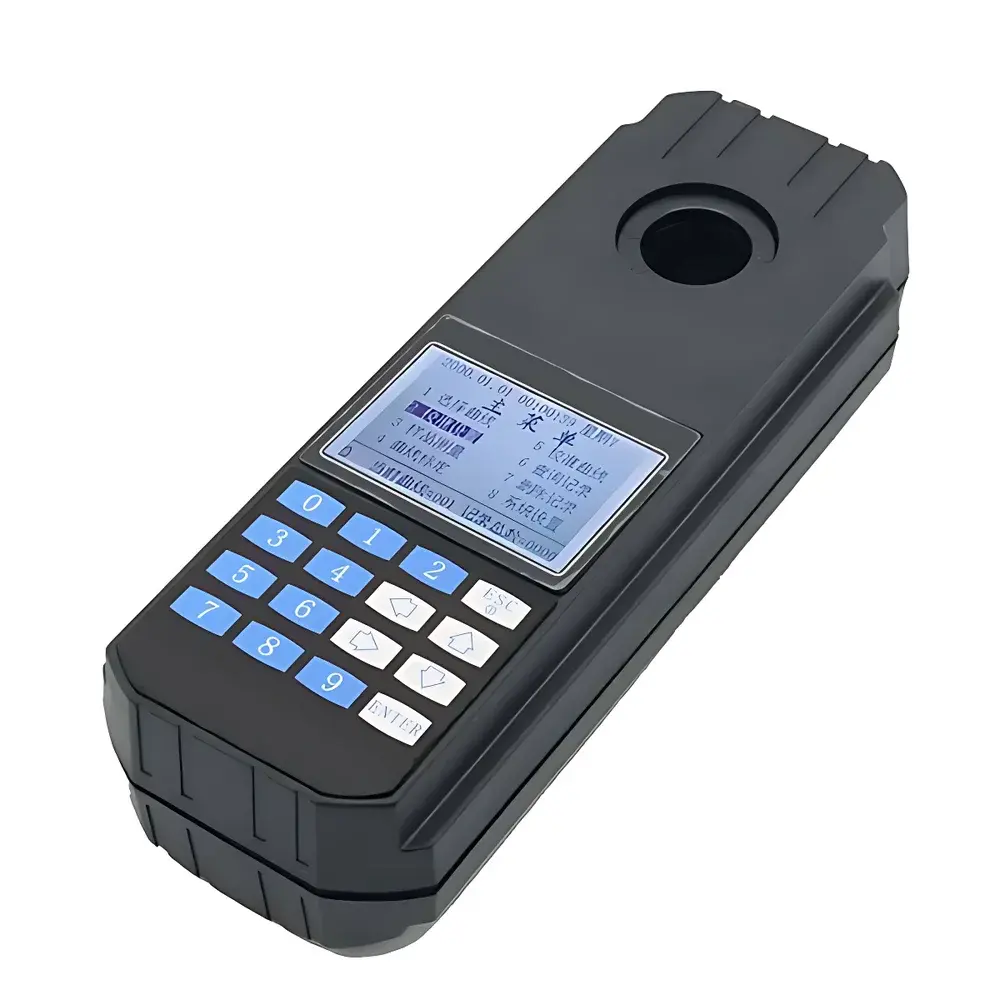
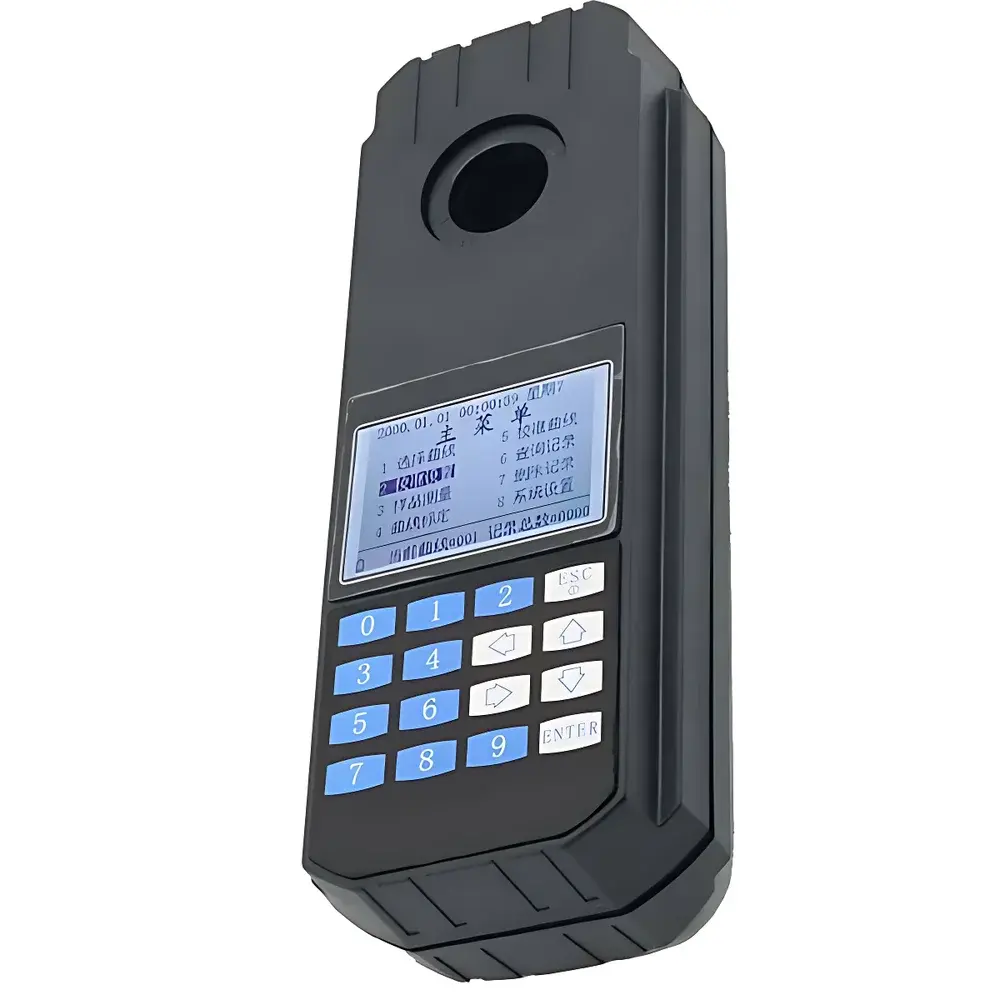
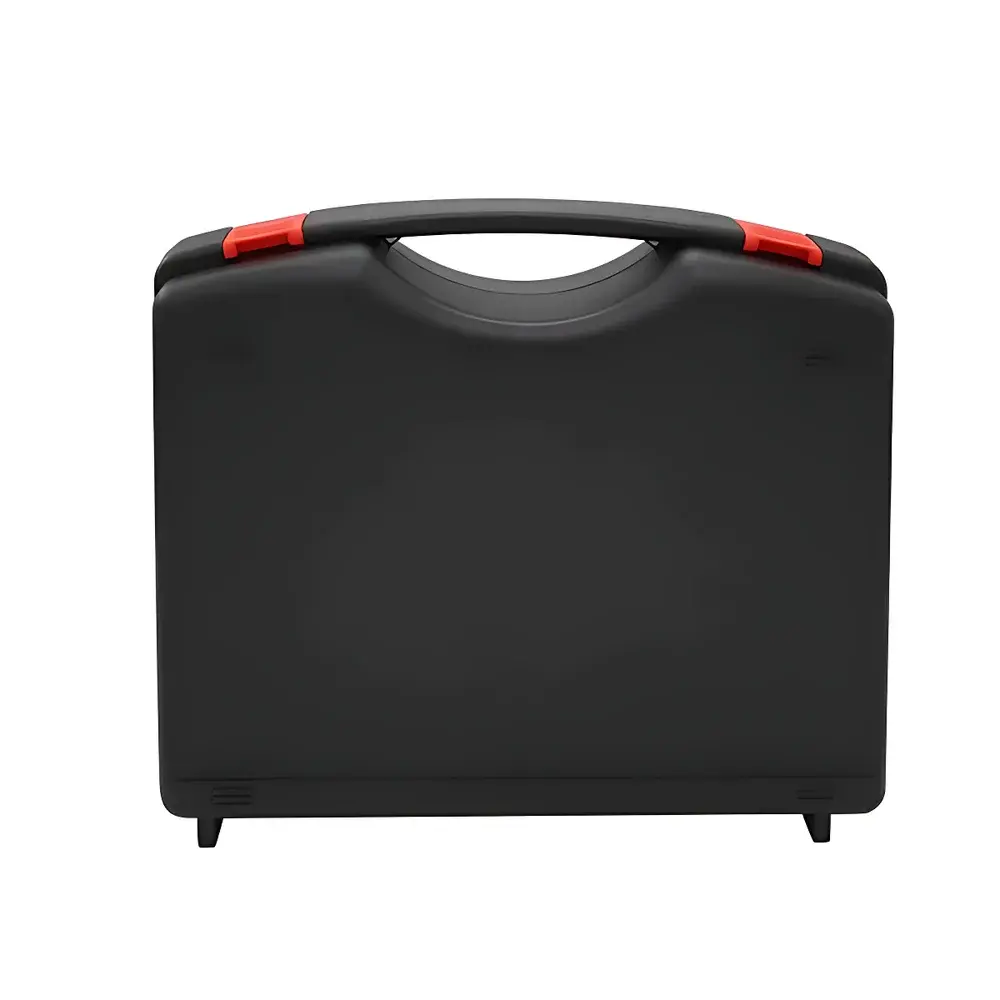
Shenchanghong PCHCN-121 Portable Cyanide Analyzer
| Brand | Shenchanghong |
|---|---|
| Origin | Shenzhen, China |
| Manufacturer Type | Direct Manufacturer |
| Country of Origin | China |
| Model | PCHCN-121 |
| Instrument Type | Portable/HANDHELD Water Quality Analyzer |
| Measured Parameter | Total Cyanide in Water |
| Measurement Range | 0.01–0.50 mg/L |
| Accuracy (Abs. Error) | ≤±5% |
| Repeatability (RSD) | ≤3% |
| Optical Drift | <0.002 A within 20 min |
| Dimensions | 80 × 230 × 55 mm |
| Weight | 500 g |
| Operating Temperature | 5–40 °C |
| Relative Humidity | ≤85% RH |
| Power Supply | 4 × AA batteries |
| Protection Rating | IP65 |
| Data Storage | 199 measurement records with timestamp (YYYY-MM-DD hh:mm:ss), plus 20 programmable calibration curves |
| Display | LCD with backlight |
| Optical System | Monochromatic cold light source + narrow-band interference filter |
Overview
The Shenchanghong PCHCN-121 Portable Cyanide Analyzer is a field-deployable photometric instrument engineered for the quantitative determination of total cyanide in aqueous matrices using the standard ISO 6703-1 (1984) and HJ 484–2009 (Chinese EPA method) compliant colorimetric assay—specifically, the pyridine-barbituric acid spectrophotometric method. It operates on the principle of absorbance measurement at 580 nm following derivatization of cyanide ions into a stable chromophore under controlled acidic distillation and reaction conditions. Designed for regulatory compliance and routine monitoring, the analyzer integrates a monochromatic cold light source and narrow-band optical interference filters to minimize spectral stray light and ensure long-term photometric stability—critical for trace-level cyanide quantification where interferences from sulfide, nitrite, or thiocyanate must be rigorously controlled.
Key Features
- Compact handheld form factor (80 × 230 × 55 mm; 500 g) optimized for field deployment, emergency response, and mobile laboratory use.
- IP65-rated ABS polymer housing providing robust protection against dust ingress, water splashes, and chemical corrosion—suitable for outdoor, industrial, or wastewater treatment plant environments.
- Low-power 16-bit microcontroller architecture enabling up to 12 hours of continuous operation on four standard AA alkaline batteries.
- Backlit LCD display with intuitive menu navigation supporting real-time concentration readout (mg/L), transmittance (%T), and absorbance (A) values.
- Integrated data logging with non-volatile memory: stores 199 timestamped measurements (including full date/time stamp down to the second) and up to 20 user-defined calibration curves.
- Optical system stability verified per IEC 61000-4-2: drift <0.002 A over 20 minutes—ensuring repeatability and minimizing recalibration frequency during extended field campaigns.
- Automatic zeroing and blank compensation routines reduce operator dependency and improve measurement consistency across variable ambient lighting conditions.
Sample Compatibility & Compliance
The PCHCN-121 is validated for use with drinking water, surface water, groundwater, municipal wastewater, and industrial effluents—provided samples are pre-treated according to HJ 484–2009 or ISO 6703-1 protocols (e.g., acid distillation with manual or semi-automated distillate collection). It meets functional performance criteria aligned with ISO/IEC 17025:2017 for field instrumentation used in environmental testing laboratories. While not certified to GLP or FDA 21 CFR Part 11 out-of-the-box, its audit-ready data storage (with immutable timestamps and curve identifiers) supports traceability requirements under national water quality monitoring programs and third-party QA/QC audits.
Software & Data Management
No external PC software is required for basic operation; however, measurement records can be exported via optional USB-to-serial adapter (not included) to CSV-compatible spreadsheet applications. All stored data retain intrinsic metadata—including measurement time, calibration curve ID, raw absorbance, and calculated concentration—enabling retrospective review without proprietary software dependencies. The instrument implements hardware-level data retention: power loss does not erase previously saved results or calibration parameters due to built-in EEPROM-based memory with battery-backed write protection.
Applications
- Routine cyanide surveillance at municipal water intake points and distribution networks.
- Compliance monitoring for electroplating, metal finishing, mining, and chemical manufacturing facilities discharging to sewer or receiving waters.
- Emergency response screening following suspected cyanide spills or accidental releases.
- Educational and training laboratories requiring low-cost, maintenance-free platforms for teaching environmental analytical techniques.
- Field validation of fixed online cyanide analyzers or laboratory benchtop spectrophotometers.
FAQ
Does the PCHCN-121 measure free cyanide or total cyanide?
It measures total cyanide after acid distillation pretreatment per HJ 484–2009 or ISO 6703-1. Free cyanide requires separate analysis using direct electrode or flow-injection methods.
Is reagent kit included with the instrument?
Yes—a complete set of pre-qualified reagents for ≥100 tests is supplied, including sodium hydroxide, phosphoric acid, chloramine-T, pyridine-barbituric acid reagent, and standard cyanide reference solution.
Can calibration curves be edited or deleted in the field?
Yes—users may overwrite, rename, or delete any of the 20 stored calibration curves using the onboard keypad and confirmation prompts.
What is the recommended maintenance interval?
No scheduled maintenance is required beyond periodic cleaning of the cuvette chamber and optical path with lint-free tissue and deionized water. Battery replacement is the only consumable service.
Is the instrument compatible with international metrological standards?
Its optical performance and measurement uncertainty align with ISO 8466-1 for calibration function validation and ISO 5725 for precision estimation; full metrological traceability requires annual verification using NIST-traceable cyanide standards.
Related Products







