
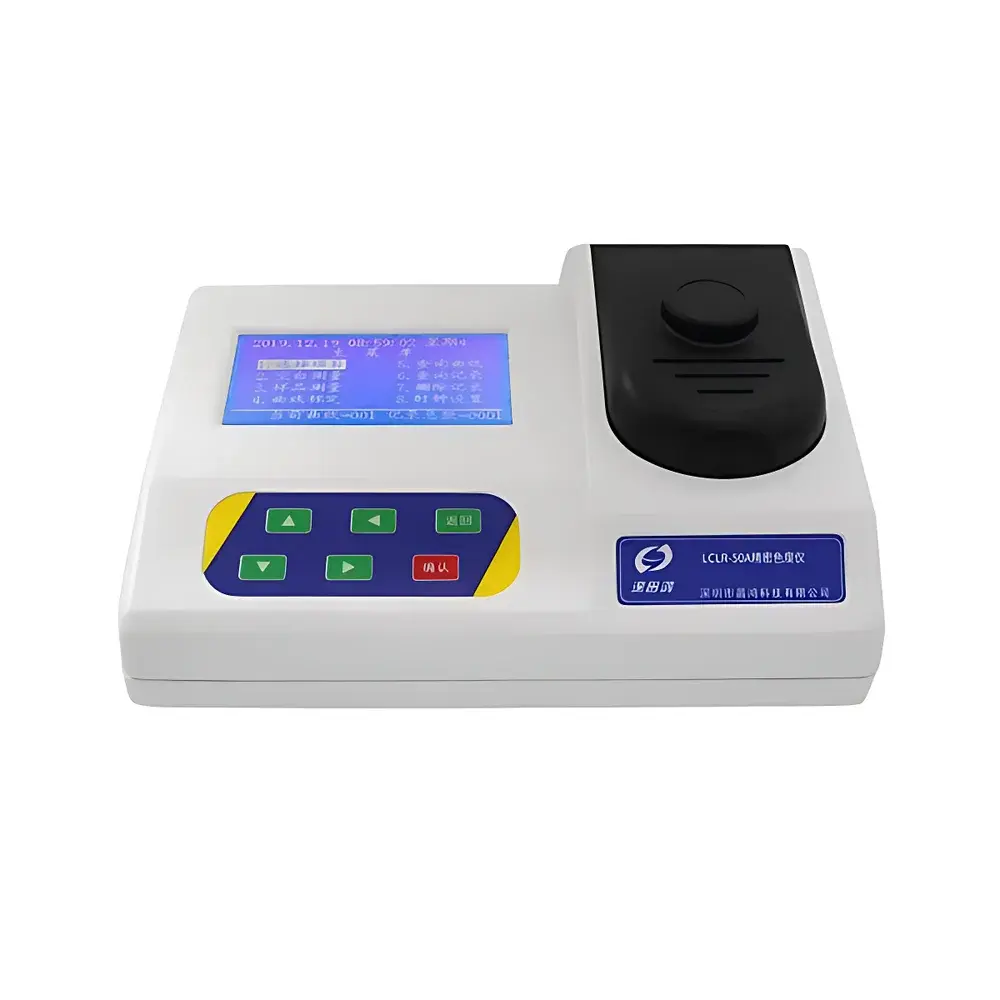
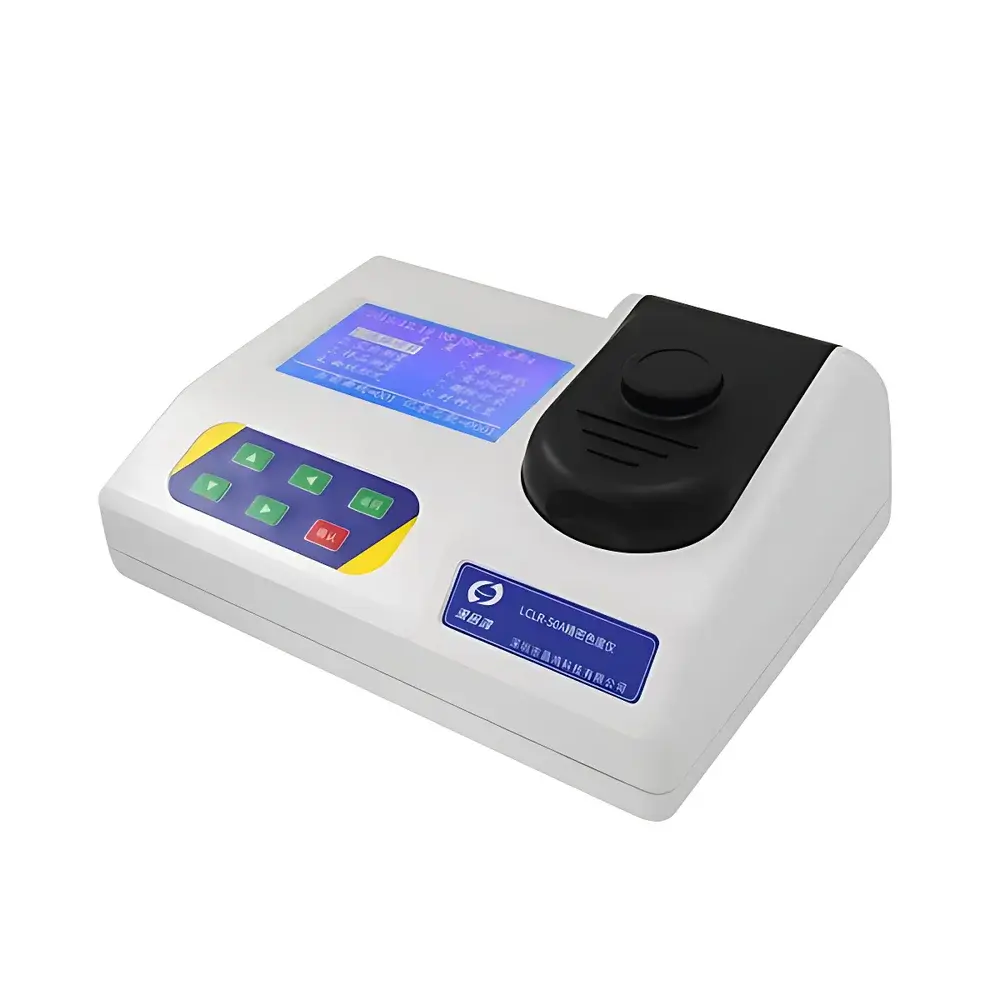
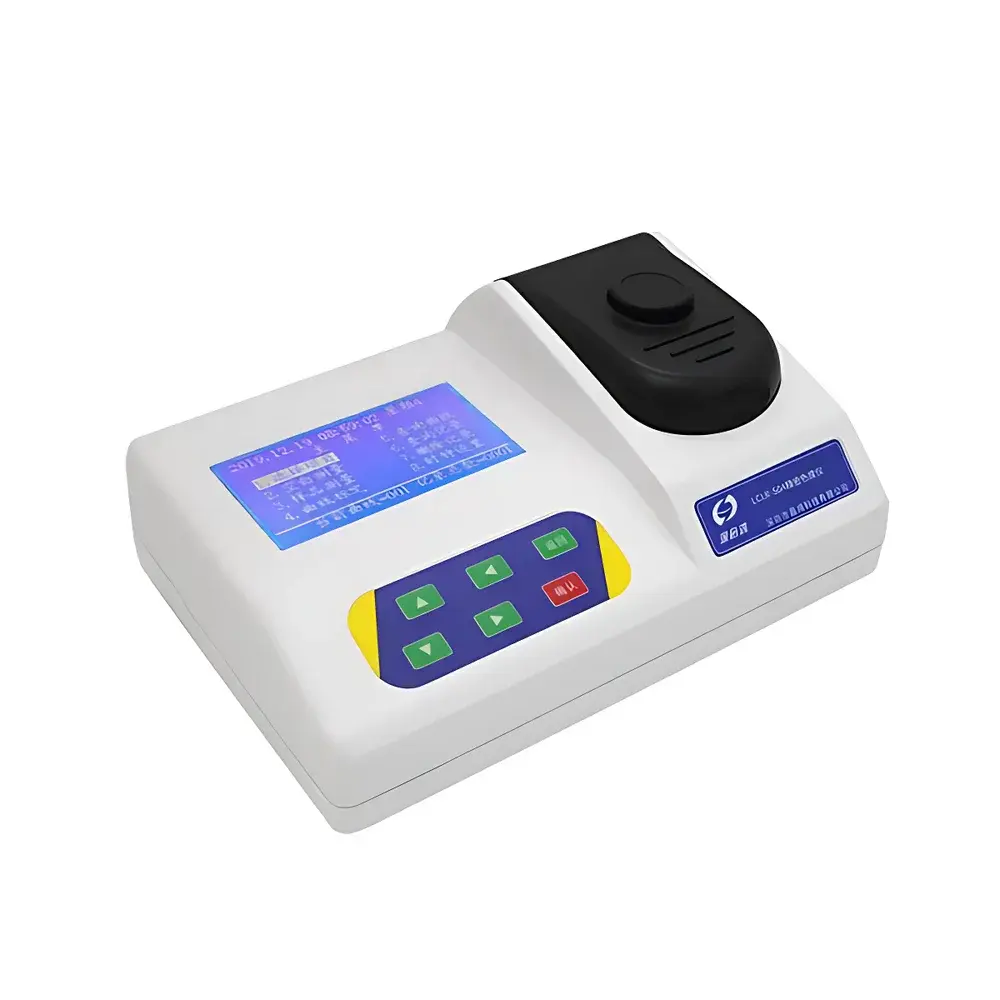
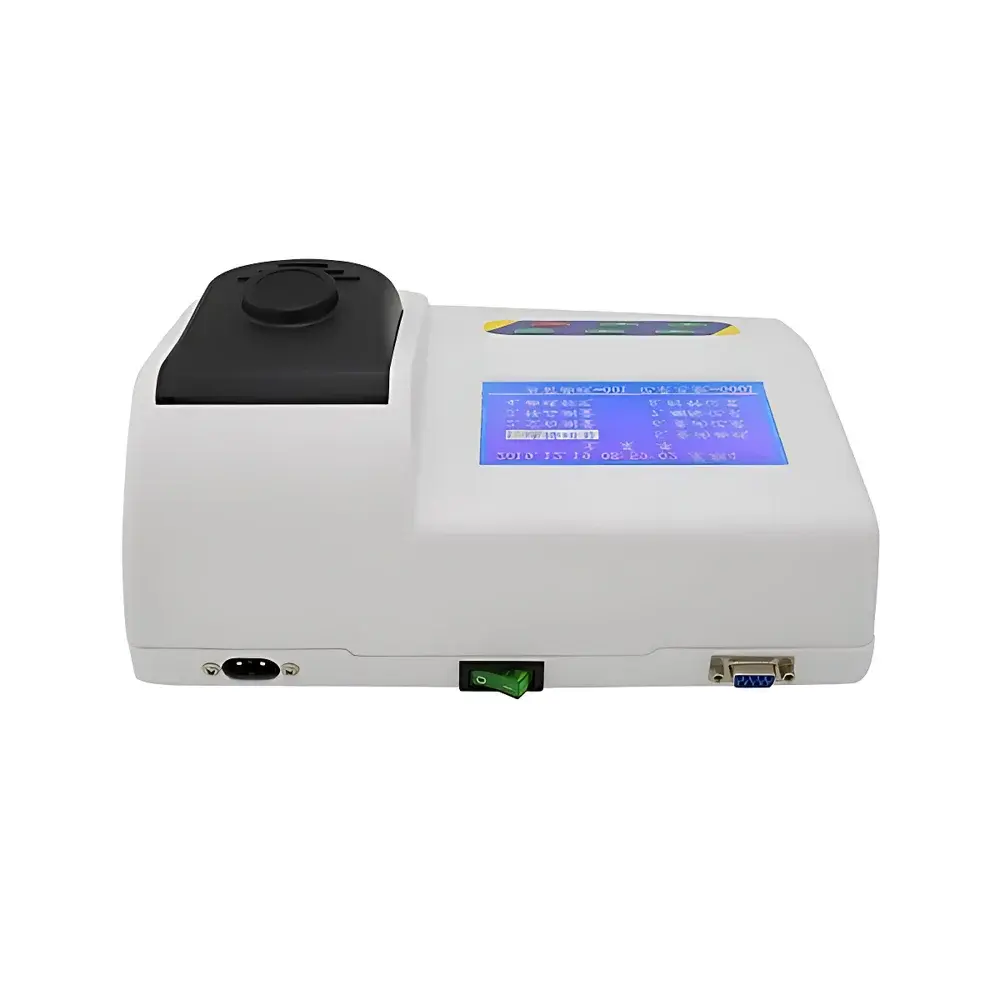
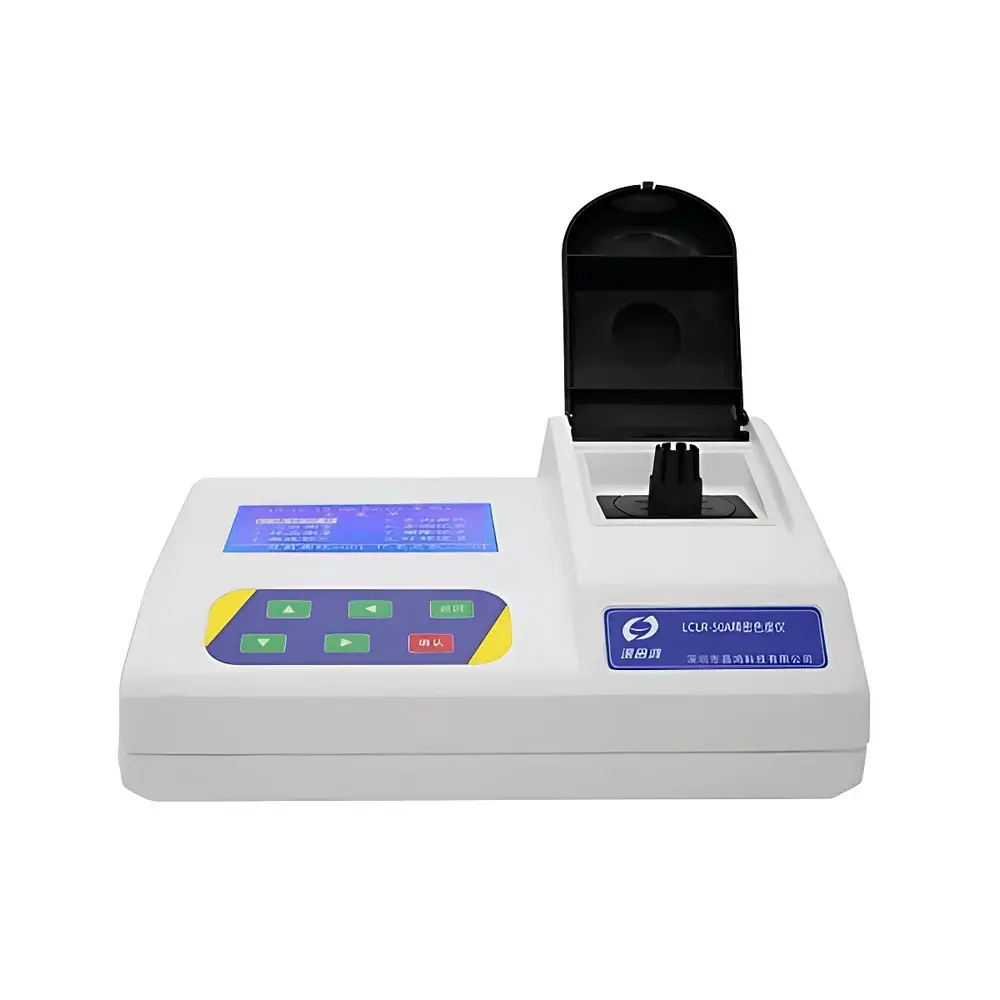
Shenchanghong LCLR-50A Precision Colorimeter
| Brand | Shenchanghong |
|---|---|
| Origin | Guangdong, China |
| Manufacturer Type | Direct Manufacturer |
| Origin Category | Domestic (China) |
| Model | LCLR-50A |
| Pricing | Upon Request |
| Measurement Range | 0.00–500 PCU |
| Resolution | 0.01 PCU |
| Basic Accuracy | ±3% of Full Scale |
| Repeatability | ≤3% |
| Optical Stability | Absorbance drift <0.002 A within 20 min |
| Dimensions (H×W×D) | 266 mm × 200 mm × 130 mm |
| Weight | 1 kg |
| Operating Temperature | 5–40 °C |
| Relative Humidity | ≤85% RH |
| Power Supply | AC (220 ± 22) V, (50 ± 0.5) Hz |
| Light Source Lifetime | 100,000 hours |
| Filter System | Narrow-band optical interference filters |
| Compliance | GB/T 5750.4–2006 (Platinum-Cobalt Colorimetric Method) |
Overview
The Shenchanghong LCLR-50A Precision Colorimeter is a dedicated benchtop photometric instrument engineered for quantitative color assessment in aqueous samples using the standardized Platinum-Cobalt (Pt-Co) method per GB/T 5750.4–2006. It operates on the principle of spectrophotometric absorbance measurement at a fixed wavelength optimized for yellow-brown hue quantification—typically centered near 455 nm—where Pt-Co standard solutions exhibit maximal spectral discrimination. The instrument employs a high-stability, long-life (100,000-hour) LED light source coupled with precision narrow-band interference filters to ensure minimal spectral deviation and high photometric reproducibility. Its optical architecture is designed to minimize stray light, thermal drift, and ambient light interference, resulting in robust baseline stability (<0.002 A drift over 20 minutes) and low measurement variance (≤3% repeatability). Unlike general-purpose spectrophotometers, the LCLR-50A is purpose-built for compliance-driven water quality laboratories requiring traceable, routine color evaluation across drinking water, surface water, groundwater, and treated effluent matrices.
Key Features
- Stable 100,000-hour LED light source with narrow-band optical filtering for consistent spectral output and reduced photometric aging effects.
- High-precision analog-to-digital conversion and 16-bit microcontroller-based signal processing, enabling 0.01 PCU resolution across the full 0–500 PCU range.
- Optimized optical path design with minimized internal reflection and temperature-compensated detector electronics to maintain absorbance stability under variable ambient conditions (5–40 °C).
- Large-backlit LCD display with intuitive Chinese-language menu navigation—designed for rapid operator training and error-resistant workflow execution in municipal and industrial QC labs.
- Dual calibration capability: pre-loaded factory-certified Pt-Co reference curves plus user-definable calibration points for method adaptation or matrix-specific correction.
- Chemically resistant ABS housing with reinforced structural integrity, suitable for humid or chemically exposed laboratory environments.
- Low power consumption (<5 W) and wide-input AC power compatibility (220 V ±10%, 50 Hz ±1%) for stable operation in field-deployable or mobile lab settings.
Sample Compatibility & Compliance
The LCLR-50A is validated for use with clarified, non-turbid aqueous samples conforming to the sample preparation requirements outlined in GB/T 5750.4–2006—including filtration through 0.45 µm membrane filters and pH adjustment where necessary. It is not intended for highly colored, suspended, or emulsified samples without pretreatment. Instrument performance meets the metrological criteria specified in ISO 7887:2011 (Water quality — Determination of colour) for visual and instrumental Pt-Co comparison methods. While primarily aligned with Chinese national standards, its measurement principle and reporting units (PCU) are directly convertible to APHA (American Public Health Association) units (1 PCU = 1 APHA unit), facilitating cross-referencing in international water quality reports. The device supports GLP-aligned documentation practices via onboard data logging and timestamped result storage.
Software & Data Management
The LCLR-50A stores up to 500 measurement records internally with date/time stamps, sample IDs, and calibration identifiers. Data export is supported via optional RS-232 serial interface (standard) or USB-to-serial adapter (accessory), enabling integration with LIMS or Excel-based QA/QC tracking systems. Firmware supports firmware-upgradable calibration coefficients and allows secure overwrite protection for factory curves. Though it does not feature native 21 CFR Part 11-compliant audit trails, its deterministic measurement logic, non-volatile memory retention, and manual calibration log functionality support GMP-aligned verification protocols when paired with laboratory SOPs governing instrument qualification, calibration frequency (recommended daily or per batch), and operator authentication procedures.
Applications
- Routine color monitoring in drinking water treatment plants for compliance with GB 5749–2022 (Sanitary Standard for Drinking Water), where color ≤15 PCU is mandated.
- Quality control of surface and groundwater sources during environmental baseline surveys and pollution incident response.
- Effluent characterization in municipal wastewater facilities prior to discharge, supporting regulatory reporting under local ecological departments’ monitoring guidelines.
- Validation of activated carbon or ozone-based decolorization processes in pilot- and full-scale treatment studies.
- Educational use in environmental engineering laboratories for teaching standardized colorimetric methodology and analytical uncertainty principles.
FAQ
What color scale does the LCLR-50A report in?
It reports results exclusively in Platinum-Cobalt Units (PCU), fully aligned with GB/T 5750.4–2006 and equivalent to APHA units.
Can the instrument measure beyond 500 PCU?
No—the optical design and calibration range are strictly limited to 0.00–500 PCU. Samples exceeding this range must be diluted with deionized water and corrected mathematically.
Is the device suitable for colored industrial effluents such as textile or dye-house wastewater?
Only after rigorous clarification (e.g., centrifugation + 0.45 µm filtration) and verification against Pt-Co standards; non-Pt-Co chromophores may introduce positive bias due to spectral mismatch.
Does the LCLR-50A require annual factory recalibration?
While not mandatory, Shenchanghong recommends biannual verification using NIST-traceable Pt-Co standard solutions (e.g., 5, 50, and 200 PCU) to confirm linearity and zero stability.
How is optical stability verified during routine operation?
Users can initiate a 20-minute dark-current drift test via the built-in diagnostics mode; recorded absorbance deviation must remain below 0.002 A to satisfy internal QC acceptance criteria.



