

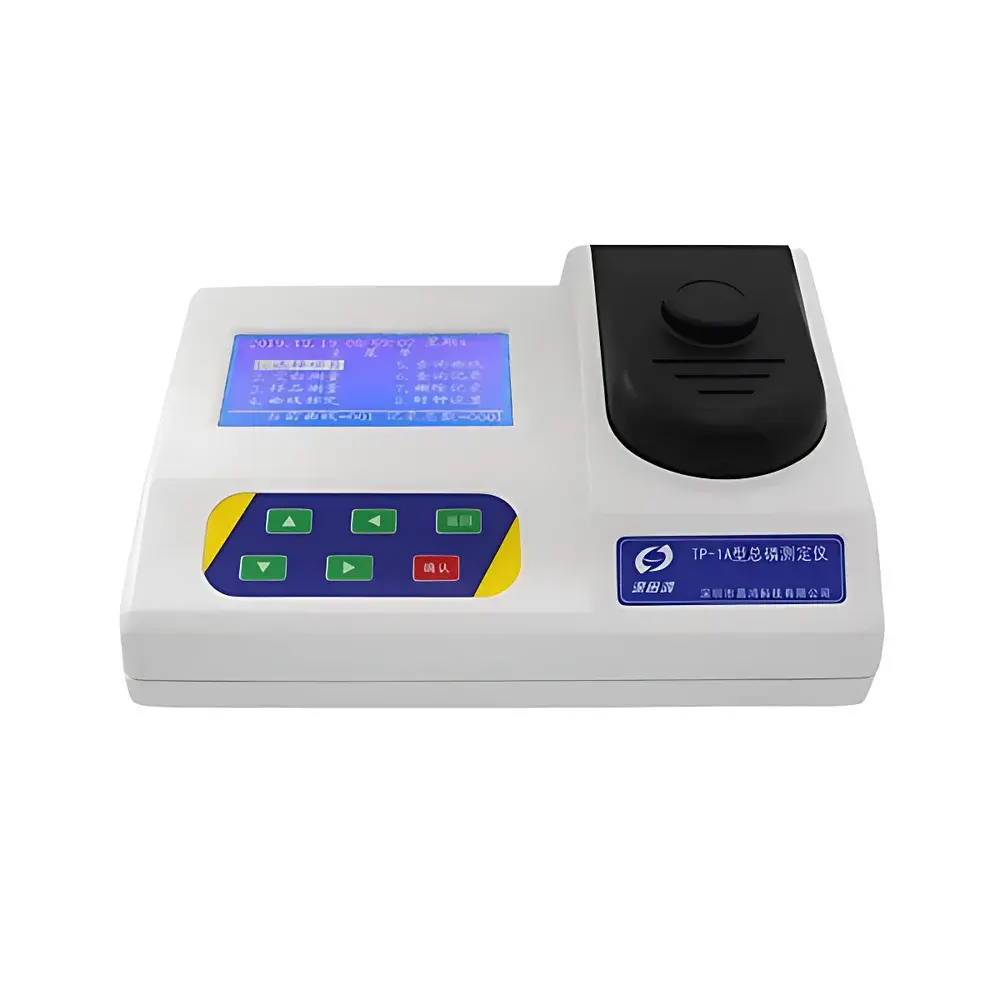
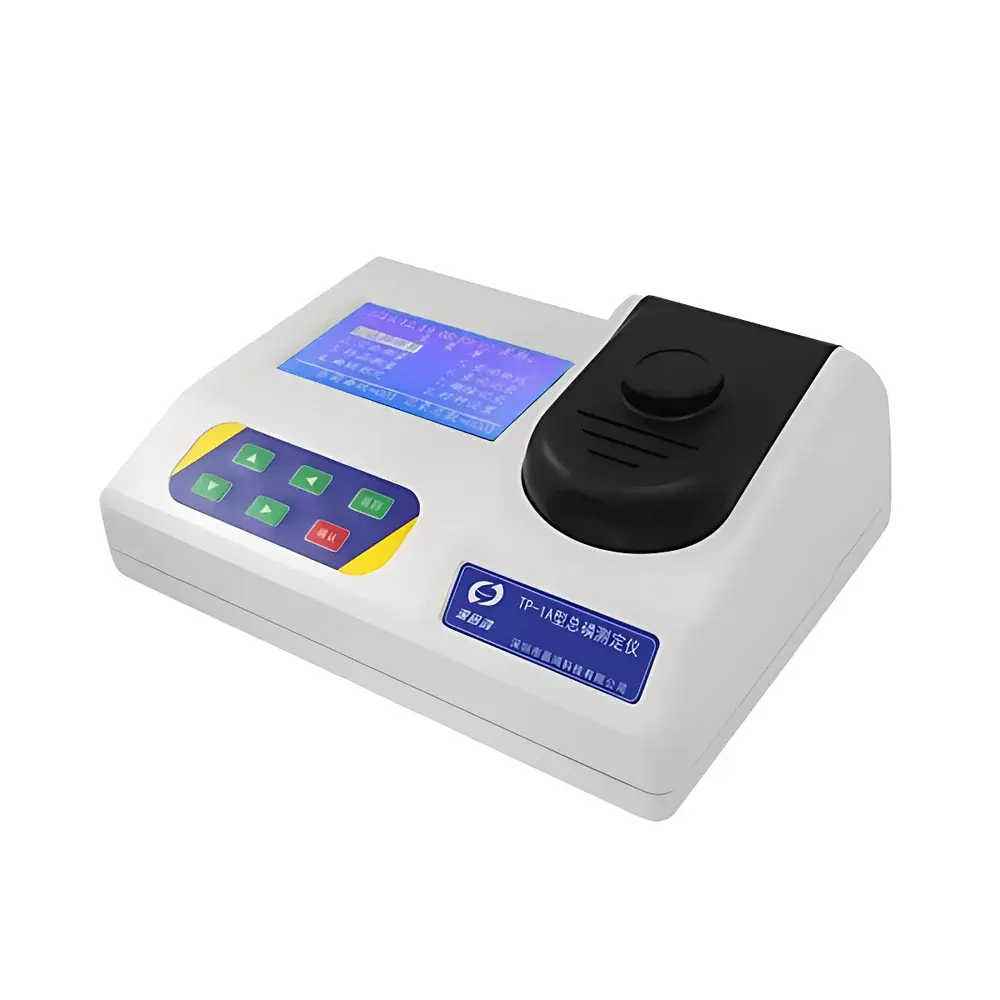
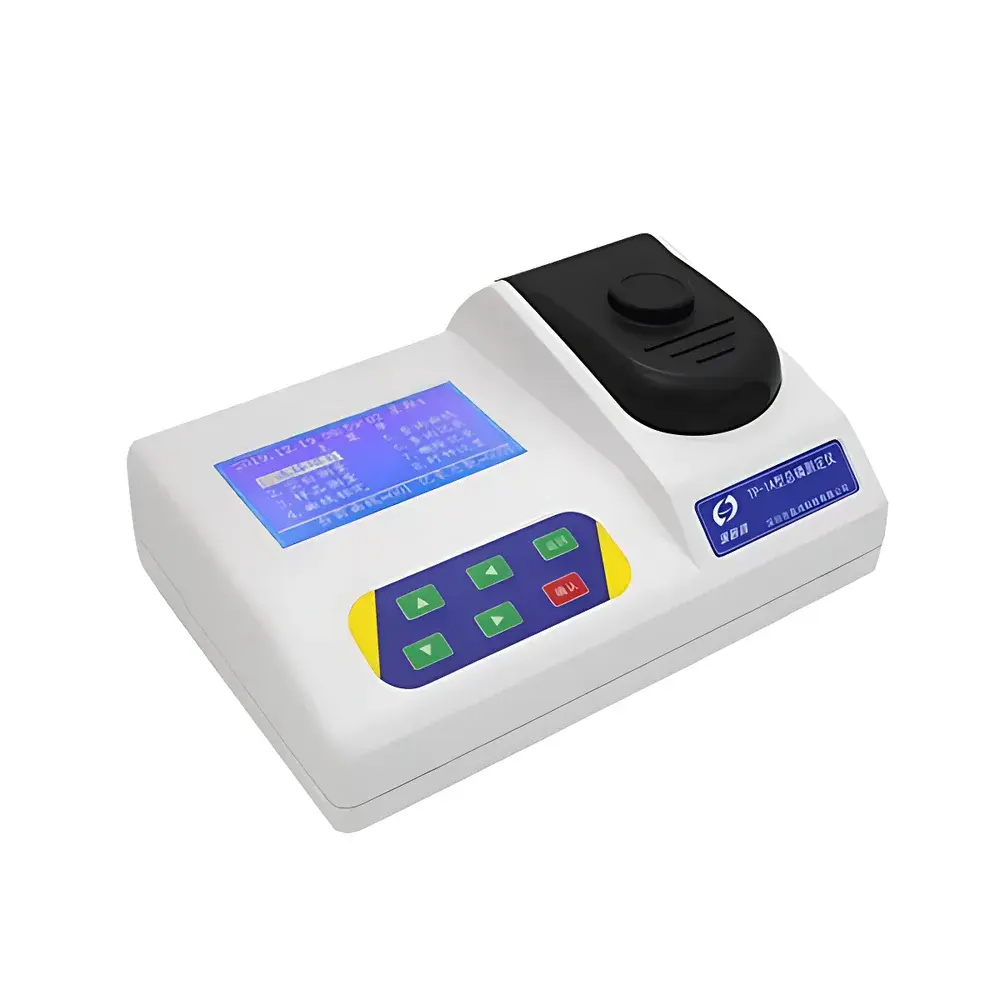
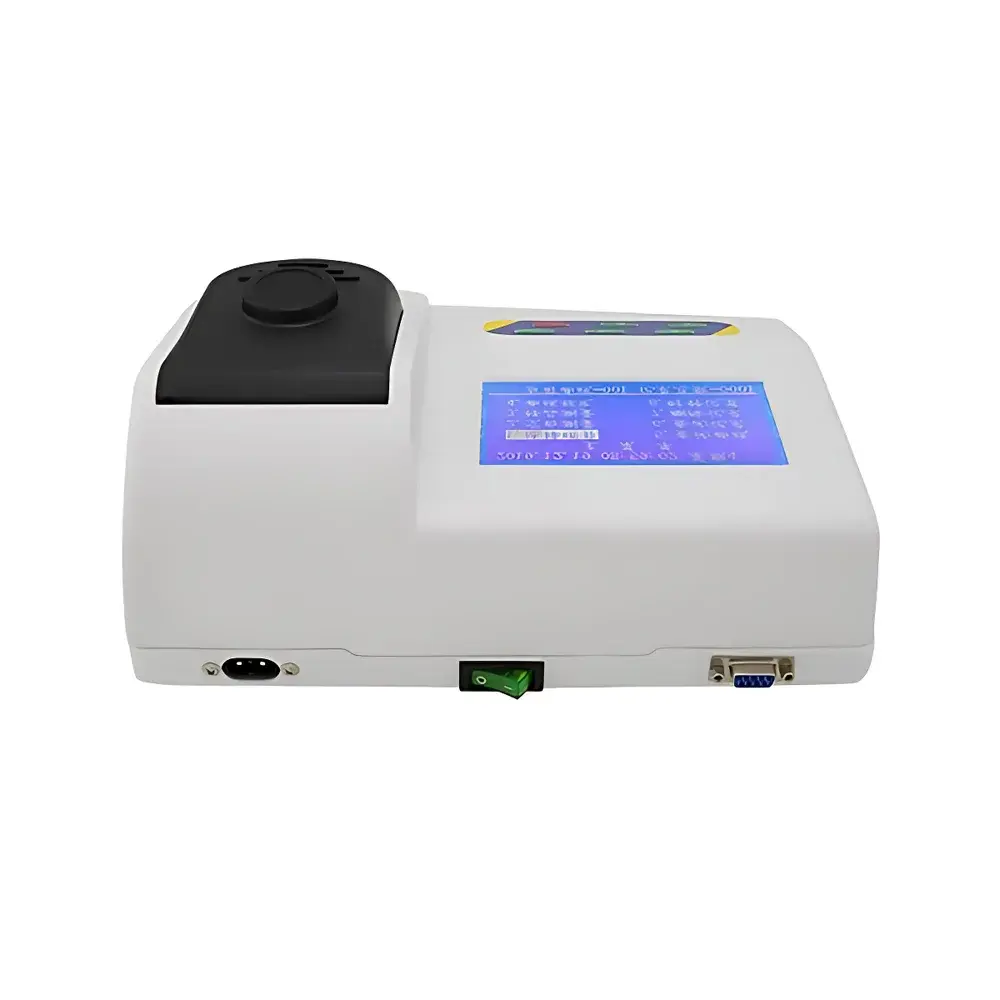
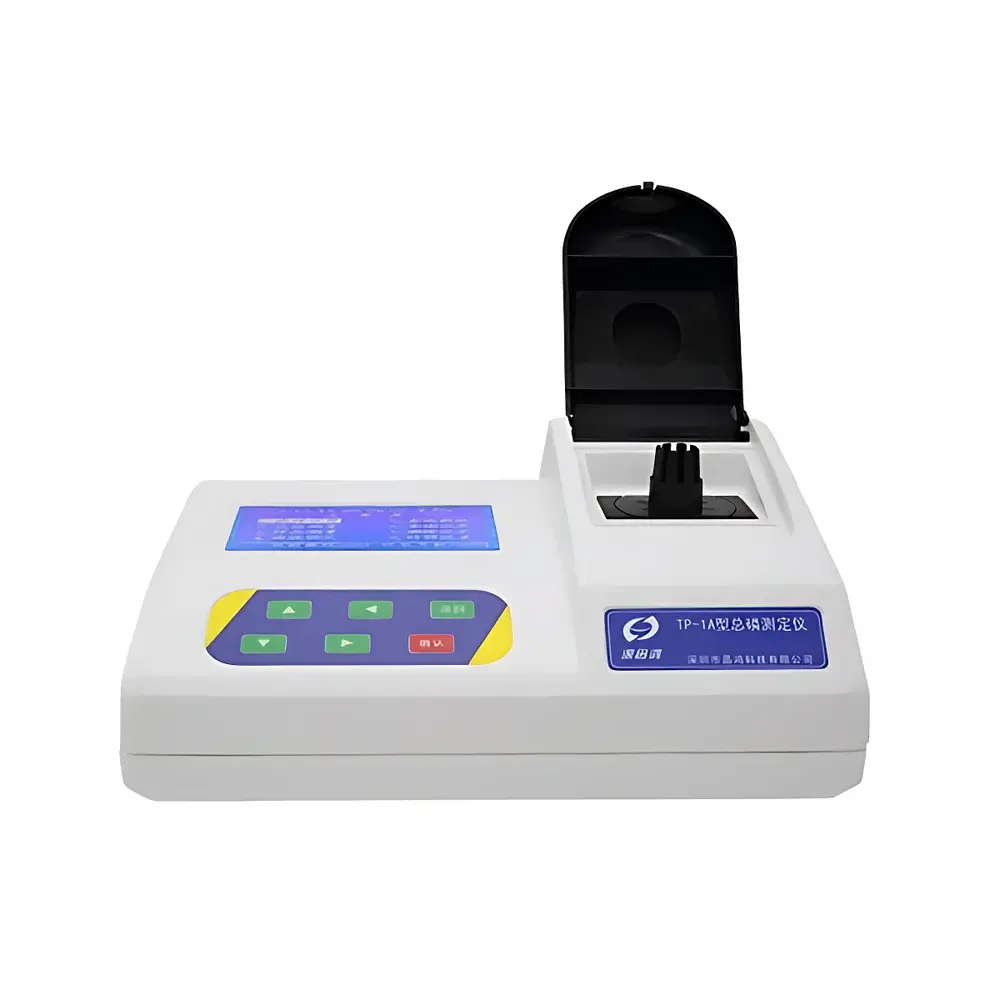
Shenchanghong TP-1A Total Phosphorus Analyzer
| Brand | Shenchanghong |
|---|---|
| Origin | Guangdong, China |
| Manufacturer Type | Manufacturer |
| Product Category | Domestic |
| Model | TP-1A |
| Price | ¥9,800 |
| Measured Parameter | Total Phosphorus |
| Instrument Type | Laboratory Benchtop Analyzer |
| Measurement Principle | Sealed High-Temperature Digestion Followed by Colorimetric Detection (Molybdenum Blue Method) |
| Measurement Range | 0.02–10 mg/L as P |
| Accuracy | ≤ ±5% of Full Scale or ±0.2 mg/L (whichever is greater) |
| Repeatability | ≤ 3% RSD |
| Detection Limit | 0.02 mg/L |
| Digestion Temperature | 120 °C ± 1.0 °C |
| Digestion Time | 30 min |
| Optical Stability | ≤ 0.002 A / 20 min |
| Resolution | 0.001 mg/L (display), 0.002 A (absorbance) |
| Batch Capacity | 16 samples (DIS-16B digester |
| Dimensions (Analyzer) | 266 × 200 × 130 mm |
| Dimensions (Digester) | 355 × 260 × 135 mm |
| Power Consumption | 400 W |
| Display | 3.5-inch color TFT touchscreen (320 × 240 pixels), bilingual Chinese/English UI |
| Housing Material | Molded ABS with corrosion-resistant finish |
| Microcontroller | 16-bit low-power MCU |
Overview
The Shenchanghong TP-1A Total Phosphorus Analyzer is a dedicated laboratory-grade instrument engineered for accurate, reproducible quantification of total phosphorus (TP) in aqueous environmental matrices. It implements the standardized molybdenum blue colorimetric method—per ASTM D515-89 and ISO 6878:2004—following complete oxidation of all phosphorus species via sealed high-temperature acid digestion at 120 °C for 30 minutes. This ensures full conversion of organic phosphorus, condensed phosphates, and orthophosphate into measurable orthophosphate prior to complexation with ammonium molybdate and ascorbic acid under controlled pH. The resulting phosphomolybdenum blue complex is quantified spectrophotometrically at 700 nm using a long-life imported LED light source and precision narrow-band optical filtering. Designed for routine compliance monitoring in municipal wastewater treatment plants, industrial effluent laboratories, and environmental testing facilities, the TP-1A delivers trace-level sensitivity (LOD: 0.02 mg/L P) and robust performance across the 0.02–10 mg/L working range.
Key Features
- Integrated dual-unit architecture: standalone spectrophotometric analyzer + temperature-controlled digestion block (DIS-16B), enabling complete sample preparation and measurement within one workflow.
- High-stability optical system featuring imported high-brightness LED source and thermally compensated narrow-band interference filters (FWHM < 10 nm), ensuring absorbance drift ≤ 0.002 A over 20 minutes—critical for multi-sample batch analysis.
- Bilingual 3.5-inch color TFT touchscreen (320 × 240 resolution) with intuitive icon-driven menu navigation, real-time digestion status feedback, and on-device calibration curve management.
- Corrosion-resistant molded ABS housing rated for continuous operation in humid laboratory environments; meets IP20 ingress protection standards.
- Dual-mode data handling: pre-loaded factory calibration curves (NIST-traceable standard solutions) plus user-definable multi-point calibration tables (up to 10 points) stored in non-volatile memory.
- 16-position digestion block with independent thermal uniformity control (±1.0 °C across all wells); optional upgrade paths to 20-, 25-, or 36-well configurations for higher throughput.
Sample Compatibility & Compliance
The TP-1A is validated for use with raw and treated surface water, domestic sewage, industrial process water, and landfill leachate—provided samples are free of suspended solids exceeding 50 mg/L (pre-filtration via 0.45 µm membrane recommended). Its methodology aligns with core regulatory frameworks including China’s HJ 670–2013 (Water Quality – Determination of Total Phosphorus – Molybdenum Blue Spectrophotometric Method), EPA Method 365.1, and ISO 6878. All internal calibration and measurement records support GLP-compliant audit trails when exported via USB; instrument firmware includes timestamped event logging (power-on, digestion start/end, calibration events, error codes). While not 21 CFR Part 11 certified out-of-the-box, its deterministic data flow and immutable result storage facilitate validation for GMP-aligned environmental QC labs.
Software & Data Management
Data acquisition and processing are handled by an embedded 16-bit microcontroller running real-time firmware with deterministic loop timing. Absorbance readings are automatically converted to concentration (mg/L P) using polynomial or linear regression models selected per calibration session. Up to 1,000 test results—including sample ID, date/time stamp, digestion parameters, raw absorbance, and final concentration—are retained onboard. Export is supported via USB 2.0 to CSV-formatted files compatible with LIMS integration or Excel-based QA/QC review. No proprietary software installation is required; exported datasets include metadata headers compliant with ISO/IEC 17025 documentation requirements.
Applications
- Regulatory compliance testing for TP discharge limits under local environmental permits (e.g., China’s GB 8978–1996, EU Urban Wastewater Treatment Directive).
- Process control in biological nutrient removal (BNR) systems, where sub-mg/L phosphorus monitoring informs chemical dosing and sludge retention time adjustments.
- Research applications in limnology and eutrophication studies requiring longitudinal TP profiling in lakes, rivers, and reservoirs.
- Industrial pretreatment verification for food processing, pharmaceutical manufacturing, and metal finishing facilities subject to phosphorus discharge caps.
- Educational laboratories performing standardized APHA 4500-P E method exercises with hands-on digestion and spectrophotometry training.
FAQ
What digestion reagents are required for the TP-1A?
Potassium persulfate (K₂S₂O₈) and sulfuric acid (H₂SO₄) are used in the sealed digestion step; reagent-grade chemicals meeting ISO 648 specifications are recommended.
Can the TP-1A measure orthophosphate separately?
No—the TP-1A is configured exclusively for total phosphorus. Orthophosphate determination requires direct analysis without digestion; a separate ortho-phosphate module or manual protocol is necessary.
Is external calibration verification possible?
Yes—users may validate instrument performance using NIST SRM 2786 (Phosphate in Water) or certified reference materials from LGC, AccuStandard, or Inorganic Ventures.
What maintenance intervals are recommended?
Optical path cleaning every 100 measurements; annual verification of digestion block temperature uniformity using calibrated PT100 probes; LED source lifetime exceeds 100,000 hours under normal use.
Does the instrument support remote data transfer?
Not natively—data export is USB-host only. Integration with networked LIMS requires intermediate PC-based middleware or manual file upload protocols.







