
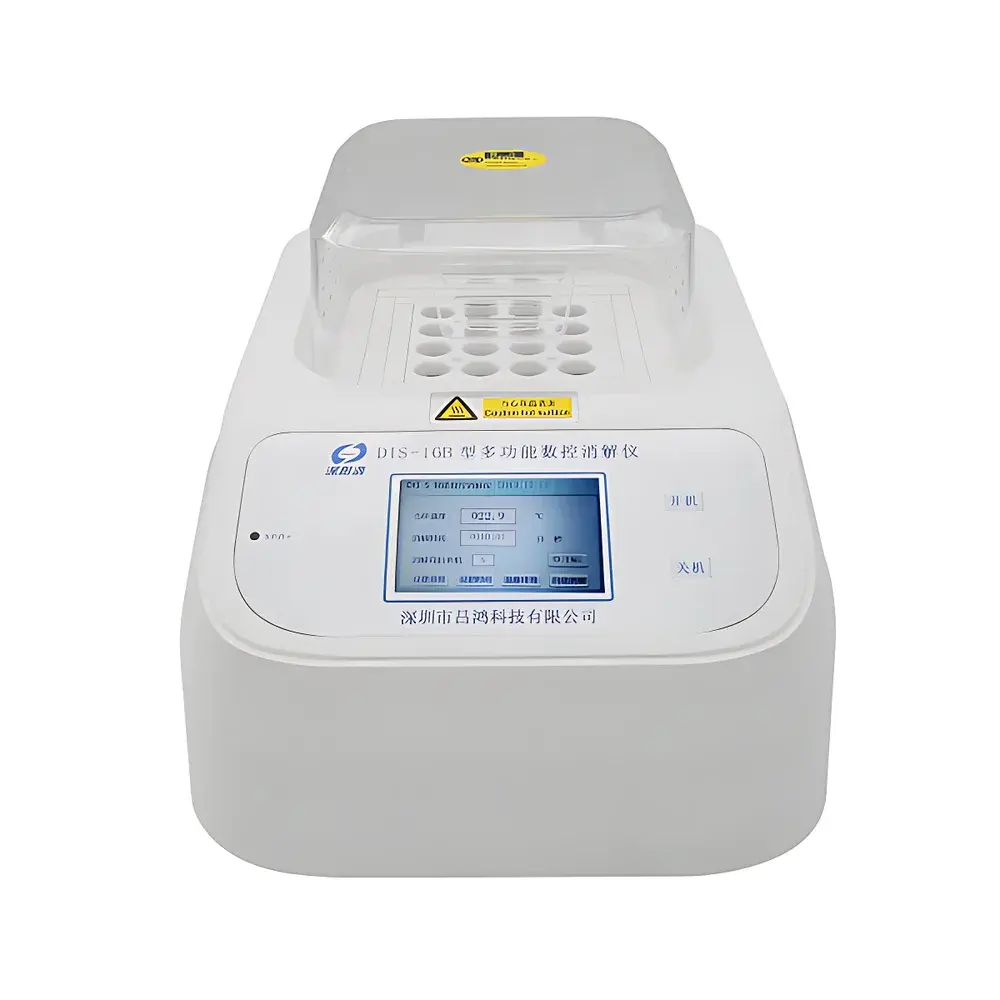
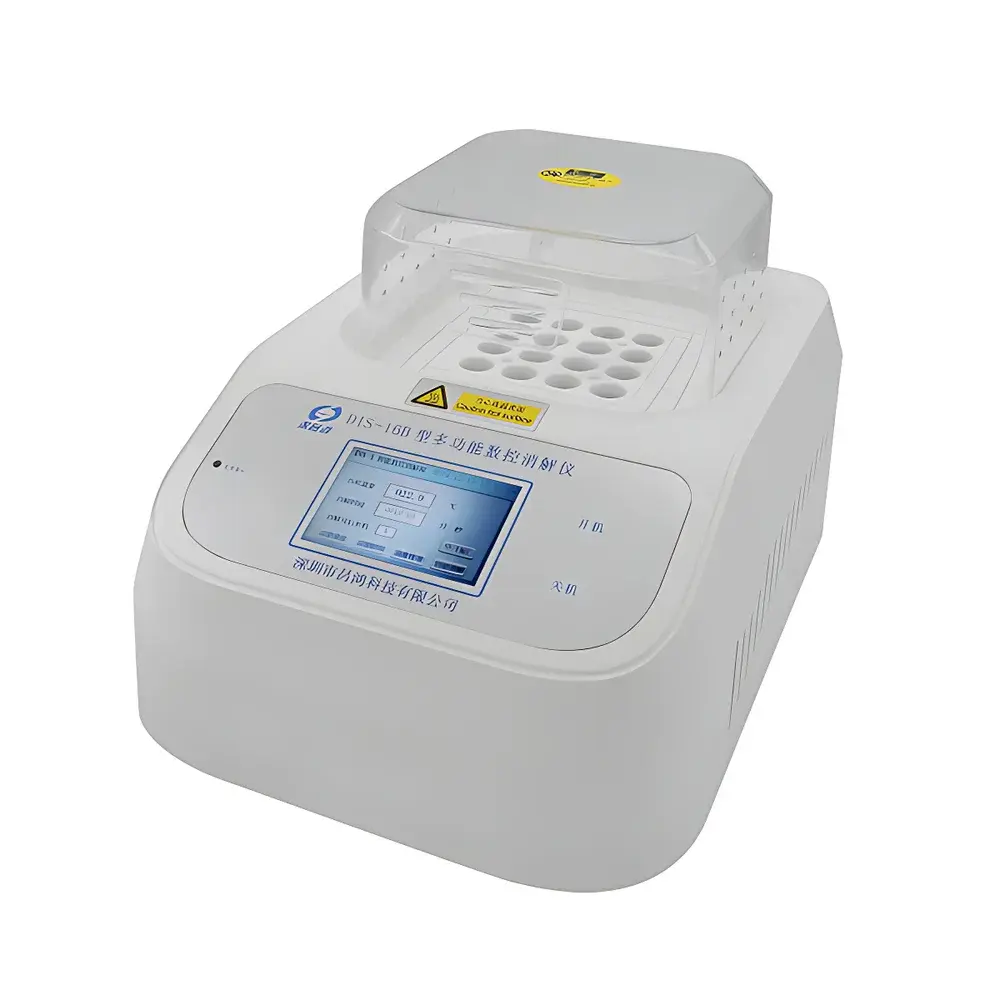
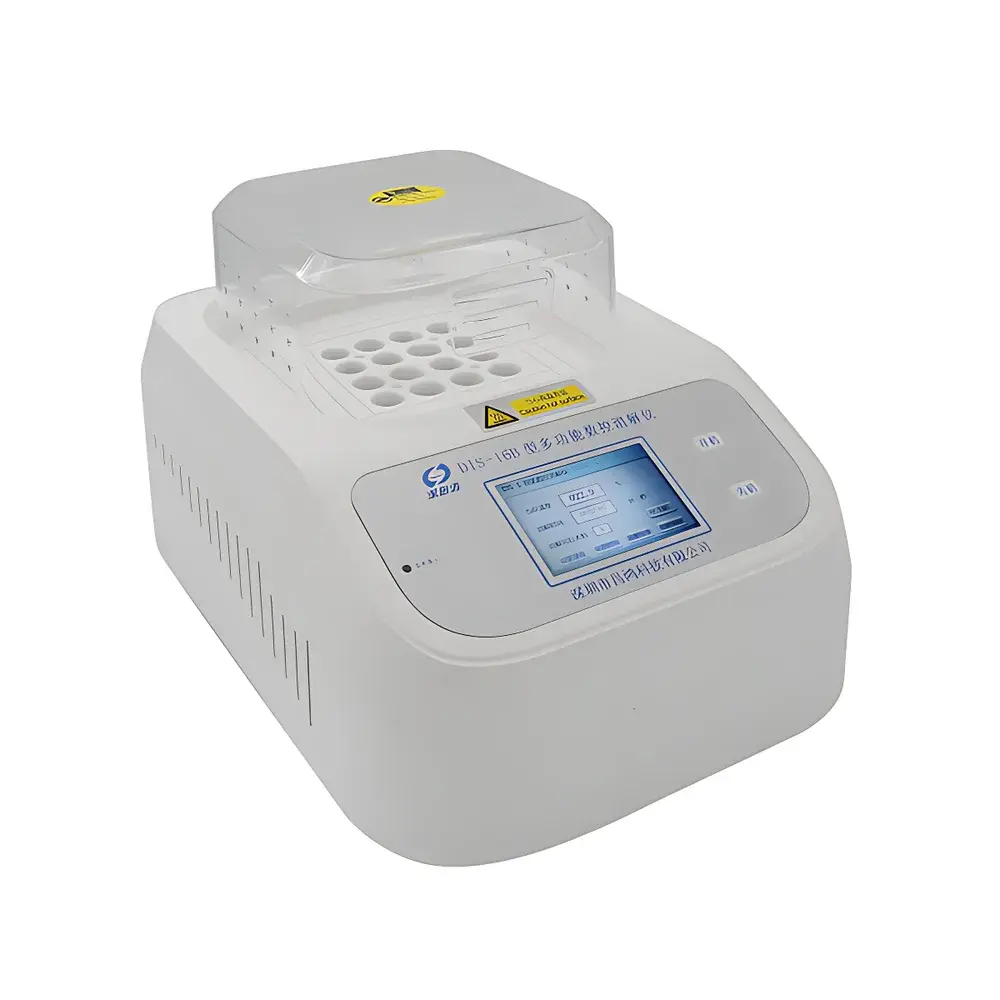
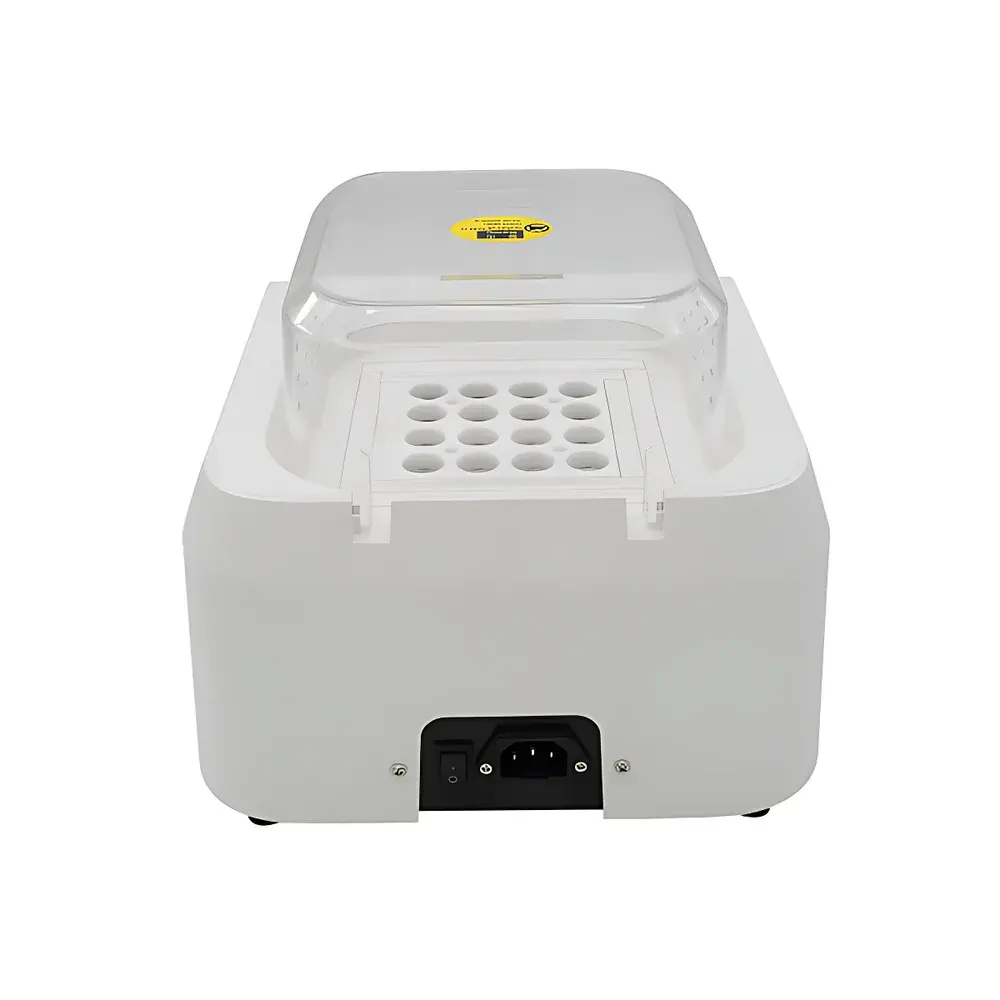
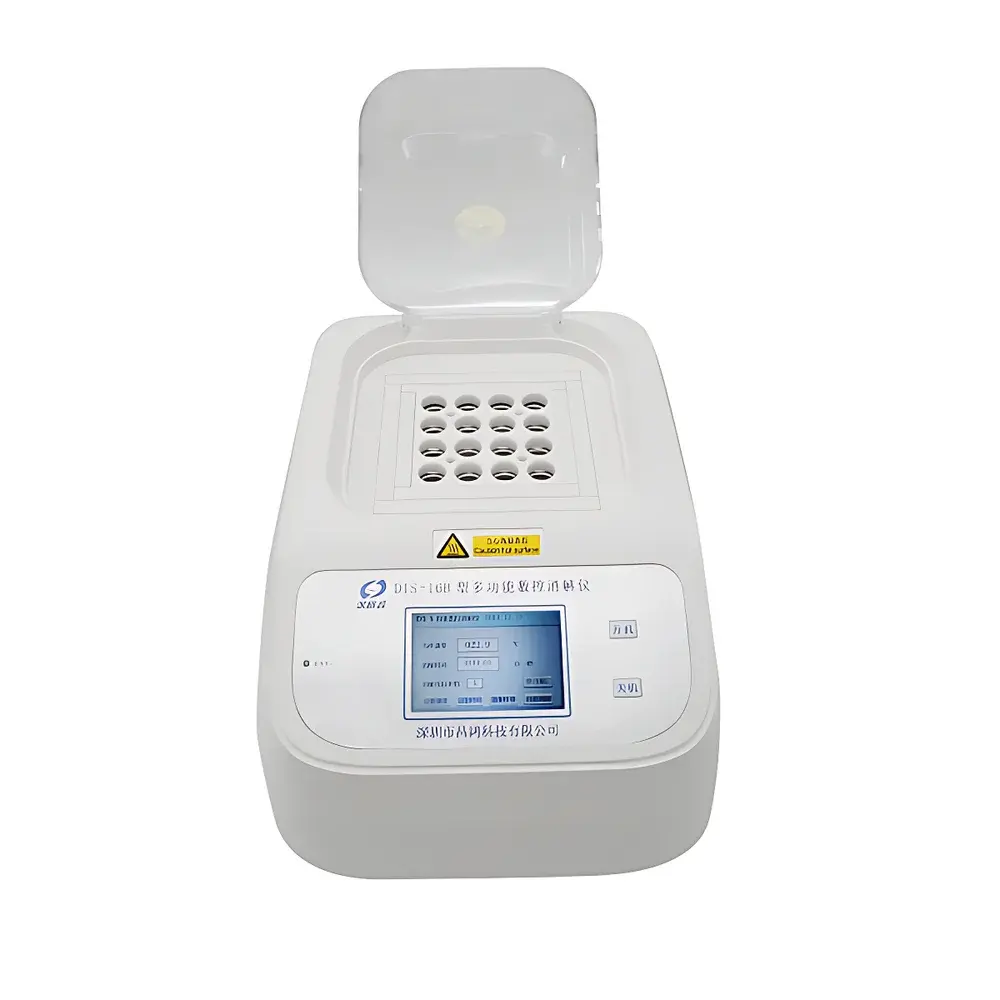
Shenchanghong DIS-16B Benchtop Multi-Parameter Digital Digestion System
| Brand | Shenchanghong |
|---|---|
| Origin | Guangdong, China |
| Manufacturer Type | Direct Manufacturer |
| Product Origin | Domestic (China) |
| Model | DIS-16B |
| Digestion Method | Rapid Digestion |
| Heating Module | Integrated Aluminum Block with Precision PID Control |
| Batch Capacity | 16 × Ø16 mm digestion tubes |
| Temperature Range | Ambient to 200 °C |
| Temperature Accuracy | ±0.5 °C |
| Digestion Volume per Tube | 10–15 mL |
| Timer Resolution | 0.1 s |
| Power Supply | AC 220 V ±10%, 50 Hz, 500 W |
| Dimensions (L×W×H) | 355 × 260 × 135 mm (excl. safety shield) |
| Net Weight | 5.5 kg |
| Enclosure Material | Corrosion-Resistant Coated Metal |
| Display | 3.5″ TFT color touchscreen, 320 × 240 resolution, bilingual (English/Chinese) UI |
Overview
The Shenchanghong DIS-16B Benchtop Multi-Parameter Digital Digestion System is a precision-engineered thermal digestion platform designed for standardized wet-chemical oxidation of water and wastewater samples prior to spectrophotometric or instrumental analysis of chemical oxygen demand (COD), total phosphorus (TP), total nitrogen (TN), and total chromium (Cr). It operates on the principle of controlled conductive heating via a high-uniformity aluminum heating block, enabling reproducible thermal decomposition of organic and inorganic analytes under defined temperature–time profiles per ASTM D1252 (COD), ISO 6878 (TP), ISO 11908 (TN), and EPA Method 200.7 (Cr). The system supports method-compliant digestion protocols across environmental monitoring laboratories, municipal wastewater treatment plants, and industrial effluent QA/QC facilities—where regulatory adherence, inter-laboratory comparability, and traceable thermal control are mandatory.
Key Features
- High-speed thermal ramping: Reaches target temperature (up to 200 °C) within ≤15 minutes, minimizing turnaround time without compromising thermal stability.
- Precision temperature regulation: PID-controlled heating block maintains ±0.5 °C accuracy across the full 0–200 °C range; multi-point calibration eliminates nonlinearity-induced drift inherent in generic thermistor-based systems.
- Safety-critical dual protection: Automatic power cutoff activates if internal block temperature exceeds 200 °C—a hardware-level fail-safe independent of software logic.
- Energy-efficient thermal architecture: Optimized insulation and low-thermal-mass block design reduce standby power consumption by up to 30% versus conventional ceramic-heater digesters.
- Intuitive human–machine interface: 3.5″ color touchscreen with 320 × 240 resolution provides real-time temperature/time profiling, bilingual (English/Chinese) navigation, and password-protected parameter locking for GLP compliance.
- Durability-focused consumables: Standard Ø16 mm digestion tubes are made from borosilicate glass meeting DIN ISO 3585 specifications—resistant to thermal shock (−20 °C to +200 °C cycling) and acid corrosion (including H₂SO₄/H₃PO₄ mixtures at boiling point).
Sample Compatibility & Compliance
The DIS-16B accommodates 16 parallel Ø16 mm reaction tubes (10–15 mL capacity), compatible with standard EPA, ISO, and Chinese HJ methods requiring closed-vessel digestion. Its thermal uniformity profile (±1.2 °C across all 16 positions, verified per ASTM E220) ensures inter-sample equivalence critical for regulatory reporting. The system meets mechanical and electrical safety requirements per IEC 61010-1:2010 (Laboratory Equipment Safety) and supports audit-ready operation when integrated into GLP/GMP workflows—timer logs, temperature setpoints, and run completion timestamps are stored internally with non-volatile memory retention (>10,000 cycles). Optional RS232/USB data export enables traceable integration with LIMS platforms compliant with FDA 21 CFR Part 11 (electronic records/signatures).
Software & Data Management
No external PC software is required for basic operation; all parameters—including temperature setpoint (0.1 °C increments), digestion duration (1–9999 min, 0.1 s resolution), auto-shutdown delay, and alarm thresholds—are configured directly via the embedded touchscreen UI. Internal memory stores ≥500 complete digestion event records, each timestamped with start/end times, actual block temperature history (sampled every 5 s), and operator ID (if enabled). Data export is supported via USB flash drive in CSV format for post-run validation, trend analysis, or regulatory submission. Firmware updates are performed offline via FAT32-formatted USB media, ensuring air-gapped security in classified or validated lab environments.
Applications
- Routine COD determination in surface water, domestic sewage, and industrial effluents per ISO 6060 and HJ 828–2017.
- Total phosphorus quantification via persulfate digestion (ISO 6878) in lake sediments and wastewater influent/effluent streams.
- Total nitrogen analysis using alkaline potassium persulfate oxidation (ISO 11908) for nutrient load assessment.
- Hexavalent and total chromium speciation preparation (EPA 200.7, HJ 636–2012) requiring precise 100–120 °C reflux conditions.
- Method development and validation studies where thermal reproducibility, ramp rate control, and positional uniformity are performance-critical variables.
FAQ
What is the maximum allowable sample volume per tube?
Each Ø16 mm digestion tube supports 10–15 mL of liquid sample plus reagent mixture—consistent with standard HJ and ISO digestion vial specifications.
Does the DIS-16B support programmable multi-step temperature ramps?
No. It executes single-setpoint isothermal digestion only. For gradient protocols (e.g., stepwise ramp-hold-cool), external controller integration is not supported.
Is calibration certificate included with shipment?
A factory calibration report (traceable to NIM China) is supplied; full ISO/IEC 17025 calibration with uncertainty budget requires optional third-party service.
Can the instrument be used for mercury digestion per EPA 1631?
Not recommended. The DIS-16B lacks sealed reflux condensation and cold-finger trapping; it is optimized for open-tube or loosely capped digestion per COD/TP/TN standards.
What maintenance is required for long-term accuracy?
Annual verification of temperature sensor linearity and block uniformity using NIST-traceable dry-block calibrators is advised; no user-serviceable parts require replacement under normal use.







