
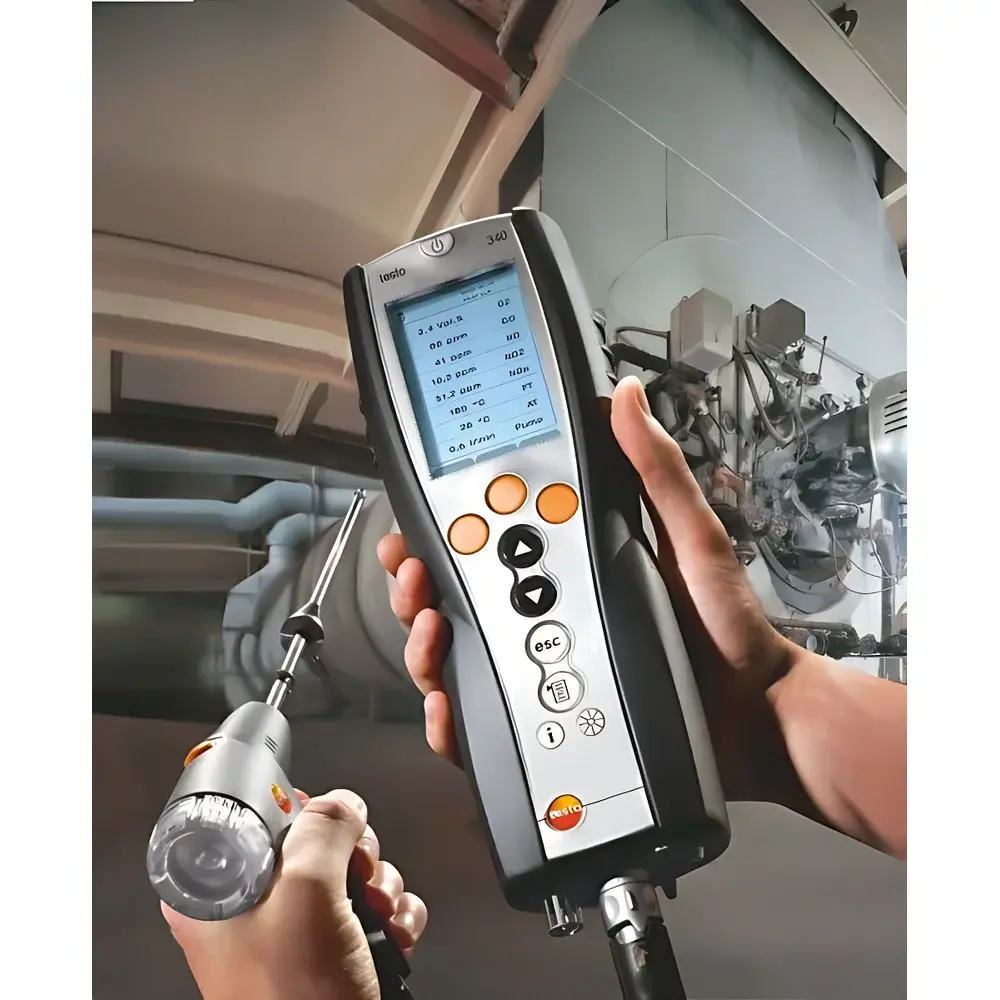
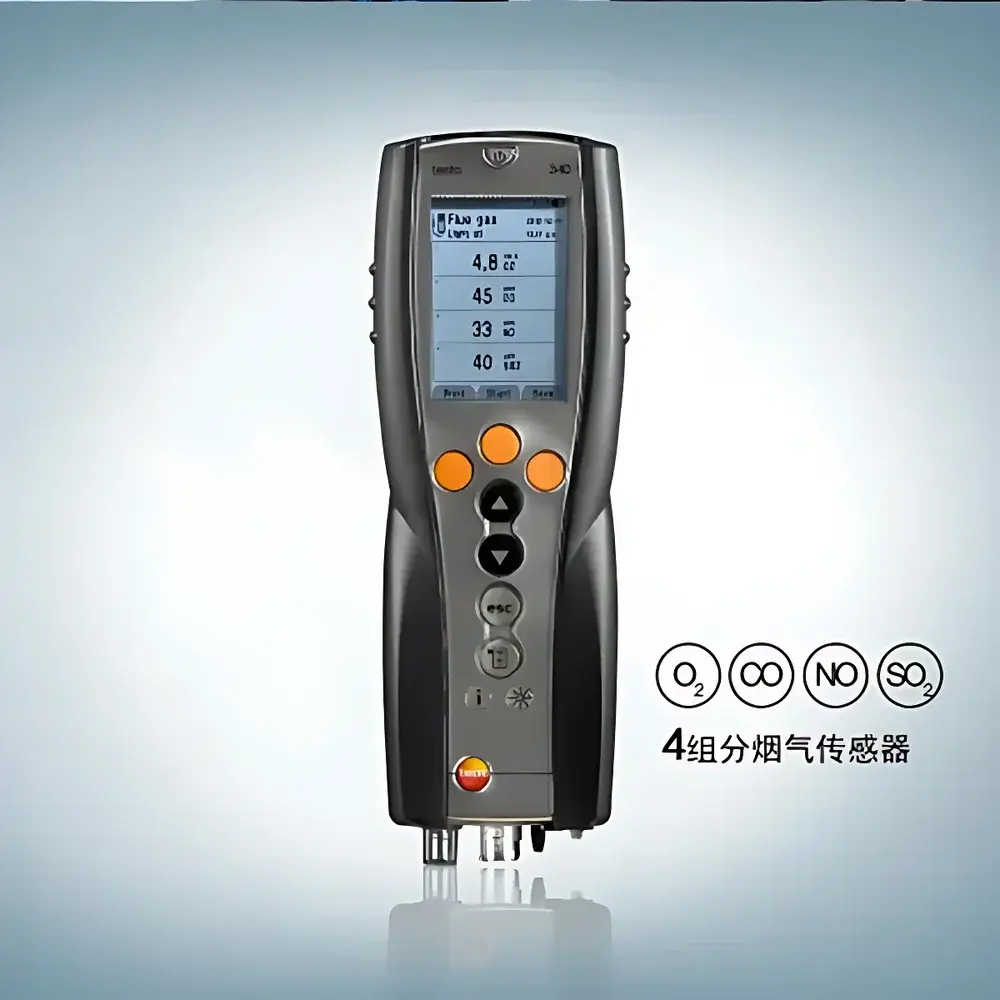
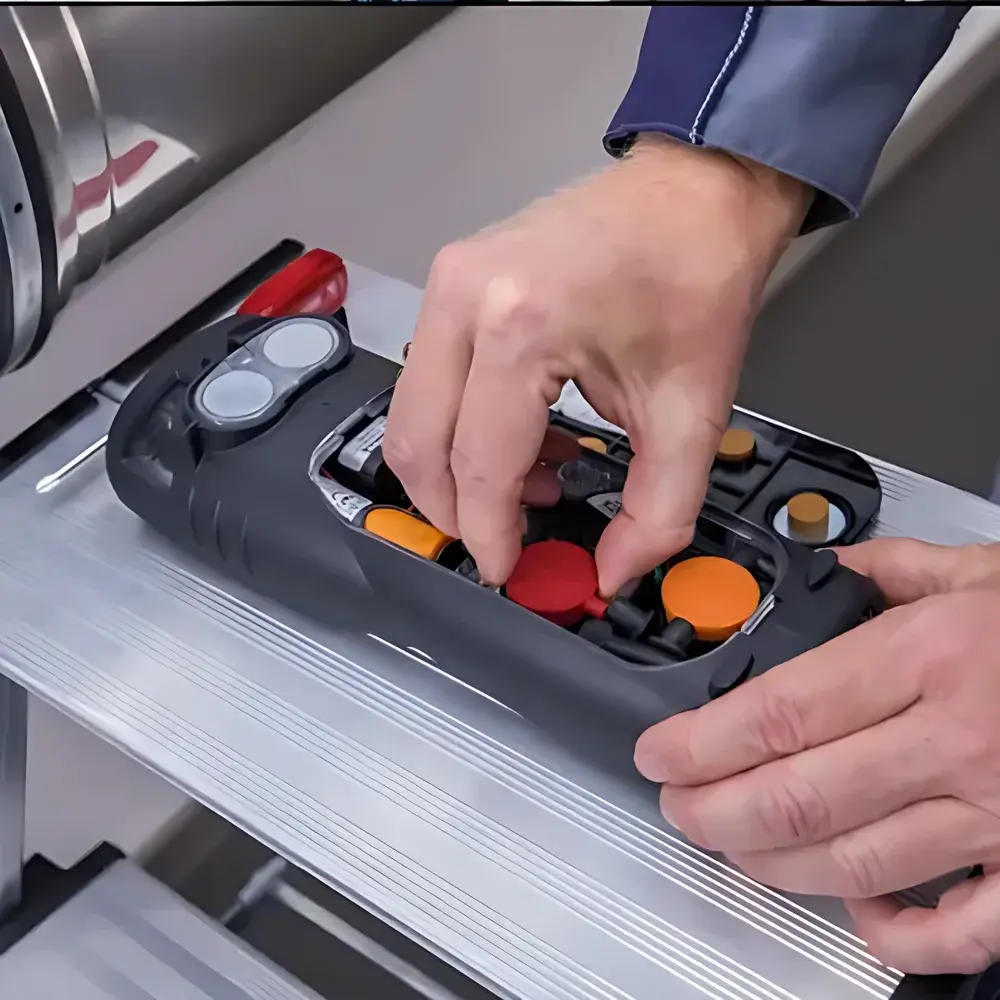
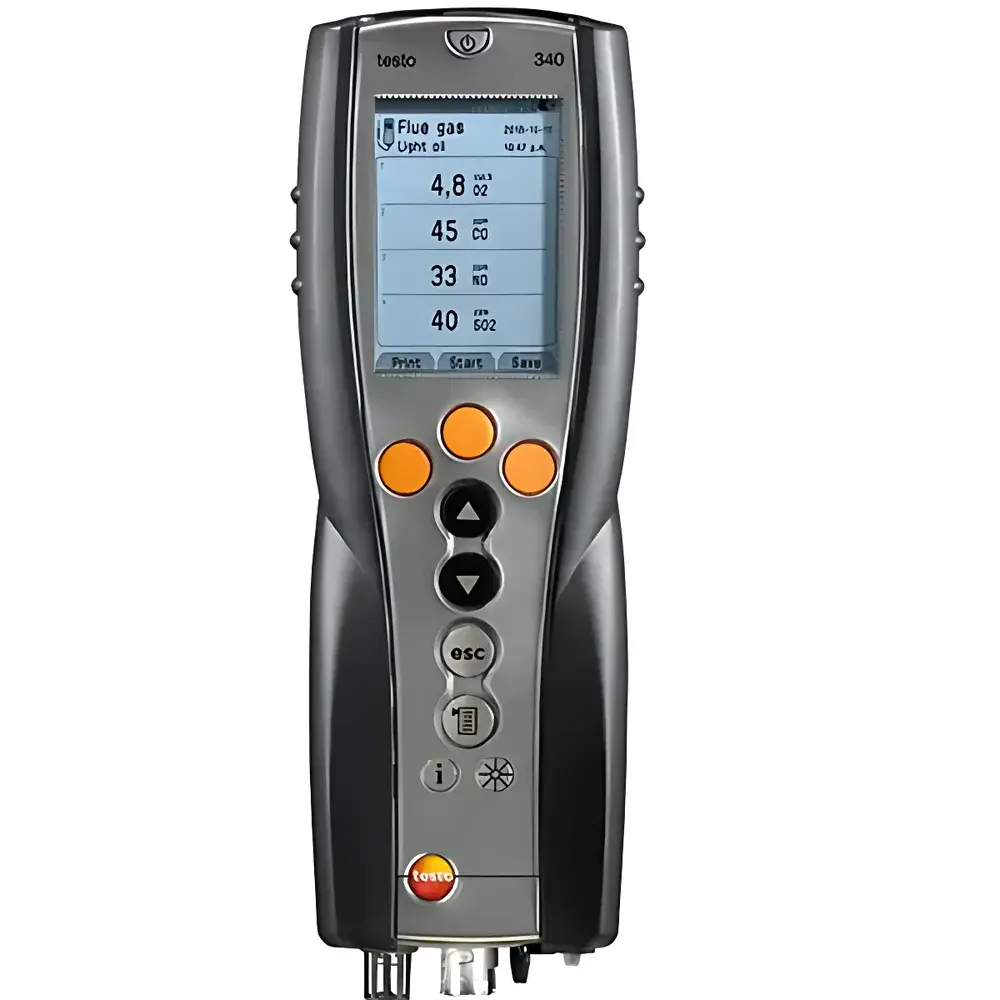
Testo 340 Portable Flue Gas Analyzer
| Brand | Testo |
|---|---|
| Origin | Germany |
| Model | testo 340 |
| Instrument Type | Portable Flue Gas Analyzer |
| Measurement Accuracy | ±5% (gas readings) |
| Repeatability | ≤2% |
| Response Time | <20 s (O₂), <30–40 s (CO, NO, NO₂, SO₂, COlow, NOlow) |
| Stability | ≤5% over 2 h |
| Measurable Gases | CO, COlow, NO, NOlow, NO₂, SO₂, O₂, differential pressure, absolute pressure, flue gas temperature, combustion efficiency, flue gas loss, dew point, CO₂ (calculated) |
| Differential Pressure Range | −200 to +200 hPa |
| O₂ Range | 0–25 vol.% |
| CO Range | 0–10,000 ppm |
| COlow Range | 0–500 ppm |
| NO Range | 0–4,000 ppm |
| NOlow Range | 0–300 ppm |
| NO₂ Range | 0–500 ppm |
| SO₂ Range | 0–5,000 ppm |
| Temperature Range | −40 to +1200 °C |
| Operating Temperature | −5 to +50 °C |
| Battery Life | >6 h (pump on, backlight off, 20 °C) |
| Weight | 960 g |
| Dimensions | 283 × 103 × 65 mm |
| Enclosure | TPE/PC, IP40 |
| Display | Graphic LCD, 160 × 240 pixels |
| Power | Rechargeable Li-ion battery (3.7 V / 2.4 Ah) + external adapter (6.3 V / 2 A) |
Overview
The Testo 340 Portable Flue Gas Analyzer is an engineered field instrument designed for precise, real-time measurement and evaluation of combustion exhaust gases in industrial boilers, heating systems, cogeneration units, and municipal incineration facilities. Built upon electrochemical sensor technology with integrated paramagnetic (O₂) and infrared (optional upgrade path) detection principles, the device delivers trace-level quantification of key regulatory pollutants—CO, NO, NO₂, SO₂—and critical combustion parameters including O₂ concentration, flue gas temperature, differential pressure, and calculated CO₂. Its modular architecture supports simultaneous multi-gas analysis while maintaining compliance with international emission monitoring requirements under EN 15267-3, EN 14181, and ISO 12039. The analyzer operates on a robust physical sampling principle: heated probe aspiration ensures condensate-free gas transport; internal Peltier-cooled condensate separator minimizes water vapor interference; and automatic zero-point compensation corrects for sensor drift during extended field operation.
Key Features
- Simultaneous six-parameter measurement: O₂, CO, COlow, NO, NOlow, NO₂, SO₂ (configurable sensor combinations)
- Integrated differential pressure sensor (−200 to +200 hPa) with ±0.5 hPa accuracy in mid-range, enabling draft and fan performance assessment
- High-resolution flue gas temperature measurement (−40 to +1200 °C) with thermocouple input and ±0.5 °C accuracy in 0–99 °C range
- Automatic calculation of combustion efficiency, flue gas loss, dew point, and CO₂ (via O₂-based stoichiometric algorithm)
- Graphical LCD display (160 × 240 pixels) with intuitive menu navigation, real-time trend plotting, and configurable data logging intervals
- IP40-rated rugged housing (TPE/PC composite), ergonomic form factor (960 g), and battery endurance exceeding 6 hours under typical operational load
- Internal data storage for up to 250,000 measurement values; USB interface for export to testo IRSoft or third-party CSV-compatible platforms
Sample Compatibility & Compliance
The Testo 340 is validated for use with standard stainless-steel flue gas probes (e.g., testo 310, 320, 330 series) and K-type thermocouples meeting IEC 60584-1 specifications. It accommodates stack gas matrices containing particulate concentrations below 5 g/m³ and moisture content up to 15 vol.% without requiring external dilution or filtration—provided sampling duration remains within the 2-hour limit for NO₂ and SO₂ to prevent adsorption-related bias. The instrument conforms to European Union Measuring Instruments Directive (MID) Annex MI-005 for portable emission analyzers and satisfies pre-certification criteria for periodic inspection under national air quality ordinances aligned with EU Directive 2010/75/EU (IED). All firmware versions support audit-ready data integrity features, including time-stamped records, user ID tagging, and tamper-evident file structure—essential for GLP-compliant reporting and regulatory submissions.
Software & Data Management
Data acquisition and post-processing are managed via testo IRSoft PC software (Windows-compatible), which provides automated report generation per EN 12952-15 and EN 12953-10 templates. Raw measurement files (.tdf) include embedded metadata: sensor calibration dates, probe serial numbers, ambient conditions, and operator credentials. The software enforces 21 CFR Part 11–compatible electronic signature workflows when configured with password-protected user roles and session logging. Export options include PDF (with company header, logo, and digital signature), Excel (.xlsx), and ASCII (.csv) formats compatible with LIMS integration. Firmware updates are delivered through signed binary packages verified via SHA-256 checksum, ensuring traceability and cybersecurity compliance per IEC 62443-3-3.
Applications
- Periodic emission verification for stationary combustion sources under national environmental permit conditions
- Tuning and optimization of burner air-fuel ratios in oil-, gas-, and biomass-fired heating plants
- Commissioning and troubleshooting of heat recovery steam generators (HRSGs) and waste-to-energy (WtE) boiler systems
- Field validation of continuous emission monitoring systems (CEMS) per EN 14181 QAL2 and ASTME2659 protocols
- Academic and vocational training in combustion engineering, air pollution control, and energy efficiency auditing
- Pre-compliance screening for ISO 50001 energy management system certification audits
FAQ
What is the maximum recommended sampling duration for NO₂ and SO₂ measurements?
To minimize adsorption-related signal attenuation on electrochemical sensor surfaces, continuous NO₂ and SO₂ measurement should not exceed two hours per probe insertion cycle.
Does the Testo 340 support direct CO₂ measurement via NDIR?
No—the device calculates CO₂ concentration stoichiometrically from measured O₂ and fuel-specific combustion equations; optional NDIR modules (e.g., testo 350 series) are required for direct infrared CO₂ detection.
Can the instrument operate in environments exceeding 50 °C ambient temperature?
Operation above +50 °C ambient is not supported; prolonged exposure may compromise sensor stability and battery performance—external cooling or shaded deployment is advised.
Is calibration traceable to national standards?
Yes—factory calibration certificates reference PTB (Physikalisch-Technische Bundesanstalt) traceable gas standards, and field recalibration kits include certified span gases with uncertainty budgets compliant with ISO 6141.
How is data integrity ensured during wireless transfer?
The Testo 340 does not feature built-in Wi-Fi or Bluetooth; all data exchange occurs via encrypted USB mass storage mode or optically isolated RS232—eliminating RF interference risks in electrically noisy plant environments.
Related Products







