
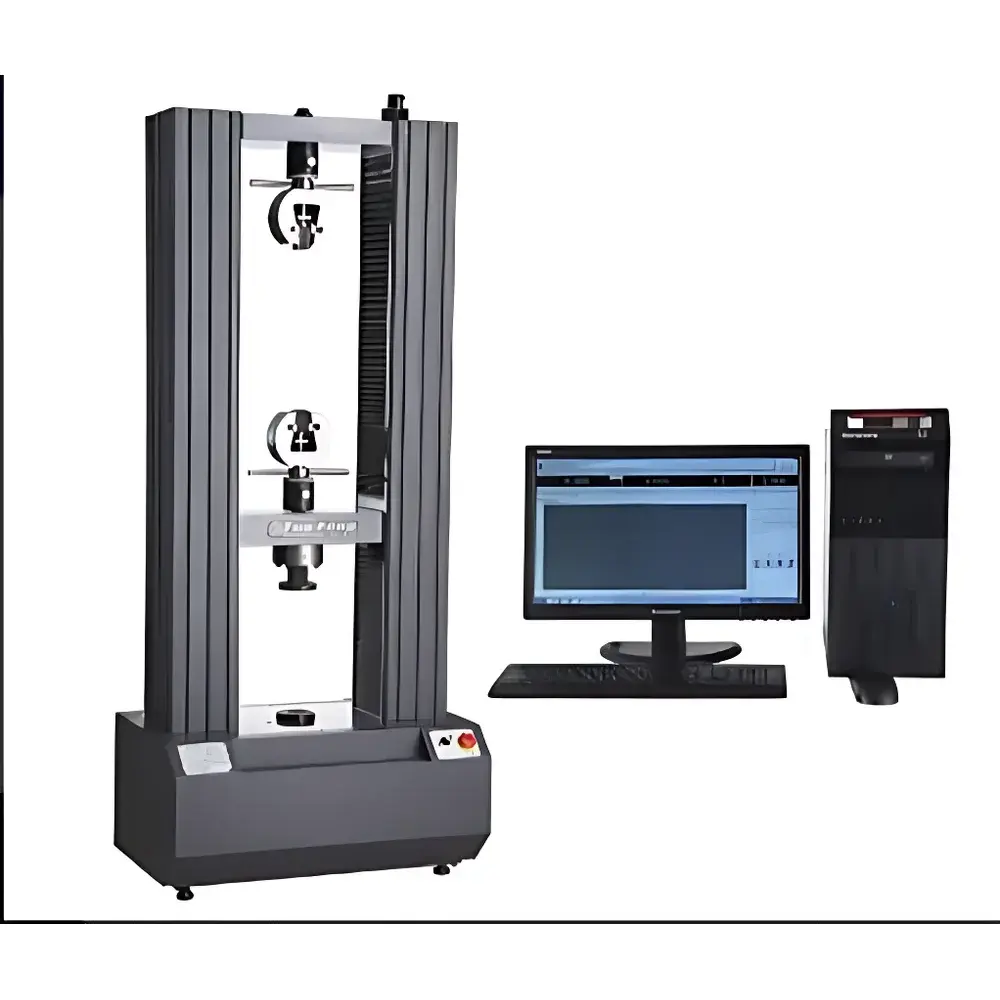
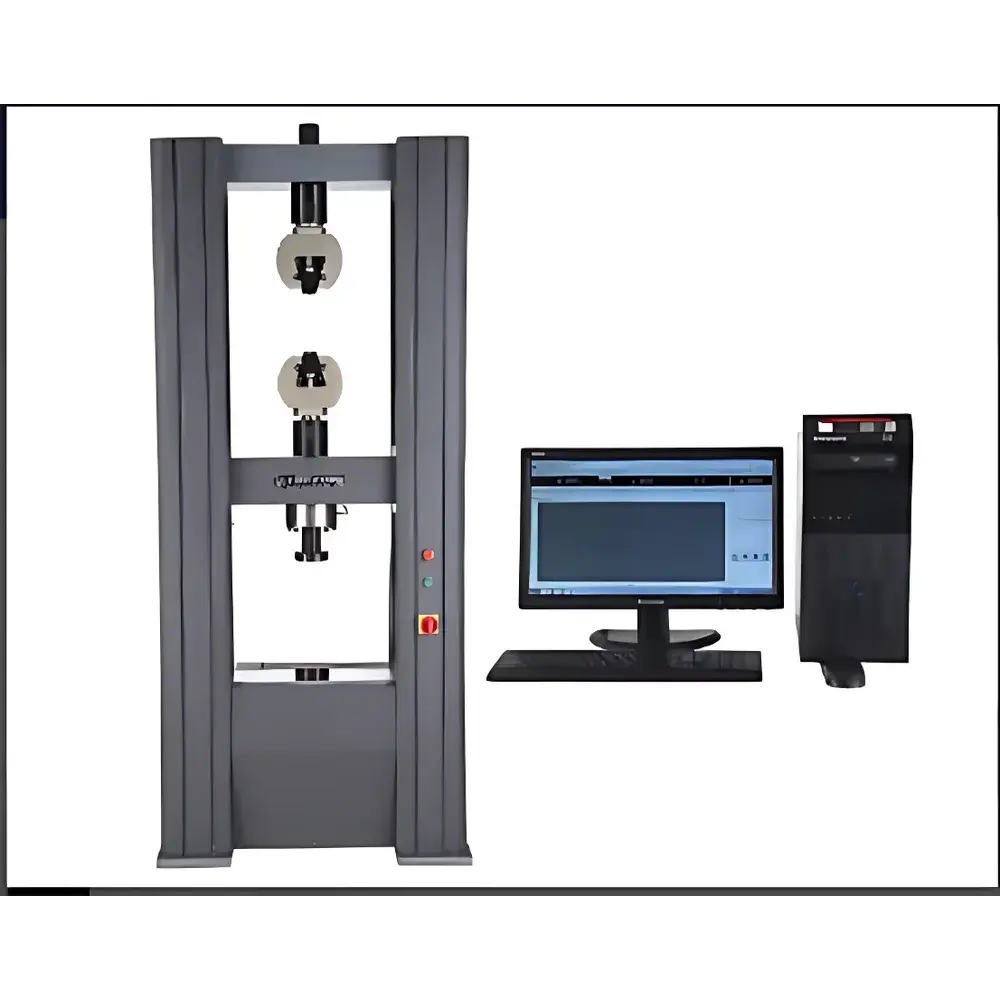
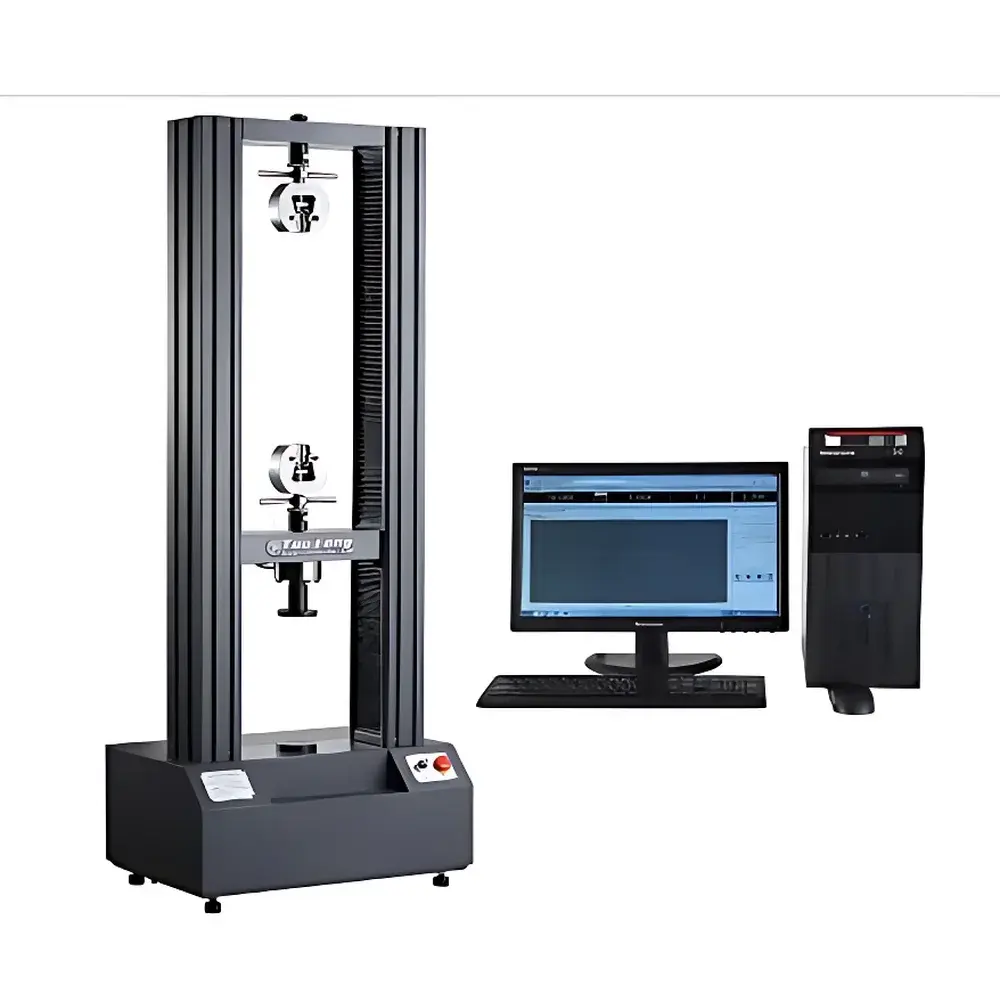
Tuofeng TFW-97 Dual-Column Microcomputer-Controlled Universal Testing Machine
| Brand | Tuofeng |
|---|---|
| Origin | Shanghai, China |
| Manufacturer Type | Direct Manufacturer |
| Instrument Type | Electromechanical Universal Testing Machine |
| Model | TFW-97 |
| Force Capacity | 10 kN (configurable up to 200 kN) |
| Accuracy Class | ISO 7500-1 / ASTM E4 Class 0.5 |
| Standards Compliance | GB/T 16491–2008, JJG 475–2008, ASTM E4, ISO 7500-1, DIN 51221, JIS B 7721 |
Overview
The Tuofeng TFW-97 is a dual-column, microcomputer-controlled electromechanical universal testing machine engineered for high-precision mechanical property evaluation of metallic, polymeric, elastomeric, composite, and ceramic materials. Based on servo-motor-driven load application and high-resolution force/displacement feedback architecture, it implements quasi-static uniaxial loading in tension, compression, bending, shear, tear, peel, and puncture configurations. Its modular design supports standardized test protocols across R&D laboratories, QC departments, and third-party certification bodies—delivering repeatable, traceable, and audit-ready results under GLP/GMP and ISO/IEC 17025 operational frameworks.
Key Features
- Dual-column rigid frame with precision-ground ball-screw actuation system and imported servo motor + planetary gear reducer for smooth, low-noise motion control
- Force measurement accuracy conforming to ISO 7500-1 Class 0.5 (±0.5% of reading over 0.2–100% FS), with internal resolution of 1 part in 500,000 full-scale codes
- Displacement measurement via optical encoder with ±0.005% FS accuracy; optional extensometer or large-deformation clip-on sensor for strain quantification
- Programmable crosshead speed range: 0.001–500 mm/min (infinitely variable, closed-loop controlled)
- Integrated safety architecture including electronic limit switches, emergency stop button, overload protection (110% FS cutoff), and programmable return-to-start function
- Quick/slow dual-speed motorized crosshead positioning with jog mode for precise specimen alignment
- Modular fixture interface compatible with ASTM, ISO, and GB-standard grips—including pneumatic, wedge, hydraulic, and custom-designed tooling for rubber, elastomer, and textile specimens
Sample Compatibility & Compliance
The TFW-97 accommodates standard and non-standard specimens per ISO 527, ASTM D412 (rubber tensile), ASTM D638 (plastics), ASTM D790 (flexural), ASTM D1876 (peel), ASTM D624 (tear), ISO 37 (vulcanized rubber), and GB/T 528–2009 (rubber vulcanizates). It supports thicknesses from 0.1 mm to 50 mm and widths up to 600 mm (customizable). All mechanical and software functions comply with national and international metrological standards: GB/T 16491–2008 (design specification), JJG 475–2008 (verification regulation), ASTM E4 (force verification), and ISO 7500-1 (static calibration). Data integrity meets FDA 21 CFR Part 11 requirements when operated with audit-trail-enabled software configuration.
Software & Data Management
The Windows-based TFW TestSuite software provides multi-language UI (English, Simplified/Traditional Chinese), unit conversion (N/kN/lbf, mm/in, MPa/psi), and real-time plotting of load–time, load–displacement, stress–strain, and displacement–time curves. It supports user-defined test methods with preset control modes: constant rate of extension (CRE), constant load ramping, hold-to-strain, and cyclic loading profiles. Automatic calculation of tensile strength, yield strength (0.2% offset), elongation at break, modulus (secant/tangent), compressive strength, flexural modulus, tear strength, peel adhesion, and puncture resistance is performed upon test completion. Results are exportable to CSV, PDF, and XML formats; batch reporting includes statistical summaries (max/min/mean/stdev) and overlaid curve comparison. All data entries, parameter changes, and test executions are timestamped and logged for full traceability—enabling compliance with ISO/IEC 17025 Clause 7.7 and GLP Annex 11.
Applications
The TFW-97 serves as a core mechanical characterization platform in rubber product development (tires, seals, gaskets, hoses), polymer formulation labs, automotive component validation (belt tensioners, bushings, mounts), aerospace elastomer qualification (O-rings, dampers), medical device testing (catheter tensile, balloon burst), and quality assurance in wire & cable manufacturing. It is routinely deployed for incoming raw material inspection, process optimization (e.g., vulcanization parameter correlation), failure analysis, and regulatory submission support (e.g., USP , ISO 10993-12). Universities and metrology institutes utilize the system for teaching fundamental mechanics of materials and calibrating secondary reference standards.
FAQ
What is the maximum force capacity of the TFW-97 model?
The base TFW-97 configuration is rated for 10 kN; however, the platform supports scalable load cells up to 200 kN across the TFW-S series family.
Does the system meet international calibration standards?
Yes—it complies with ISO 7500-1 Class 0.5, ASTM E4, and JJG 475–2008, and is supplied with factory calibration certificate traceable to NIM (National Institute of Metrology, China).
Can the software generate reports compliant with FDA 21 CFR Part 11?
When configured with electronic signatures, audit trail logging, and role-based access control, the TFW TestSuite satisfies electronic record and signature requirements under 21 CFR Part 11.
Is extensometer integration supported for strain measurement?
Yes—both contact-type axial extensometers and non-contact video extensometers can be connected via standard analog/digital interfaces for high-fidelity strain data acquisition.
What safety certifications does the hardware carry?
The mechanical structure conforms to CE Machinery Directive 2006/42/EC (with risk assessment documentation), and electrical components meet IEC 61000-6-2/6-4 EMC standards.



