Xunsu iCount 20 Fully Automated Colony Counter
| Brand | Xunsu |
|---|---|
| Origin | Zhejiang, China |
| Manufacturer Type | Direct Manufacturer |
| Product Category | Domestic (China-Made) |
| Model | iCount 20 |
| Price Range | USD 4,200 – 7,000 (FOB) |
| Instrument Type | Fully Automated Colony Counter |
| Counting Speed | <1 second for up to 500 colonies |
Overview
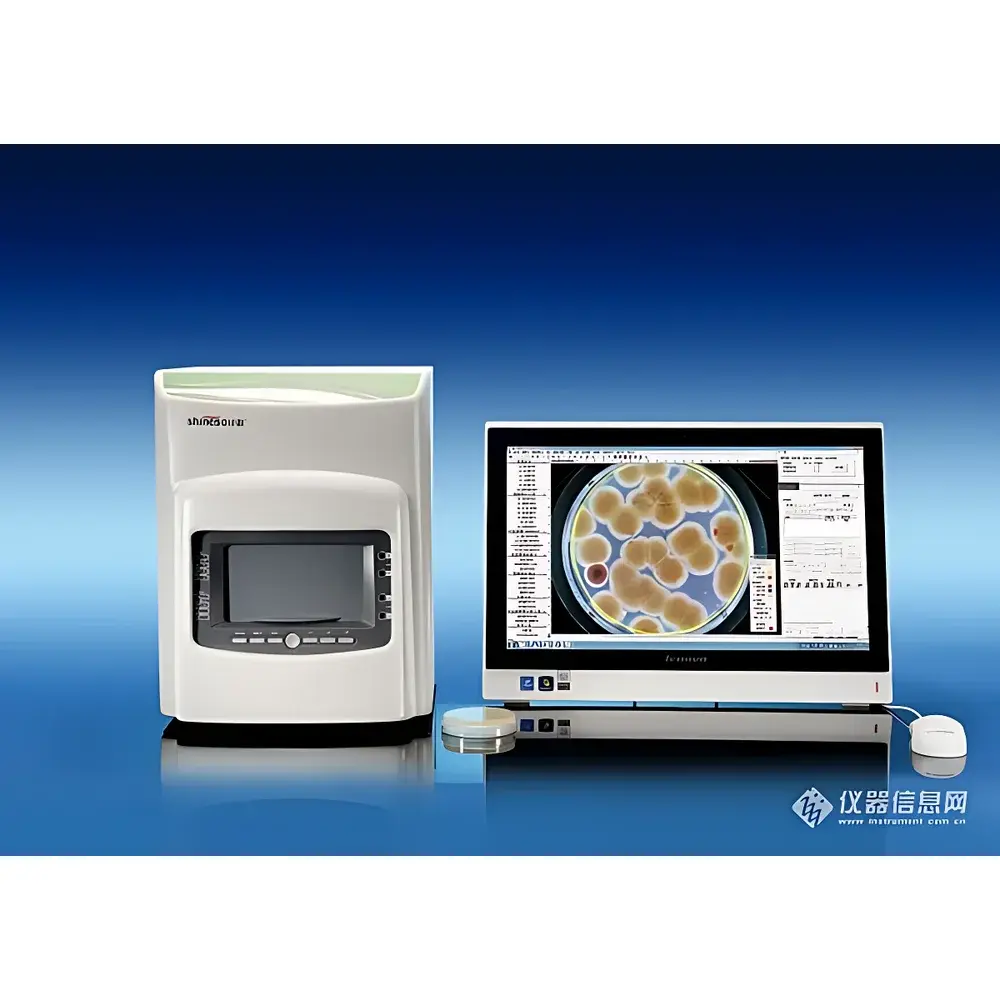
The Xunsu iCount 20 is a fourth-generation fully automated colony counter engineered for precision, reproducibility, and operational efficiency in routine microbiological quality control and research laboratories. It employs high-resolution digital imaging coupled with adaptive image segmentation algorithms to quantify viable microbial colonies on standard Petri dishes—including pour plates, spread plates, and membrane filtration assays. The system operates on the principle of optical contrast enhancement and morphometric feature extraction: colonies are identified based on spatial intensity gradients, colorimetric differentiation (RGB channel analysis), and shape-based classification (circularity, solidity, convexity). Designed specifically for resource-constrained or mid-throughput environments—such as food safety labs, pharmaceutical QC units, environmental monitoring facilities, and academic teaching labs—the iCount 20 delivers clinical-grade accuracy without requiring operator expertise in image processing or threshold tuning.
Key Features
- Tri-color LED hybrid illumination system: Combines red, green, and blue LEDs to eliminate the blue-shift bias inherent in conventional white LEDs, enabling faithful chromatic reproduction of colony pigmentation (e.g., Staphylococcus aureus golden-yellow, Pseudomonas aeruginosa greenish-blue, or fungal hyphal morphology).
- 360° circumferential top lighting: Uniform, shadow-free illumination across the entire Petri dish surface, minimizing edge falloff and ensuring consistent contrast for peripheral colonies.
- CrystalSharp suspended dark-field bottom lighting: Generates high-contrast background illumination ideal for detecting sub-millimeter colonies (<0.2 mm) and translucent or low-pigment isolates (e.g., Campylobacter jejuni, Helicobacter pylori).
- Sealed optical chamber with ergonomic porthole door: Blocks ambient light interference and eliminates stray-light artifacts—including refraction halos and specular reflections from agar surface irregularities or condensation droplets.
- Six one-click intelligent counting modes: Pre-configured algorithms optimized for common plate types (e.g., ISO 4833-1:2013 pour plates, ISO 7218:2017 spread plates, ASTM D5976 membrane filters), reducing inter-operator variability and training time.
- Dual-layer statistical engine: Integrates both baseline segmentation (threshold-based binary conversion) and advanced adaptive analysis (dynamic parameter adjustment, bias estimation, and impurity rejection based on hue-saturation-value (HSV) clustering and elliptical Fourier descriptors).
Sample Compatibility & Compliance
The iCount 20 supports standard 90 mm and 150 mm Petri dishes (glass or polystyrene), as well as membrane filter assemblies (47 mm and 50 mm diameter). It accommodates diverse media formulations—including nutrient agar, VRBA, PCA, TSA, Sabouraud dextrose agar, and selective chromogenic media—without hardware recalibration. All counting protocols align with internationally recognized standards: ISO 4833-1:2013 (microbiology of food and animal feeding stuffs), ISO 7218:2017 (general requirements and guidance for microbiological examinations), and AOAC Official Method 990.12 (colony enumeration). While the instrument itself does not carry CE/UKCA marking, its software architecture supports audit-ready data integrity: full user authentication, timestamped action logs, and immutable raw image archiving—enabling compliance with GLP and GMP documentation requirements per FDA 21 CFR Part 11 when deployed within validated laboratory workflows.
Software & Data Management
The proprietary iCount Analysis Suite runs on Windows OS and features a modular, permission-based interface. Three-tier password protection secures access: application launch password, database encryption key, and administrator-level configuration rights. All raw images and processed results are stored in a local SQL Server Express database with indexed metadata (plate ID, operator name, date/time, dilution factor, medium type, incubation conditions). Statistical outputs—including total colony counts, size-distribution histograms (25 bin classes), and morphometric parameters (equivalent diameter, area, perimeter, circularity)—export directly to Microsoft Excel (.xlsx) with customizable templates. The software supports batch reporting, cross-plate comparative analysis, and automatic CFU/mL or CFU/g unit conversion upon entry of plate diameter and sample dilution ratio. Audit trails record every image modification, region exclusion, or manual correction—ensuring traceability for internal QA reviews or external regulatory inspections.
Applications
The iCount 20 serves critical roles across regulated and non-regulated settings: routine enumeration of total aerobic mesophiles in food and beverage production; detection of indicator organisms (e.g., coliforms, Enterobacteriaceae) per ISO 21528-2; verification of sterility assurance levels (SAL) in medical device manufacturing; validation of disinfectant efficacy per EN 13697; enumeration of environmental isolates in water and wastewater testing (ISO 9308-1); and educational use in undergraduate microbiology laboratories where reproducible, objective quantification replaces subjective manual tallying. Its robustness in handling heterogeneous samples—such as soil extracts, fermented products, or unfiltered clinical specimens—makes it particularly suitable for laboratories managing variable sample loads without dedicated bioinformatics support.
FAQ
Does the iCount 20 support ASTM or USP methods for microbial enumeration?
Yes—the system’s one-click modes and adjustable segmentation parameters can be configured to meet ASTM D5976 (membrane filtration) and USP <61> / <62> (microbial limits testing) requirements, though method validation remains the responsibility of the end user.
Can raw images and analysis parameters be exported for third-party reanalysis?
Yes—raw TIFF images, annotated overlays (PNG), and full parameter sets (XML export) are accessible via the database management module.
Is remote software update or technical support available outside China?
Firmware updates and remote diagnostics are supported via secure HTTPS-based portal; English-language technical documentation and video tutorials are provided with each shipment.
What is the recommended calibration frequency?
Instrument calibration (using included calibration disk) is advised before first use, after relocation, and at least once per month during continuous operation—per ISO/IEC 17025:2017 clause 6.5.2.
Does the system integrate with LIMS platforms?
Native LIMS integration is not embedded, but Excel-exported datasets (with structured column headers) are compatible with common LIMS import modules (e.g., Thermo Fisher SampleManager, LabVantage, STARLIMS).