
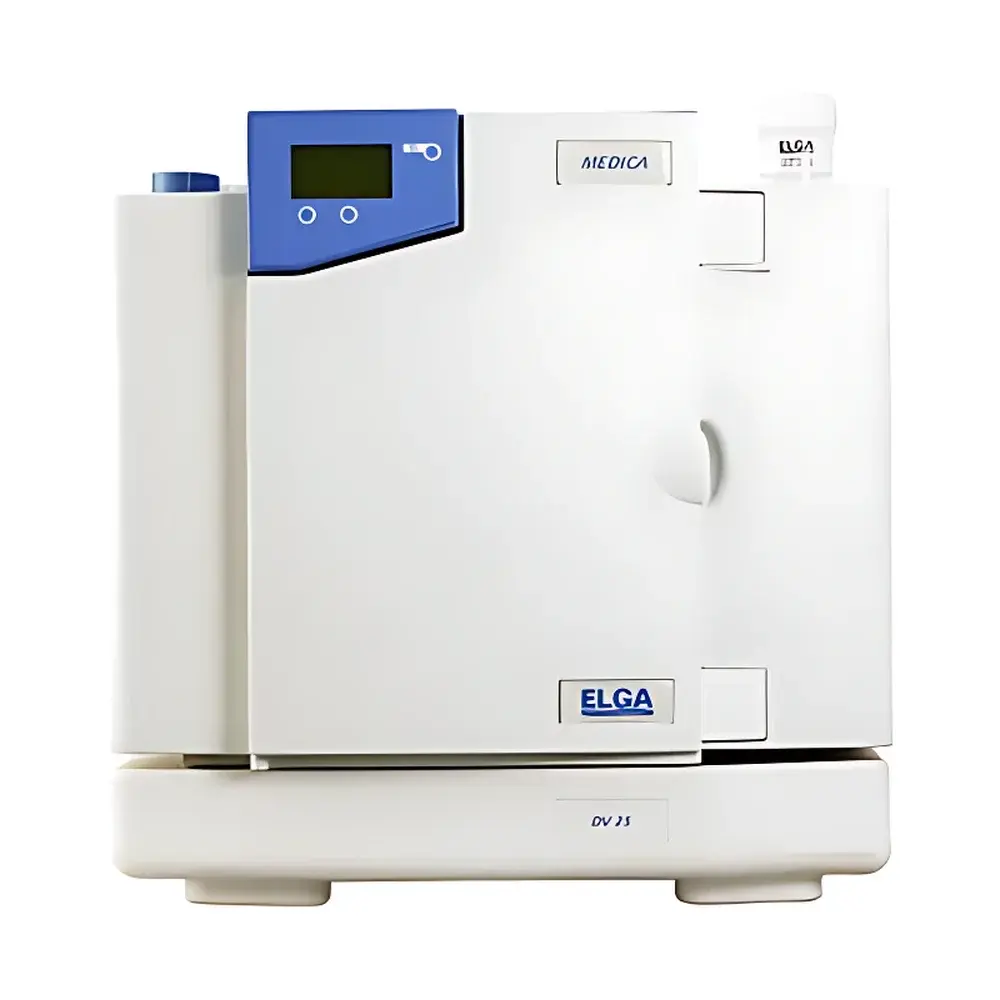
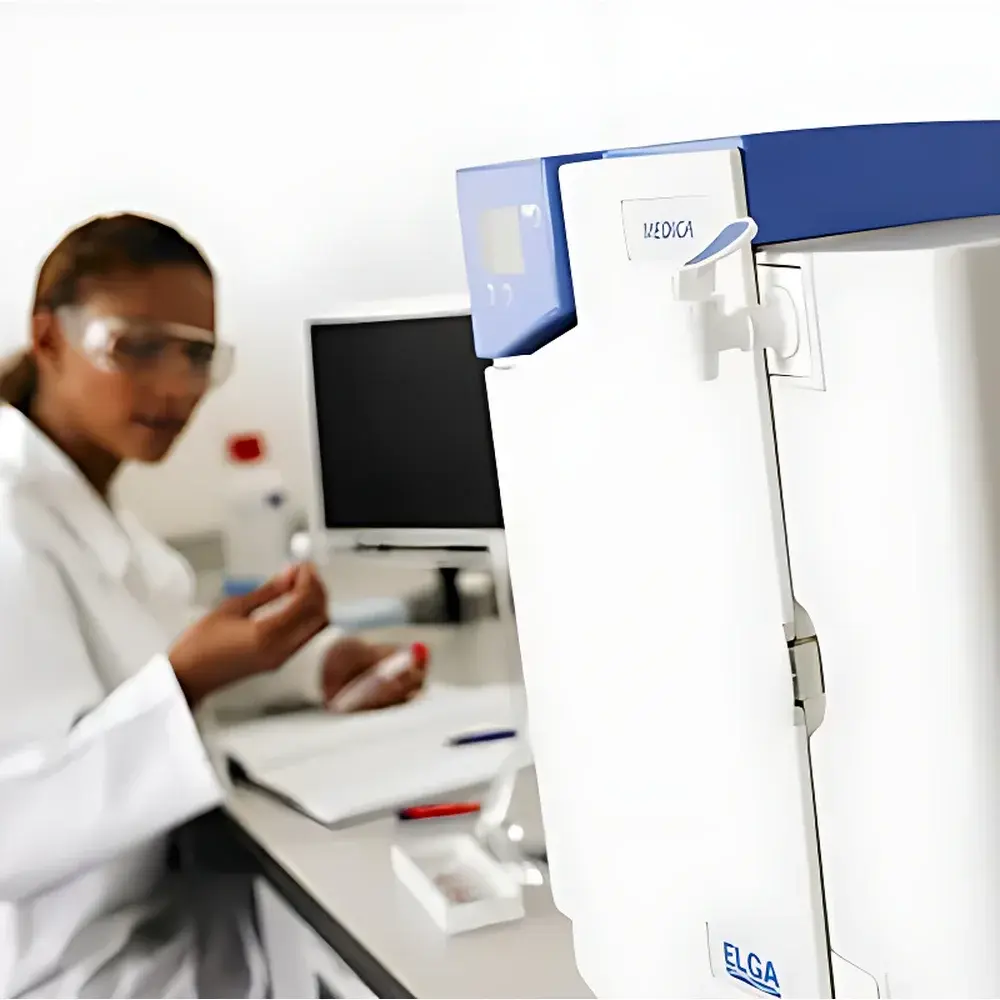
ELGA MEDICA Ultra-Pure Water System for Clinical Diagnostics
| Brand | ELGA (Veolia) |
|---|---|
| Origin | United Kingdom |
| Manufacturer Type | Original Equipment Manufacturer (OEM) |
| Import Status | Imported |
| Model | MEDICA |
| Water Grade | CLRW (Clinical Laboratory Reagent Water, per CLSI C37-A) |
| Resistivity | >10 MΩ·cm @ 25 °C |
| Heavy Metals & Soluble Silica | <0.1 ppb |
| Total Organic Carbon (TOC) | <30 ppb |
| Microbial Count | <1 CFU/mL |
| Endotoxin | <0.001 EU/mL |
| Particulates (>0.1 µm) | <0.2 µm |
| Dissolved Oxygen (MEDICA-D only) | 6–8 ppm |
| Flow Rate | 7–15 L/hr |
Overview
The ELGA MEDICA Ultra-Pure Water System is an engineered solution specifically designed to meet the stringent water quality requirements of clinical diagnostic instrumentation, including automated clinical chemistry analyzers and immunoassay platforms. It delivers Clinical Laboratory Reagent Water (CLRW) in strict compliance with the CLSI C37-A standard—widely recognized across North America, Europe, and Asia for diagnostic-grade water. Unlike general-purpose laboratory water systems, the MEDICA series employs a dedicated purification architecture centered on reverse osmosis, electrodeionization (EDI), ultrafiltration, and dual-wavelength UV oxidation (185/254 nm), followed by final polishing through a 0.2 µm sterile-grade filter and endotoxin-removing membrane. Its closed-loop recirculation design (MEDICA-R variant) maintains continuous flow dynamics that suppress biofilm formation and ensure microbial stability over time. The MEDICA-D variant integrates a proprietary membrane-based degassing module to reduce dissolved oxygen to 6–8 ppm—a critical specification for certain enzymatic assays where oxygen interference may compromise reaction kinetics or reagent shelf life.
Key Features
- CLRW-compliant output validated per CLSI C37-A: resistivity >10 MΩ·cm at 25 °C, TOC <30 ppb, bacterial load <1 CFU/mL, endotoxin <0.001 EU/mL, heavy metals/silica <0.1 ppb
- Dual configuration options: MEDICA-R (recirculating loop for microbiological control) and MEDICA-D (integrated dissolved oxygen reduction for oxygen-sensitive assays)
- Real-time, multi-parameter water quality monitoring with visual LED indicators and audible alarm thresholds for resistivity, TOC, pressure, and flow interruption
- Touch-free, ergonomically positioned dispensing valve on MEDICA-R for flexible benchtop use in routine lab workflows
- Modular, serviceable design with tool-free access to consumables—including prefilter cartridges, RO membranes, EDI stacks, and final ultrafilters—supporting GLP-aligned maintenance logs
- No internal storage tank; direct-on-demand delivery minimizes stagnation risk and eliminates need for periodic sanitization cycles
Sample Compatibility & Compliance
The MEDICA system is validated for continuous feed to IVD (In Vitro Diagnostic) instruments requiring CLRW, including but not limited to Roche Cobas®, Siemens Atellica®, Beckman Coulter AU/DxH series, and Ortho Clinical Diagnostics Vitros® platforms. Its output meets or exceeds specifications referenced in ISO 15195:2018 (clinical laboratory testing—requirements for reference measurement laboratories), ASTM D1193-20 (Type I reagent water), and USP (Water for Pharmaceutical Purposes) for non-sterile applications. All wetted materials comply with USP Class VI biocompatibility standards. System validation documentation supports IQ/OQ protocols aligned with FDA 21 CFR Part 820 and ISO 13485 quality management systems.
Software & Data Management
While the MEDICA platform operates as a standalone hardware system without embedded software or network connectivity, it provides analog and digital signal outputs (4–20 mA, RS-485 optional) for integration into facility-wide water monitoring networks. Event-driven logging—including alarm triggers, cartridge replacement timestamps, and resistivity drift trends—is supported via external SCADA or LIMS interfaces. Audit trails for maintenance interventions can be manually recorded in accordance with GLP/GMP documentation practices. No data encryption or user authentication is implemented, consistent with its role as a dedicated utility device rather than a regulated data-generating instrument.
Applications
- Primary water source for clinical chemistry analyzers performing photometric, ion-selective electrode (ISE), and enzymatic assays
- Feed water for immunoassay systems utilizing chemiluminescent, fluorescence, or turbidimetric detection modalities
- Reagent preparation and calibration standard dilution in CAP-accredited clinical laboratories
- Wash buffer formulation for automated ELISA and lateral flow platforms requiring low endotoxin and trace metal content
- Support of ISO 15189-accredited quality control procedures where water purity directly impacts assay CVs and calibration linearity
FAQ
What distinguishes CLRW (CLSI C37-A) from Type I ultrapure water (ASTM D1193)?
CLRW places greater emphasis on microbiological and endotoxin control (<0.001 EU/mL) and specifies tighter limits for soluble silica and heavy metals relevant to enzymatic interference—whereas ASTM Type I prioritizes resistivity and TOC for general analytical applications.
Can MEDICA be connected to multiple analyzers simultaneously?
Yes—via a branched stainless-steel or PFA distribution loop with individual point-of-use filters; however, total demand must remain within the 7–15 L/hr flow envelope and pressure drop across the loop must not fall below 2.5 bar at the furthest outlet.
Is annual validation required?
Per CLSI C37-A Section 7.2, laboratories must verify CLRW quality at installation, after major component replacement, and at least semiannually thereafter using in-house or third-party certified methods.
Does MEDICA support remote diagnostics or predictive maintenance?
No—the system lacks embedded firmware, Wi-Fi, or cloud connectivity. Predictive alerts are limited to local visual/audible indicators tied to real-time sensor thresholds.
What consumables require scheduled replacement?
Prefilters (every 6 months), RO membrane (every 24 months), EDI stack (every 36 months), and final ultrafilter (every 12 months)—all intervals assume average feed water quality (TDS <200 ppm, chlorine <0.5 ppm).



