
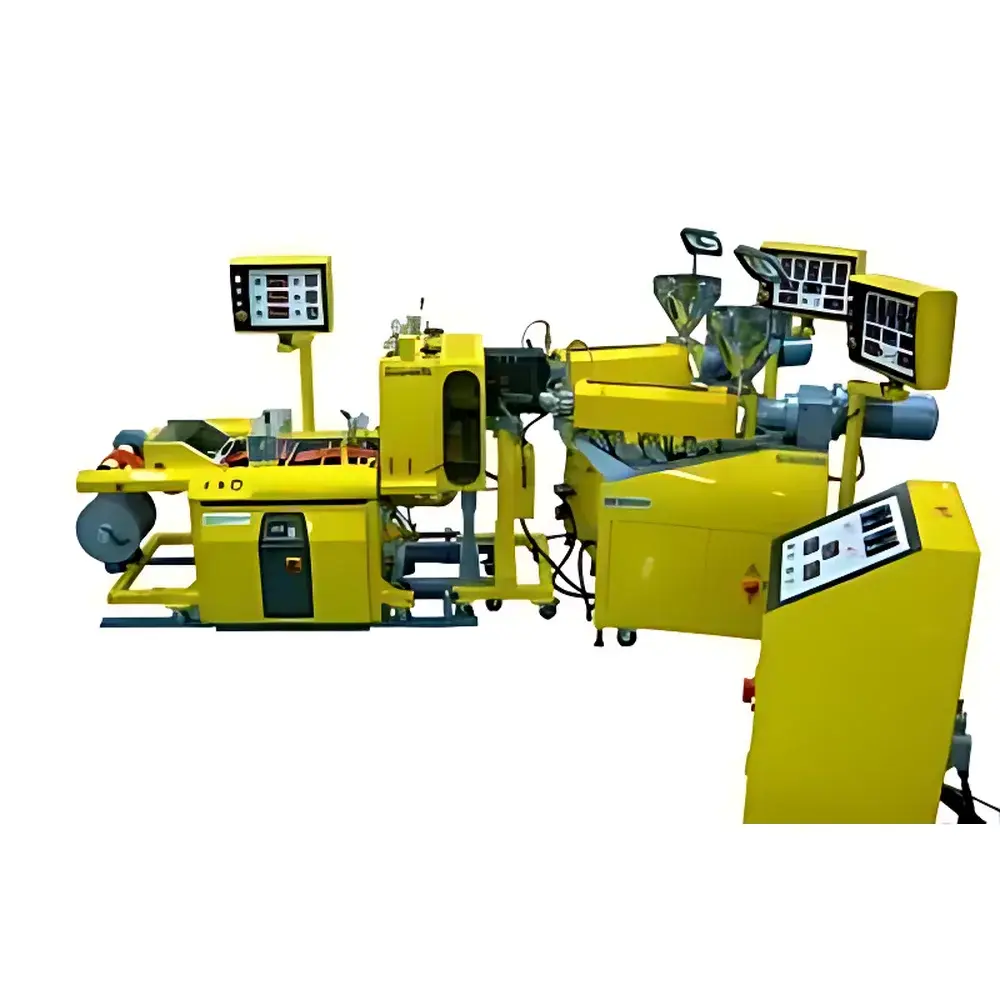
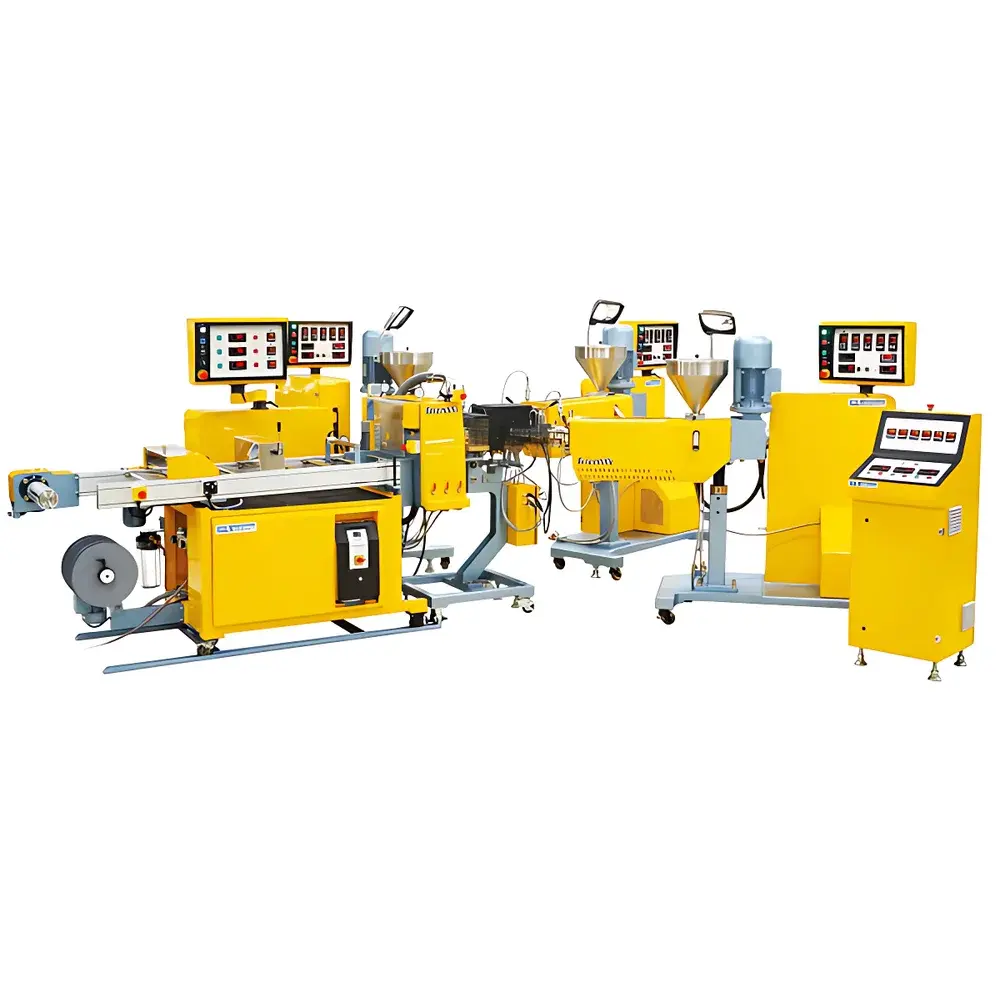
Labtech LCR Single- or Multi-Layer Cast Film Extrusion Line
| Brand | Labtech Engineering |
|---|---|
| Origin | Imported (Non-China) |
| Model | LCR |
| Screw Options | 12.5 mm, 20 mm, 25 mm, 30 mm, 45 mm |
| Max Film Width | 1100 mm |
| Min Film Width | 50 mm |
| Max Layers | 9 |
| Die Type | High-Performance T-shaped (Coat-Hanger) Cast Die |
| Winding | Pneumatic Shaft (Paperless) with Multiple Winding Configurations |
| Optional Units | Cast Roll Stack, Calender Roll Stack |
| Form Factor | Benchtop to Floor-Mounted Configurations Available |
Overview
The Labtech LCR Cast Film Extrusion Line is a modular, laboratory-scale polymer processing system engineered for the precise development and optimization of single- and multilayer cast films. It operates on the principle of melt extrusion followed by quenching via controlled contact with chilled roll surfaces—enabling rapid solidification while preserving molecular orientation, surface finish, and layer integrity. Unlike blown film systems, cast film technology delivers superior thickness uniformity, gloss control, and interlayer adhesion—critical parameters for barrier packaging, optical films, medical laminates, and functional coextruded structures. The LCR line integrates seamlessly with Labtech’s family of precision single-screw extruders, allowing users to replicate industrial-scale shear history, residence time distribution, and thermal profiles at benchtop scale—supporting DOE-driven formulation screening, rheological validation, and regulatory-compliant process documentation.
Key Features
- Modular architecture supporting single-layer baseline configurations up to 9-layer coextrusion—each melt stream independently metered, temperature-controlled, and pressure-monitored
- High-precision coat-hanger type cast die with hardened steel manifold channels, optimized for low-pressure drop and uniform flow distribution across full width (50–1100 mm)
- Chilled roll stack with independent temperature control (±0.5 °C), surface finish ≤0.05 µm Ra, and adjustable nip pressure for caliper control
- Pneumatic-shaft winding station eliminating paper cores—reducing waste, improving edge registration, and enabling high-speed take-up (up to 50 m/min) with tension feedback loop
- Interchangeable roll configurations: standard cast roll stack, optional calender stack for enhanced surface replication or embossing capability
- Benchtop footprint available (LCR-BT series); floor-mounted versions accommodate auxiliary units including gravimetric feeders, inline IR thickness gauges, and static eliminators
Sample Compatibility & Compliance
The LCR line processes thermoplastic polymers including but not limited to polyolefins (PP, PE), PET, PA6/66, EVOH, ionomers, and specialty biopolymers (PLA, PHA). It supports both neat resins and masterbatches containing fillers (CaCO₃, talc), pigments, nanoclays, and functional additives. All wetted components comply with FDA 21 CFR §177.1520 (olefin plastics) and EU Regulation (EC) No. 1935/2004 for food-contact materials. Temperature zones meet IEC 61000-6-2/6-4 immunity and emission standards; electrical safety conforms to UL 61010-1 and CE Machinery Directive 2006/42/EC. System architecture supports GLP/GMP-aligned operation: hardware timestamps, user-access logs, and audit-trail-ready parameter recording when paired with Labtech ControlSuite software.
Software & Data Management
Labtech ControlSuite v4.2 provides real-time monitoring and closed-loop control of extrusion parameters—including screw speed (0.1–120 rpm), barrel zone temperatures (range: ambient to 400 °C, stability ±0.3 °C), melt pressure (0–100 MPa), and roll surface temperature. Data is acquired at 10 Hz minimum and stored in .csv and SQL-compatible formats. The software includes built-in ASTM D3895 (oxidative induction time), ISO 1133 (MFR), and ISO 16750-2 (thermal cycling) test templates. Full 21 CFR Part 11 compliance is enabled via electronic signatures, role-based access control, and immutable data archiving—facilitating IQ/OQ/PQ execution and regulatory submissions.
Applications
- R&D of high-barrier multilayer structures for pharmaceutical blister packaging and retort pouches
- Optimization of tie-layer adhesion in PP/EVOH/PE architectures using peel strength and delamination onset analysis
- Thermal and mechanical property mapping of PLA-based compostable films under variable quench rates
- Validation of pigment dispersion stability in color concentrate masterbatches via haze/gloss correlation
- Accelerated aging studies per ISO 11607-1, supported by integrated environmental chamber interfaces
- Support for ASTM F1921 (seal integrity), ASTM D882 (tensile), and ISO 527-3 (film modulus) specimen preparation
FAQ
What is the minimum film width achievable on the LCR system?
The system supports film widths as narrow as 50 mm—ideal for small-batch formulation trials and microstructure characterization.
Can the LCR line be validated for GMP production environment simulation?
Yes—when configured with IQ/OQ protocols, Part 11-compliant software, and calibrated transducers traceable to NIST standards, it serves as a qualified platform for process simulation and tech transfer.
Is offline rheological data from capillary or rotational rheometers compatible with LCR process modeling?
Absolutely—the ControlSuite API enables import of viscosity vs. shear rate and temperature datasets to predict pressure drop and die swell behavior during coextrusion setup.
Does Labtech provide application support for multilayer die setup and layer ratio optimization?
Yes—Labtech Application Engineers offer remote and on-site assistance including die flow modeling (via Polyflow integration), layer symmetry analysis, and troubleshooting of interfacial instability (e.g., viscous fingering).





