
Sanxin ORP5 Portable ORP Meter
| Brand | Sanxin Peirui |
|---|---|
| Origin | Shanghai, China |
| Manufacturer | Sanxin Instrument Co., Ltd. |
| Type | Laboratory-Grade Portable ORP Meter |
| Model | ORP5 |
| Measurement Range | ±1000 mV |
| Resolution | 1 mV / ±0.2% FS |
| Temperature Range | 0–50 °C |
| Temp. Resolution | 0.1 °C |
| Temp. Accuracy | ±0.5 °C |
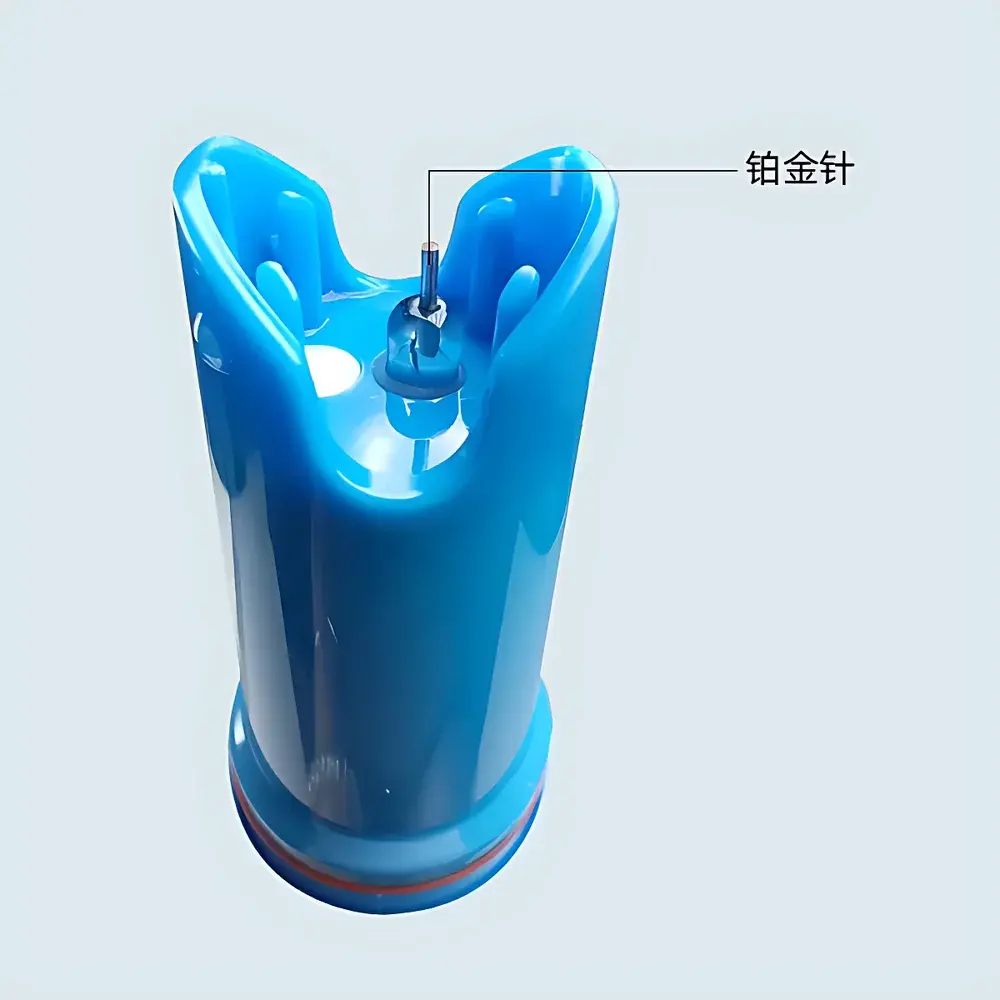
| Electrode | Replaceable ORP5-E Sensor |
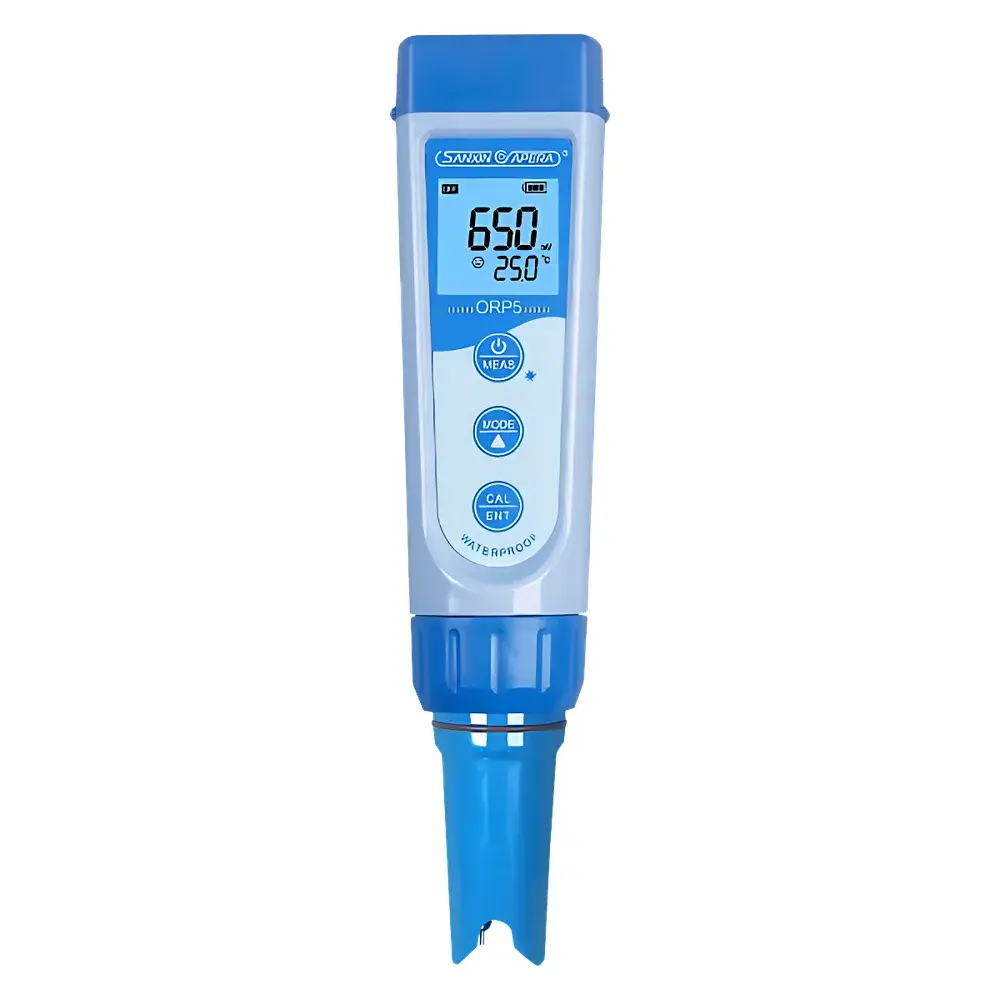
| Display | STN LCD with Dual-Color Backlight (Blue: Measurement |
| Green | Calibration) |
| Power | 4 × AAA Alkaline Batteries (DC 3 V) |
| Battery Life | >200 h continuous use |
| Auto-Off | After 8 min inactivity |
| IP Rating | IP67 (submersible, floatable) |
| Dimensions (Meter) | 40 × 40 × 178 mm |
| Weight (Meter) | 133 g |
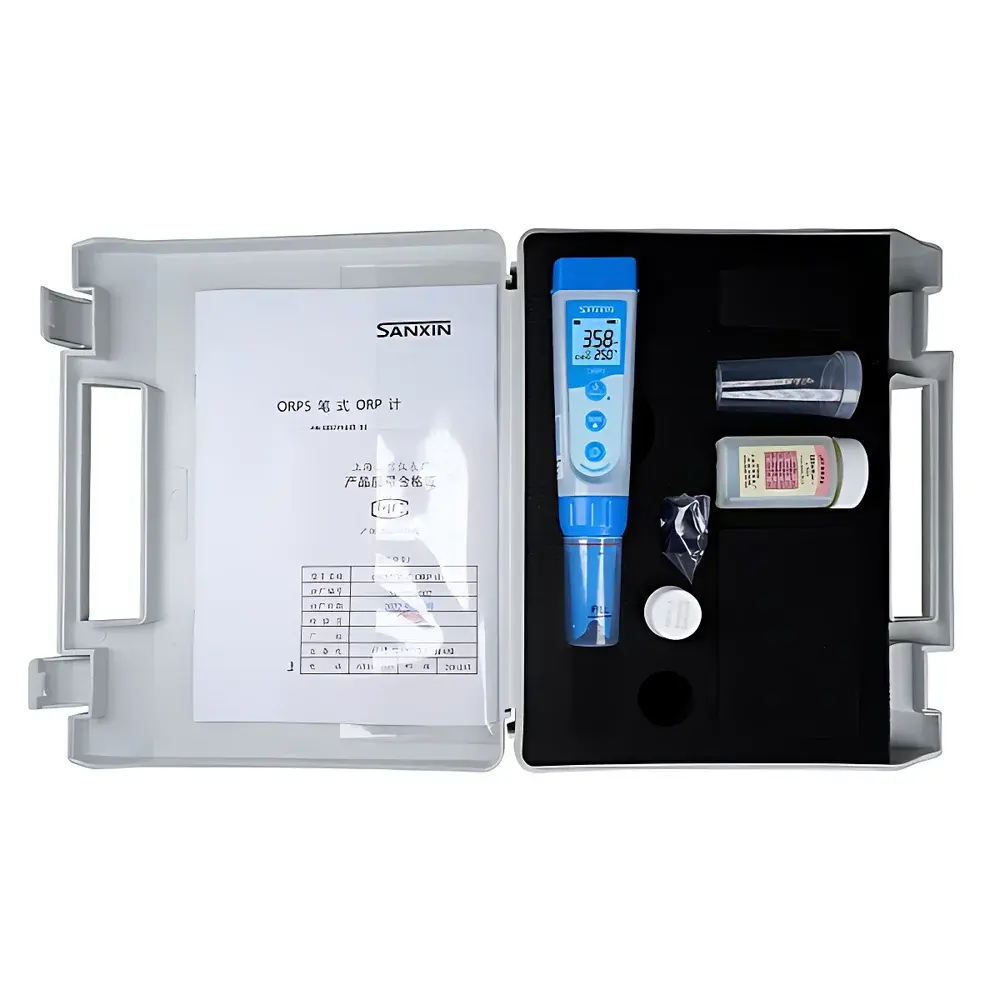
| Kit Includes | ORP5 meter, 50 mL 1222 mV ORP standard solution, 1 × measurement cup, 1 × 3 M KCl storage solution, 1 × lanyard, 4 × AAA batteries, 1 × rugged carry case (255 × 210 × 50 mm, 438 g) |
Overview
The Sanxin ORP5 Portable ORP Meter is an engineered electrochemical instrument designed for reliable, field-deployable oxidation-reduction potential (ORP) measurements in aqueous environments. Based on the fundamental principle of potentiometric measurement—where the voltage difference between a noble-metal sensing electrode (typically platinum or gold) and a stable reference electrode (Ag/AgCl in 3 M KCl) is measured against a known standard—the ORP5 delivers traceable, reproducible mV readings across a full ±1000 mV range. Unlike pH meters that require two-point calibration, ORP measurement relies on single-point verification using certified redox standards (e.g., 1222 mV Zobell’s or 225 mV Light’s solution), making it especially suited for rapid process monitoring in dynamic water systems. Its compact pen-style form factor, combined with IP67-rated sealing and buoyant housing, ensures operational integrity in high-humidity, splash-prone, or fully immersed conditions—critical for applications where traditional benchtop meters are impractical.
Key Features
- Replaceable ORP5-E sensor with integrated Ag/AgCl reference system and platinum sensing element—designed for consistent response and extended service life in chlorinated, saline, or organic-rich media.
- Dual-color STN LCD display (180° viewing angle): blue backlight during measurement mode; green backlight during calibration—enabling unambiguous operational state recognition under variable ambient lighting.
- Intelligent microcontroller architecture supporting manual and auto-HOLD functionality, real-time low-battery indication (flashing icon), and programmable auto-power-off after 8 minutes of inactivity to conserve battery life.
- Ruggedized, IP67-compliant enclosure tested per IEC 60529: fully dust-tight and capable of withstanding immersion in 1 m of water for up to 30 minutes—validated for field use in aquaculture ponds, cooling towers, and municipal water distribution points.
- Pre-configured calibration workflow with audible and visual prompts—minimizing operator error during routine verification against NIST-traceable ORP standards.
Sample Compatibility & Compliance
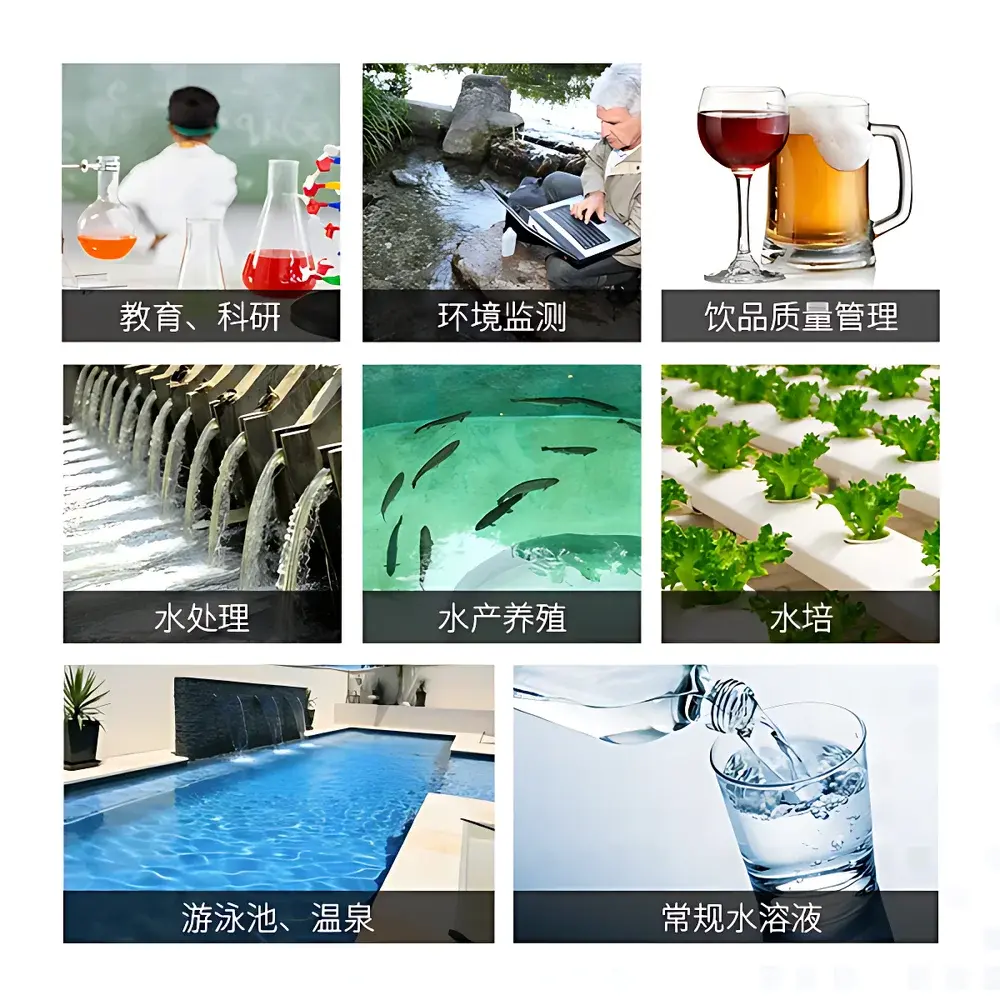
The ORP5 is optimized for direct immersion measurement in clear to moderately turbid aqueous solutions, including recirculating hydroponic nutrient reservoirs, marine and freshwater aquaculture systems, chlorine-stabilized swimming pools, thermal spa effluents, and industrial cooling water circuits. It is not intended for non-aqueous solvents, highly viscous suspensions, or samples containing sulfide or heavy metal precipitates that may poison the Pt surface. While the instrument itself does not carry CE, UKCA, or FDA registration, its measurement methodology aligns with ASTM D1129 (Standard Terminology Relating to Water) and ISO 5814:2012 (Water quality — Determination of oxidation-reduction potential). The included 1222 mV Zobell’s standard solution is prepared per EPA-approved protocols and supports GLP-aligned calibration documentation when used with external logbooks.
Software & Data Management
As a standalone portable meter, the ORP5 does not interface with proprietary software or cloud platforms. All measurements are displayed in real time and retained only as transient values on the LCD—consistent with ISO/IEC 17025:2017 requirements for field instruments where data capture occurs manually. Users are advised to record results alongside environmental context (e.g., temperature, sample ID, time, operator) in auditable paper or electronic lab notebooks. The device supports traceability through its built-in temperature compensation (0–50 °C, ±0.5 °C accuracy), ensuring ORP values are reported at standardized reference conditions without post-acquisition correction.
Applications
- Real-time disinfection efficacy monitoring in chlorinated or ozone-treated water systems via correlation between ORP and free chlorine residual (per US EPA guidance for pool/spa operation).
- Process control in aquaponics and recirculating aquaculture systems (RAS), where ORP serves as an early indicator of microbial imbalance or organic loading shifts.
- Preventive maintenance in HVAC cooling towers—tracking oxidant demand and biofilm formation risk through trending of baseline ORP drift over time.
- Field validation of wastewater treatment plant effluent compliance with local discharge permits referencing redox thresholds (e.g., < +200 mV for anaerobic digestion outflow).
- Educational laboratories requiring robust, low-cost instrumentation for teaching electrochemical fundamentals, electrode kinetics, and environmental water quality assessment.
FAQ
What ORP standard solution is recommended for calibration?
The ORP5 is supplied with a 50 mL vial of 1222 mV Zobell’s standard solution (±10 mV at 25 °C), traceable to NIST SRM 1903. For routine verification, this solution is sufficient; for formal calibration audits, users should maintain lot-specific certificates of analysis.
Can the ORP5 measure temperature independently of ORP?
Yes—the integrated thermistor provides simultaneous temperature readout (0–50 °C) with 0.1 °C resolution. Temperature data is used internally for automatic mV compensation but is also displayed alongside ORP values.
Is the ORP5-E electrode compatible with other Sanxin meters?
The ORP5-E uses a proprietary 3.5 mm coaxial connector and is mechanically and electrically optimized for the ORP5 circuitry. It is not cross-compatible with Sanxin’s pH or conductivity pens due to differing impedance matching and signal conditioning requirements.
How often should the electrode be cleaned and stored?
After each use in dirty or organic-laden water, rinse thoroughly with deionized water and gently blot dry. Store immersed in 3 M KCl solution (provided) to maintain junction hydration and reference stability. Avoid prolonged dry storage or exposure to strong acids/bases.
Does the ORP5 support data logging or Bluetooth output?
No—the ORP5 is a dedicated analog-to-digital converter with no memory buffer, USB port, or wireless module. Its design prioritizes mechanical reliability, battery longevity, and regulatory simplicity over digital connectivity.






