
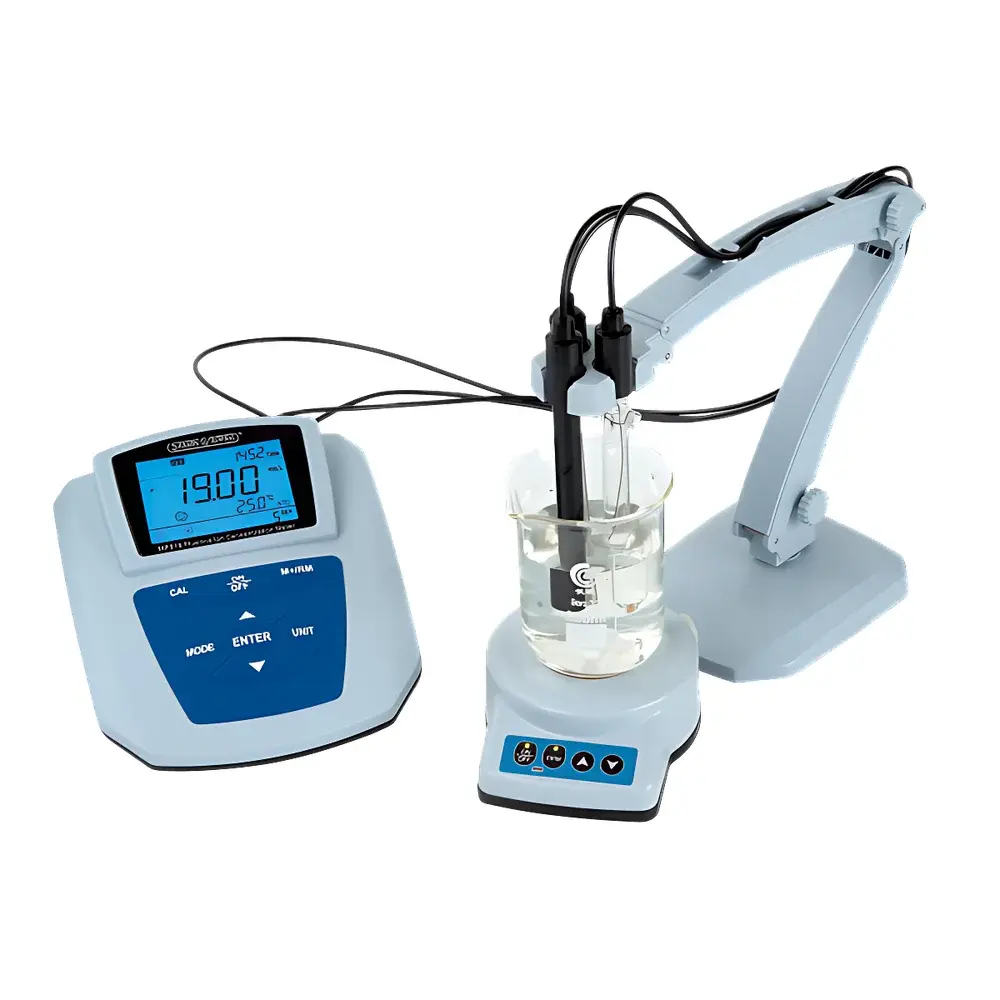
SANXIN MP519 Fluoride Ion Concentration Meter
| Brand | SANXIN |
|---|---|
| Origin | Shanghai, China |
| Manufacturer Type | Direct Manufacturer |
| Instrument Type | Benchtop |
| Ion Measured | Fluoride (F⁻) |
| Measurement Range (Meter) | 0.00–9.00 pF |
| Measurement Range (with Electrode Pair) | 1.00–7.00 pF |
| Accuracy (Meter) | ±0.01 pF |
| Accuracy (Electrode System) | ±0.02 pF |
| Temperature Range | −10 °C to 110 °C |
| Temperature Compensation Range | 0 °C to 50 °C |
| mV Range | ±1999.9 mV |
| mV Resolution | 0.1 mV |
| mV Accuracy | ±0.1% FS |
| Temperature Accuracy | ±0.5 °C (5–60 °C), ±1.0 °C (other ranges) |
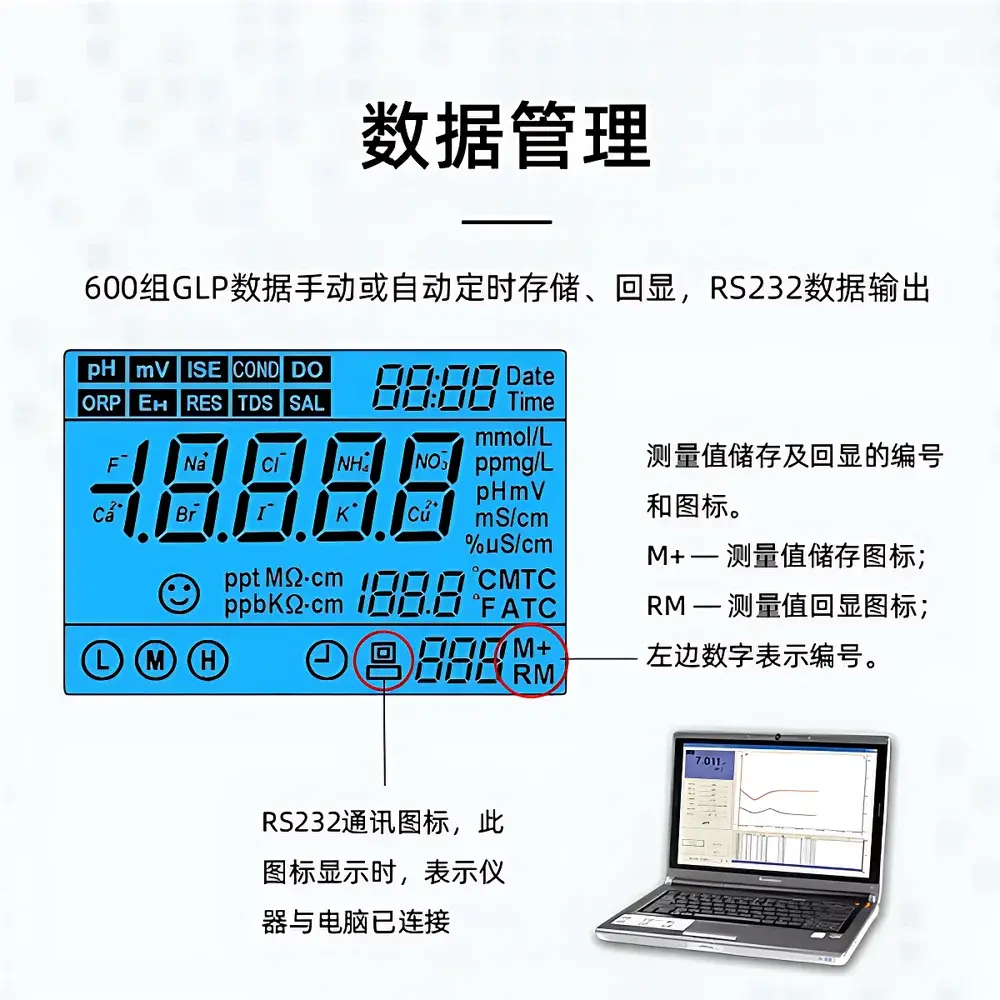
| Data Storage | 600 sets |
| Interface | RS232 |
| Power Supply | DC 9 V / 300 mA |
| Dimensions | 160 × 190 × 70 mm |
| Weight | 880 g |
| IP Rating | IP54 |
| Compliance | GLP-compliant design, dust- and splash-resistant enclosure |
Overview
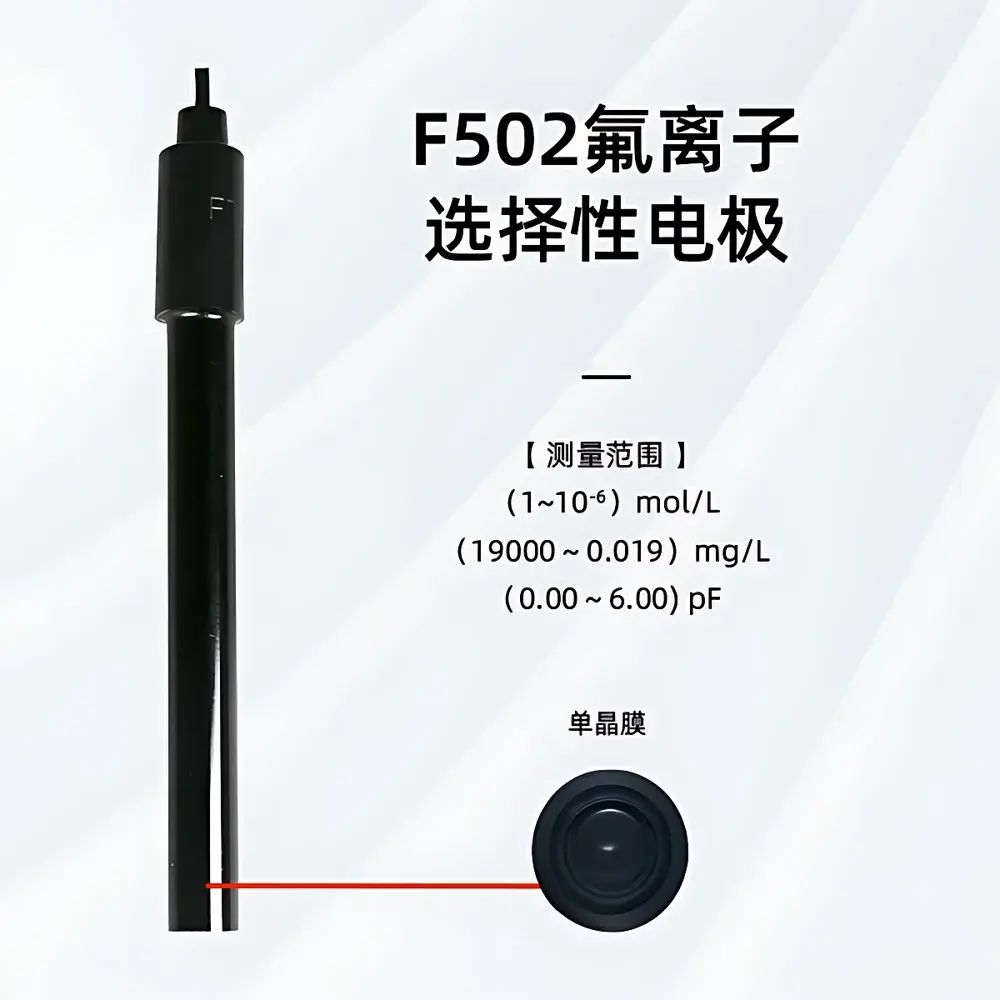
The SANXIN MP519 Fluoride Ion Concentration Meter is a benchtop potentiometric analyzer engineered for precise, trace-level quantification of fluoride ions (F⁻) in aqueous environmental, municipal, and industrial water samples. It operates on the principle of ion-selective electrode (ISE) potentiometry, utilizing a solid-state lanthanum fluoride (LaF₃)-based sensing membrane that generates a Nernstian response to F⁻ activity across a defined logarithmic concentration range. The instrument measures the potential difference between a fluoride-selective electrode (F502) and a double-junction reference electrode (6211-M), with automatic temperature compensation via an integrated Pt1000 thermistor (MP500). Designed for regulatory-aligned field and laboratory workflows, the MP519 delivers stable, reproducible results under variable ambient conditions — supporting compliance-driven monitoring programs for drinking water, wastewater effluent, groundwater, and industrial process streams per ISO 10304-1, ASTM D4327, and EPA Method 300.1.
Key Features
- Four selectable measurement units — pF, mol/L, mg/L, and ppm — enabling direct reporting in context-specific regulatory formats without manual conversion.
- Two-point user-defined calibration with auto-recognition of standard solutions; includes supplied pF1.00 stock solution (100 mL) for preparation of secondary standards across the operational range.
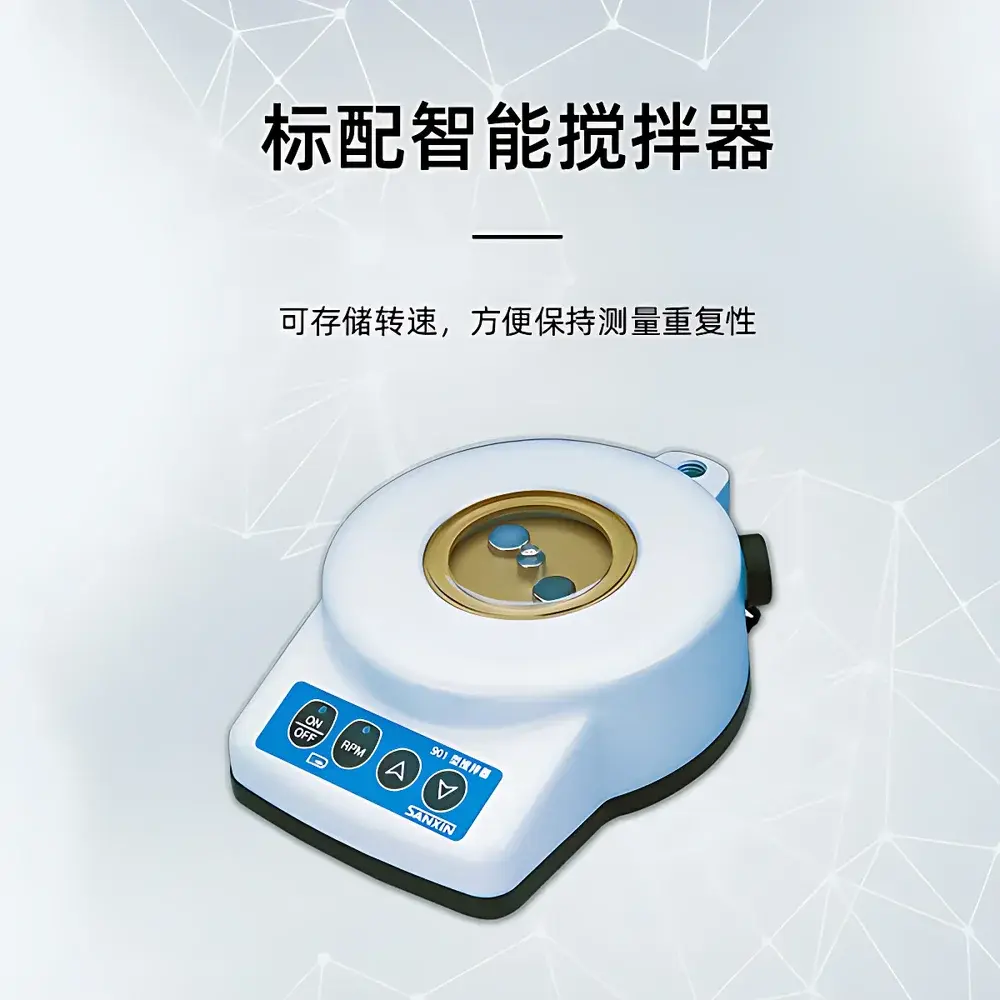
- Integrated 901 Smart Stirrer with fixed-speed control ensures consistent hydrodynamic conditions during measurement, minimizing boundary layer effects and improving signal stability.
- Full GLP functionality: timestamped data logging (600 entries), audit-ready storage, clock display, self-diagnostic alerts, and RS232 serial output for traceable data export to LIMS or spreadsheet environments.
- Robust mechanical architecture with IP54-rated enclosure; all electrode and cable ports feature silicone protective caps to prevent contamination and moisture ingress.
- Simultaneous dual-parameter operation: concurrent fluoride ion concentration and millivolt (±1999.9 mV) measurement with 0.1 mV resolution and ±0.1% full-scale accuracy.
Sample Compatibility & Compliance
The MP519 is optimized for liquid-phase analysis of low-ionic-strength to moderately complex aqueous matrices, including surface water, treated drinking water, leachates, and alkaline industrial effluents. Total ionic strength adjustment buffer (TISAB) compatibility enables accurate F⁻ quantification in samples containing interfering anions (e.g., OH⁻, Al³⁺, Fe³⁺). The system meets GLP documentation requirements through automatic metadata tagging (date/time, calibration status, electrode ID, temperature). Its design aligns with ISO/IEC 17025 quality system expectations for environmental testing laboratories and supports traceability under EPA-approved protocols. All electrical safety and EMC performance conform to IEC 61010-1:2010 for laboratory equipment.
Software & Data Management
The included MP519 PC communication software (supplied on optical disc) enables bidirectional data transfer via RS232 interface. Users can download stored measurements, review calibration history, generate PDF reports with embedded metadata, and configure instrument parameters remotely. The software enforces structured data formatting compatible with CSV and Excel imports, facilitating integration into QA/QC workflows. Audit trails include operator ID fields (manually entered), calibration verification timestamps, and error logs — satisfying FDA 21 CFR Part 11 read-only archival requirements when used in validated environments.
Applications
- Regulatory compliance testing for fluoride in public drinking water supplies (WHO guideline: ≤1.5 mg/L; US EPA MCL: 4.0 mg/L).
- Monitoring fluoride discharge limits in electroplating, semiconductor, and aluminum anodizing wastewater streams.
- Quality control of fluoride-containing dental products and pharmaceutical excipients.
- Research applications in geochemical speciation studies and soil leaching experiments.
- Field-deployable verification of point-of-use defluoridation systems (e.g., activated alumina, bone char filters).
FAQ
What is the recommended storage condition for the F502 fluoride electrode?
Store the F502 electrode upright in a dry environment with the sensing tip capped; avoid prolonged immersion in deionized water or storage in high-fluoride solutions.
Does the MP519 support automatic slope calculation during calibration?
Yes — the instrument calculates and displays electrode slope (%Nernst) and offset (mV) after two-point calibration, flagging deviations beyond ±5% from theoretical slope (−59.2 mV/pF at 25 °C).
Can the temperature electrode be used independently for general-purpose thermometry?
Yes — the MP500 Pt1000 probe provides calibrated temperature readings across −10 °C to 110 °C with 0.1 °C resolution and is compatible with external dataloggers via its analog output.
Is TISAB required for all sample types?
TISAB is mandatory for samples with pH 8.0, or those containing complexing cations (Al³⁺, Fe³⁺); omission may result in underestimation due to hydroxide interference or ion pairing.
How often should the reference electrode junction be cleaned?
Clean the 6211-M double-junction refillable reference electrode weekly using 0.1 M HNO₃ followed by rinsing with deionized water; replenish 3 M KCl outer fill solution as needed to maintain stable liquid junction potential.
Related Products







