
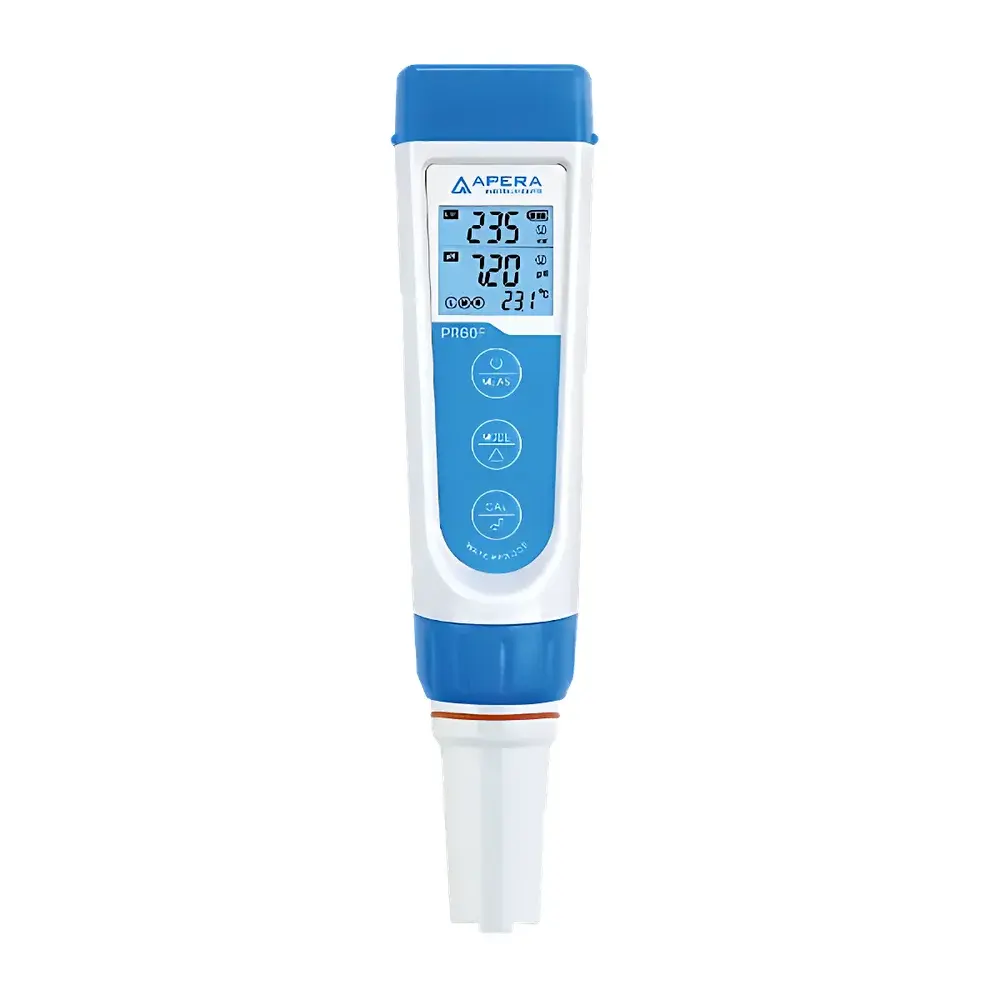
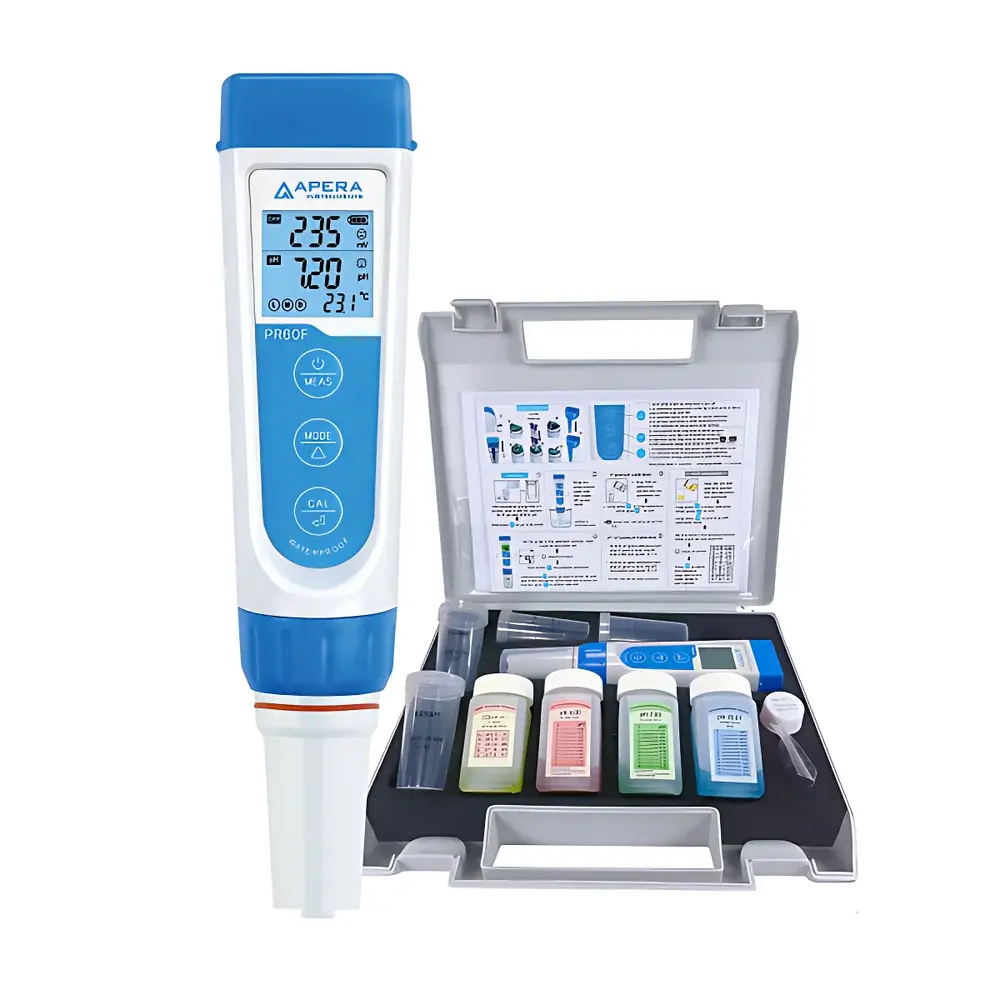
Sanxin PR60F Pen-Style Dual-Parameter pH/ORP Meter
| Brand | Sanxin Peri |
|---|---|
| Origin | Shanghai, China |
| Manufacturer Type | Direct Manufacturer |
| Product Category | Domestic (China-Made) |
| Model | PR60F |
| Instrument Type | Pen-Style |
| Parameter Types | pH & ORP (Dual-Parameter) |
| pH Accuracy | ±0.01 pH |
| pH Range | 0.00–14.00 pH |
| pH Resolution | 0.01 pH |
| ORP Range | −1000 to +1000 mV |
| ORP Accuracy | ±0.2% F.S. |
| ORP Calibration | 1-Point Manual |
| Temperature Range | 0–50 °C |
| Temperature Accuracy | ±0.5 °C |
| Auto Temperature Compensation (ATC) | 0–50 °C |
| Calibration Solutions | NIST-traceable (China Edition) / USA-traceable (International Edition) |
| Calibration Points | 1–3-Point Automatic pH Calibration |
| IP Rating | IP67 |
| Power Supply | Four AAA alkaline batteries |
| Dimensions (Meter) | 40 × 40 × 178 mm |
| Weight (Meter) | 133 g |
| Carry Case Dimensions | 255 × 210 × 50 mm |
| Carry Case Weight | 438 g |
| Operating Environment | 5–50 °C, <70% RH |
| Certifications | CE, RoHS, FCC |
| Auto-Off | 10 min inactivity |
| StableRead™ Function | Yes |
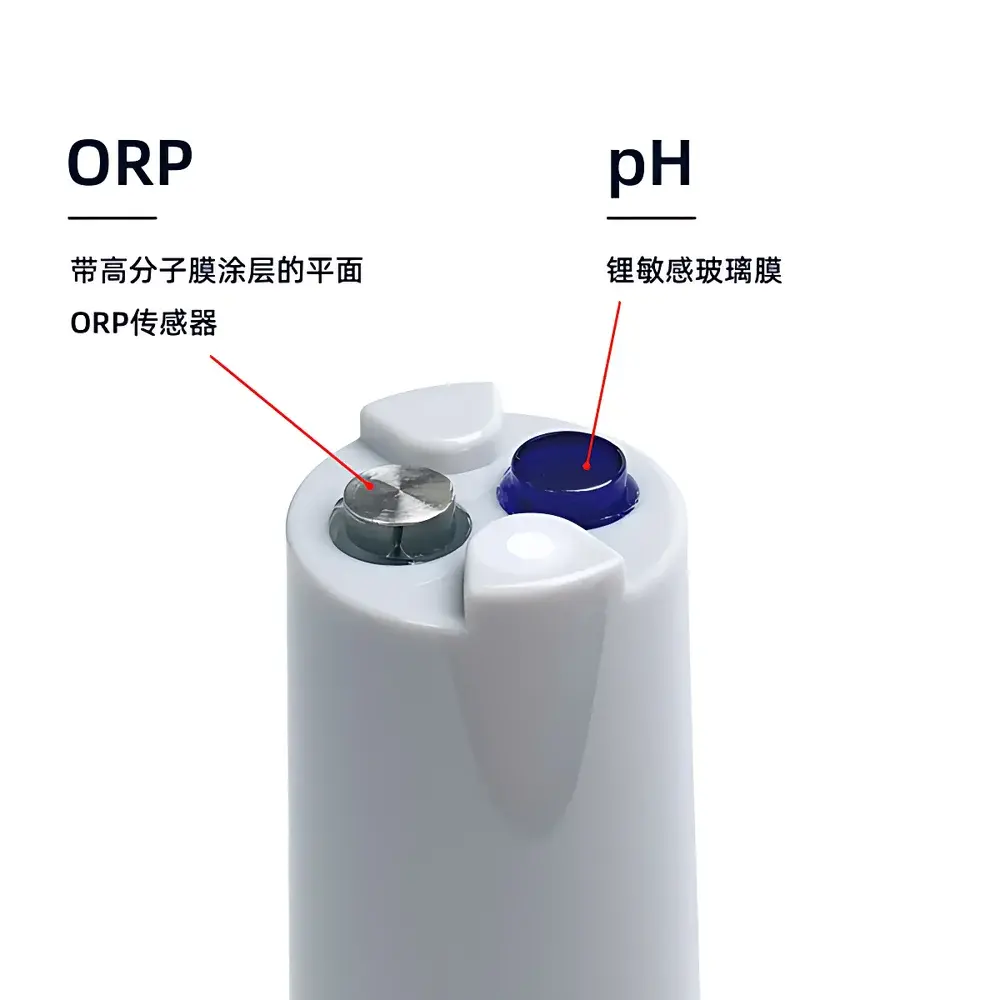
| Electrode Type | Dual-Junction pH/ORP Combination Sensor with Flat Platinum ORP Element |
| Battery Indicator | Flashing icon at low voltage |
Overview
The Sanxin PR60F Pen-Style Dual-Parameter pH/ORP Meter is an engineered field and laboratory instrument designed for rapid, reliable electrochemical measurement of hydrogen ion activity (pH) and oxidation-reduction potential (ORP) in aqueous media. Built upon potentiometric principles, the device employs a dual-junction combination electrode architecture—integrating a glass pH sensing element with a flat platinum ORP sensor featuring a proprietary macromolecular coating—to minimize junction clogging and surface oxidation artifacts. Its measurement methodology conforms to standard electrochemical conventions defined in ASTM D1293 (Standard Test Method for pH of Water) and ISO 10523 (Water Quality — Determination of pH), ensuring traceability and comparability across regulatory and quality control workflows. The PR60F is optimized for routine use in environments where portability, ruggedness, and operational simplicity are critical—including aquaculture facilities, hydroponic systems, municipal water treatment monitoring points, cosmetic formulation labs, environmental field surveys, and food safety inspection stations.
Key Features
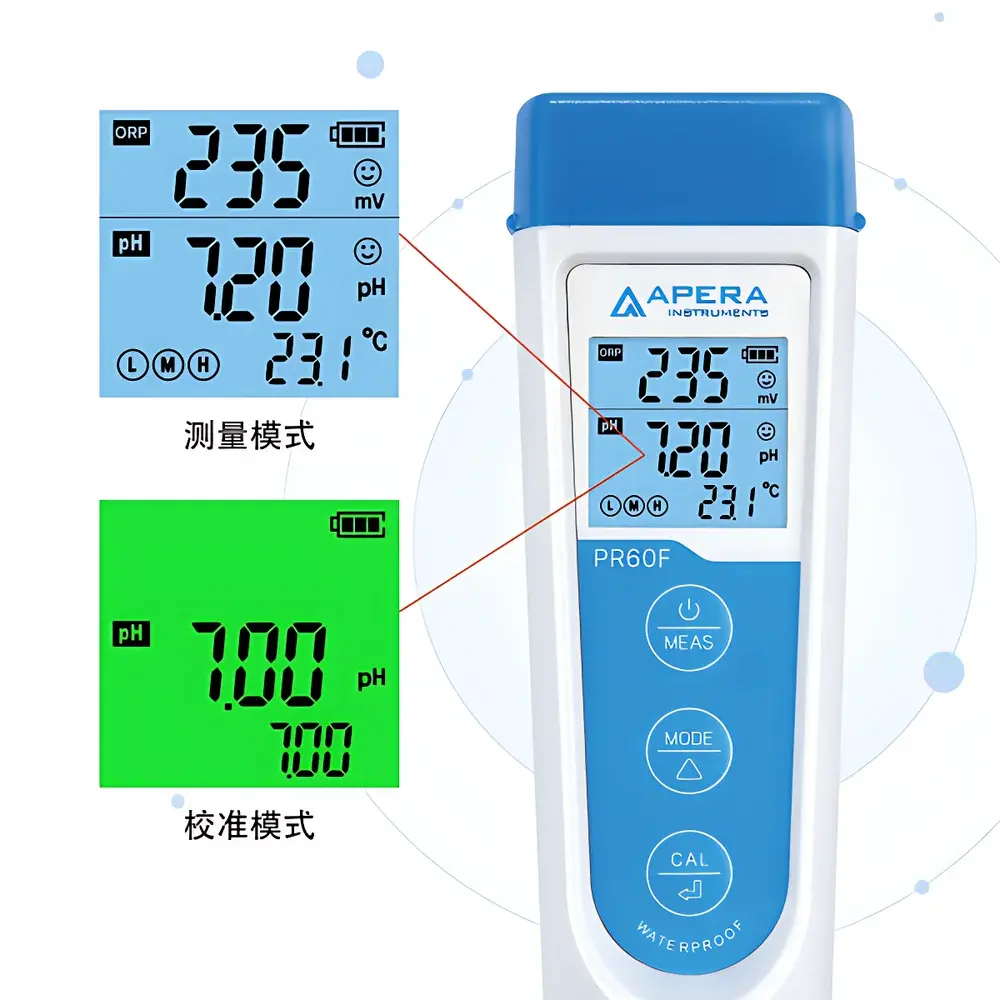
- Dual-parameter capability: Simultaneous real-time display of pH and ORP (mV) values on a single high-contrast LCD screen
- Dual-junction reference system: Reduces contamination-induced drift by isolating the reference electrolyte from sample matrix interferences—extending electrode service life by up to 2.5× versus conventional single-junction designs
- Flat platinum ORP sensor: Coated with a chemically stable macromolecular layer that accelerates electron transfer kinetics, achieving ~40% faster response time and improved resistance to passivation in oxidizing or organic-rich solutions
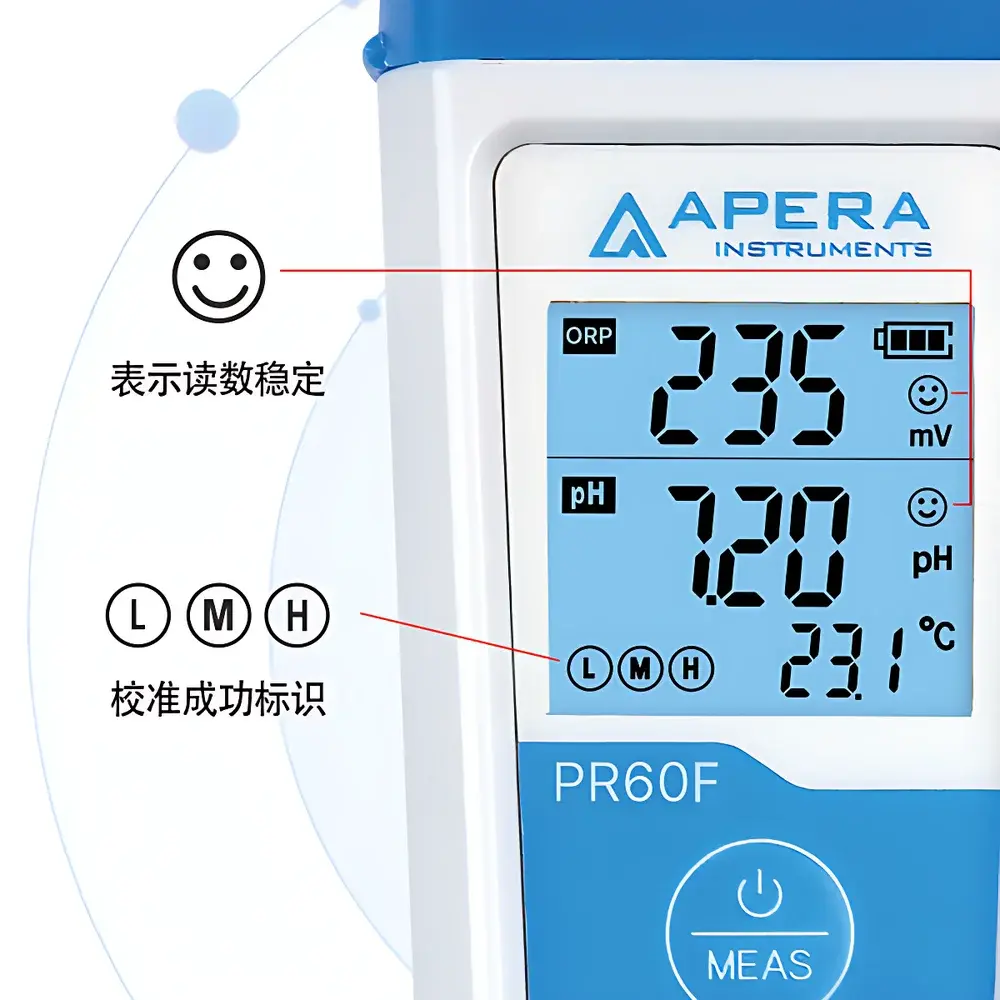
- StableRead™ algorithm: Automatically detects signal stability (±0.01 pH or ±2 mV over 3 sec) and locks the reading without user interpretation—eliminating subjective endpoint judgment errors common in manual titration-style measurements
- Intelligent calibration management: Supports 1–3 point automatic pH calibration using NIST-traceable or USA-standard buffers; includes audible and visual calibration prompts, slope diagnostics, and offset verification
- Full-range automatic temperature compensation (ATC): Integrated thermistor provides continuous 0–50 °C correction per NIST SRM 186 buffer tables, ensuring accuracy across seasonal or process-related thermal variations
- IP67-rated enclosure: Fully sealed against dust ingress and immersion in 1 m of water for up to 30 minutes—validated per IEC 60529—enabling safe operation in humid greenhouses, outdoor ponds, or splash-prone industrial settings
- Low-power architecture: Four AAA alkaline cells deliver >200 hours of continuous operation; auto-off after 10 minutes of inactivity preserves battery life without compromising measurement readiness
Sample Compatibility & Compliance
The PR60F is validated for direct-contact measurement in liquid-phase samples meeting standard aqueous conductivity requirements (>50 µS/cm). It supports routine analysis of tap water, swimming pool recirculation streams, wastewater effluents, nutrient solutions, cosmetic emulsions, soil leachates (after filtration), and topical skin formulations. For non-aqueous or low-conductivity matrices (e.g., ethanol-based solvents or pure oils), external ionic strength adjustment or specialized electrodes are recommended. Device firmware and hardware design comply with electromagnetic compatibility (EMC) standards per EN 61326-1 (CE), hazardous substance restrictions under RoHS Directive 2011/65/EU, and radiofrequency emission limits per FCC Part 15 Subpart B. While not certified for GMP or GLP audit trails, its calibration logging, ATC transparency, and stable endpoint detection support documentation practices aligned with ISO/IEC 17025 clause 7.7 (Sampling) and USP (pH Measurement).
Software & Data Management
The PR60F operates as a standalone electrochemical terminal with no embedded data logging or PC connectivity. All measurement data remain on-device only during active use and are not retained post-shutdown. However, its intelligent interface facilitates traceable manual recordkeeping: calibration history (date, buffer ID, slope %, offset mV), measured values with timestamped stability confirmation (via StableRead™ indicator), and temperature-compensated outputs are all visually verifiable in real time. The unit’s calibration diagnostics—including slope deviation alerts and out-of-range buffer detection—support adherence to internal SOPs requiring documented calibration verification prior to sample analysis. No software installation or driver dependencies are required, eliminating cybersecurity exposure vectors associated with USB-connected instruments.
Applications
- Aquaculture & hydroponics: Monitoring pH stability in recirculating aquaculture systems (RAS) and nutrient film technique (NFT) channels to prevent stress-induced mortality in finfish and crustaceans
- Recreational water management: Rapid verification of disinfectant efficacy via ORP correlation in swimming pools and hot tubs per CDC Model Aquatic Health Code guidelines
- Environmental field screening: On-site assessment of acid mine drainage (AMD) pH shifts and redox transitions in wetland sediments or stormwater runoff
- Personal care product QC: Batch-to-batch consistency checks for shampoo, lotion, and toner formulations targeting physiologically compatible pH ranges (4.5–6.5)
- Food safety pre-screening: Surface pH estimation of cured meats, dairy products, or fermented vegetables where surface acidity correlates with microbial inhibition
- Educational laboratories: Teaching core concepts of electrode potential, liquid junction potentials, and Nernst equation applications in undergraduate chemistry curricula
FAQ
What calibration standards are supported for international deployment?
The PR60F accommodates both NIST-traceable (China edition) and USA-standard (e.g., Fisher Scientific, Hanna Instruments) pH buffer sets. Users must select the appropriate firmware configuration during initial setup to ensure correct slope calculation and temperature correction coefficients.
Can the PR60F measure pH in semi-solid or viscous samples?
It is intended for aqueous solutions only. For gels, pastes, or soils, use a dedicated flat-surface pH probe with gentle pressure application—never force the pen-style tip into non-fluid media.
Is the ORP sensor replaceable independently of the pH element?
No—the PR60F uses an integrated dual-parameter electrode cartridge. Replacement requires swapping the entire sensor assembly to maintain calibrated alignment and junction integrity.
Does the device meet FDA 21 CFR Part 11 requirements?
No. The PR60F lacks electronic audit trail, user authentication, and secure data export capabilities required for regulated pharmaceutical or clinical applications.
How often should the electrode be cleaned and stored?
Rinse with deionized water after each use; store immersed in 3 M KCl storage solution. Clean the junction weekly with dilute HCl (0.1 M) if used in protein- or sulfide-rich matrices to prevent clogging.





