
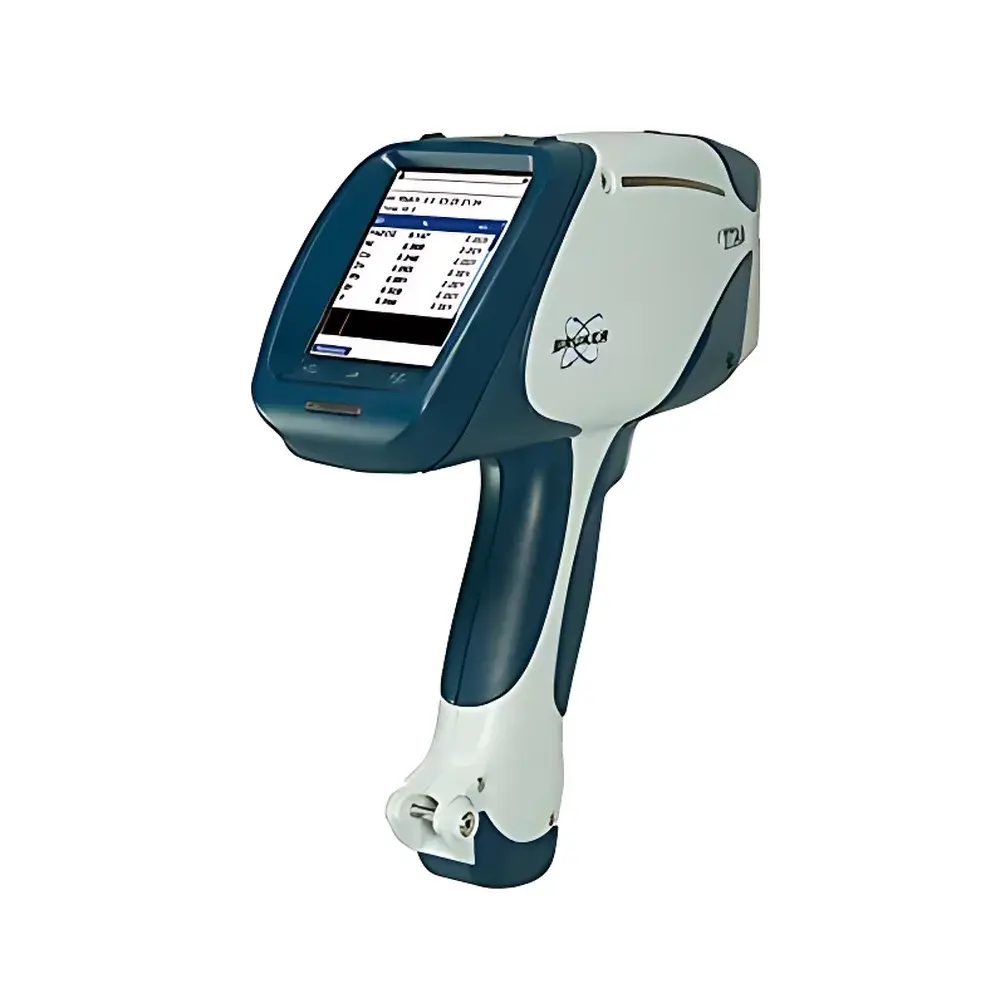
Bruker S1 TITAN Handheld Energy Dispersive X-Ray Fluorescence (ED-XRF) Spectrometer for Ore Analysis
| Brand | Bruker |
|---|---|
| Origin | Germany |
| Model | S1 TITAN |
| Application | Field-portable |
| Industry-Specific Use | Geological & Mining Exploration |
| Elemental Range | Mg–U |
| Detection Limits | 1 ppm to 99.99% (w/w) |
| Energy Resolution | <140 eV at Mn Kα |
| Detector Type | Silicon Drift Detector (SDD) |
Overview
The Bruker S1 TITAN is a field-deployable, handheld energy dispersive X-ray fluorescence (ED-XRF) spectrometer engineered for rapid, non-destructive elemental analysis of geological materials in situ. Operating on the fundamental principle of X-ray fluorescence—where primary X-rays excite atoms in a sample, inducing emission of characteristic secondary X-rays—the instrument quantifies elemental composition by measuring energy and intensity of emitted photons. Unlike traditional lab-based XRF systems requiring vacuum or helium purge for light-element detection, the S1 TITAN integrates optimized excitation geometry, high-efficiency SDD detection, and advanced spectral deconvolution algorithms to deliver reliable quantification of elements from magnesium (Mg) through uranium (U) under ambient atmospheric conditions. This capability eliminates logistical dependencies on gas supply or vacuum chambers, enabling direct measurement of Mg, Al, Si, P, S, and Cl in raw ore samples, drill cores, tailings, soils, and sediments without sample preparation.
Key Features
- Robust, ergonomic handheld design with IP54-rated housing for operation in harsh mining, exploration, and environmental field environments.
- Silicon Drift Detector (SDD) with <140 eV resolution at Mn Kα, ensuring high peak separation and accurate identification of overlapping spectral lines (e.g., Pb L-lines vs. As K-lines).
- Optimized X-ray tube with selectable voltage (up to 50 kV) and current (up to 200 µA), enabling tailored excitation for light- and heavy-element analysis across diverse matrices.
- Real-time spectrum acquisition and on-device quantification using fundamental parameters (FP) and empirical calibration models, validated against certified reference materials (CRMs) per ISO 18557 and ASTM D7763.
- Integrated GPS, camera, and Bluetooth/Wi-Fi connectivity for georeferenced data logging and synchronized metadata capture during survey campaigns.
- Battery-powered operation (≥8 hours typical runtime) with hot-swappable Li-ion packs, supporting continuous field deployment without external power sources.
Sample Compatibility & Compliance
The S1 TITAN accommodates heterogeneous solid samples including unprepared rock chips, drill core segments, crushed ore, soil auger samples, sediment slurry filters, mine waste piles, and industrial concentrates. Its open-beam configuration allows direct analysis of irregular surfaces and large-volume specimens without grinding or pelletization—critical for preserving spatial heterogeneity during grade control and resource delineation. The system complies with IEC 61000-6-3 (EMC) and IEC 61000-6-4, and meets radiation safety requirements per IEC 62495 and local regulatory frameworks governing portable X-ray devices. Firmware and calibration protocols support audit readiness for GLP-compliant geological surveys and QA/QC workflows aligned with ISO/IEC 17025 accreditation criteria.
Software & Data Management
Data acquisition, processing, and reporting are managed via Bruker’s proprietary S1 PX software suite, which runs natively on the device and synchronizes with desktop applications for advanced statistical analysis. The software includes multi-layered user access control, full audit trail functionality compliant with FDA 21 CFR Part 11 (electronic records and signatures), and configurable report templates supporting ASTM E2925 (standard guide for handheld XRF use in mining). Spectral libraries include pre-loaded calibrations for common ore types (e.g., iron oxides, copper sulfides, bauxite, phosphate rock), while custom method development tools allow users to build matrix-matched calibrations using site-specific CRMs. All spectra, results, GPS coordinates, and operator logs are stored in encrypted SQLite databases with export options to CSV, PDF, and XML formats for integration into GIS platforms or enterprise LIMS systems.
Applications
- Exploration & Prospecting: Rapid reconnaissance mapping of anomalous element distributions across outcrops, trench walls, and regolith profiles to prioritize drill targets.
- Drill Core Logging: Continuous downhole elemental profiling of split-core sections, enabling real-time lithological correlation and alteration zone identification.
- Mine Site Grade Control: On-bench or truckload analysis for feed-forward process optimization—measuring Cu, Zn, Pb, Ni, Co, and precious metals in run-of-mine material prior to crushing and milling.
- Tailings & Environmental Monitoring: Quantitative assessment of residual heavy metals (As, Cd, Cr, Hg, Pb) and radionuclides (U, Th) in waste dumps, leachate ponds, and reclaimed land.
- Industrial Mineral Characterization: Determination of critical impurities (e.g., Fe in kaolin, Ti in quartz sand, alkalis in feldspar) for quality assurance in ceramic, glass, and metallurgical feedstock supply chains.
- Geochemical Baseline Studies: High-density sampling of surface soils and stream sediments to establish natural background concentrations and detect anthropogenic contamination signals.
FAQ
Does the S1 TITAN require helium or vacuum for light-element analysis?
No. Its optimized collimation, high-transmission X-ray window, and SDD sensitivity enable reliable Mg–Cl quantification in air without gas purging.
Can it analyze powdered or pressed pellets?
Yes—though designed for direct solid analysis, it supports reproducible measurements on homogenized powders and fused beads when higher precision is required for certification or inter-laboratory comparison.
How is calibration traceability maintained?
All factory calibrations are traceable to NIST SRMs and ISO-certified geological CRMs (e.g., CANMET, USGS, SARM standards); users may perform periodic verification using onboard check standards.
Is the instrument suitable for regulatory reporting?
When operated within defined method scopes and documented procedures, data generated meet evidentiary requirements for environmental compliance reporting under EPA Method 6200 and EU Council Directive 2009/90/EC.
What training and support resources are available?
Bruker provides field application specialist-led on-site training, remote technical support, annual firmware updates, and access to an online knowledge base with SOPs, troubleshooting guides, and method validation templates.
Related Products





