
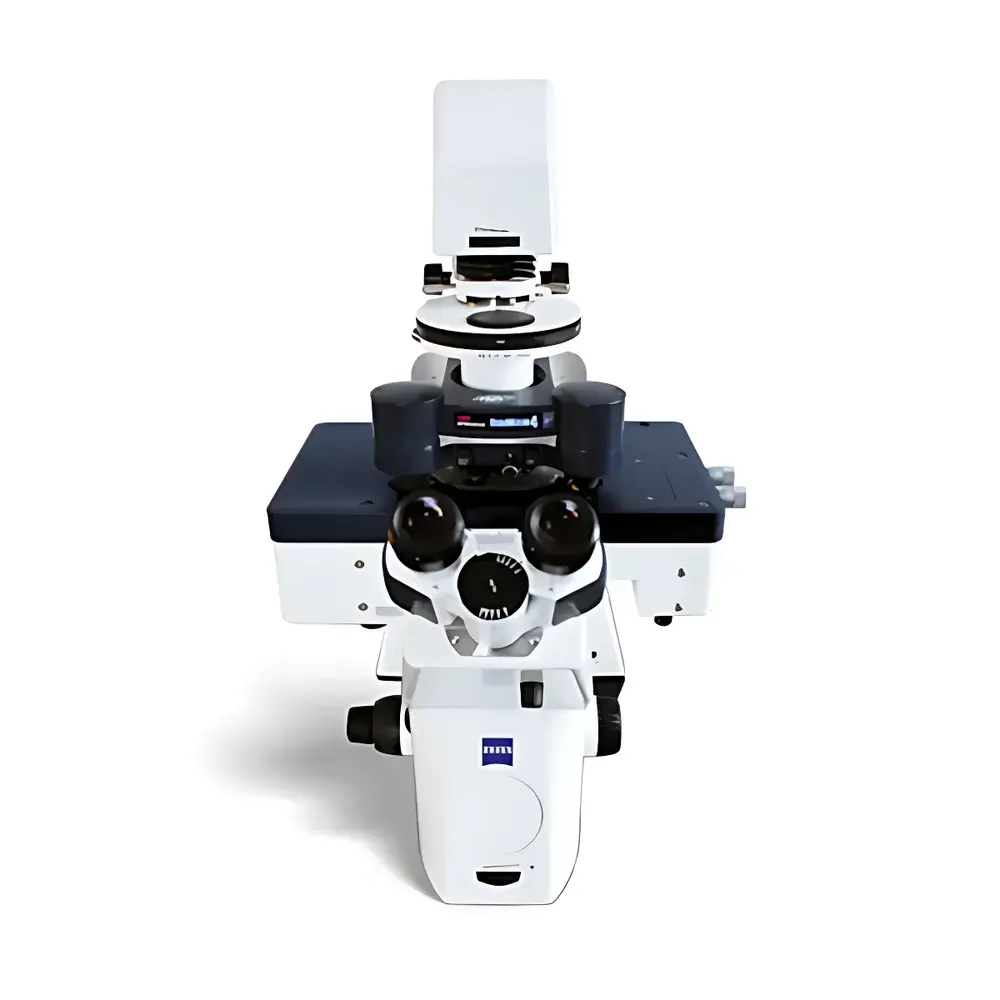
Bruker NanoWizard® 4 XP BioScience Atomic Force Microscope
| Brand | Bruker |
|---|---|
| Origin | Germany |
| Model | NanoWizard® 4 XP BioScience |
| Instrument Type | Biological Atomic Force Microscope |
| Software Platform | V7 |
| Category | Scanning Probe Microscope |
| Import Status | Imported |
Overview
The Bruker NanoWizard® 4 XP BioScience is a high-performance, research-grade atomic force microscope (AFM) engineered specifically for life science applications under physiological conditions. Utilizing advanced closed-loop piezoelectric positioning and low-drift scanning architecture, it enables nanoscale topographic, mechanical, and functional imaging of soft biological specimens—including live cells, extracellular matrices, lipid bilayers, and protein complexes—in liquid environments. Unlike conventional AFMs optimized for materials science, the NanoWizard® 4 XP BioScience integrates a thermally stable optical platform with integrated inverted optical microscopy (compatible with standard commercial microscopes), allowing simultaneous AFM force spectroscopy and high-resolution fluorescence or phase-contrast imaging. Its design adheres to the physical constraints of biological sample integrity: minimal phototoxicity, low thermal drift (<0.1 nm/min), and sub-piconewton force sensitivity—critical for quantifying receptor–ligand interactions, cell adhesion forces, and viscoelastic properties of hydrated biomaterials.
Key Features
- Biological AFM platform with fully enclosed fluid cell and temperature-controlled sample stage (20–40 °C range, ±0.1 °C stability)
- Closed-loop XYZ piezo scanner with 100 µm × 100 µm × 15 µm scan range and <0.1 nm RMS noise in Z-direction
- Integrated optical access for concurrent confocal, TIRF, or widefield fluorescence imaging via standard inverted microscope ports
- Automated probe approach and laser alignment system reducing setup time and operator dependency
- High-bandwidth digital controller supporting real-time force–distance curve acquisition at up to 10 kHz sampling rate
- Modular cantilever compatibility—including commercial silicon, silicon nitride, and biofunctionalized probes (e.g., NHS-ester, streptavidin, antibody-conjugated)
- V7 software suite with automated image analysis modules for cell morphology quantification, elasticity mapping (Hertz model fitting), and force-volume array processing
Sample Compatibility & Compliance
The NanoWizard® 4 XP BioScience supports a broad range of biospecimens: adherent and non-adherent mammalian cells, bacterial biofilms, tissue sections, hydrogels, and supported lipid bilayers—all maintained in buffered aqueous media (e.g., PBS, HBSS, or custom culture media). Sample substrates include glass coverslips, ITO-coated slides, and polymer-based microfluidic chips. The system meets essential regulatory expectations for laboratory instrumentation used in preclinical research: full audit trail logging in V7 software (compliant with ALCOA+ principles), electronic signature support per FDA 21 CFR Part 11, and traceable calibration protocols aligned with ISO/IEC 17025 guidelines. It is routinely deployed in GLP-compliant labs conducting mechanobiology studies, biopharmaceutical formulation characterization, and nanotoxicology assessments.
Software & Data Management
Bruker’s V7 software provides an integrated environment for instrument control, real-time data visualization, and post-acquisition analysis. Key capabilities include: multi-channel force spectroscopy batch processing, automated tip-sample contact point detection, spatially resolved Young’s modulus mapping with statistical confidence intervals, and export of calibrated force curves in HDF5 and ASCII formats. All raw data files are self-documenting—embedding metadata such as environmental conditions (temperature, humidity), scanner calibration parameters, and user-defined experimental annotations. Data security is enforced via role-based access control, encrypted local storage, and optional integration with institutional LIMS or electronic lab notebook (ELN) systems through standardized API interfaces.
Applications
- Quantitative nanomechanics of single cells during differentiation, apoptosis, or drug treatment
- Single-molecule force spectroscopy of membrane proteins and receptor–ligand binding kinetics
- In situ structural dynamics of amyloid fibrils and intrinsically disordered proteins
- Mechanical phenotyping of cancer cell lines across metastatic potential gradients
- Characterization of biomaterial–cell interface mechanics in tissue engineering scaffolds
- Time-lapse nanoscale morphological changes in neurons during synaptic plasticity assays
FAQ
Is the NanoWizard® 4 XP BioScience compatible with third-party inverted microscopes?
Yes—it features standardized C-mount and Nikon/Zeiss-compatible optical coupling interfaces, enabling seamless integration with most commercial inverted microscope platforms.
Does the system support long-term live-cell imaging over several hours?
Yes, when paired with an environmental chamber (optional accessory), the system maintains CO₂, humidity, and temperature control to sustain cell viability during extended acquisitions.
Can V7 software perform automated elasticity segmentation on heterogeneous cell populations?
Yes—V7 includes machine-learning-assisted region-of-interest (ROI) classification tools that distinguish cytoplasm, nucleus, and membrane domains based on topography and mechanical contrast.
What calibration standards are supplied with the instrument?
Bruker provides NIST-traceable grating standards for lateral calibration and certified colloidal probe kits for quantitative force calibration, all documented in accordance with ISO 25178-601.
Is remote operation supported for collaborative or core facility use?
Yes—V7 supports secure remote desktop access and browser-based experiment monitoring via Bruker’s optional Remote Lab Manager module, compliant with institutional IT security policies.





