
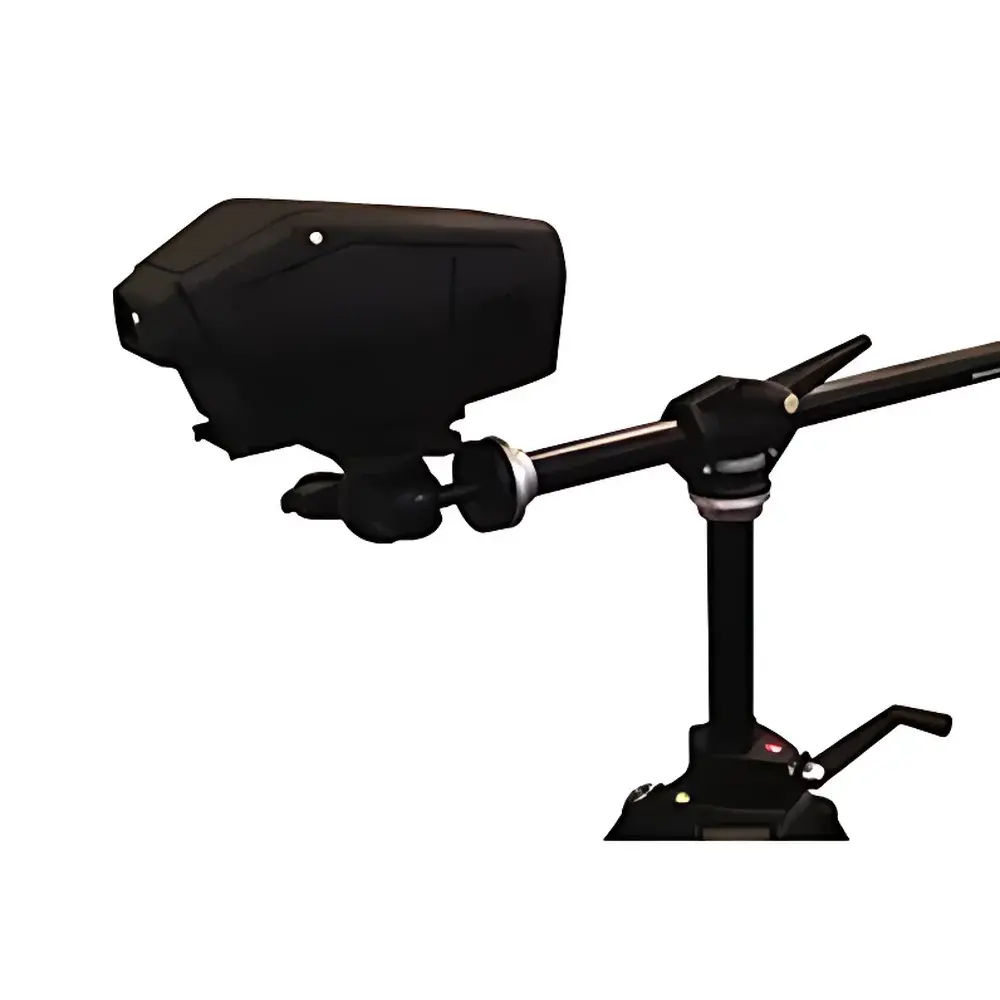
Bruker ELIO Portable Energy Dispersive X-Ray Fluorescence Spectrometer
| Brand | Bruker |
|---|---|
| Origin | Germany |
| Model | ELIO |
| Portability | Handheld/Portable |
| Application Field | Geology & Mining |
| Energy Resolution | <140 eV (Mn Kα) |
| Detector | Large-Area Silicon Drift Detector (SDD) |
| X-ray Source | 50 kV Microfocus Tube |
| Excitation Geometry | Close-Proximity Non-Contact |
| Spot Localization | 1 mm Laser Crosshair + Integrated CMOS Camera |
| Motion Control | Motorized XY Stage (Optional) |
| Form Factor | Compact Tripod-Mounted Measurement Head (2.1 kg) |
Overview
The Bruker ELIO is a field-deployable, benchtop-compatible energy dispersive X-ray fluorescence (ED-XRF) spectrometer engineered for non-contact, non-destructive elemental mapping and quantitative analysis of heterogeneous solid samples. Operating on the fundamental principle of X-ray fluorescence—where primary X-rays excite inner-shell electrons in sample atoms, resulting in characteristic secondary (fluorescent) X-ray emission—the ELIO delivers spatially resolved elemental composition data without physical contact or sample preparation. Its optimized close-proximity excitation geometry, combined with a high-brightness 50 kV microfocus X-ray tube and a large-area silicon drift detector (SDD), enables rapid acquisition of high-statistics spectra from sub-millimeter regions. Designed for in situ operation across diverse environments—from geological outcrops and museum conservation labs to classroom demonstrations—the ELIO bridges laboratory-grade analytical performance with true portability.
Key Features
- Non-contact analysis enabled by precision 1 mm laser crosshair targeting and integrated 5 MP CMOS imaging system for real-time visual correlation between optical morphology and elemental distribution.
- CUBE™ technology integration for automated, high-fidelity elemental mapping: synchronizes motorized XY stage motion (optional), spectral acquisition, and detector readout to generate pixel-resolved quantifiable maps.
- High-performance SDD detector with energy resolution 100,000 cps typical), ensuring robust peak separation and statistical confidence even in low-concentration regimes.
- Modular excitation optics: interchangeable anodes (e.g., Rh, Mo, Cr), filter sets, and collimators (down to 0.1 mm diameter) allow optimization for light-element detection (Na–F), heavy-metal quantification (Pb, U), or matrix-specific suppression.
- Compact tripod-mounted architecture: aluminum alloy frame with adjustable height and tilt; total measurement head mass of 2.1 kg; compatible with manual or motorized XY translation stages for field-based raster scanning.
- Robust thermal and electronic design compliant with IEC 61000-6-3 (EMC) and IEC 61010-1 (safety); IP54-rated enclosure for dust and splash resistance during outdoor geological surveys.
Sample Compatibility & Compliance
The ELIO accommodates irregular, fragile, or irreplaceable specimens—including uncut rock cores, archaeological ceramics, painted artifacts, botanical sections, and industrial components—without requiring sectioning, coating, or vacuum environments. Its open-beam configuration supports samples up to 30 cm × 30 cm × 15 cm (L×W×H) when mounted on standard tripods. All spectral acquisition and quantification workflows adhere to ISO 17025 principles for testing laboratories. Data integrity is maintained through embedded audit trails, user access control, and export formats compatible with ASTM E1621 (standard practice for EDXRF analysis of metals) and ISO 22053 (XRF analysis of soils and sediments). Optional software modules support GLP-compliant reporting and 21 CFR Part 11–aligned electronic signatures for regulated environments.
Software & Data Management
Acquisition and analysis are managed via Bruker’s proprietary ESPRIT™ software suite, featuring intuitive drag-and-drop workflow configuration, real-time spectral visualization, and automated peak deconvolution using fundamental parameter (FP) algorithms. Mapping datasets are stored in vendor-neutral HDF5 format, supporting third-party post-processing in Python (via h5py), MATLAB, or QGIS. Batch processing tools enable calibration transfer across instruments, while spectral library matching (including NIST SRM reference spectra) facilitates rapid material identification. All raw spectra, metadata (position, voltage, live time, detector temperature), and processing parameters are embedded within each file to ensure full traceability and reproducibility.
Applications
- Geoscience & Mining: In-field elemental distribution mapping of drill core segments, thin sections, or hand specimens; quantification of ore grade variability (e.g., Cu, Zn, As, REEs) and alteration halos; correlation with petrographic context.
- Cultural Heritage: In situ analysis of pigments, corrosion layers, and gilding on paintings, manuscripts, and sculptures; provenance studies via trace-element fingerprinting without sampling.
- Materials Science: Characterization of additive-manufactured alloys, battery cathode heterogeneity, catalyst dispersion, and thin-film interdiffusion profiles.
- Agricultural & Food Science: Spatial mapping of micronutrient accumulation (Fe, Zn, Se) in grain endosperm or leaf tissue; verification of fortificant homogeneity in processed foods.
- Education & Research: Undergraduate and graduate instruction in analytical chemistry, geochemistry, and materials characterization; hypothesis-driven field experiments with immediate spectral feedback.
FAQ
Is the ELIO suitable for light-element analysis (e.g., Na, Mg, Al)?
Yes—when equipped with a beryllium window SDD, vacuum-purge option, and appropriate anode/filter combination (e.g., Cr anode + Al filter), the ELIO achieves reliable detection down to sodium (Na, Z=11) under controlled ambient conditions.
Can ELIO data be exported for regulatory submission?
Yes—ESPRIT generates PDF reports with full metadata, calibration certificates, and raw spectral archives in HDF5 format, meeting documentation requirements for ISO/IEC 17025 accreditation and FDA-regulated QA/QC protocols.
What maintenance is required for field deployment?
The ELIO requires no routine consumables; detector cooling is thermoelectric (no liquid nitrogen or cryo-gas); annual verification of X-ray output stability and energy calibration against certified reference materials is recommended.
How is positional accuracy ensured during mapping?
Motorized XY stages feature closed-loop encoders with ±1 µm repeatability; optical camera registration corrects for mechanical drift; CUBE™ software applies sub-pixel interpolation and spectral normalization to minimize spatial artifacts.
Does ELIO support quantitative analysis without standards?
Yes—fundamental parameter (FP) quantification is available for homogeneous matrices; however, empirical calibration using matrix-matched standards is recommended for highest accuracy in complex or heterogeneous samples.
Related Products




