
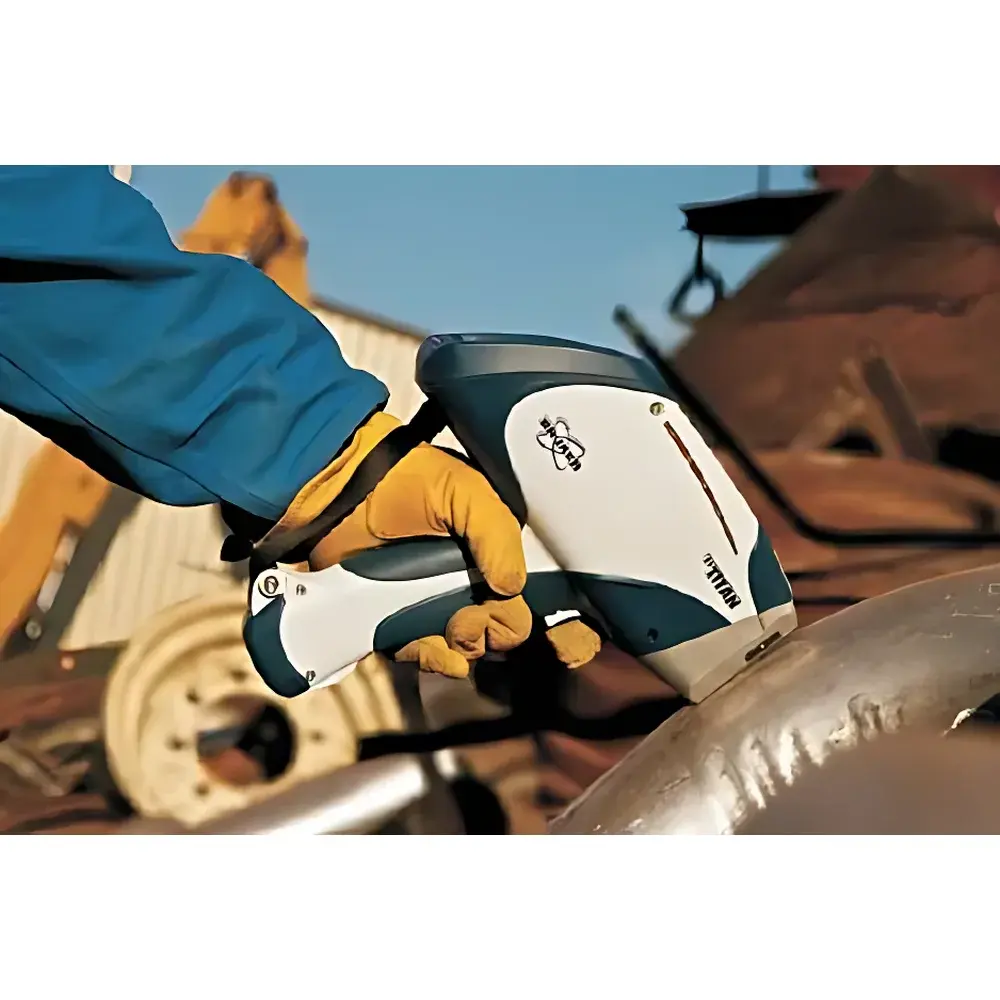
Bruker S1 TITAN Handheld Energy Dispersive X-Ray Fluorescence (ED-XRF) Spectrometer
| Brand | Bruker |
|---|---|
| Origin | USA |
| Manufacturer Type | Authorized Distributor |
| Origin Category | Imported |
| Model | S1 TITAN |
| Application | Handheld/Portable |
| Industry Type | General-Purpose |
| Elemental Range | Na (Z=11) to U (Z=92) |
| Detection Limit | 1 ppm |
| Energy Resolution | <140 eV (at Mn Kα) |
| Repeatability | 0.1% RSD |
| Detector | Silicon Drift Detector (SDD) |
Overview
The Bruker S1 TITAN is a handheld energy dispersive X-ray fluorescence (ED-XRF) spectrometer engineered for rapid, non-destructive elemental analysis of metallic and alloyed materials in field and industrial environments. Operating on the principle of X-ray fluorescence—where primary X-rays excite atoms in a sample, causing emission of characteristic secondary X-rays—the instrument quantifies elemental composition by measuring the energy and intensity of these emitted photons. Its compact, ergonomic design integrates a high-performance X-ray tube, optimized collimation optics, and a large-area silicon drift detector (SDD), enabling robust performance under demanding conditions including high ambient temperature, humidity, rain exposure, and mechanical vibration. Designed specifically for metallurgical applications, the S1 TITAN delivers laboratory-grade accuracy without requiring sample preparation or vacuum/purge gas, making it suitable for real-time decision-making in dynamic operational settings.
Key Features
- Lightweight, ruggedized magnesium-alloy housing rated IP54 for dust and water resistance, with reinforced shock-absorbing bumpers for drop protection
- Integrated high-power microfocus X-ray tube (up to 50 kV, 20 µA) with selectable anode materials (Rh or Ag) for optimized excitation across light and heavy elements
- Silicon drift detector (SDD) with active area ≥25 mm² and ultra-low electronic noise, delivering energy resolution <140 eV at Mn Kα (5.89 keV)
- Patented “Puncture-Resistant Detector Window” featuring a reinforced polymer-mesh barrier that prevents physical damage from sharp metal fragments (e.g., shavings, wire ends) without attenuating low-energy X-rays
- Real-time spectrum processing with automatic peak deconvolution, background subtraction, and matrix correction algorithms based on fundamental parameters (FP)
- Battery-powered operation with hot-swappable Li-ion packs supporting >8 hours of continuous analysis per charge
- Onboard touchscreen interface with intuitive icon-driven navigation, multilingual support (including English, German, Spanish, Chinese), and configurable user roles
Sample Compatibility & Compliance
The S1 TITAN is validated for direct analysis of solid metallic samples—including ferrous and non-ferrous alloys, scrap metal fragments, castings, welds, and coated components—without surface polishing or cleaning. It complies with international safety standards IEC 62471 (photobiological safety) and IEC 61010-1 (electrical safety for measurement equipment). For regulatory traceability, spectral acquisition and result export support audit trails compliant with FDA 21 CFR Part 11 (when used with Bruker’s optional secure software configuration), and analytical workflows align with ASTM E1621 (Standard Guide for XRF Analysis of Metals) and ISO 3497 (Metallic Coatings – XRF Determination of Coating Thickness and Composition). All firmware and calibration libraries undergo annual metrological verification per ISO/IEC 17025 requirements when maintained under Bruker’s certified service program.
Software & Data Management
The instrument runs Bruker’s proprietary S1 PXRF software v4.x, which provides full spectral visualization, live library matching (with >1,200 preloaded alloy grade libraries), and customizable reporting templates exportable as PDF, CSV, or XML. Data integrity is ensured through time-stamped, user-logged acquisition records with digital signature capability. Optional cloud synchronization enables centralized fleet management via Bruker’s CloudLink platform, allowing remote calibration updates, firmware deployment, and cross-site data aggregation for statistical process control (SPC). The software supports GLP/GMP-compliant workflows, including electronic signatures, change control logs, and locked method files preventing unauthorized parameter modification.
Applications
- Positive Material Identification (PMI) for ASME B31.3 and API RP 578 compliance in oil & gas, power generation, and chemical processing facilities
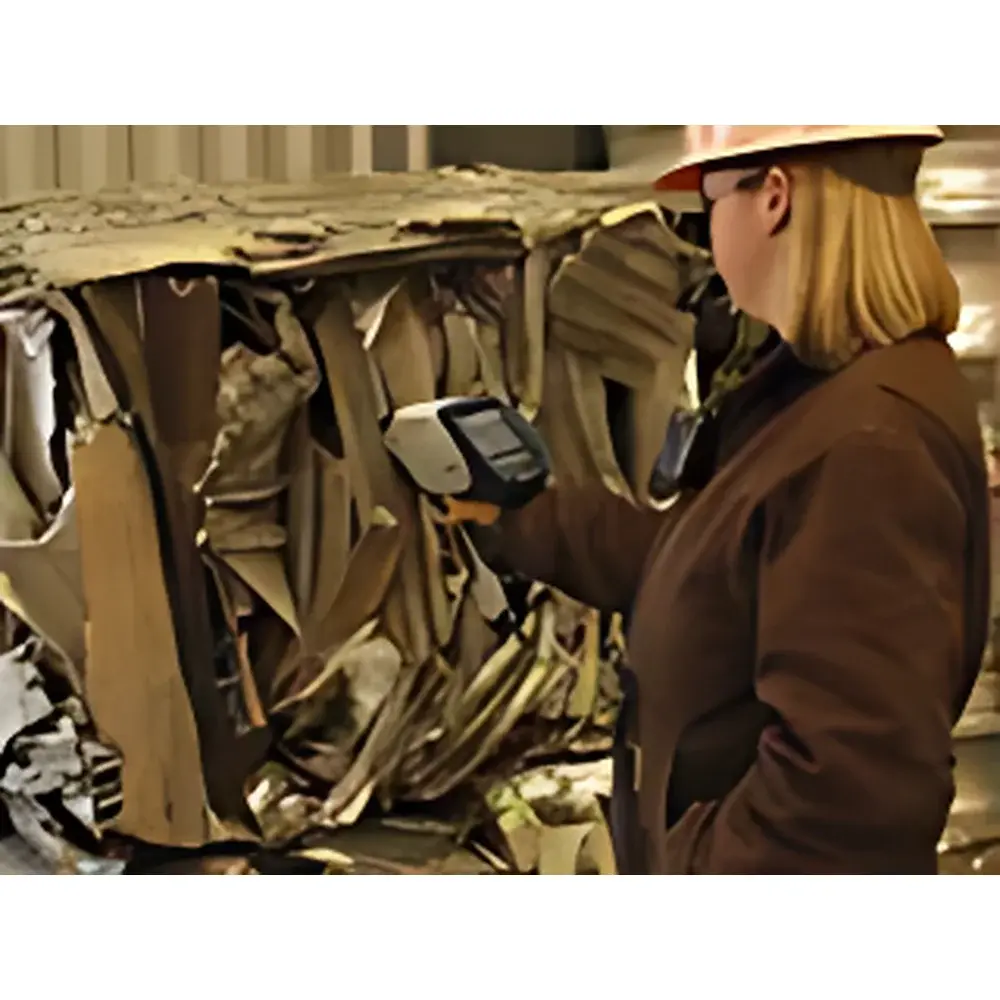
- Scrap metal sorting and recycling stream optimization, distinguishing stainless steels (e.g., 304 vs. 316), aluminum grades (e.g., 6061 vs. 7075), and copper alloys (e.g., C11000 vs. C26000)
- In-process QA/QC during fabrication, welding, and heat treatment—verifying elemental homogeneity and detecting segregation or contamination
- Grade verification of incoming raw materials, forgings, and fasteners in aerospace, automotive, and heavy machinery manufacturing
- Regulatory screening for restricted substances (e.g., Pb, Cd, Hg, Cr⁶⁺) per RoHS, ELV, and China RoHS directives
- Field-based precious metal assay (Au, Pt, Pd) in jewelry, electronics recycling, and catalytic converter evaluation
FAQ
What is the minimum detectable concentration for lead (Pb) in steel?
Lead detection limits are matrix-dependent; in low-alloy steel, typical 1σ detection limits range from 2–5 ppm under standard 30-second measurement conditions.
Can the S1 TITAN analyze light elements such as magnesium and aluminum in air?
Yes—the instrument’s vacuum-pump-free air-mode analysis includes optimized excitation and detector response for Mg (Z=12) through P (Z=15); enhanced light-element sensitivity is available with optional helium purge accessory.
Is spectral data export compatible with third-party LIMS systems?
Yes—CSV and XML exports include full spectral metadata (tube settings, live time, count rates, calibration ID), enabling seamless integration with major LIMS platforms via standardized import protocols.
How often does the instrument require recalibration?
Factory calibrations are stable for 12 months under normal use; Bruker recommends annual verification using certified reference materials (CRMs) traceable to NIST SRMs.
Does the puncture-resistant detector window affect measurement precision for low-Z elements?
No—validation testing per ASTM E2857 confirms no statistically significant degradation in repeatability or detection limits for elements from Na to Ca when using the reinforced window versus standard beryllium windows.
Related Products




