
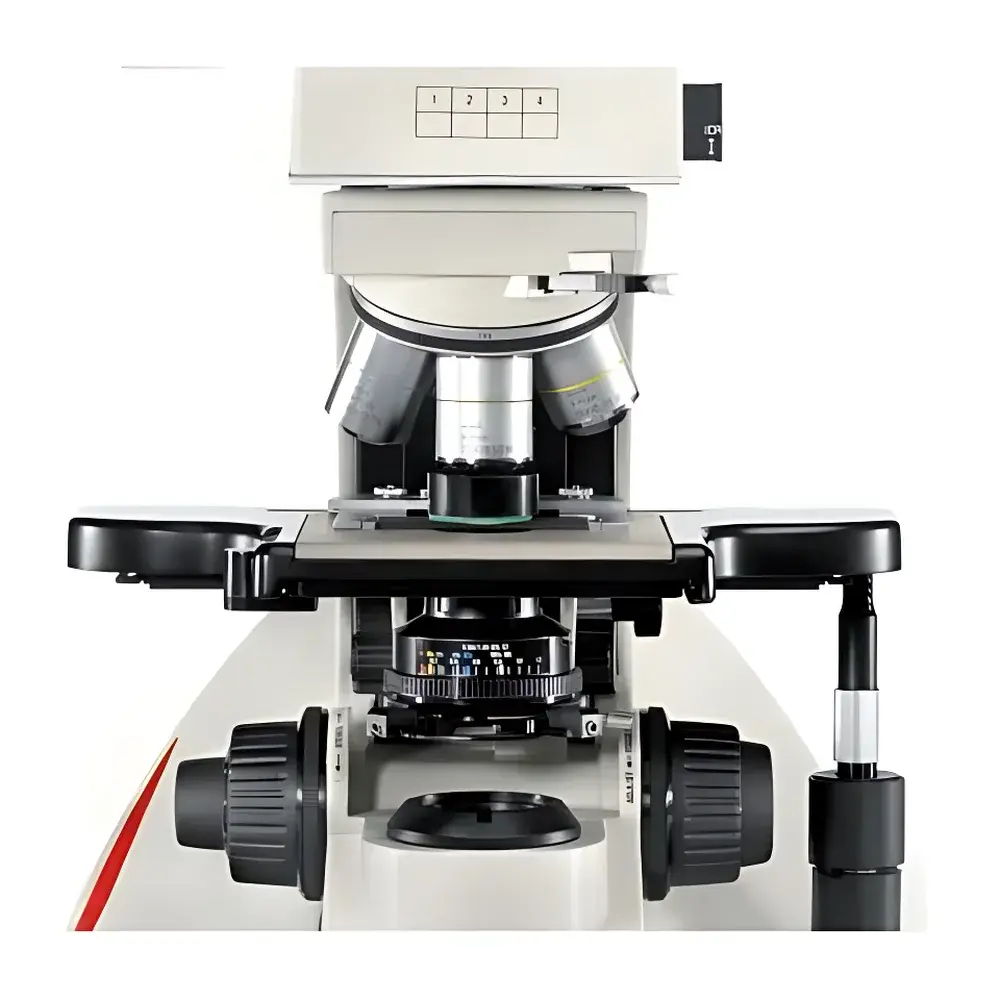
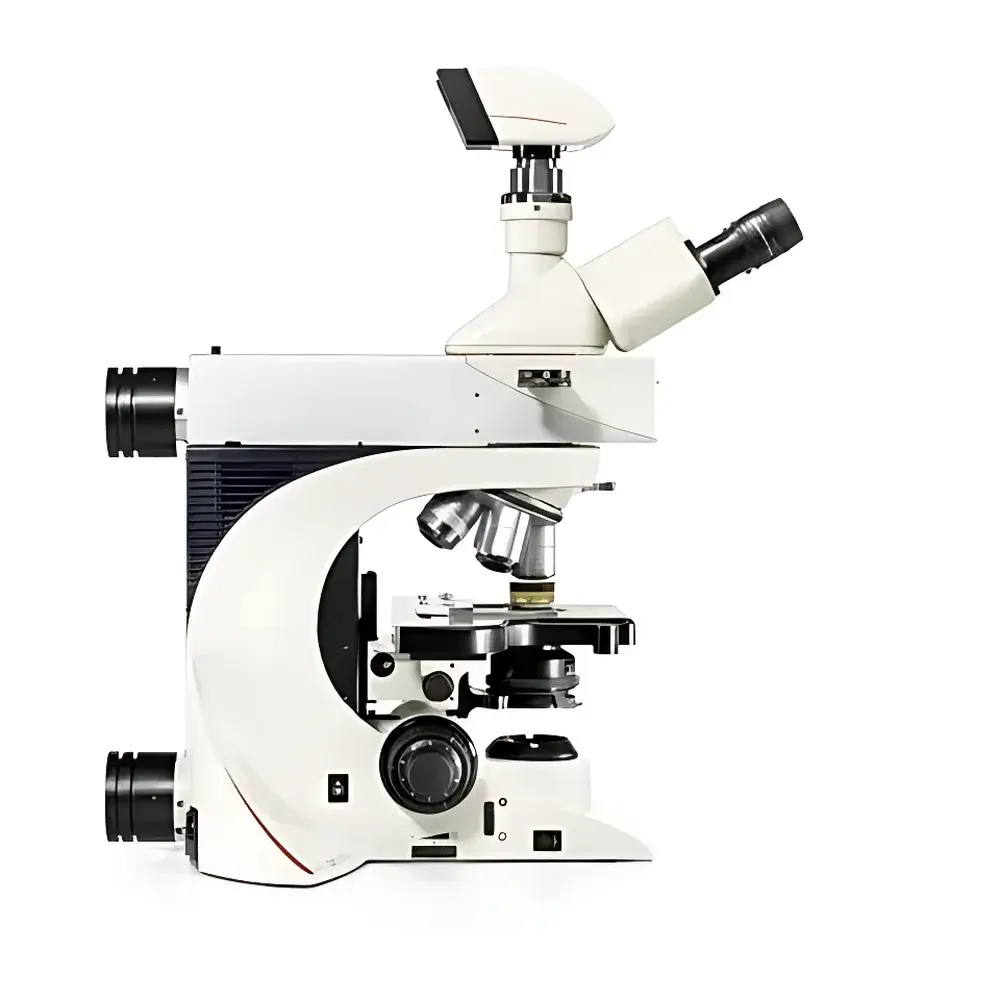
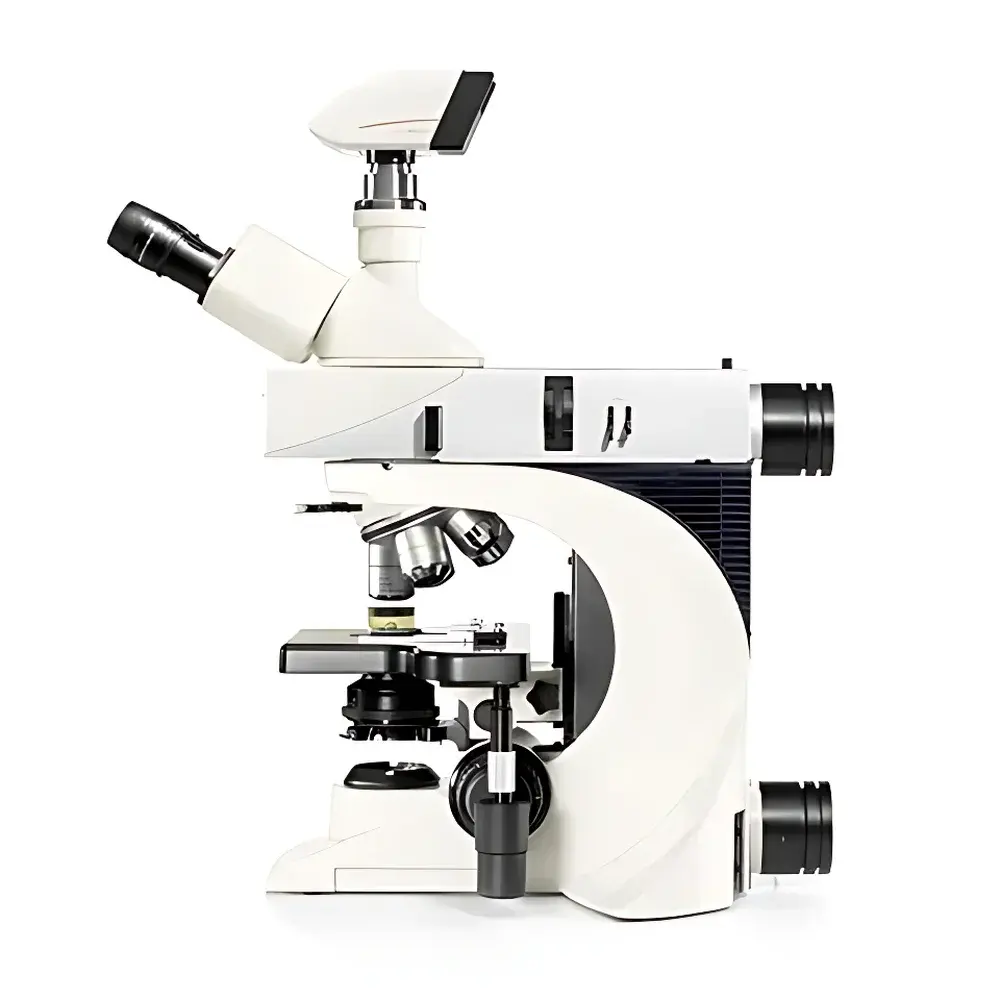
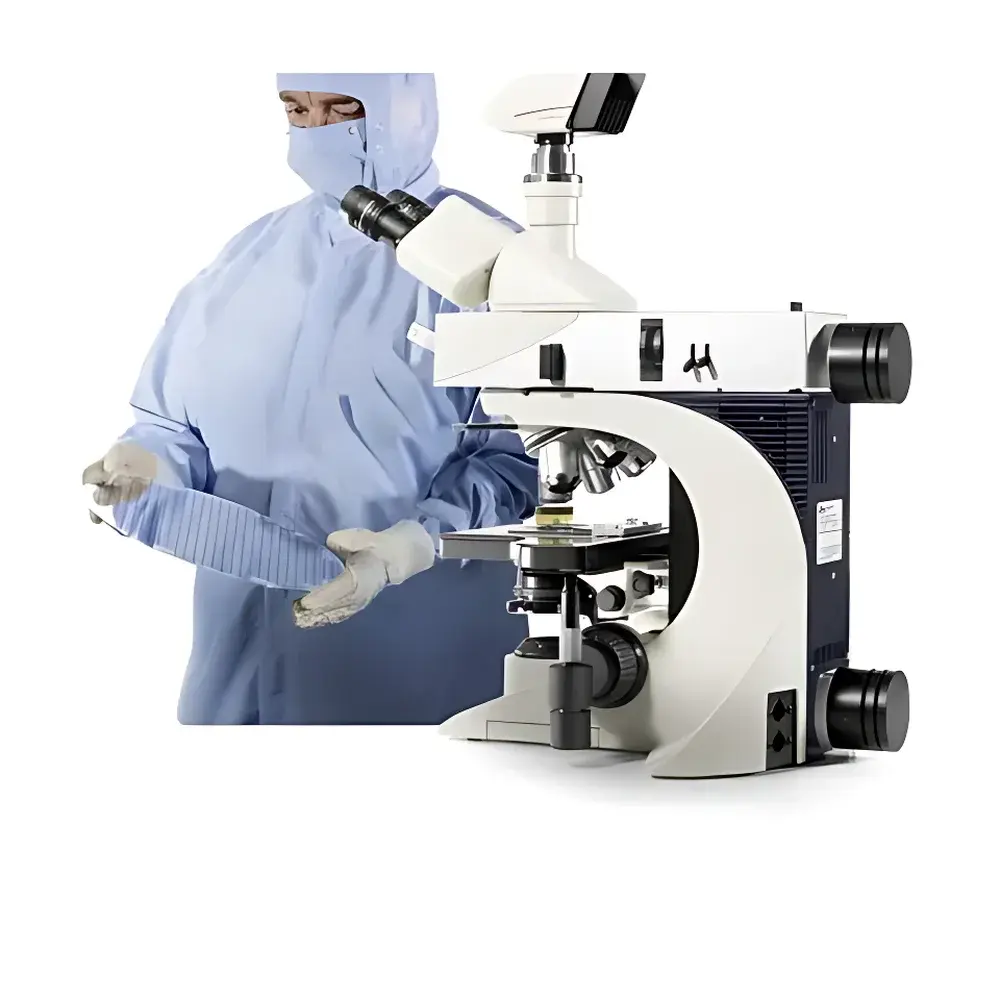
Leica DM2700 M Metallurgical Microscope
| Brand | Leica |
|---|---|
| Origin | Germany |
| Model | DM2700 M |
| Configuration | Upright |
| Image Analysis System | Integrated |
| Total Magnification Range | 50×–1000× |
| Eyepiece Field of View | 25 mm |
| Objective Lenses | High-Performance Achromatic N PLAN Series (1.25×–100×) |
| Macro Objective | 0.7× (40 mm field length) |
| Illumination | High-Power White LED (4500 K, constant color temperature) |
| CCDA | Encoded Color-Coded Dial Assistant |
| Ergonomic Design | Fully Adjustable Stage, Low-Positioned Controls, Extended Working Distance |
Overview
The Leica DM2700 M Metallurgical Microscope is an upright, high-precision optical instrument engineered for routine and advanced metallurgical analysis, materials science research, forensic examination, geoscience specimen evaluation, and industrial quality control. Built upon Leica Microsystems’ legacy of German optical engineering, the DM2700 M employs a robust Köhler illumination architecture with a high-luminance, thermally stabilized white LED light source delivering a consistent 4500 K color temperature across all intensity levels—ensuring faithful color rendition in brightfield, darkfield, differential interference contrast (DIC), polarized light, and oblique illumination modes. Its optical path is optimized for high numerical aperture (NA) performance and flat-field correction, enabling sharp, high-contrast imaging from edge-to-edge across the full 25 mm eyepiece field of view. The microscope’s mechanical stability, vibration-damped base, and precision-machined aluminum alloy frame support long-term dimensional integrity under laboratory or production-floor conditions.
Key Features
- Encoded Color-Coded Dial Assistant (CCDA): Mechanically synchronized objective turret and condenser settings provide tactile, unambiguous feedback during magnification and contrast mode transitions—eliminating misconfiguration and reducing operator-dependent variability.
- N PLAN Achromatic Objective Series: Wide-range magnification coverage (1.25× to 100×) with 22 mm field number, extended working distances (up to 20.5 mm at 5×), and flat-field correction; includes dedicated 0.7× macro objective for rapid sample survey over ~40 mm linear field.
- LED Illumination System: 4500 K correlated color temperature maintained across full brightness range (0–100%); >50,000-hour LED lifetime; no warm-up time; minimal heat emission to sample stage.
- Ergonomic Workstation Design: Low-positioned focus knobs, adjustable inclination joint (0°–30°), height-adjustable stage, and intuitive control layout reduce musculoskeletal strain during prolonged use—validated per ISO 9241-5 and EN 614-1 human factors guidelines.
- Modular Integration Capability: Standardized C-mount interface (1× or 0.5× reduction) for digital cameras; compatibility with Leica Application Suite (LAS X) software and third-party image analysis platforms compliant with DICOM, TIFF, and JPEG2000 export protocols.
Sample Compatibility & Compliance
The DM2700 M accommodates standard metallurgical specimens (up to 76 mm × 52 mm × 30 mm) including polished metallographic mounts, ceramic fracture surfaces, semiconductor wafers, MEMS devices, and geological thin sections. Its reinforced mechanical stage supports heavy-duty sample carriers and optional motorized XYZ translation modules. The system conforms to IEC 61000-6-3 (EMC emissions), IEC 61000-6-2 (immunity), and UL/CSA 61010-1 safety standards. When configured with audit-trail-enabled LAS X software and hardware-locked user permissions, it supports GLP/GMP workflows aligned with FDA 21 CFR Part 11 requirements for electronic records and signatures.
Software & Data Management
The microscope integrates seamlessly with Leica Application Suite (LAS X) v3.7+, supporting automated measurement routines (grain size per ASTM E112, inclusion rating per ASTM E45, phase fraction quantification), multi-channel fluorescence overlay (when equipped with optional filter cubes), and batch-report generation compliant with ISO/IEC 17025 documentation frameworks. All image metadata—including objective ID, illumination mode, exposure parameters, and CCDA configuration state—is embedded in EXIF headers and preserved in raw TIFF exports. Data export formats include CSV (for statistical analysis), PDF (for QA reports), and annotated AVI (for dynamic process documentation).
Applications
- Metallurgical Quality Assurance: Grain boundary analysis, inclusion identification, coating thickness verification, and weld microstructure assessment per ASTM E3, E407, and ISO 643.
- Semiconductor & Electronics Inspection: Defect mapping on silicon wafers, bond pad integrity checks, and MEMS actuator surface topology evaluation under oblique illumination.
- Forensic Materials Examination: Toolmark comparison, bullet striation analysis, and paint layer stratigraphy using polarized and DIC contrast enhancement.
- Geoscience Petrography: Mineral identification, texture classification (e.g., porphyritic vs. phaneritic), and alteration zone delineation in thin sections.
- Failure Analysis Laboratories: Crack propagation path tracing, corrosion product characterization, and intergranular embrittlement assessment under controlled lighting conditions.
FAQ
Does the DM2700 M support automated focus or motorized stage options?
Yes—optional motorized Z-focus drive and programmable XY stage modules are available via Leica’s DM2700 M Motorized Package, enabling repeatable positioning and Z-stack acquisition for quantitative depth profiling.
Is the LED illumination intensity calibrated traceably to NIST standards?
While the LED output is factory-calibrated for photometric stability and uniformity, formal NIST-traceable calibration requires optional Leica Light Intensity Calibration Kit (Order No. 12345678), which includes reference photodiode and calibration certificate.
Can the CCDA system be disabled for expert manual operation?
CCDA operates purely as a mechanical indexing aid—it does not restrict manual selection of objectives or condenser settings; experienced users may bypass dial guidance without functional limitation.
What is the maximum usable numerical aperture (NA) achievable with this system?
With the 100× N PLAN objective (NA 0.85) and appropriate oil immersion condenser, the system achieves effective NA ≥ 0.80 under brightfield, meeting resolution limits defined by Abbe’s criterion (~0.3 µm lateral resolution at 550 nm).
Are replacement parts and service manuals available globally?
All consumables (LED modules, fuses, stage clips), optics (objectives, eyepieces), and mechanical subassemblies are stocked through Leica’s authorized service centers in >60 countries, with technical documentation accessible via Leica Support Portal (login required).



